Imagine a world where digital information doesn’t just live on a screen but is seamlessly woven into the very fabric of your reality, enhancing everything you see, do, and learn. This is the promise of augmented reality, a technology poised to break free from the confines of novelty and fundamentally reshape our personal and professional lives in ways we are only beginning to comprehend.
Beyond the Hype: Defining the AR Landscape
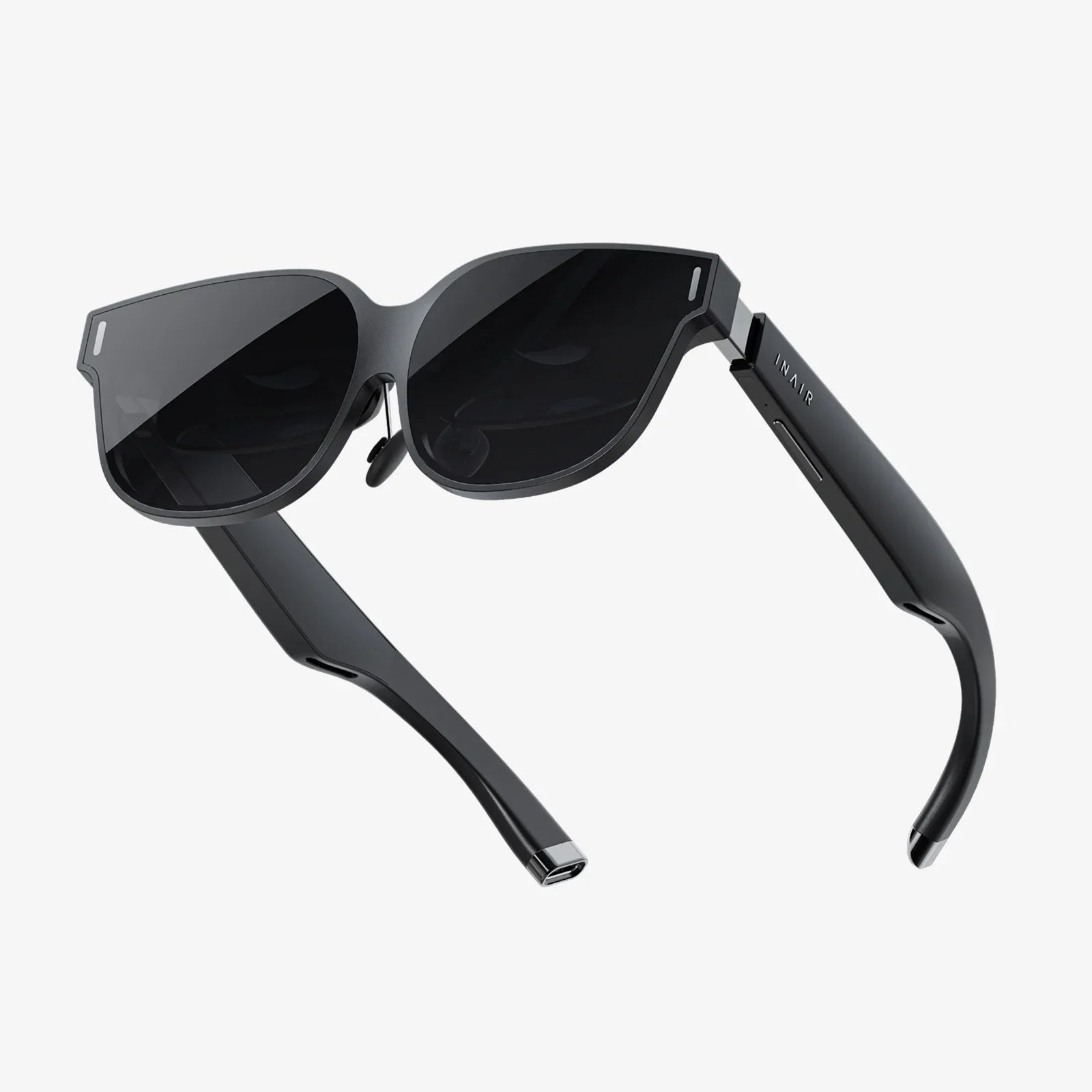
Before delving into its applications, it is crucial to distinguish Augmented Reality from its technological cousin, Virtual Reality (VR). While VR aims to replace the user's environment with a completely digital, simulated one, AR's power lies in its ability to overlay digital content—images, data, 3D models, and instructions—onto the user's real-world view. This is typically achieved through devices like smartphones, tablets, smart glasses, and heads-up displays. The core value proposition of AR is context: it delivers the right information, at the right time, in the right place, transforming inert surroundings into interactive, intelligent spaces.
Revolutionizing the Classroom and the Training Ground
The education and corporate training sectors stand to gain immensely from AR's interactive capabilities. Traditional learning methods often struggle with abstract concepts, but AR can make them tangible.
Interactive Learning
Students can point a device at a textbook page to see a historical battle play out in 3D on their desk, or explore a detailed, interactive model of the human circulatory system. Complex subjects like organic chemistry or astronomy become immersive experiences, drastically improving engagement and knowledge retention.
Skill-Based Training and Simulation
In fields from medicine to advanced manufacturing, AR provides a risk-free environment for trainees to practice complex procedures. Medical students can practice surgeries on virtual patients superimposed onto mannequins, receiving real-time feedback. Mechanics-in-training can see step-by-step repair instructions overlaid directly onto the engine they are working on, reducing errors and accelerating proficiency.
Transforming Patient Care and Medical Practice
Perhaps one of the most impactful potential uses of augmented reality lies within healthcare, where it is set to improve outcomes for both patients and practitioners.
Enhanced Surgical Precision
Surgeons can use AR headsets to visualize critical information, such as a patient’s vital signs, 3D reconstructions of tumors, or the precise path of blood vessels, directly within their field of view during an operation. This "X-ray vision" allows for greater precision, minimizes the need to look away at monitors, and can significantly reduce operation times.
Improved Medical Imaging and Diagnostics
Radiologists can project MRI or CT scan data onto a patient's body, providing a clearer understanding of the relationship between internal structures and external anatomy. This aids in diagnosis, planning for radiation therapy, and preparing for complex surgical interventions.
Patient Education and Rehabilitation
AR can help patients better understand their conditions and treatment plans by visualizing their own anatomy. In physical therapy, AR games and exercises can make repetitive rehabilitation routines more engaging, motivating patients to complete their programs and providing therapists with precise motion-tracking data.
Reshaping the Retail and E-Commerce Experience
The retail industry is leveraging AR to bridge the gap between the convenience of online shopping and the certainty of physical retail, creating a powerful new hybrid model.
Virtual Try-On and Preview
Shoppers can use their smartphones to see how furniture would look in their living room, how a new paint color would appear on their walls, or how a pair of glasses or makeup would look on their face. This drastically reduces purchase uncertainty and the high return rates associated with online shopping, building consumer confidence.
In-Store Navigation and Product Information
Inside large retail stores, AR apps can guide customers to the exact aisle and shelf where a product is located. By pointing their phone at an item, shoppers can access a wealth of information, such as detailed specifications, customer reviews, or even the product's journey through the supply chain, promoting transparency and informed decisions.
Powering the Next Generation of Industry and Manufacturing
Known as Industry 4.0, the digital transformation of manufacturing is being supercharged by AR, which is becoming an indispensable tool on the factory floor.
Assembly, Maintenance, and Repair
Technicians wearing AR glasses can see digital work instructions and animated guides overlaid onto the physical machinery they are assembling or repairing. This can highlight the exact components to be installed, show the correct torque settings for bolts, and warn of potential errors, reducing training time and improving accuracy for complex tasks.
Remote Expert Assistance
When a field technician encounters a problem, an off-site expert can see what they see through AR glasses. The expert can then annotate the technician's real-world view with arrows, circles, and notes, providing guidance as if they were standing right there. This eliminates travel costs and downtime, enabling one expert to support a global workforce.
Design and Prototyping
Engineers and designers can use AR to visualize and interact with full-scale 3D models of new products long before a physical prototype is built. They can walk around the model, examine it from all angles, and even simulate how it will function within a real-world environment, streamlining the design process and fostering collaboration.
Building the Smarter Cities of Tomorrow
Urban planning and public infrastructure management are becoming more efficient and intuitive through the application of AR.
Urban Planning and Architecture
City planners and architects can project proposed building designs onto a physical empty lot, allowing stakeholders to see how a new structure would fit within the existing skyline, assess its impact on sunlight and sightlines, and make more informed decisions before any construction begins.
Infrastructure Maintenance and Utilities
Workers can use AR to visualize underground infrastructure—such as water pipes, electrical conduits, and fiber optic cables—before they dig. This prevents costly accidents and service disruptions. Similarly, maintenance crews can access the service history and operational status of public assets like streetlights or transformers simply by looking at them through an AR device.
Enhanced Navigation and Tourism
Beyond simple turn-by-turn directions, AR navigation can overlay pathways onto the real world through a smartphone or windshield display. Tourists can point their devices at a monument to see historical facts, reconstructions of how it looked in the past, or user-generated reviews of nearby restaurants, creating a deeply enriched travel experience.
The Future of Human Connection and Collaboration
AR promises to redefine remote collaboration, making it feel as natural as being in the same room. Colleagues from across the globe could join a shared, persistent AR workspace to interact with 3D data models, brainstorm on virtual whiteboards, and manipulate digital prototypes together. This spatial computing environment could eventually replace many traditional video calls and presentations, fostering a new level of immersive teamwork.
Navigating the Challenges and Ethical Considerations
The path to widespread AR adoption is not without significant hurdles. Concerns around data privacy are paramount, as these systems continuously capture and process real-world environments. The creation of a persistent digital layer over reality also raises questions about digital litter, advertising spam in public spaces, and the potential for reality distortion. Furthermore, the development of comfortable, socially acceptable, and high-performing hardware remains a critical challenge that must be overcome for AR to achieve its true ubiquitous potential.
The line between our digital and physical existences is blurring, and augmented reality is the brushstroke painting this new reality. From the operating room to the factory floor and the living room, its potential uses are a testament to a coming age where information is not something we seek out, but something that enhances our world effortlessly, forever changing how we work, learn, and perceive everything around us.


Share:
VR Headset Wearing Glasses: The Ultimate Guide to a Clear and Comfortable Experience
AI 3D Glasses The Next Evolutionary Leap in How We Perceive Reality