


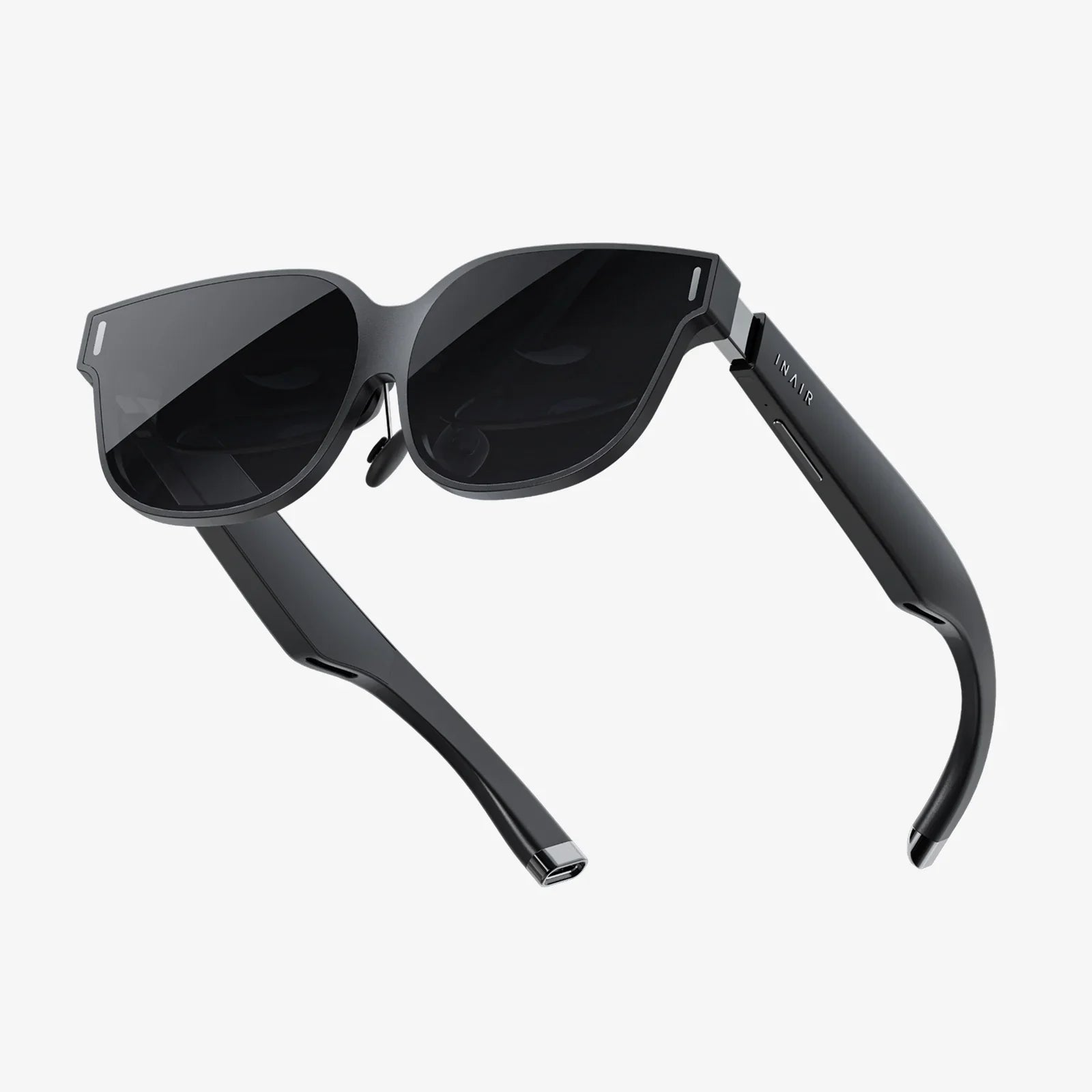
Imagine a world where your glasses do more than just correct your vision—they translate conversations in real-time, identify objects for you, and offer a seamless layer of digital information over the real world. This isn't science fiction; it's the reality available today through the purchase of prescription AI glasses, a technological leap that is fundamentally changing how we see and interact with our environment. The journey to acquiring these advanced devices is both exciting and complex, requiring a blend of optical expertise and tech-savvy decision-making. This guide will navigate you through every critical step, from understanding the groundbreaking technology to finally placing your order for a pair that feels like it's from the future.
The Evolution of Eyewear: From Simple Lenses to Smart Vision
Eyewear has come a long way from its humble beginnings as mere vision correctors. For centuries, glasses were passive tools, their sole purpose to focus light accurately onto the retina. Then came transitions, anti-reflective coatings, and blue light filtering—incremental improvements that added functionality. The true revolution, however, began with the miniaturization of computing power and the development of augmented reality (AR) platforms. This convergence birthed a new category: smart glasses. Early iterations were often bulky, expensive, and lacked integration with prescription lenses, limiting their appeal. Today, the market has matured significantly. Modern prescription AI glasses are sleek, powerful, and designed first and foremost as high-quality optical devices, with the artificial intelligence capabilities seamlessly integrated. They represent the pinnacle of this evolution, offering a symbiotic relationship between essential vision correction and transformative digital assistance.
Demystifying the Technology: What Makes Them "AI"?
At their core, prescription AI glasses are sophisticated wearable computers. The "AI" or artificial intelligence component refers to the onboard software and hardware that can process information, learn from user interactions, and perform tasks autonomously. Key technological elements include:
- Micro-displays and Optical Engines: Tiny, high-resolution displays project images onto specially designed lenses, which then reflect this information into your eyes. This creates the illusion that digital text, images, or videos are hovering in your natural field of view.
- Integrated Sensors: An array of sensors—including cameras, microphones, accelerometers, and gyroscopes—acts as the eyes and ears of the device. They continuously gather data about your surroundings, your movements, and your voice commands.
- Onboard Processing: A miniaturized central processing unit (CPU) and often a specialized neural processing unit (NPU) handle the immense computational load required for tasks like real-time language translation, object recognition, and spatial mapping.
- Connectivity: Bluetooth and Wi-Fi connect the glasses to your smartphone, acting as a conduit for data, updates, and more complex processing that might be offloaded to your phone.
- Voice and Gesture Control: Advanced AI algorithms interpret your voice commands and even subtle gestures, allowing for touch-free interaction, which is crucial for accessibility and convenience.
This combination allows the glasses to understand context. They don't just hear words; they understand commands. They don't just see a building; they can tell you its history or its operating hours. This contextual awareness is the true power of AI in this form factor.
A World of Possibilities: Key Features and Capabilities
The feature set of prescription AI glasses is vast and continually expanding through software updates. For many users, these features solve real-world problems and enhance daily life.
- Real-Time Transcription and Translation: Imagine traveling in a foreign country and having every sign and conversation translated instantly in your line of sight. Or as a tool for those with hearing impairments, providing live captions of every spoken word during a meeting or social gathering.
- Visual Assistance and Object Identification: Point your gaze at a landmark, and its name and history pop up. Struggling to find your gate in a busy airport? Directional arrows can overlay your path. For the visually impaired, this technology can audibly describe scenes, read text aloud, and identify products on a shelf.
- Hands-Free Information and Navigation: Get turn-by-step directions without looking down at your phone, check your calendar during a walk, or control your smart home devices with a simple voice command—all while keeping your eyes on the world around you.
- Photography and Videography: Capture your perspective hands-free, perfect for documenting repairs, creating first-person content, or simply saving a memory without interrupting the moment by pulling out a phone.
- Fitness and Health Metrics: For the health-conscious, some models can overlay workout stats, heart rate, or pacing information directly into their view during a run or gym session.
The Crucial First Step: The Comprehensive Eye Exam
Before you even browse models or features, your journey must begin in an examination room. A comprehensive eye exam is non-negotiable. This is not just about getting an updated prescription; it's a critical health check. An eye care professional will:
- Determine your precise prescription for distance, intermediate (computer), and near vision.
- Measure your Pupillary Distance (PD) with high accuracy, a crucial metric for aligning the digital display with your pupils.
- Assess your eye health, checking for conditions like glaucoma, cataracts, or macular degeneration that could affect your suitability for these devices or your visual experience with them.
- Discuss your lifestyle needs. Do you drive often? Work long hours on a computer? This consultation will help determine the best lens materials and designs for you.
Walking out of your appointment with a current, valid prescription is your key to the next phase. Do not rely on an old prescription, as your vision can change subtly year-to-year.
Navigating the Purchase Process: A Step-by-Step Guide
Acquiring prescription AI glasses is a more involved process than buying standard frames. Here’s how to approach it methodically.
Step 1: Research and Model Selection
Start by researching the available models. Compare their feature sets, battery life, design aesthetics, and compatibility with your smartphone's operating system. Pay close attention to the field of view of the display and the overall form factor—some prioritize a minimalist look, while others are more explicitly tech-forward. Read reviews from both tech critics and long-term users to understand real-world performance and potential drawbacks.
Step 2: Understanding Prescription Integration
This is the most technical part of the purchase. Not all AI glasses frames can accommodate all prescriptions. High powers, strong astigmatism, or progressive lenses require specific frame considerations. You must ensure the model you choose can be fitted with your specific prescription lenses. This often involves consulting directly with the seller or a certified optician familiar with the product. They will confirm if your prescription falls within the "modifiable range" for that frame.
Step 3: Choosing Your Lenses
Your choice of lenses is as important as the frame itself. You will need to select:
- Lens Material: High-index plastics are often recommended for stronger prescriptions as they are thinner and lighter.
- Lens Design: Single-vision, bifocals, or progressives? Your choice will be dictated by your prescription and visual needs.
- Coatings: Absolutely invest in anti-reflective coating to minimize glare from both the external environment and the internal display. Consider blue light filtering, scratch-resistant coating, and photochromic (transition) lenses if available and suitable for the model.
Step 4: The Ordering Platform
Purchases are typically made through dedicated online platforms. The process will walk you through:
- Selecting your frame model and color.
- Entering your prescription details exactly as they appear on your prescription form. Double-check every number, especially sphere (SPH), cylinder (CYL), axis, and Add power.
- Entering your accurately measured Pupillary Distance (PD).
- Selecting your chosen lens options and coatings.
Accuracy here is paramount. An error in entering your PD by just a few millimeters can lead to eye strain, headaches, and a poor visual experience.
Step 5: Fitting and Adjustment
Once your custom-made glasses arrive, a professional fitting is highly advisable. An optician can adjust the nose pads and temples to ensure a secure and comfortable fit. The positioning of the frame on your face is critical for the AI components to work correctly; the cameras and sensors must be aligned properly for optimal performance.
Considering Privacy, Cost, and the Future
With a device that has cameras and microphones always on your face, privacy is a legitimate concern. Reputable manufacturers build privacy into their products with features like physical camera shutters, LED indicators that show when recording is active, and clear data policies explaining what information is processed on the device versus sent to the cloud. It is imperative to review these policies thoroughly before purchasing.
Cost is another significant factor. Prescription AI glasses represent a premium product, combining advanced optics with cutting-edge technology. The investment is substantial, but for many, the enhancement to daily productivity, accessibility, and connectivity justifies the price. View them as a long-term computing and vision platform.
The technology is still young, and future iterations promise even slimmer designs, longer battery life, more immersive displays, and ever-more-capable AI. Purchasing now means getting in on the ground floor of a transformative technology.
The decision to purchase prescription AI glasses is an investment in a new way of perceiving the world—one where information is effortlessly accessible and your surroundings become more interactive and understandable. It’s a fusion of medical necessity and technological desire, a tool that empowers you to see better and do more. By carefully navigating the process, from the essential eye exam to the final precise fitting, you unlock a future where your vision is not just corrected, but intelligently augmented, forever changing your relationship with the world right before your eyes.
Share:
Seeing AI Glasses: A New Vision for Accessibility and Human Connection
Augmented Reality Technology Market: Reshaping Reality and Redefining Global Industries