


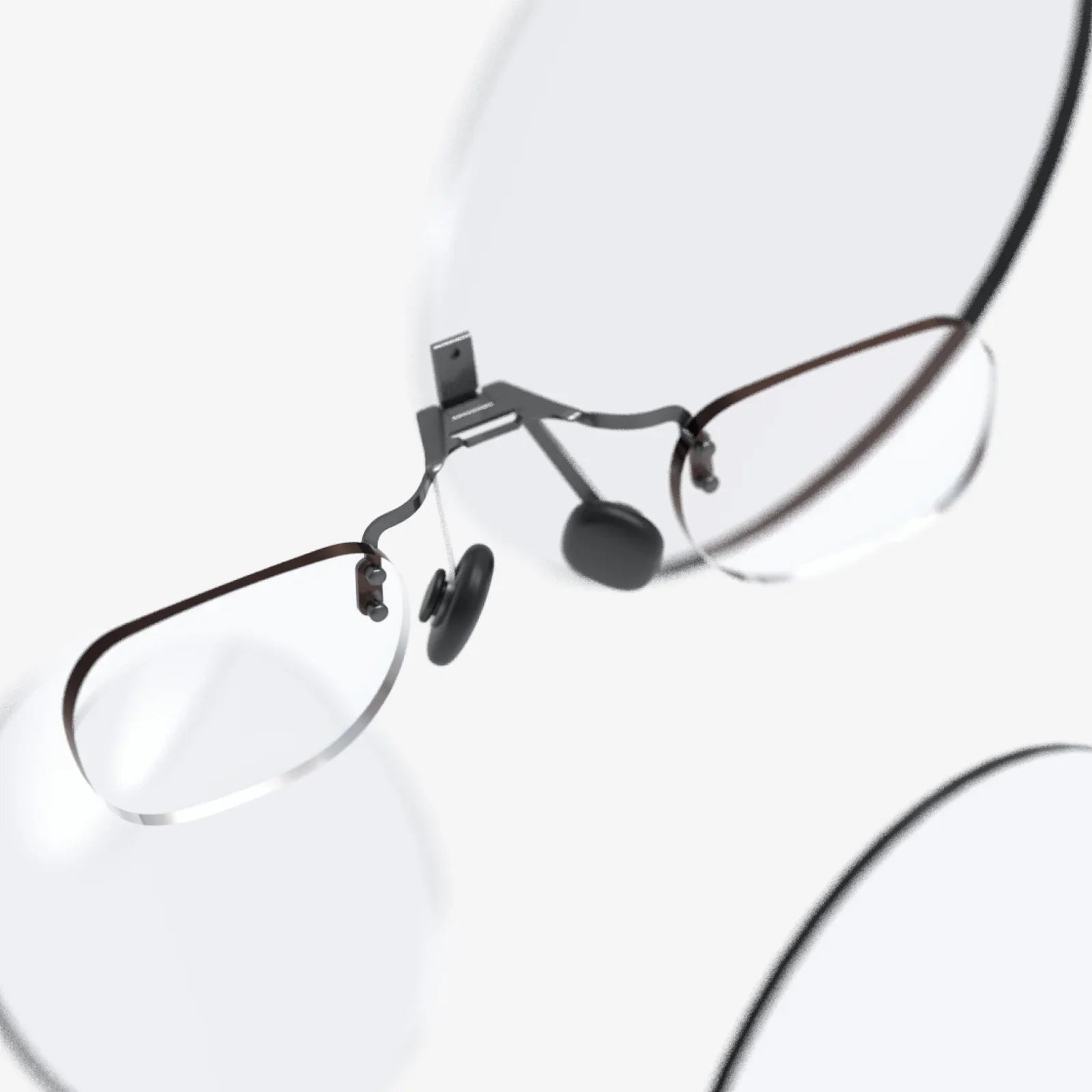
Imagine a world where a simple pair of glasses could describe the expression on a loved one's face, read the menu at a restaurant, or identify the exact bus pulling up to the curb. For millions living with visual impairments, this is not a futuristic fantasy but an emerging reality, powered by a revolutionary class of wearable technology known as seeing AI glasses. This isn't about enhancing vision with magnification; it's about fundamentally redefining what it means to 'see' by harnessing the power of artificial intelligence to interpret and narrate the visual environment. The implications extend far beyond mere convenience, promising to dismantle barriers to independence and reshape the landscape of human experience and connection.
The Technological Architecture Behind the Scenes
At its core, the functionality of seeing AI glasses is a symphony of sophisticated technologies working in seamless concert. The hardware, discreetly integrated into a familiar eyeglass form factor, typically includes a high-resolution camera to capture the visual field, a robust processing unit to serve as the device's brain, and bone conduction speakers or discreet earpieces for private audio feedback. Sensors like accelerometers and gyroscopes provide spatial awareness, understanding the user's orientation and movement.
However, the true magic lies in the software and the artificial intelligence that drives it. This is where the raw visual data is transformed into meaningful information. The process involves several key AI domains:
- Computer Vision: This is the foundational technology that allows the system to identify and classify objects, people, and text within a captured image. Advanced algorithms can distinguish between a person, a dog, or a car, and can even detect more nuanced elements like colors and landmarks.
- Optical Character Recognition (OCR): A specialized subset of computer vision, OCR is dedicated to extracting text from images. This is what enables the glasses to read aloud anything from a newspaper headline to the ingredients on a food package, from a street sign to a computer screen.
- Facial Recognition and Analysis: More advanced systems can not only detect the presence of a person but also estimate their approximate age, gender, and, most importantly, their emotional state based on facial expressions. This capability is a game-changer for social interaction, providing crucial non-verbal cues that are otherwise missed.
- Natural Language Processing (NLP): NLP is used to structure the analyzed data into a coherent, natural-sounding spoken sentence. Instead of a robotic list of data points—'object: dog, breed: golden retriever, distance: five feet'—the system articulates, 'There is a golden retriever five feet in front of you.'
This entire pipeline, from image capture to audio description, often happens in near real-time, creating an experience that feels intuitive and immediate for the user.
Transforming Daily Life and Fostering Independence
The most immediate and profound impact of seeing AI glasses is on the day-to-day lives of individuals who are blind or have low vision. The technology acts as a constant, patient, and incredibly perceptive companion, empowering users with a level of independence that was previously difficult to achieve.
Consider the simple act of navigating a grocery store. Previously, this could be a frustrating exercise in reliance, requiring assistance to find specific items or check expiration dates. With seeing AI glasses, a user can now independently scan the aisles, hear the names of products, and even have a can of soup read aloud to confirm it's the right flavor. The glasses can identify currency denominations, removing the anxiety from financial transactions. They can describe the surroundings, noting obstacles, doorways, and empty chairs.
Beyond practical tasks, the technology empowers users in their professional lives. The ability to instantly read printed documents, whiteboards in meeting rooms, or data on a screen opens up new educational and career opportunities, levelling the playing field in many office environments. This empowerment directly challenges societal perceptions of disability, reframing visual impairment not as a limitation but as a different way of interacting with the world, one where technology provides a bridge.
The Social and Emotional Dimension: Restoring a Layer of Connection
Perhaps the most human-centric benefit of seeing AI glasses is their potential to enhance social connectivity. Human interaction is heavily reliant on non-verbal communication. A smile, a frown, a nod of agreement—these subtle cues form the subtext of our conversations. For those unable to see these cues, social situations can feel isolating and ambiguous.
Seeing AI glasses can act as a social interpreter. A quiet prompt describing who has entered the room and their general demeanor allows the user to engage more confidently. Knowing that a colleague is smiling or looks concerned provides critical context for a conversation. This technology can help identify friends and acquaintances in a crowd, restoring a sense of presence and engagement in group settings.
This extends to the most personal moments as well. The ability to 'see' family photos through detailed descriptions, or to witness a child's reaction to a gift through narrated emotion, adds a rich layer to personal relationships that many have had to live without. It’s a tool that doesn’t just describe the world, but helps to weave the user back into the social fabric of their community.
Navigating the Ethical and Practical Landscape
As with any powerful technology, especially one that involves constant data capture, the development and adoption of seeing AI glasses are not without significant challenges and ethical questions.
Privacy and Data Security: These devices, by their very nature, capture a continuous stream of visual data from the user's environment. This raises immediate concerns. Where is this data processed—on the device itself or on remote servers? How is it stored and who has access to it? The potential for misuse is considerable, necessitating robust, transparent, and encrypted data handling practices. Users must have absolute control over their data and clear understanding of its usage.
Social Etiquette and Dependence: New social norms must evolve around their use. Is it considered rude to wear glasses that can identify people in a private setting? How do we inform others that they are in the field of view of an AI-powered device? Furthermore, there is a valid concern about over-reliance on technology. Striking a balance between using the glasses as a powerful tool and maintaining other skills and methods of navigation is crucial.
Accessibility and the Digital Divide: Currently, advanced assistive technologies can be prohibitively expensive. There is a real risk that seeing AI glasses could become a tool only for the affluent, exacerbating the digital divide within the disability community. Ensuring affordability and advocating for coverage by healthcare providers and insurance companies is essential to prevent this technology from creating new inequalities.
The Future Horizon: What Lies Beyond Description?
The current generation of seeing AI glasses is impressive, but it merely scratches the surface of what's possible. The future trajectory of this technology points toward even more deeply integrated and intuitive systems.
We are moving toward glasses that offer proactive assistance, not just reactive description. Imagine glasses that learn your daily routines and preferences, offering navigational guidance before you even ask, or that can warn you of a freshly mopped floor or an unexpected step down. Integration with smart home systems could allow the glasses to identify and interact with appliances, turning the entire living space into an accessible environment.
Advancements in AI will lead to more nuanced and contextual understanding. The glasses will not just say, 'There is a person,' but might offer, 'Your neighbor, Sarah, is waving to you from across the street and looks like she wants to talk.' They could analyze a complex scene, like a busy town square, and prioritize the most relevant information for the user at that moment.
Furthermore, the underlying technology is poised to benefit a much wider audience. Tourists could receive real-time translations of signs and historical information. Warehouse workers could have inventory and picking lists hands-free. Mechanics could get visual overlays of complex wiring diagrams. The potential applications are boundless, transforming the glasses from a specialized assistive device into a universal tool for enhancing human capability.
The journey of seeing AI glasses is just beginning. They stand as a powerful testament to human ingenuity's capacity to solve profound challenges. This is more than technology; it's a new lens through which to experience life, offering not just information, but confidence, connection, and a restored sense of agency. The future is not about seeing differently, but about understanding the world in a whole new way.
Share:
AR VR Metaverse Developments 2025: The Year Digital and Physical Realities Converge
Prescription AI Glasses Purchase: Your Guide to the Future of Vision