


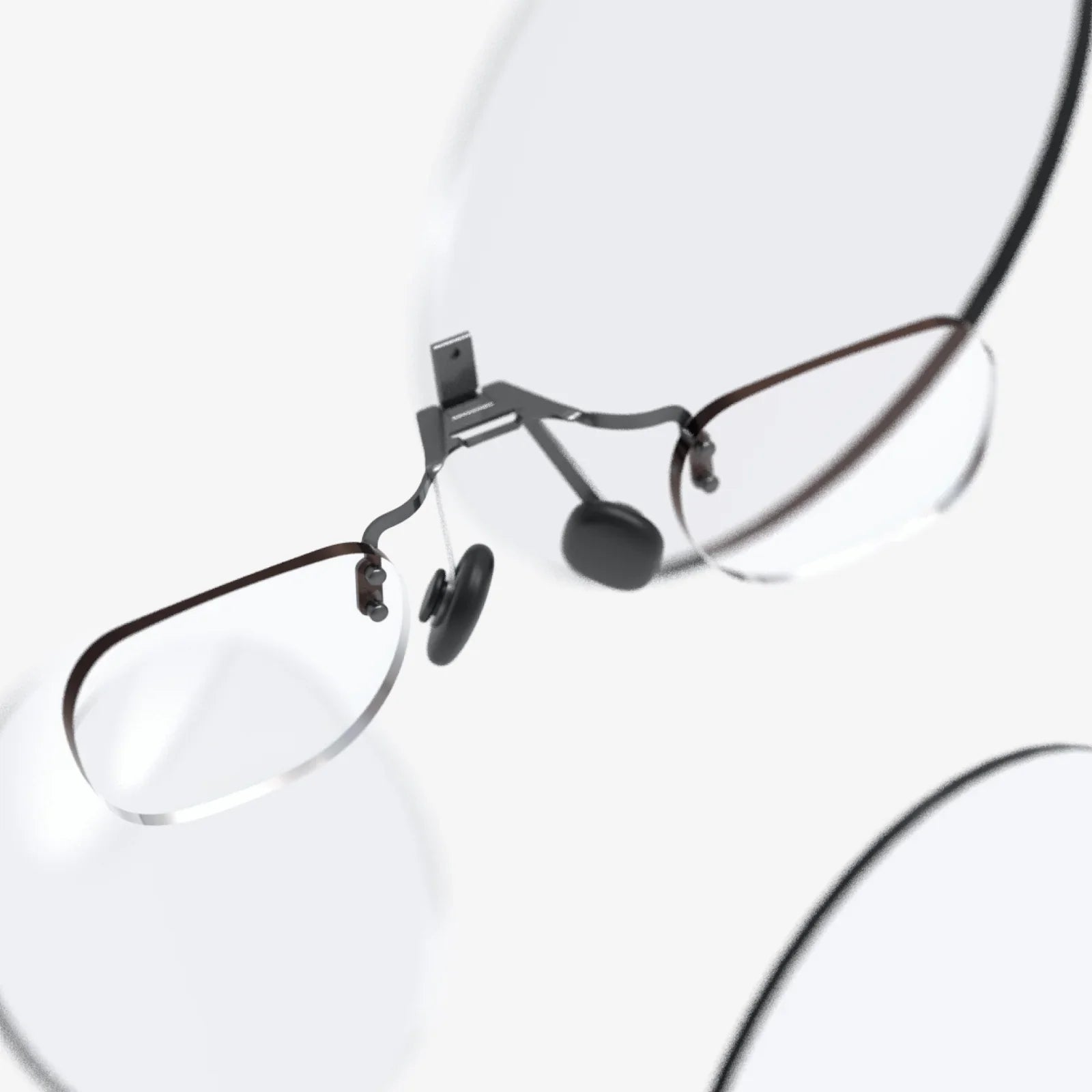
Imagine a world where digital information seamlessly overlays your physical reality, where instructions float above a complex engine, historical figures narrate their stories on city streets, and distant colleagues appear as lifelike holograms in your living room. This is the breathtaking promise of augmented reality glasses, a technology poised to fundamentally reshape how we work, play, and connect. Yet, for all the dazzling potential and futuristic allure, the path to this next computing paradigm is not a clear vista but a minefield of formidable challenges. The current generation of devices, while technologically impressive, grapples with a host of problems that range from simple physical discomfort to deep, philosophical questions about the nature of reality itself. The journey from niche gadget to ubiquitous tool is fraught with hurdles that developers, manufacturers, and society at large must overcome.
The Hardware Hurdle: Bulk, Battery, and the Burden of Wearability
The most immediate and tangible problems with augmented reality glasses are those of physical design and hardware limitations. For a device meant to be worn on the face for extended periods, the bar for comfort and convenience is extraordinarily high.
Form Factor and Comfort: The dream is a pair of sleek, lightweight glasses indistinguishable from standard eyewear. The current reality is often a bulky, front-heavy headset that can cause pressure on the nose and ears, leading to fatigue and discomfort during prolonged use. This "face-computer" problem involves an intricate dance of engineering, needing to pack powerful processors, multiple cameras and sensors, high-resolution displays, and audio systems into a minimally invasive frame. Achieving this without compromising on functionality or inducing user strain remains a primary obstacle.
Battery Life and Power Consumption: The computational demands of overlaying high-fidelity graphics onto the real world in real-time are immense. Constantly processing camera feeds, tracking user movement and the environment, and rendering complex digital objects are tasks that drain batteries at an alarming rate. Many current devices offer only a few hours of active use, tethered either to a bulky battery pack in a user's pocket or a power outlet. This severely limits mobility and practical application, creating a constant anxiety around power that disrupts the immersive experience.
Visual Fidelity and Field of View (FoV): A truly immersive AR experience requires digital objects to look solid, stable, and integrated within the environment. However, many devices suffer from a limited field of view—a small, postage-stamp-like window into the AR world—which constantly reminds the user they are looking through a device rather than at a blended reality. Other visual issues include latency (a lag between real-world movement and digital object response), low resolution leading to pixelated graphics, and challenges with brightness and contrast, making digital content difficult to see in various lighting conditions, especially bright sunlight.
The Software and Experience Quandary: Lag, Interaction, and the Digital Divide
Beyond the physical hardware, the software that powers these glasses and the user experiences they enable present another layer of complex problems.
User Interface (UI) and User Experience (UX): How does one intuitively interact with a interface that has no fixed screen? Traditional paradigms of mice, keyboards, and touchscreens fall away. Current solutions include hand-tracking, voice commands, and simple gesture controls, but each has its flaws. Voice control can be socially awkward or impractical in noisy environments. Hand gestures can be imprecise and lead to "gorilla arm" fatigue from holding limbs aloft. Developing intuitive, effortless, and socially acceptable interaction models is a critical unsolved problem.
Tracking and Registration Errors: The magic of AR relies on the device's ability to perfectly understand and map its environment. When this fails, the illusion shatters. Digital objects can drift, jitter, or be placed incorrectly in the physical space. This poor "registration" breaks immersion and can render practical applications like precise design or navigation useless. These errors are often caused by limitations in simultaneous localization and mapping (SLAM) algorithms, poor lighting conditions, or environments with few distinct visual features for the device to track.
The Killer App Conundrum: Beyond gaming and niche industrial applications, a compelling, mass-market "killer app" for AR glasses remains elusive. The technology is often a solution in search of a problem for the average consumer. Developers are still exploring what experiences are truly enhanced by a persistent, wearable AR display versus a smartphone or other device. Without a must-have application that demonstrates clear and undeniable value, consumer adoption will likely remain slow.
The Human and Social Dimension: Privacy, Safety, and the Erosion of Shared Reality
The most profound problems with augmented reality glasses are not technical, but human. They force us to confront difficult questions about privacy, social etiquette, safety, and the very fabric of human interaction.
Privacy and the Surveillance Panopticon: AR glasses are, by their very nature, surveillance devices. They feature always-on cameras and microphones, continuously scanning the user's environment. This raises monumental privacy concerns for both the wearer and, more critically, everyone around them. The potential for unauthorized recording, facial recognition, and data harvesting creates a chilling effect on public life. The concept of consent becomes blurred; how does one consent to being recorded by every AR glasses wearer they pass on the street? Establishing robust digital ethics, legal frameworks, and clear social norms around this is a societal challenge we are only beginning to grapple with.
Social Acceptance and the "Glasshole" Stigma: Early attempts at consumer AR glasses were met with significant social resistance. Wearers were perceived as rude, distracted, or, worse, as covertly recording conversations. The term "Glasshole" entered the lexicon, describing an oblivious and socially intrusive user. Overcoming this stigma requires not only more socially transparent design—like obvious recording indicators—but also a gradual cultural shift in what is considered acceptable behavior in shared spaces.
Safety and Distraction: Wearing a device that overlays distracting digital content onto the real world introduces significant safety risks. Using AR glasses while walking down a street, cycling, or—most dangerously—driving a car, could lead to catastrophic inattention. Mitigating this requires advanced contextual awareness from the software to suppress notifications during critical tasks, but perfecting this is incredibly difficult. The line between useful information and dangerous distraction is perilously thin.
Psychological and Health Impacts:
The long-term effects of persistently mediating reality through a digital lens are unknown. Potential issues include: Solving these multifaceted problems requires a concerted effort across multiple domains. Technological innovation will gradually solve the hardware issues; processors will become more efficient, batteries more dense, and displays more advanced. Breakthroughs in materials science and optics will lead to slimmer, lighter designs. The deeper challenges demand a broader approach. Developers must focus on creating experiences that offer genuine utility and delight, moving beyond gimmicks. Policymakers, technologists, and ethicists must engage in open dialogue to establish rules of the road that protect individual privacy without stifling innovation. This could include regulations on data collection, mandatory transparency features, and clear laws against malicious use. Most importantly, the public must be part of the conversation. The adoption of such a transformative technology cannot be a foregone conclusion dictated solely by the market. It requires public awareness, debate, and the establishment of social contracts that dictate how we use this powerful tool to enhance, rather than diminish, our humanity. The problems with augmented reality glasses are not a sign of impending failure, but rather the growing pains of a technology that holds immense power and potential. They are a checklist of challenges that must be acknowledged and addressed head-on. By confronting these issues with honesty, creativity, and a strong ethical compass, we can steer the development of AR toward a future where it amplifies our human experience, connects us more deeply to our world and each other, and ultimately, remains a tool that serves humanity, and not the other way around. The true augmented future isn't just about what we can build; it's about whether we can build it wisely.
The Road Ahead: Navigating a Path Forward
Share:
Latest VR Goggles: A Deep Dive into the Next Generation of Immersive Technology
Latest VR Goggles: A Deep Dive into the Next Generation of Immersive Technology