


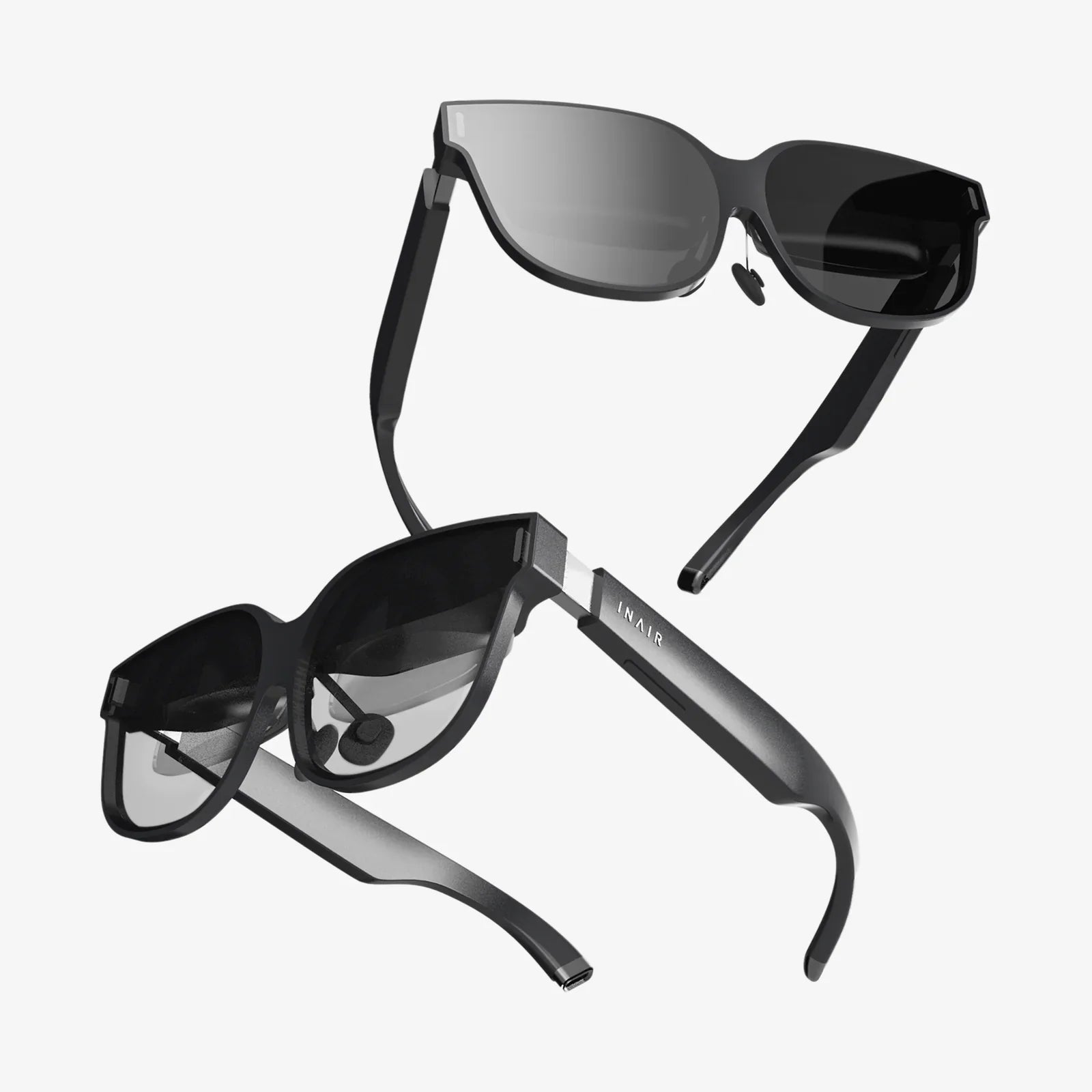
Imagine a world where the line between the digital and the physical not only blurs but collaborates, enhancing everything from how we learn and work to how we shop and heal. This is no longer the realm of science fiction; it is the burgeoning reality powered by augmented reality (AR). Unlike its fully immersive cousin, virtual reality, AR doesn't seek to replace our world but to enrich it, layering actionable data, interactive graphics, and digital information directly onto our field of view. The pros of augmented reality are not merely incremental improvements; they represent a fundamental shift in human-computer interaction, promising to unlock unprecedented levels of efficiency, understanding, and connection. The potential is staggering, poised to touch nearly every facet of our lives, and we are only just beginning to scratch the surface of its transformative power.
Revolutionizing Education and Training
One of the most profound pros of augmented reality lies in its capacity to democratize and revolutionize education. Traditional learning methods often rely on abstract concepts and two-dimensional representations, which can be challenging for many students to grasp. AR shatters these limitations, bringing textbooks and lessons to life.
Imagine a medical student peering at a textbook image of the human heart. With an AR-enabled device, that same student can now project a beating, three-dimensional hologram of the heart onto their desk. They can rotate it, zoom in to examine valves and chambers, and even watch a simulation of blood flow—all without setting foot in a lab. This kinesthetic, visual learning leads to dramatically improved knowledge retention and a deeper, more intuitive understanding of complex subjects.
This extends far beyond the classroom. In corporate and industrial training, AR is a game-changer. Technicians learning to repair a complex piece of machinery can wear AR glasses that overlay step-by-step instructions, highlight specific components with arrows, and display torque specifications directly onto the equipment itself. This see-what-I-see guidance reduces errors, slashes training time, and empowers even novice workers to perform complex tasks with expert-level precision, all while keeping their hands free and their focus on the physical task.
Transforming the Retail and Shopping Experience
The retail sector is undergoing a seismic shift, and augmented reality is at the forefront, effectively solving the inherent limitations of e-commerce. The biggest hurdle of online shopping has always been the inability to try before you buy. AR elegantly bridges this gap, allowing consumers to visualize products in their own space and on their own person with stunning accuracy.
Furniture shoppers can project a virtual sofa into their living room to check for size, style, and color match against their existing decor. Beauty enthusiasts can use AR filters to try on countless shades of lipstick or eyeshadow instantly, eliminating the guesswork. This capability drastically reduces purchase uncertainty and buyer's remorse, leading to higher consumer confidence and significantly lower return rates for retailers. It transforms shopping from a transactional experience into an engaging, interactive, and personalized journey, fostering a stronger connection between the consumer and the product.
Enhancing Healthcare and Surgical Precision
In the high-stakes world of healthcare, the pros of augmented reality can be a matter of life and death. AR is providing medical professionals with superhuman abilities, granting them x-ray vision and access to critical data without ever looking away from the patient.
Surgeons can use AR headsets to overlay 3D reconstructions of a patient's CT or MRI scans directly onto their body during procedures. This allows for incredibly precise navigation, helping to locate tumors, avoid critical nerves, and plan incision paths with sub-millimeter accuracy. For vein placement, AR projectors can map a patient's vasculature directly onto their skin, making it vastly easier to find a vein on the first attempt, reducing patient discomfort and improving outcomes.
Furthermore, AR is revolutionizing patient education and physiotherapy. A doctor can use an AR model to explain a diagnosis or surgical procedure in a way that is immediately understandable to the patient. In rehabilitation, AR games and exercises can motivate patients to complete their repetitive movements by turning them into an engaging, goal-oriented activity, thereby improving adherence and recovery times.
Driving Industrial Efficiency and Maintenance
The industrial and manufacturing sectors are reaping immense benefits from AR integration, primarily through massive gains in efficiency, accuracy, and safety. The concept of the digital twin—a virtual replica of a physical asset—is supercharged when combined with AR.
Field service engineers dispatched to repair industrial equipment can wear AR glasses that recognize the machine via a camera. Instantly, a wealth of information is overlaid: service history, real-time sensor data, schematics, and highlighted components that may need attention. An expert located thousands of miles away can see the engineer's view and annotate the real world with arrows and notes, providing remote guidance as if they were standing side-by-side. This minimizes downtime, reduces the need for specialist travel, and ensures repairs are done correctly the first time.
In complex assembly lines, AR can project assembly instructions directly onto the workbench, showing workers exactly which part goes where and in what sequence, reducing errors and accelerating production rates. For warehouse logistics, AR can visually show pickers the most efficient route and highlight the exact shelf and bin for an item, supercharging fulfillment operations.
Creating Immersive Entertainment and New Art Forms
Beyond practical applications, one of the most publicly visible pros of augmented reality is its power to create entirely new forms of entertainment and artistic expression. AR turns the entire world into a potential playground or canvas.
The gaming industry has been fundamentally altered by AR, which encourages physical movement, exploration of real-world locations, and social interaction in ways traditional video games cannot. Players are compelled to go outside, explore their cities, and collaborate with others, blending fantasy and reality into a cohesive experience.
For artists and storytellers, AR offers a revolutionary medium. Digital sculptures can be placed in public parks for everyone to view through their devices. Historical tours can be transformed, allowing users to point their phone at a ruin and see a reconstructed castle teeming with animated life. Live sports broadcasts can overlay real-time statistics, player profiles, and first-down lines directly onto the field of play, enriching the viewing experience for fans at home. This fusion of digital art with our physical environment creates a powerful new layer of cultural and experiential storytelling.
Improving Navigation and Spatial Awareness
AR is set to make the humble map obsolete, replacing it with intuitive, visual guidance integrated directly into our perception of the world. Instead of glancing down at a phone screen with a blinking blue dot, imagine looking through your windshield or smart glasses and seeing giant, floating arrows painted onto the road itself, guiding you to your next turn.
This technology is already being piloted in navigation apps and is poised to become standard in next-generation vehicle heads-up displays (HUDs). It reduces driver distraction, as directions are seamlessly part of the environment rather than on a separate screen. Inside large, complex buildings like airports, hospitals, or university campuses, AR can project a path on the floor, leading you directly to your gate, a specific department, or a professor's office, eliminating confusion and saving precious time.
Fostering Remote Collaboration and Communication
In an increasingly global and remote-work world, AR offers a significant leap beyond video conferencing. It enables true telepresence and contextual collaboration. Rather than just seeing a colleague's face on a screen, teams can interact with shared 3D models or physical objects as if they are in the same room.
Architects in different countries can examine and annotate the same holographic building model simultaneously. A factory manager can give a virtual tour of the production line to off-site executives, complete with overlaid performance data. For personal communication, AR could allow families to share not just video, but to play a virtual board game on their real table together, creating a powerful sense of shared presence and activity that flat screens cannot replicate. This breaks down geographical barriers and enables a richer, more productive form of remote interaction.
The journey of augmented reality is just beginning, but its trajectory is clear: it is a foundational technology moving from novelty to necessity. The pros of augmented reality—enhanced learning, safer procedures, streamlined workflows, and deeper entertainment—paint a picture of a future where our digital tools don't distract us from the real world but help us understand it, manage it, and appreciate it more deeply. The gap between information and action is closing, and in that space, AR is building a bridge to a more efficient, creative, and connected human experience. The world is about to get a major upgrade, and it will change how we see everything, forever.
Share:
Augmented Reality Marketing Definition: The Ultimate Guide to Blending Digital and Physical Realms for Unforgettable Campaigns
Best AI Glasses for Everyday Use 2025: The Ultimate Guide to Smart Eyewear