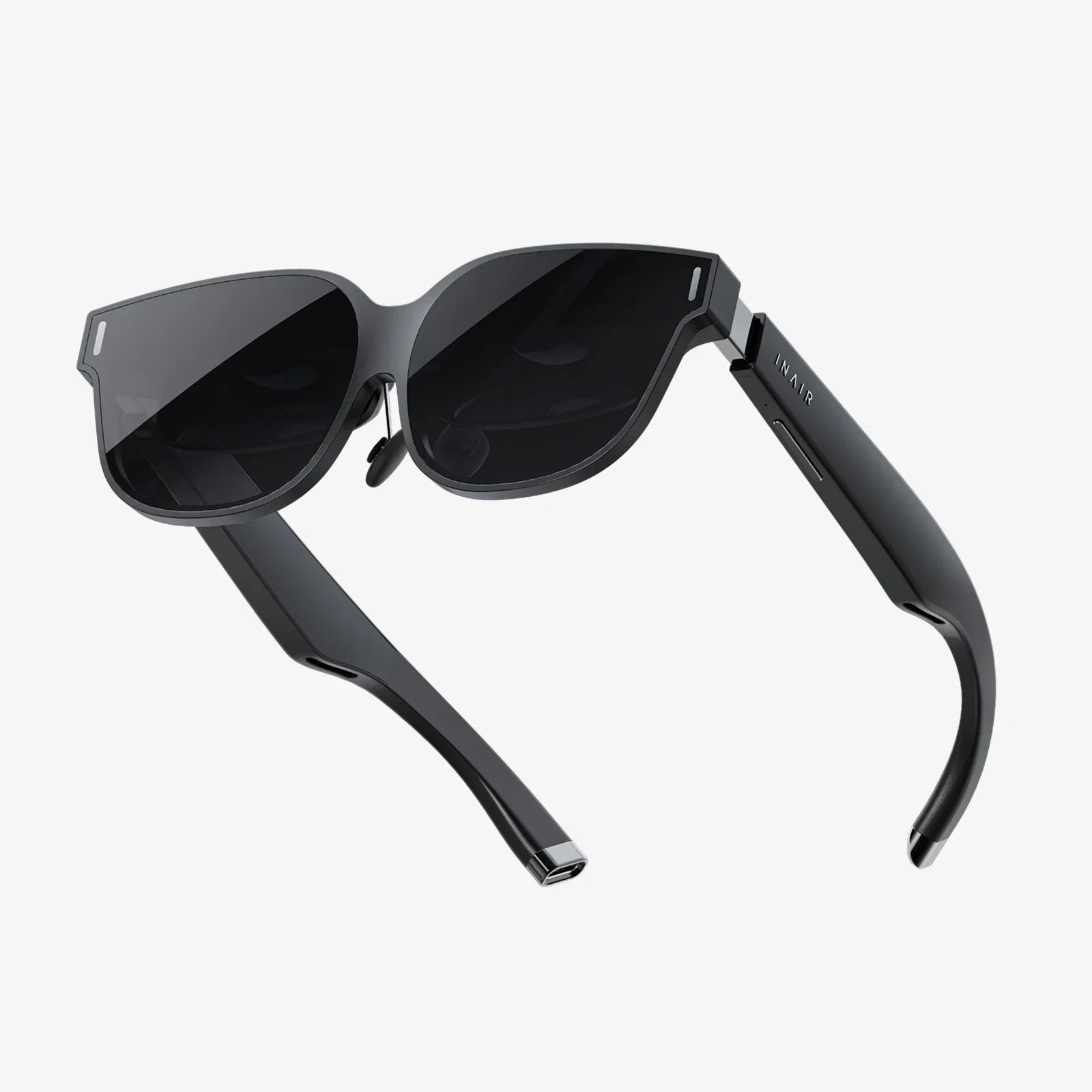
Imagine a world where the line between the digital and the physical isn't just blurred—it's elegantly and seamlessly woven together. Information doesn't live on a screen you hold in your hand; it lives in the world around you, accessible with a glance, a gesture, or a spoken word. This isn't a distant science fiction fantasy; it's the emerging paradigm of reality augmentation, a technological revolution poised to become as fundamental to our daily lives as the internet itself. It promises to unlock human potential, redefine entire industries, and change how we see, well, everything. But beneath the surface of this dazzling potential lie profound questions about privacy, perception, and what it means to be human in an increasingly mediated world. The future is not just arriving; it's being layered over our present, and understanding it is the first step to shaping it.
Beyond the Buzzword: Defining the Augmented Spectrum
Before we can explore its impact, we must define our terms. Reality augmentation is often mistakenly used interchangeably with its more famous cousin, virtual reality (VR). The distinction, however, is critical. Virtual reality aims to replace your reality entirely, transporting you to a fully digital environment. Reality augmentation, by contrast, aims to enhance your existing reality by superimposing digital information—images, text, data, and 3D models—onto your view of the physical world.
This technological spectrum can be broadly categorized, though the boundaries are increasingly fluid:
-
Marker-Based Augmentation: The earliest form, which uses a specific visual trigger (a QR code, a symbol, or an image) to anchor and display digital content. Point your device's camera at the marker, and a 3D model appears on your screen.
-
Markerless (or Location-Based) Augmentation: This more advanced form uses GPS, accelerometers, and digital compasses to pin digital content to a specific geographic location. Imagine pointing your phone at a historic street and seeing a ghostly image of what it looked like a century ago, or seeing Yelp reviews float above a restaurant's doorway as you walk down the street.
-
Projection-Based Augmentation: This method projects digital light directly onto physical surfaces, turning any wall or table into an interactive display. It can be used for immersive art installations or to create touch-sensitive controls on a blank surface.
-
Superimposition-Based Augmentation: This sophisticated approach replaces the original view of an object with an augmented one. For instance, a surgeon might look at a patient and see a real-time, augmented overlay of their X-rays directly on their body, or a mechanic might see the internal components of an engine simply by looking at its casing.
The ultimate expression of this technology is wearable, transparent technology—smart glasses or eventually contact lenses—that project information directly onto your retina, making the digital layer a permanent, yet unobtrusive, part of your field of vision. This is the endpoint where the technology fades into the background, and the augmented experience becomes primary.
The Engine Room: How Reality Augmentation Actually Works
The magic of overlaying digital content onto the real world is a complex dance of hardware and software. It requires a powerful synergy of components:
-
Sensors: Cameras act as the eyes, capturing the real-world environment. But they are joined by a host of other sensors: LiDAR scanners to map depth and distance, accelerometers and gyroscopes to understand orientation and movement, GPS for macro-location, and magnetometers (compasses) for direction.
-
Processing: The raw data from these sensors is a chaotic mess. Powerful processors, increasingly aided by dedicated AI chips, must make sense of it all in real-time. This involves simultaneous localization and mapping (SLAM)—creating a map of an unknown environment while simultaneously tracking the user's location within it. This allows the digital content to stay locked in place, whether it's on a table or a mountain.
-
Display: This is the final output. It can be a screen on a smartphone or tablet (the most common entry point today), but the goal is more immersive displays like optical head-mounted displays in smart glasses. These use waveguides or other systems to project light into the user's eye, making holograms appear to coexist with physical objects.
-
Software and Connectivity: The brain of the operation is the software platform and the AI algorithms that power object recognition, spatial understanding, and gesture tracking. This software is often connected to the cloud, allowing for vast databases of information to be accessed instantly and for complex computations to be offloaded from the wearable device itself.
It is the rapid advancement in miniaturizing these components, coupled with leaps in artificial intelligence and 5G/6G connectivity for low-latency data transfer, that is finally making seamless, wearable reality augmentation a practical possibility.
Transforming the World of Work: The Industrial Metaverse
While consumer applications often grab headlines, the most immediate and revolutionary impact of reality augmentation is happening in the industrial and enterprise sectors. Here, it's not about entertainment; it's about efficiency, accuracy, and safety, delivering a clear return on investment.
-
Manufacturing and Field Service: Technicians working on complex machinery can have digital schematics, torque specifications, and step-by-step instructions overlaid directly onto the equipment they are repairing. This reduces errors, slashes training time, and allows less experienced workers to perform complex tasks with expert guidance. A remote expert can see what the on-site technician sees and draw annotations directly into their field of view, enabling collaborative problem-solving from across the globe.
-
Healthcare and Surgery: This is one of the most promising fields. Medical students can practice procedures on augmented anatomy. Surgeons can use AR overlays to visualize critical structures like blood vessels and tumors beneath the tissue, improving precision and outcomes. It can also revolutionize patient education, allowing doctors to show 3D models of conditions and procedures, making complex medical information intuitively understandable.
-
Logistics and Warehousing: In massive distribution centers, workers equipped with smart glasses can have the most efficient picking route displayed before them. Digital arrows can guide them to the exact shelf, and the system can verify the correct item is selected by scanning it, dramatically reducing time and errors in order fulfillment.
-
Architecture, Engineering, and Construction (AEC): Architects and clients can walk through a full-scale, holographic model of a building before a single brick is laid, experiencing the space and making changes in real-time. On the construction site, workers can project BIM (Building Information Modeling) data onto the unfinished structure, ensuring everything is built to exact specifications and preventing costly misalignments.
In these contexts, reality augmentation acts as a cognitive prosthetic, amplifying human intelligence and skill by putting the right information in the right place at the right time.
The Social and Consumer Frontier: A New Layer of Life
The migration of this technology into our social and consumer lives is slower but inevitable. It promises to change how we learn, play, shop, and connect.
-
Education and Training: Textbooks become living, interactive experiences. A student studying astronomy can point their device at the night sky and have constellations, planets, and satellites identified and explained. History lessons can come alive with reenactments happening on the classroom floor. Learning becomes experiential and contextual.
-
Retail and Commerce: The try-before-you-buy concept is revolutionized. You can see how a new sofa would look in your living room, how a pair of glasses fits your face, or how a car's dashboard feels before visiting a dealership. This layer of information reduces purchase anxiety and bridges the gap between online and physical shopping.
-
Navigation and Tourism: The end of the frustrating phone-held-out-in-front-of-you walk is near. Directional arrows can be painted onto the sidewalk, and points of interest can be highlighted as you explore a new city. Historical figures could offer guided tours, and restaurant menus could translate themselves as you look at them.
-
Social Connection and Entertainment: Filters and lenses on social media are a primitive, yet wildly popular, form of AR. The next step is persistent, shared experiences. Friends could leave digital notes or drawings for each other in specific locations, or collaborative games could turn entire city blocks into playing fields, creating a shared digital landscape over our own.
The Flip Side of the Lens: Ethical and Societal Challenges
This powerful technology does not arrive without significant risks and challenges. To embrace its potential, we must proactively address its pitfalls.
-
The Privacy Paradox: For reality augmentation to work, it must see what you see. This means cameras and sensors are constantly capturing your environment, which may include unaware bystanders. The potential for mass surveillance, facial recognition on a societal scale, and the erosion of public anonymity is staggering. The concept of a "right to not be augmented" will become a critical legal and ethical debate.
-
Data Ownership and Security: The data generated by our interactions with the augmented world—where we go, what we look at, how long we look at it—will be incredibly valuable. Who owns this data? The platform provider, the developer, or the user? Securing this intimate data stream from breaches is paramount.
-
Reality Dilution and Addiction: If we can constantly customize and filter our reality to be more entertaining, pleasing, or affirming, what happens to our shared sense of objective reality? Could we see a rise in a new form of digital addiction, where the augmented world is more appealing than the real one? The psychological impact of a perpetually mediated existence is unknown.
-
The Digital Divide 2.0: This technology could create a new class of information haves and have-nots. Those who can afford the best hardware and software will have access to a layer of knowledge and efficiency that others do not, potentially exacerbating social and economic inequalities.
-
Physical Safety and Cyber-Physical Risks: A distracting notification appearing in a user's field of vision at the wrong moment could have dire consequences while driving or operating machinery. Furthermore, if our reality is dependent on digital layers, what happens if they are hacked? Malicious actors could alter navigation signs, hide real hazards, or provide incorrect instructions, creating real-world danger from digital attacks.
Designing the Future We Want to Inhabit
Navigating these challenges requires a conscious effort from technologists, policymakers, and society at large. It cannot be an afterthought. The core principles of this new era must be built on:
-
Human-Centered Design: The technology must serve people, not the other way around. It should augment human abilities without replacing human connection or overwhelming our senses. Interfaces need to be intuitive, respectful, and non-intrusive.
-
Ethical Frameworks and Regulation: We need new laws and norms established before the technology becomes ubiquitous. This includes clear rules on data privacy, digital consent, and the limits of augmentation in public spaces. The European Union's AI Act is an early example of attempting to set guardrails for powerful technologies.
-
Digital Literacy and Critical Thinking: As citizens of an augmented world, we will need a new kind of literacy—the ability to critically assess digital information, understand how our data is being used, and recognize when our perception is being manipulated.
The goal is not to stop progress but to guide it. The technology itself is neutral; its value is determined by how we choose to use it.
The quiet hum of reality augmentation is already here, buzzing in our pockets and on the edges of our professional lives. It’s the preview of a world where knowledge is contextual, work is superpowered, and our environment is a dynamic canvas for information and imagination. But this new layer of reality is a double-edged sword, offering unparalleled utility at the potential cost of our privacy and a shared sense of what is real. The path forward isn't about rejecting this evolution, but about engaging with it critically and creatively. The question is no longer if this future will arrive, but what we will build within it. The power to design a future that enhances our humanity, rather than diminishes it, rests not in the code, but in our collective hands. The next chapter of human experience is being written not on a page, but all around us, and we all have a role to play in its story.