


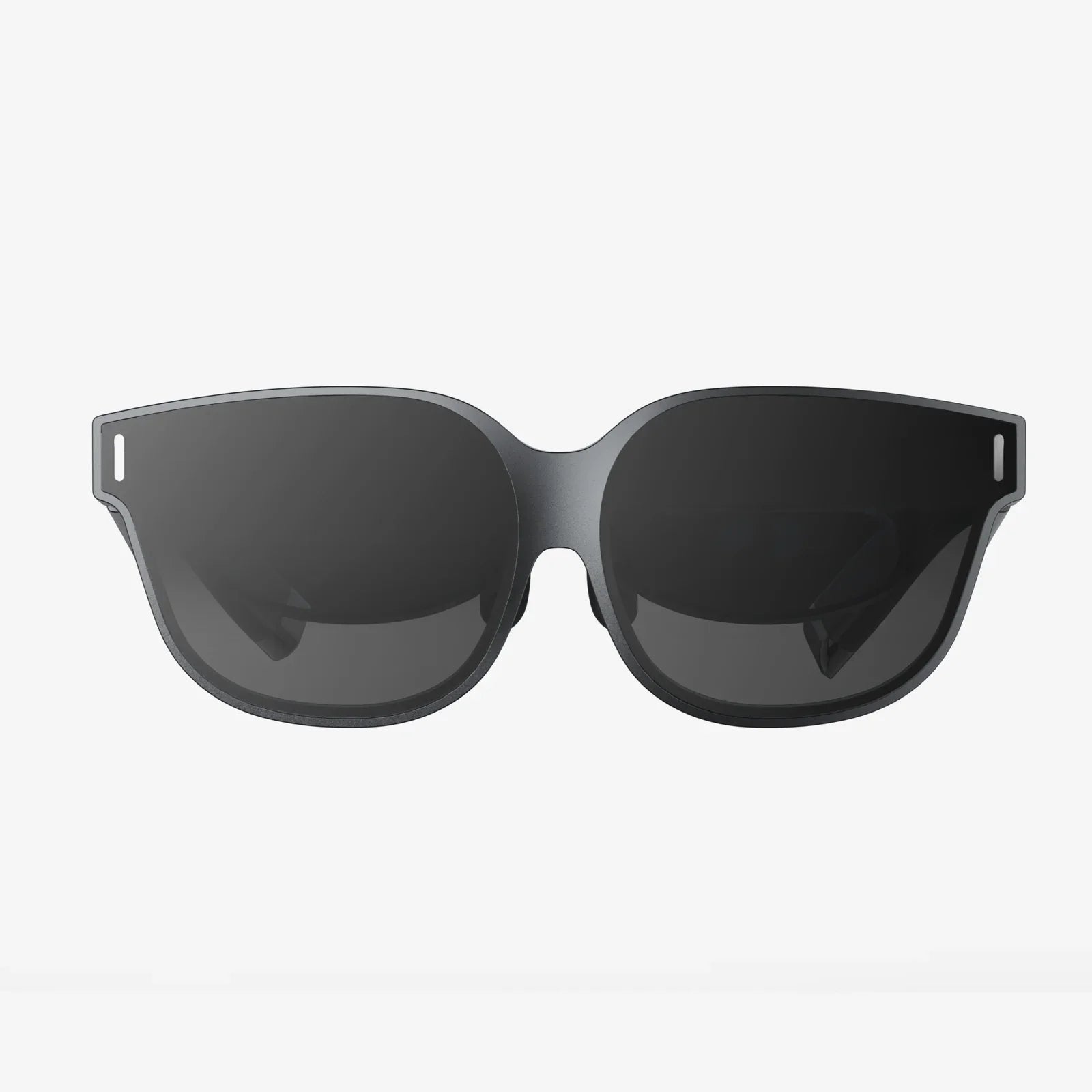
Imagine a world where information floats before your eyes, where digital assistants respond to a whisper, and the line between the physical and digital realms seamlessly blurs. This isn't a scene from a science fiction film; it's the burgeoning reality promised by a revolutionary category of wearable technology sitting right on the bridge of your nose. But if you've tried to dive into this futuristic market, you've likely been met with a bewildering array of names, acronyms, and marketing jargon. So, what are these incredible devices actually called? The answer is more nuanced than a single branded product, unfolding as a fascinating spectrum of technological ambition.
Decoding the Terminology: More Than Just a Name
The overarching term that encompasses this entire category is smart glasses. This is the broad, catch-all phrase, much like "smartphone" is for mobile devices. It simply denotes eyewear that incorporates computational technology, offering functionality beyond mere vision correction or sun protection. However, beneath this umbrella term, several more specific classifications have emerged, each describing a different approach to integrating technology with our vision.
Augmented Reality (AR) Glasses: The Gold Standard
When most people dream of the future of wearable tech, they are envisioning Augmented Reality (AR) Glasses. These are considered the pinnacle of smart eyewear design. Unlike Virtual Reality (VR), which completely immerses you in a digital environment, AR overlays digital information—images, text, data, 3D models—onto your real-world view. Think of it as a heads-up display (HUD) for your life.
The core technology enabling this magic is often a combination of micro-displays (like LCoS or Micro-OLED panels) and optical waveguides or beam splitters. These components project light directly into the user's eyes, creating the illusion that digital objects coexist with physical ones. The potential applications are staggering:
- Navigation: Directional arrows and street names appear superimposed on the road ahead.
- Maintenance & Repair: A technician sees animated instructions and diagnostic data overlaid on the machinery they are fixing.
- Gaming: Digital creatures and objects interact with your physical living room.
- Social Interaction: Virtual avatars of friends could appear sitting on your actual couch during a video call.
While true, consumer-ready AR glasses with a wide field of view are still evolving, they represent the holy grail that many technology companies are racing towards.
AI Glasses: The Invisible Assistant
A newer and rapidly advancing category is that of AI Glasses or AI-powered smart glasses. The primary focus here is less on visual overlays and more on auditory intelligence and contextual awareness. These devices prioritize a powerful microphone array, sophisticated speakers for bone conduction or private audio, and a dedicated AI processor.
Their superpower is auditory augmentation. They are designed to be always listening, ready to answer questions, translate languages in real-time during a conversation, read out notifications, or summarize articles—all hands-free and through audio feedback. They act as a discreet, voice-controlled portal to a large language model, providing information and utility without requiring you to look at a screen. For many, this audio-first approach offers a more practical and immediate benefit than visual AR, making them a compelling entry point into smart eyewear.
The Humble Beginnings: Hands-Free Communication Devices
It's important to acknowledge the precursors to today's advanced concepts. Before "AR" and "AI" dominated the lexicon, the first wave of popular smart glasses were often marketed simply as hands-free communication devices or wearable displays. Their functionality was typically limited to a monocular display (in one eye) that could show notifications, simple navigation cues, or act as a viewfinder for a camera. They were essentially a secondary screen for your smartphone, worn on your face. While rudimentary by today's standards, these pioneers proved there was a market for face-worn computers and provided invaluable lessons in design, battery life, and social acceptance.
The Technology Behind the Lenses: How They Work
Understanding what smart glasses are called is easier when you understand what makes them tick. The engineering challenges are immense, requiring a delicate balance of power, performance, size, weight, and aesthetics.
- Processing: A miniaturized System-on-a-Chip (SoC) acts as the brain, handling everything from AI computations to graphics rendering.
- Display Systems: This is the heart of the visual experience. Technologies include LCD, OLED, MicroLED, and LCoS, paired with complex optics like free-form prisms, birdbath lenses, or holographic waveguides to bend light into the eye.
- Sensors: A suite of sensors including accelerometers, gyroscopes, magnetometers (for spatial tracking), ambient light sensors, and high-resolution cameras act as the eyes, constantly scanning the environment to understand context and position.
- Audio: Advanced audio systems use bone conduction technology (vibrating the skull to transmit sound) or miniature directional speakers to create a "sound bubble" for private listening without headphones.
- Connectivity: Bluetooth and Wi-Fi are standard for connecting to a smartphone, while some aspire to standalone functionality with cellular connectivity.
- Power: This remains the greatest hurdle. Small, lightweight batteries must power all this technology, often limiting usage to a few hours of active operation.
A World Transformed: Applications Across Industries
The term "smart glasses" might sound like a consumer gadget, but their impact is poised to be profoundly felt across professional fields long before they become a mainstream consumer accessory.
Enterprise and Industrial Revolution
In warehouses, technicians wearing smart glasses can have picking lists, inventory data, and bin locations displayed in their line of sight, dramatically increasing efficiency and reducing errors. Field service engineers can receive remote expert guidance, with annotations appearing directly on the equipment they are servicing. This "see-what-I-see" remote assistance saves time, reduces travel costs, and empowers less experienced workers.
Healthcare and Surgery
Surgeons could access vital signs, ultrasound images, or pre-op scans without turning away from the patient. Medical students could observe procedures from the surgeon's point of view. For general practitioners, patient records and historical data could be available during consultations, allowing for more focused patient interaction.
Education and Training
Imagine learning complex anatomy by exploring a full-size, interactive 3D model of the human body or understanding historical events by seeing them reenacted in your classroom. Smart glasses can transform abstract concepts into tangible, immersive experiences, revolutionizing pedagogical methods.
Accessibility and Empowerment
For individuals with visual impairments, smart glasses could audibly describe surroundings, read text from signs and documents, or identify faces and objects. For those who are hard of hearing, real-time speech-to-text transcription could be displayed, turning conversations into captioned dialogues. This potential to augment human ability and overcome limitations is perhaps the most powerful application of all.
Navigating the Challenges: The Road to Ubiquity
Despite the exciting potential, the path to making smart glasses as common as smartphones is fraught with significant obstacles that the industry must overcome.
- Social Acceptance: The "glasshole" stigma from early devices lingers. Wearing conspicuous technology on your face can feel awkward and may raise concerns about privacy and social etiquette. The ultimate goal is to create designs that are indistinguishable from regular eyewear.
- Battery Life: High-performance computing and bright displays are power-hungry. Until battery technology sees a fundamental leap, users will be tethered to charging cases, limiting all-day usability.
- Form Factor: The trade-off between capability and comfort is stark. Powerful components generate heat and add weight. Creating a device that is light, comfortable, cool, and powerful enough for compelling AR is the central design challenge.
- Privacy and Ethics: Glasses with always-on cameras and microphones understandably trigger privacy anxieties. Clear, transparent, and user-controlled policies regarding data collection, recording, and usage are non-negotiable for public adoption. The ethical implications of recording people without their knowledge must be addressed through technology (like obvious recording indicators) and legislation.
- The Killer App: For consumers, a single compelling, must-have application could drive adoption. For smartphones, it was initially the combination of the phone, internet browser, and camera. For smart glasses, it could be seamless real-time translation, a revolutionary social media platform, or an AI assistant so intuitive it becomes indispensable.
The Future is Clear: What's Next for Smart Eyewear
The evolution of smart glasses is moving towards a convergence of the categories discussed. The future lies in devices that seamlessly blend immersive AR visuals with powerful, contextual AI, all packaged in a form that is socially acceptable and comfortable for all-day wear. We are moving towards a paradigm of spatial computing, where the digital world is not confined to rectangles in our pockets but is integrated into our physical environment, accessible through a simple glance.
Advances in material science, battery chemistry, and semiconductor design (like dedicated AI accelerators) will be crucial. We can expect to see more natural interaction methods, moving beyond voice and touch to include gesture control and even eye-tracking. The ultimate goal is for the technology to fade into the background, becoming an invisible layer of enhancement that feels less like a computer and more like a natural extension of our own cognition and perception.
So, the next time you see someone wearing a pair of sleek, modern glasses, look a little closer. They might not just be for reading or shading the sun. They could be a window into a new layer of reality, a personal assistant heard only through whispers, or a tool empowering someone to see the world in a way they never could before. The names—AR glasses, AI glasses, smart glasses—are all pathways to the same destination: a future where our world is amplified, our potential is unlocked, and the most powerful computer we own is the one we wear on our face.
Share:
Wireless VR Goggles: The Ultimate Guide to Untethered Immersion
Reality Augmentation: The Invisible Layer Reshaping Our World