


- by wangfred
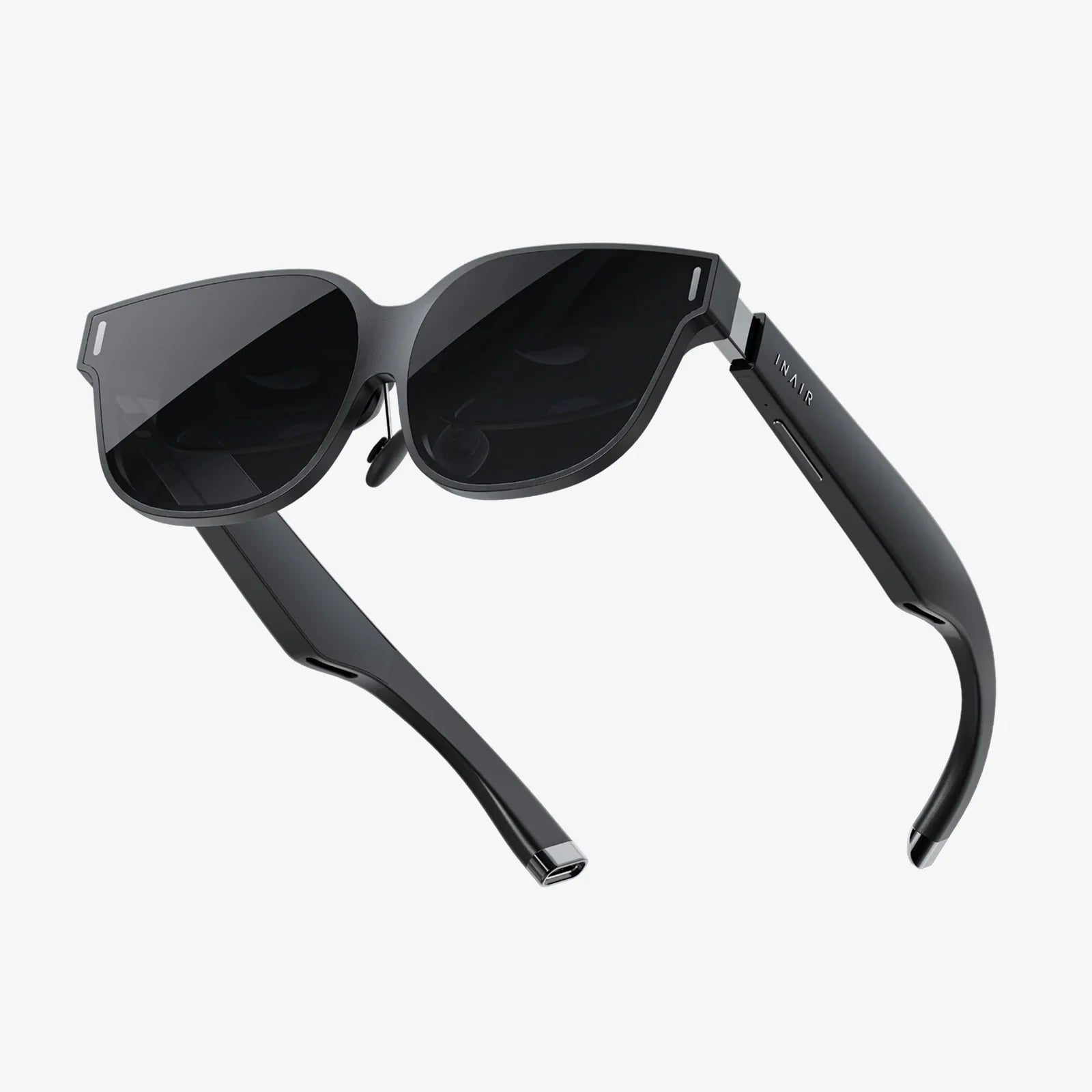
Reality Goggles: The Next Evolution in Human Perception and Connection
- by wangfred
Imagine a world where the digital and the physical are no longer separate realms, but a single, seamless tapestry of experience. This is the promise held within the sleek, sophisticated frames of reality goggles, a technology that is not just knocking on the door of our future, but is already beginning to reshape the very architecture of our daily lives, our work, and our play.
For decades, our primary window to the digital world has been a flat, rectangular screen. We have peered through this glass, manipulating content with mice, touchpads, and fingers. Reality goggles represent a fundamental break from this paradigm. They are not merely a display you look at; they are a system you look through. By overlaying high-resolution, dynamic digital information onto your field of view, these devices effectively turn the world itself into your canvas, your desktop, and your theater.
The term itself is an umbrella, encompassing a spectrum of experiences often broken down into specific categories. On one end, there is Augmented Reality (AR), which layers digital elements onto the real world. Think of navigation arrows painted onto the street in front of you or a virtual pet resting on your actual sofa. On the other end, there is Virtual Reality (VR), which immerses the user in a completely digital environment, disconnecting them from their physical surroundings to transport them anywhere imaginable. Bridging these two is Mixed Reality (MR), where digital objects can interact with and be occluded by the physical world in a believable way, creating a truly blended experience. Reality goggles are the hardware that makes all of this possible, housing the advanced sensors, processors, lenses, and displays required to build these new realities.
The magic of reality goggles is not magic at all, but a triumph of modern engineering. Inside what appears to be a simple pair of glasses or a headset lies a dense orchestra of cutting-edge technology working in perfect harmony.
At its core are the optical systems. These often involve micro-displays projecting images onto waveguides or specialized lenses that direct the light into the user's eyes, all while allowing ambient light from the real world to pass through for AR and MR experiences. This creates the illusion that digital objects exist at various depths in your physical space.
Surrounding this optical heart is a suite of sensors that act as the device's eyes and ears. High-resolution cameras continuously scan the environment, while depth sensors (like LiDAR) map the world in three dimensions, understanding the geometry of a room down to the millimeter. Inertial Measurement Units (IMUs) track the precise rotation and acceleration of the user's head with incredible speed and accuracy, ensuring the digital overlay remains locked in place even as you move. Simultaneous Localization and Mapping (SLAM) algorithms process all this sensor data in real-time, constructing a live, understanding digital twin of your environment. This is how a virtual character can convincingly sit on your real-world chair, knowing exactly where the seat is.
All this data is crunched by powerful, miniaturized processors, often with dedicated chips for specific tasks like computer vision and spatial audio. The latter is another critical component, using advanced algorithms to make sounds appear to emanate from specific points in space, completing the illusion of a coherent blended reality.
While consumer applications often grab headlines, the most profound and immediate impact of reality goggles is being felt in enterprise and industry. These devices are moving from novelty to necessity, solving real-world problems and driving efficiency.
In manufacturing and complex machinery repair, technicians can wear reality goggles to see interactive, animated instructions overlaid directly onto the equipment they are working on. They can visualize internal components, receive remote guidance from an expert thousands of miles away (who can literally draw arrows onto their field of view), and access schematics without ever looking away from the task at hand. This reduces errors, slashes training time, and minimizes downtime.
Architects, engineers, and construction professionals are using them to step inside their 3D models long before a single foundation is poured. They can walk through a full-scale, virtual building, assessing design choices, identifying potential clashes between systems (e.g., plumbing running through a beam), and making changes in real-time. This ability to prototype in the real world saves millions and leads to better-designed structures.
In healthcare, the implications are staggering. Surgeons can have vital patient statistics, MRI scans, or ultrasound imagery floating in their periphery during an operation, keeping their focus entirely on the patient. Medical students can practice complex procedures on hyper-realistic virtual cadavers, and therapists are exploring their use for treating phobias and PTSD through controlled, immersive exposure therapy.
The promise of a truly embodied "metaverse" hinges on the widespread adoption of reality goggles. The vision is not of users staring at avatars on a screen, but of feeling truly present with others in a shared digital space. With realistic avatars driven by eye and face tracking, a conversation in virtual reality can capture the nuance of a glance, a smile, or a furrowed brow, fostering a sense of connection that video calls simply cannot match.
This technology also represents the next great medium for storytelling. Imagine watching a historical documentary where events unfold around you in your living room, or a mystery where clues are hidden as virtual objects in your actual environment. Narrative becomes something you don't just watch, but something you inhabit and explore. Gaming, of course, is revolutionized, transforming the player from someone controlling a character on a screen to someone living inside the game world, physically ducking behind cover or reaching out to manipulate a virtual control panel.
Such a powerful technology does not arrive without significant questions and potential pitfalls. The very nature of reality goggles—always-on cameras and microphones, constantly scanning our most intimate spaces—raises profound privacy concerns. The data they collect about our homes, our behaviors, and our interactions is incredibly sensitive. Robust, transparent data governance and clear user control are not optional features; they are absolute prerequisites for public trust.
There are also serious societal considerations. Will these devices create a new digital divide, separating those who can afford this new layer of reality from those who cannot? Could the ability to curate and filter our perception of the world lead to further social fragmentation, where we all exist in personalized reality bubbles? The potential for new forms of advertising and distraction is also immense, with commercial messages potentially injected directly into our visual field, vying for our attention at all times.
Prolonged use, especially of fully immersive VR, raises questions about psychological effects, from simulator sickness to the potential for dissociation or addiction. Establishing healthy usage patterns and understanding the long-term effects on human cognition and social development will be a critical area of study.
The current generation of reality goggles, while impressive, is still a glimpse of the future. The goal for the industry is to create devices that are socially acceptable, comfortable enough to wear all day, and provide visual fidelity indistinguishable from real life. This means overcoming significant challenges in battery life, processing power, heat management, and form factor. The ideal endpoint is a pair of glasses that are no bulkier than typical eyewear, yet pack the computational power to generate rich, interactive worlds.
As the technology matures, its integration with other advancements like artificial intelligence and 5G/6G connectivity will unlock even more potential. AI will allow these devices to understand context and intent, proactively offering relevant information. High-speed, low-latency networks will enable cloud rendering, offloading complex processing and allowing for even lighter, more efficient goggles.
The journey ahead is not merely one of technological refinement, but of cultural and creative exploration. We are collectively writing the rules for this new medium. Developers, artists, designers, and ethicists are now tasked with building the applications, experiences, and norms that will determine whether this technology enhances our humanity or complicates it. The goggles themselves are just the lens; it is up to us to decide what we see through them.
The world is about to gain a new layer, an invisible digital skin that will change everything from how we fix a car to how we comfort a friend. The age of peering at pixels on a glass rectangle is ending; the age of living within the data, of having information and imagination woven directly into the fabric of our reality, is just beginning. The next time you look at the world around you, remember—you are only seeing part of the picture.
Share:
VR 2025: A Glimpse into the Virtual Realities of Tomorrow
Head Up Display Moto: The Future of Motorcycle Safety and Navigation is Here