


- by wangfred
VR 2025: A Glimpse into the Virtual Realities of Tomorrow
- by wangfred
Imagine a world where the line between the physical and the digital has not just blurred, but vanished, where your next meeting, medical consultation, or creative masterpiece happens not on a screen, but in a space you can step into. This is the breathtaking promise of VR 2025, a technological frontier closer than you think, waiting to redefine every facet of our lives.
The most immediate and tangible evolution by 2025 will be in the hardware itself. The clunky, tethered, and sometimes nauseating headsets of the past will be relegated to tech museums, replaced by a new generation of sleek, powerful, and accessible wearables.
The quest for visual fidelity will reach a critical milestone. Expect mainstream devices to feature micro-OLED or similar advanced displays offering resolutions that meet or exceed human visual acuity, often referred to as 'retina' quality in the virtual space. This eliminates the 'screen door effect' entirely, making text crisp and distant objects in a virtual environment indistinguishable from reality. Coupled with fields of view expanding beyond 120 degrees, the sensation of looking through a scuba mask will finally disappear, replaced by true perceptual immersion.
Perhaps the most significant leap will be in the realm of input and interaction. The controllers of today, while functional, are a constant reminder of the medium's artificiality. VR 2025 will be dominated by sophisticated inside-out tracking and high-fidelity hand tracking. Users will manipulate virtual objects with their bare hands, feeling the weight, texture, and resistance of digital matter through advanced haptic feedback systems. This won't be limited to handheld vibrations; we'll see the emergence of full haptic gloves and even vests, providing tactile sensations across the body, from the gentle brush of a virtual breeze to the impact of a thrown object.
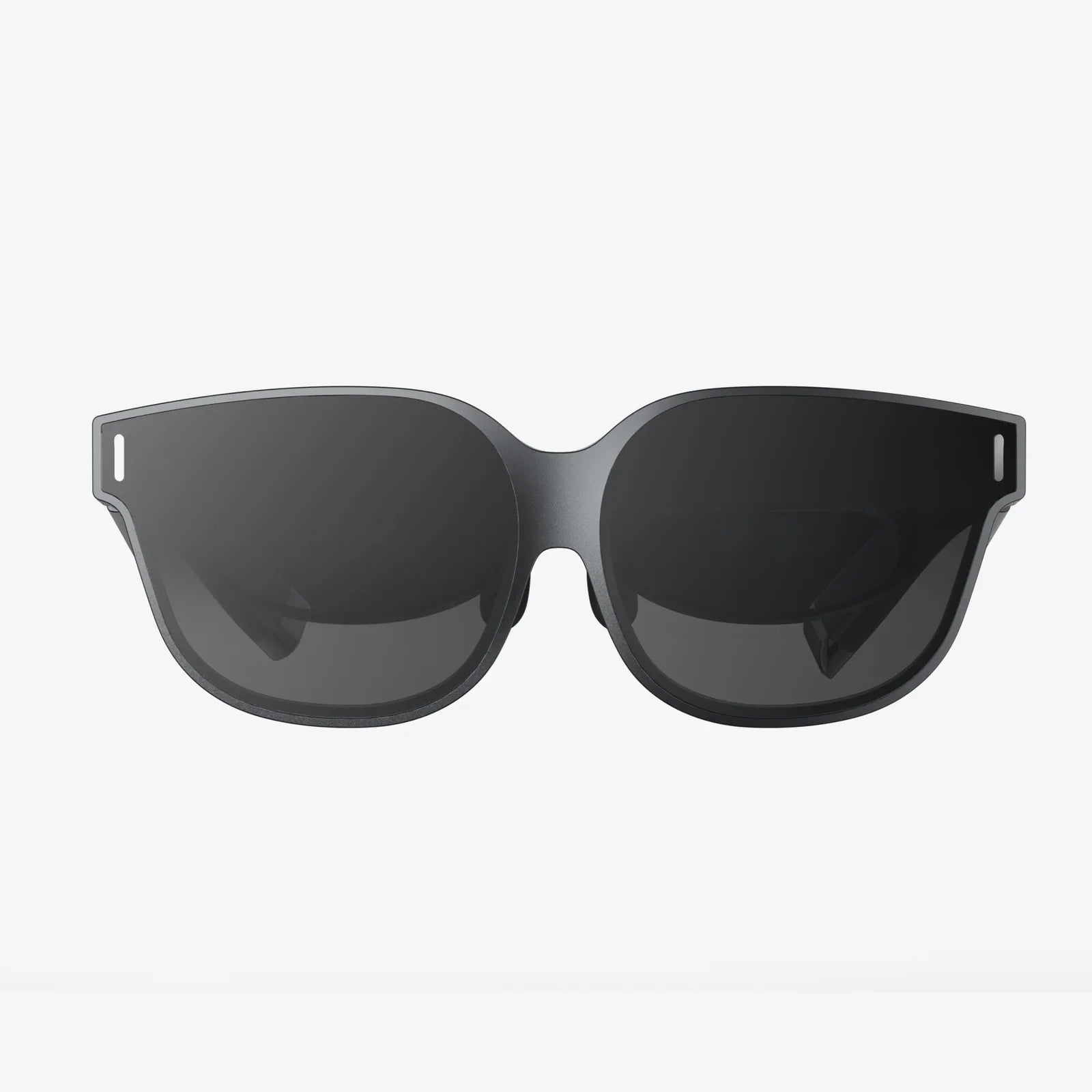
Furthermore, the form factor will diversify. Alongside all-in-one wireless headsets that offer console-quality experiences untethered from a computer, we will see the rise of ultra-lightweight glasses. These devices, powered by cloud streaming and onboard AI chips, will offer less intensive but more socially acceptable and all-day usable augmented and virtual experiences, seamlessly blending the two realities.
Powerful hardware is meaningless without compelling software. By 2025, the ecosystem will have matured from a collection of isolated experiences into a cohesive, interconnected digital layer over our world.
At the core of this will be the development of a true 'metaverse'—or more accurately, a set of interoperable virtual platforms. Unlike the walled gardens of today, these spaces will begin to support cross-platform functionality, allowing your digital identity, assets, and currency to travel with you. Imagine purchasing a virtual sculpture from a boutique gallery in one environment and displaying it in your personal virtual home, hosted on a completely different platform. This interoperability will be driven by open standards and blockchain-like technologies that verify digital ownership and provenance.
Content creation will also be democratized. User-generated content (UGC) will explode, fueled by intuitive, in-headset creation tools. Instead of needing complex desktop software, users will sculpt, paint, and build worlds using their hands in virtual space. AI will act as a creative co-pilot, generating assets, landscapes, or even code based on simple voice commands or rough sketches, making everyone a potential creator.
Social interaction will be the killer app. Virtual gatherings will evolve beyond cartoonish avatars with floating heads. Photorealistic codec avatars, driven by eye and facial tracking, will transmit our true expressions and emotions with stunning accuracy, making remote communication more authentic and emotionally resonant than a standard video call. Virtual concerts, conferences, and family reunions will become commonplace, offering a sense of 'presence' that flat screens cannot replicate.
The impact of VR 2025 on the professional world will be profound, moving beyond novel teleconferencing to become an indispensable tool for productivity and innovation.
Remote collaboration will be reborn. Global teams will no longer stare at a grid of faces on a monitor. Instead, they will step into a shared virtual workspace—a digital twin of a factory floor, a 3D model of a new building, or a blank, infinite canvas. They will interact with complex data visualizations as physical objects, walk through life-sized architectural plans, and annotate the air around them, making brainstorming and problem-solving radically more intuitive and effective.
Industries like design, engineering, and architecture will be revolutionized. Prototyping will occur entirely in virtual space. A car designer will sculpt a new vehicle's bodywork in real-scale, examining ergonomics and aesthetics long before any physical materials are used. An architect will walk their clients through a photorealistic rendering of their unfinished home, making changes to lighting, materials, and layout with a wave of their hand. This will drastically reduce costs, accelerate iteration cycles, and minimize waste.
Training and simulation will enter a new era of safety and efficacy. From surgeons practicing complex procedures on hyper-realistic virtual patients to firefighters training for dangerous scenarios in perfectly recreated digital environments, VR will provide a risk-free platform for mastering high-stakes skills. Muscle memory and spatial knowledge gained in these simulations will translate directly to the real world.
The therapeutic potential of VR will be one of its most impactful contributions by 2025, moving from experimental trials to standard clinical practice.
Mental health treatment will be transformed through continued and advanced use of exposure therapy. Patients with phobias, PTSD, or anxiety disorders will be able to confront and manage their triggers within perfectly controlled, gradual, and safe virtual environments overseen by a therapist. Furthermore, VR will become a powerful tool for meditation and stress relief, transporting users to serene, bespoke environments designed to promote mindfulness and lower cortisol levels.
In physical rehabilitation, VR will turn repetitive, often tedious exercises into engaging games and experiences. A patient recovering from a stroke might play a game that requires them to reach for virtual objects, effectively disguising their physical therapy regimen as entertainment. This 'gamification' improves motivation, adherence to treatment plans, and provides therapists with precise, data-rich feedback on a patient's range of motion and progress.
VR will also emerge as a critical tool for pain management. Immersive experiences have already been shown to distract the brain from processing pain signals, reducing the need for pharmacological interventions for burn victims during wound care or for patients undergoing painful procedures.
This rapid adoption will not be without significant challenges and societal questions that we must begin addressing now.
The digital divide risks evolving into an 'immersion divide.' If transformative experiences in education, healthcare, and social connection are locked behind expensive hardware, we risk creating a new class of haves and have-nots. Ensuring equitable access will be a paramount concern for policymakers and educators.
Data privacy and security will take on a new dimension. These devices will not just track what we click; they will track our eye movements, our biometric responses, our conversations in private spaces, and even our unconscious gestures. This constitutes the most intimate dataset ever collected. Robust frameworks must be established to prevent misuse, manipulation, and exploitation of this biological and behavioral data.
Finally, the psychological impact of living between two worlds remains unknown. How will our sense of self, our relationships, and our attachment to physical reality change when a more perfect, customizable digital alternative is always available? Establishing healthy boundaries and digital literacy will be essential for navigating this new normal.
The year 2025 is not a finish line, but a vibrant checkpoint on a much longer journey. It represents the moment VR sheds its skin as a niche gadget and emerges as a foundational technology, as integral to daily life as the smartphone. The virtual frontier is no longer a science fiction fantasy; it's a reality being built today, and its gates are about to swing wide open for everyone.
Share:
Visible Wearable: The Dawn of a New Era in Personal Technology and Expression
Reality Goggles: The Next Evolution in Human Perception and Connection