


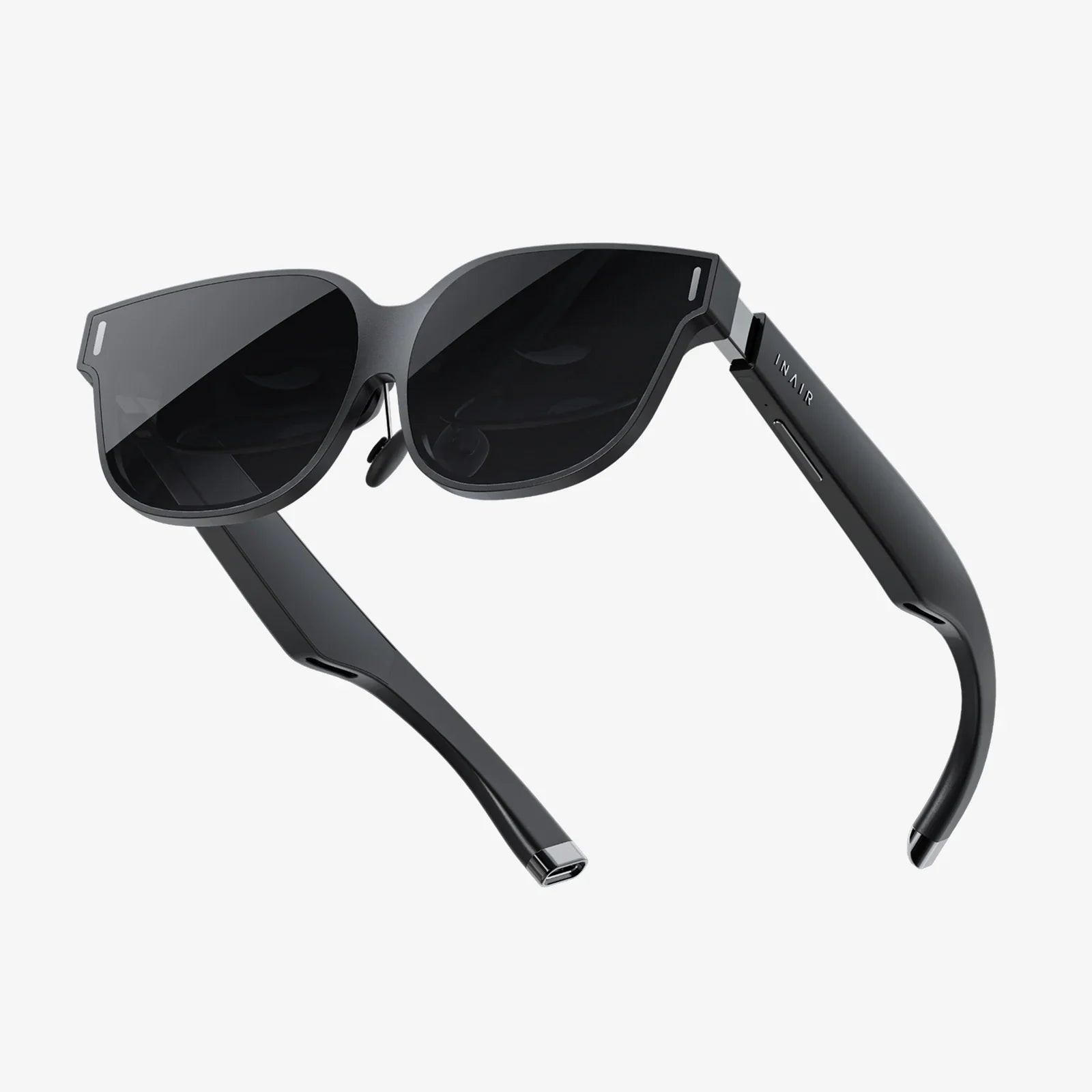
You slip on the headset, and for a moment, the real world vanishes. You're standing on the surface of Mars, the red dust swirling at your feet, or perhaps deep in a sun-dappled forest, the sounds of birds echoing around you. The promise is absolute immersion—a perfect digital facsimile of reality, or something even better. But then you take a step, and the illusion stutters. A controller vibrates awkwardly in your hand, a faint screen-door effect shimmers at the edge of your vision, or a wave of nausea begins to build. This is the unspoken truth of the virtual frontier: the reality in virtual reality is, and may always be, profoundly limited. The journey to understand why reveals not just the boundaries of our technology, but the very essence of our human experience.
The Illusion of Presence and the Hardware Hurdles
The foundational goal of any high-end virtual reality system is to generate a convincing sense of ‘presence’—the undeniable, subconscious feeling of ‘being there.’ Achieving this fragile state is a monumental technical challenge, a constant battle against a host of physical limitations that immediately constrain the user's experience.
At the most basic level, our perception of reality is an analog, continuous stream of high-fidelity data. Our eyes perceive the world in a resolution far beyond even the best consumer displays, with a dynamic range that captures subtle shadows in a dark room and the details of a sunlit cloud simultaneously. Current VR technology, however, must compress this experience into two digital screens mere centimeters from our eyes. This introduces artifacts like the ‘screen-door effect’ (seeing the fine lines between pixels), fixed focus planes that strain our eyes when objects are virtually near or far, and a limited field of view that feels like looking through a pair of binoculars, constantly reminding the brain of the headset's presence.
Furthermore, the latency—the delay between a user's movement and the system's visual response—must be imperceptibly low, ideally under 20 milliseconds. Any lag creates a sensory disconnect that can quickly break immersion and, for many, trigger cybersickness, a form of motion sickness caused by the conflict between visual motion and the inner ear's sense of stillness. The computational power required to render two high-resolution, high-frame-rate displays in real-time is staggering, anchoring even the most ambitious wireless systems to powerful, expensive hardware. This creates a significant barrier to entry, limiting the audience and the economic incentive to push beyond these hurdles rapidly.
The Input Problem: The Chasm Between Physical and Digital
If vision is the first pillar of immersion, interaction is the second. In reality, we interact with our world through an infinitely complex symphony of touch, pressure, temperature, and proprioception—our innate sense of our body's position in space. Virtual reality input, by contrast, is shockingly primitive.
Standard handheld controllers, with their buttons, joysticks, and basic haptic rumble, are a crude abstraction of the human hand. They can tell a system you want to ‘grab’ an object, but they cannot replicate the weight of a virtual rock, the texture of its surface, the subtle pressure required to hold it, or the strain in your muscles as you lift it. You can push a button to pick a flower, but you cannot feel its delicate petals crumple against your fingertips.
Emerging technologies like haptic gloves and full-body tracking suits aim to bridge this gap, but they too face fundamental limits. They can simulate pressure or vibration, but they cannot stop your real hand from passing through a virtual wall. They can track your movement, but they cannot replicate the force feedback of leaning against a virtual railing or the resistance of pushing a heavy object. This creates a constant, low-level cognitive dissonance; your eyes tell you one thing is happening, while your body feels something completely different. This ‘input problem’ is one of the most significant factors keeping the reality in virtual reality limited, creating a chasm between user intention and digital action that even the best graphics cannot overcome.
The Biological Prison: The Limits of the Human Body
Perhaps the most immutable constraints are not in the technology itself, but in the biological hardware we are trying to trick: the human brain and body. VR developers are not building for a perfect blank slate; they are building for a biological system honed over millions of years to navigate and survive in a specific physical reality. This system has deeply ingrained rules and limitations that virtual experiences constantly bump against.
The aforementioned cybersickness is a prime example. It is a direct biological rejection of the virtual experience, triggered by the vestibular mismatch between what the eyes see (movement) and what the inner ear feels (stillness). For a significant portion of the population, this is not a minor inconvenience but a hard barrier that makes prolonged VR use impossible. No software update can ‘patch’ the human vestibular system.
Furthermore, our bodies are physical entities that occupy real space. The concept of ‘locomotion’ in VR highlights this perfectly. How do you move through a vast virtual castle when your physical play area is only a few meters square? Teleportation mechanisms and ‘thumbstick’ movement are clever workarounds, but they are compromises that constantly remind users of the artificiality of the world. They break the natural, intuitive way we navigate our environment. Our bodies also fatigue; holding up arms to interact with virtual menus becomes tiresome, and the weight of the headset itself creates physical strain over time. These biological factors serve as a constant tether, pulling users back to the undeniable reality of their physical form and its needs.
The Uncanny Valley and Social Depth
Human connection is a cornerstone of reality. As social creatures, we are exquisitely tuned to read microscopic facial expressions, subtle shifts in tone of voice, and the unspoken language of body posture. Replicating this depth of social interaction in VR is arguably the greatest challenge of all, pushing directly into the phenomenon known as the ‘uncanny valley.’
While VR can place photorealistic avatars of people in a room with us, these digital representations often lack the nuanced, subconsciously perceived cues that make interaction feel genuine. Eye contact might be slightly off, or facial animations might not perfectly sync with speech cadence. Smiles might not reach the eyes, and movements might feel either too rigid or unnaturally fluid. This creates a sense of unease and detachment, making it difficult to form genuine emotional connections. The interaction feels mediated, synthetic, and limited.
True social presence requires more than just seeing a representation of a person; it requires feeling their emotional state and intention in a shared space. Current technology reduces the rich tapestry of human communication to a data stream of head positions, hand motions, and pre-recorded voice packets. It filters out the warmth of another person's proximity, the shared breath of a conversation, and the countless intangible cues that build trust and empathy. Until technology can bridge this gap, the social reality within virtual spaces will remain a shallow imitation of its real-world counterpart.
The Philosophical Cage: The Nature of Reality Itself
Beyond the silicon, optics, and biology lies the most abstract yet profound limitation: the philosophical one. What we perceive as ‘reality’ is not a perfect recording of the objective world but a constructed model inside our brains, built from sensory input and heavily filtered by our expectations, memories, and biases. VR, therefore, is not trying to replicate reality itself, but rather our perception of it.
This is a crucial distinction. It means that a perfect VR simulation is not one that replicates every photon and molecule, but one that perfectly tricks the brain's construction process. However, our brains are designed to find the cracks in the simulation. They are prediction engines, constantly comparing incoming sensory data against internal models. A shadow that falls incorrectly, a sound that doesn't propagate quite right, or a physics interaction that feels ‘off’ can instantly shatter the illusion because it violates the brain's deeply learned rules of how reality should work.
Furthermore, true reality is characterized by its unscripted, infinite detail. You can focus on a single blade of grass, examine the tiny insect crawling on it, and dig into the dirt beneath it, discovering an entire world that was not ‘designed’ but simply exists. In even the most advanced VR environment, every blade of grass is placed by an artist or algorithm. There is a fundamental limit to the depth and spontaneity; you cannot do something the developers did not explicitly or implicitly plan for. This inherent scripted nature, this lack of genuine, infinite discovery, places a permanent ceiling on the reality of virtual worlds. They are, at their core, a collection of pre-determined possibilities, not a true reality of endless emergence.
The dream of a perfect virtual reality, indistinguishable from our own, remains a powerful vision on a distant horizon. Yet, the journey toward it is far more valuable than the destination might ever be. Each limitation we encounter—every flicker of pixels, every wave of nausea, every awkward interaction—forces us to ask deeper questions about perception, consciousness, and what truly constitutes our experience of being. These aren't mere technical bugs to be solved; they are the fundamental boundaries between the physical self and the digital dream, the immutable laws of nature gently asserting their precedence over our silicon creations. They remind us that the most profound realities are not those we can simulate, but those we already inhabit, with all their messy, unpredictable, and beautifully unlimited detail.
Share:
Smartphone AR Glasses: The Invisible Revolution in Your Pocket
AI Digital Business: The Complete Guide to Transforming Your Enterprise in the New Economy