


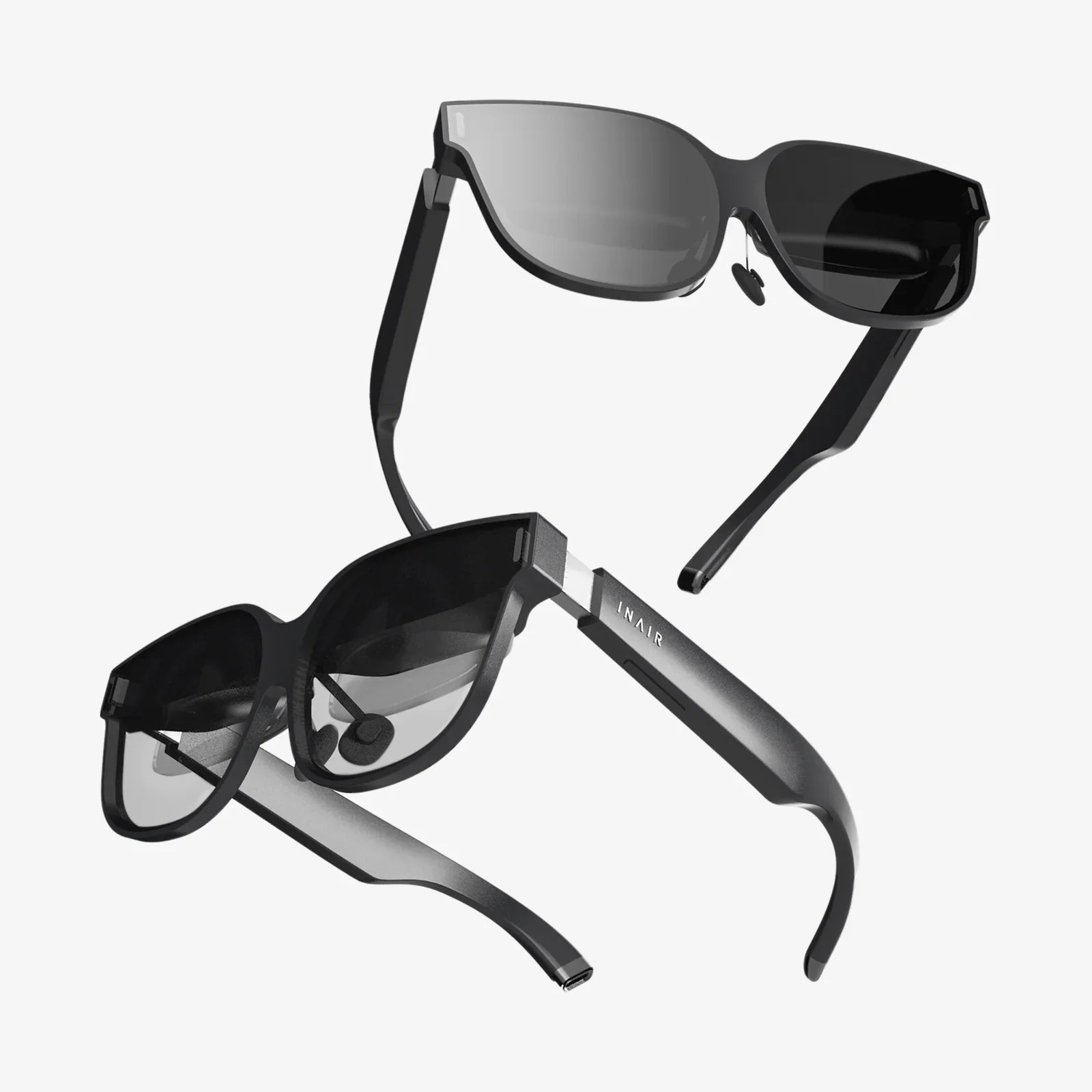
Imagine a world where information doesn't just live on a screen but is woven seamlessly into the fabric of your reality. Where directions appear as floating arrows on the sidewalk, historical facts materialize beside ancient monuments, and a recipe hovers perfectly above your mixing bowl, hands-free. This isn't a distant sci-fi fantasy; it's the imminent future being unlocked by a powerful combination you likely already possess: a smartphone and a new generation of augmented reality glasses. This convergence represents the most significant leap in personal computing since the iPhone itself, and it’s quietly building momentum in your pocket.
The Convergence: Your Smartphone as an AR Powerhouse
At first glance, the concept seems simple: a pair of sleek glasses connected to a phone. But the underlying technology is a symphony of coordinated hardware and software. Modern smartphones are, in essence, compact supercomputers equipped with a suite of sensors perfectly suited for augmented reality. They possess high-resolution cameras for capturing the environment, powerful GPUs for rendering complex digital overlays in real-time, inertial measurement units (IMUs) for tracking head and body movement, and now, dedicated processors and cores designed explicitly for machine learning and spatial calculations.
The primary role of the smartphone in this partnership is one of raw computation and connectivity. It does the heavy lifting: processing the live camera feed, understanding the geometry of the space through simultaneous localization and mapping (SLAM), and rendering high-fidelity 3D graphics. It then streams this processed visual and auditory information to the glasses, which act as a sophisticated, wearable display. This symbiotic relationship allows the glasses to remain lightweight, affordable, and energy-efficient, leveraging a device users upgrade every few years rather than burdening the eyewear with expensive, quickly-outdated internal hardware.
Beyond Gimmicks: The Practical Magic of AR Glasses
The true potential of smartphone AR glasses lies not in flashy demos but in the subtle, practical enhancement of everyday tasks. The applications span nearly every facet of modern life.
Navigation and Exploration
Gone are the days of glancing down at a phone map, mentally translating a 2D line into a 3D world. With AR glasses, turn-by-turn navigation is projected directly onto the street in front of you. A path gently guides you to your destination, while points of interest—a highly-rated café, a historical landmark, a friend's recommended shop—are tagged in your field of view with contextual information, transforming a simple walk into an interactive tour.
Work and Productivity
The concept of the virtual workspace becomes tangible. Imagine having multiple large, virtual monitors floating in your environment, accessible anywhere you go. A technician repairing complex machinery could see schematics and animated instructions overlaid directly on the equipment they are fixing. An architect could walk a client through a full-scale, virtual 3D model of a building before a single brick is laid. This hands-free, contextual information layer drastically increases efficiency and reduces error.
Social Connection and Entertainment
Social interaction is redefined. Instead of gathering around a single phone screen, friends wearing AR glasses could play a virtual board game on a real table, watch a movie on a virtual big screen against any wall, or leave digital notes and drawings for each other in specific locations. Live events and sports could be enhanced with real-time stats and player information floating above the field, creating a deeply immersive viewing experience.
Accessibility and Learning
The technology holds profound promise for accessibility. Real-time translation of street signs and conversations could be displayed for those who are deaf or hard of hearing or traveling in a foreign country. For learners, abstract concepts in textbooks—from the solar system to the human circulatory system—could be brought to life as interactive 3D models, enabling a deeper, more intuitive understanding.
The Technological Hurdles: What Stands in the Way?
Despite the exciting possibilities, significant challenges remain before smartphone AR glasses become a mainstream consumer product. These are not mere inconveniences but fundamental engineering puzzles that must be solved.
Display Technology: The Battle for Your Eyeballs
The core challenge is designing a display that is bright enough to be seen in daylight, high-resolution enough to blend digital objects convincingly with reality, energy-efficient enough to last all day, and small enough to fit into a fashionable eyeglass form factor. Current technologies like waveguide optics and microLED displays are making rapid progress, but achieving the perfect blend of field of view, visual clarity, and cost remains the holy grail. The display must be virtually indistinguishable from looking at the real world, a benchmark known as "visual pass-through."
Battery Life and Thermal Management
Continuous video processing, environmental understanding, and high-resolution rendering are computationally intensive tasks that drain smartphone batteries rapidly. Pushing pixels to an external display adds another layer of power consumption. Managing this energy drain without requiring users to carry a bulky external battery pack is critical. Furthermore, this level of processing generates heat, which must be dissipated effectively from a device held against the user's head, posing a significant thermal management challenge.
The Social Acceptance Factor
Technology does not exist in a vacuum; it exists in a social context. The specter of Google Glass's launch and subsequent backlash over privacy concerns looms large. For AR glasses to succeed, they must be designed with privacy as a core tenet, not an afterthought. Clear visual indicators showing when recording is active, respectful design that doesn't make others feel surveilled, and robust data security are non-negotiable. Furthermore, the design must be fashionable and socially acceptable. People are highly selective about what they wear on their faces; the glasses must be lightweight, comfortable, and desirable as an accessory, not a piece of obvious tech hardware.
A Glimpse into the Near Future
The evolution of this technology is likely to happen in stages. The first generation, which we are beginning to see now, will be heavily reliant on the smartphone for all processing, focusing on specific use cases like navigation and basic information overlay. The next generation may feature a more distributed computing model, where the glasses handle some basic tracking and display while the phone handles heavier tasks. Eventually, as chip technology miniaturizes further, we may see truly standalone AR glasses with all necessary compute onboard, but the smartphone will likely remain a valuable controller and companion device for the foreseeable future.
Redefining Our Relationship with Technology
The ultimate promise of smartphone AR glasses is a shift from what technologists call "world-locked" content. Instead of information being confined to a rectangular slab of glass we must constantly reach for and focus on, it becomes persistent and integrated into our environment. This marks a move away from "technology as a distraction" and toward "technology as an enhancement." It has the potential to make us more present in our surroundings, not less, by providing contextual information exactly when and where we need it, freeing our hands and our attention for the task at hand.
The journey to perfect, ubiquitous augmented reality is a marathon, not a sprint. It requires breakthroughs in optics, battery science, chip design, and artificial intelligence. But the foundation is being laid today. The smartphone in your pocket is the key, a powerful portal waiting to open a window to a layered, augmented world. The glasses are the lens. Together, they don't just offer a new product; they offer a new way of seeing, learning, working, and connecting. The revolution won't be televised; it will be projected directly onto the world in front of your eyes, and it's closer than you think.
Share:
Current Artificial Intelligence Technology: Reshaping Reality, One Algorithm at a Time
Reality in Virtual Reality Limited: The Unseen Barriers of Digital Worlds