


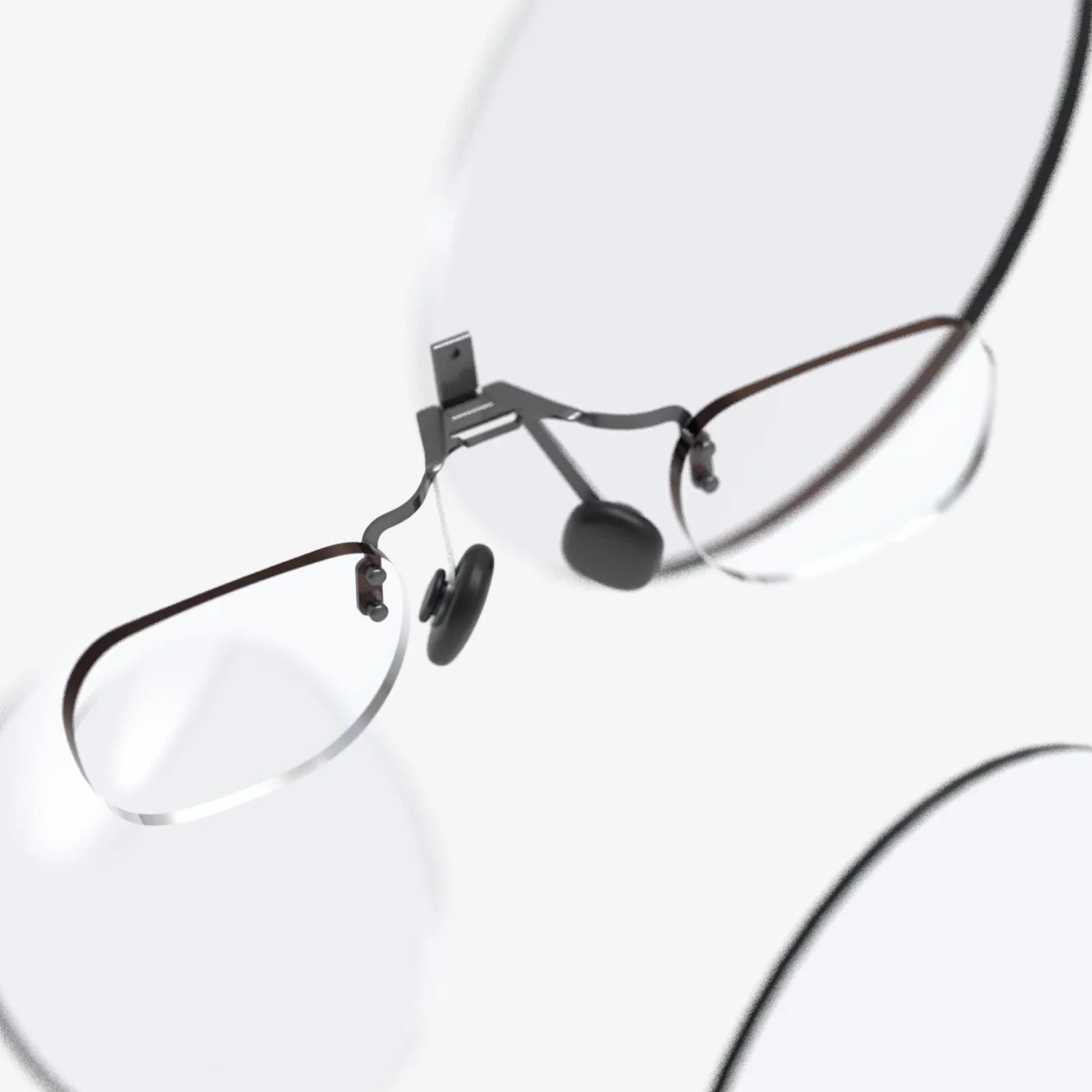
Imagine a world where the morning newspaper reads itself aloud over your coffee, where street signs whisper their names as you walk by, and the faces of friends are recognized with a cheerful auditory cue. This is not a scene from a science fiction novel; it is the emerging reality made possible by screen reader glasses, a revolutionary class of wearable assistive technology poised to shatter barriers for the blind and visually impaired. This innovation represents a profound leap from traditional assistive tools, offering a new layer of autonomy and interaction with the world that was once thought impossible.
The Genesis of a Vision: From Concept to Reality
The journey toward screen reader glasses began with a fundamental human need: the desire for independence. For decades, the primary tools for accessing written text were handheld devices that could scan and read documents, or software that interpreted on-screen digital content. These technologies, while life-changing, had inherent limitations. They often required a user to physically manipulate a device over text, confining the experience to a static, point-and-listen interaction. The dream was always to create something more seamless, more integrated, and more intuitive—something that could provide real-time access to the ephemeral visual world that surrounds us every day.
The convergence of several technological advancements turned this dream into a tangible product. Breakthroughs in miniaturized optical character recognition (OCR) algorithms, powerful enough to run on a mobile chipset, allowed for the instant translation of text from images. Simultaneously, advances in bone conduction audio provided a method for delivering sound without obstructing the ears, crucial for maintaining environmental awareness. Furthermore, the development of sophisticated computer vision and artificial intelligence models enabled these systems to not only read text but also identify objects, people, currency, and colors, transforming a simple pair of glasses into a powerful visual interpreter.
How They Work: The Symphony of Sensors and Software
At first glance, a pair of screen reader glasses might look like a slightly bulkier version of standard eyewear. However, hidden within the frame is a complex array of technology working in perfect harmony.
- The Eyes: High-resolution, wide-angle cameras act as the system's eyes, continuously capturing the user's field of view.
- The Brain: A miniaturized onboard processor serves as the brain. It runs advanced AI and OCR software in real-time to analyze the video feed. This is where the magic happens: text is deciphered, objects are classified, and scenes are interpreted.
- The Voice: A synthesized voice, often highly customizable in speed and pitch, articulates the information clearly to the user.
- The Ears: A bone conduction speaker, typically embedded in the temple tips, transmits the audio vibrations directly through the skull to the inner ear. This leaves the ear canal open, allowing users to hear both the device's output and crucial ambient sounds like traffic, conversations, and alarms.
- The Controller: Interaction is often managed through a simple touchpad on the frame or via a connected smartphone app, allowing users to trigger specific functions like reading a text block, identifying a product, or describing a person's appearance.
This entire process, from capture to audio feedback, happens in near real-time, creating a fluid and responsive experience that feels like a natural extension of the user's perception.
Beyond Reading: A Multifunctional Tool for Daily Life
While the name "screen reader glasses" implies a focus on text, their capabilities extend far beyond reading a book or a menu. These devices are evolving into comprehensive visual assistants, tackling a myriad of daily challenges.
- Navigation and Orientation: They can read street signs, bus numbers, and storefront names, empowering users to navigate unfamiliar environments with greater confidence.
- Product Identification: Pointing the glasses at a can of soup in the pantry reveals its label; aiming at a medicine bottle confirms it's the correct prescription. This functionality is critical for safety and independence in the home.
- Currency Recognition: A dedicated mode can identify denominations of paper money, a common hurdle that simplifies transactions and financial management.
- Social Interaction: Some advanced models can be trained to recognize and announce the names of friends and family members as they approach, adding a deeply personal and social dimension to the technology.
- Color and Light Detection: Describing the color of an outfit or indicating when a light is on are simple yet profoundly useful features for daily dressing and household tasks.
This expansive utility transforms the glasses from a niche reading tool into an all-day, every-day companion for navigating the modern world.
The Human Impact: Redefining Independence and Inclusion
The true measure of this technology's value is not in its processing power or its specs, but in its human impact. For individuals who are blind or have low vision, screen reader glasses are more than a gadget; they are a key to unlocked experiences.
Consider the simple act of dining out. Previously, this might have required relying on a companion to read the menu or struggling with a bulky handheld scanner. Now, a discreet glance at the menu provides a private, auditory description of the offerings, restoring a sense of choice and autonomy. In an educational or professional setting, a student or employee can independently read whiteboards, handouts, and computer screens, leveling the playing field and fostering true inclusion.
Psychologically, the effect is profound. The constant reliance on others for basic visual information can be frustrating and can chip away at self-esteem. By providing direct access to this information, these glasses empower users, boosting confidence and reducing the mental fatigue associated with navigating a sighted world. They don't cure blindness, but they effectively bridge the information gap that blindness creates, enabling fuller participation in society.
Navigating the Challenges and Looking to the Future
Despite their promise, screen reader glasses are not without challenges. The current cost of this sophisticated technology can be a significant barrier to access for many. Battery life, while improving, still requires daily charging for heavy users. Furthermore, the technology is not infallible; it can struggle with highly stylized fonts, poor lighting, or cluttered backgrounds, though software updates are continuously improving accuracy.
Privacy is another critical consideration. Devices with always-on cameras understandably raise questions. Reputable manufacturers address this with clear data policies, on-device processing where possible, and physical camera shutters to provide users with control over when they are capturing images.
The future of this technology is dazzling. We can anticipate glasses with even more discreet designs, approaching the form factor of conventional eyewear. AI will become more contextual and predictive, moving from describing what it sees to offering insightful commentary (e.g., "This milk carton expired yesterday"). Integration with the Internet of Things (IoT) could allow the glasses to interface with smart home devices, public information systems, and augmented reality platforms, creating a truly seamless digital-physical experience.
Perhaps the most exciting frontier is haptic feedback. Future iterations may incorporate subtle vibrations or tactile interfaces on the frames to convey spatial information—such as the distance to an obstacle or the layout of a room—offering a non-visual, non-auditory way of perceiving space that could work in tandem with a white cane or guide dog.
Screen reader glasses are not just a tool; they are a testament to human ingenuity's power to overcome limitations. They represent a future where technology does not seek to replace human ability but to augment it, to build bridges where walls once stood. For millions around the globe, this technology is quietly whispering a powerful promise: the world is yours to explore, independently and on your own terms. The next time you see someone wearing a pair of slightly techy glasses, know that they might be listening to the world in a way you never imagined, experiencing a symphony of information that turns everyday moments into opportunities for connection and discovery.
Share:
Enhanced Reality: The Invisible Layer Reshaping Our World
Augmented Reality Industry Growth: A Comprehensive Analysis of the Digital Revolution Reshaping Our World