


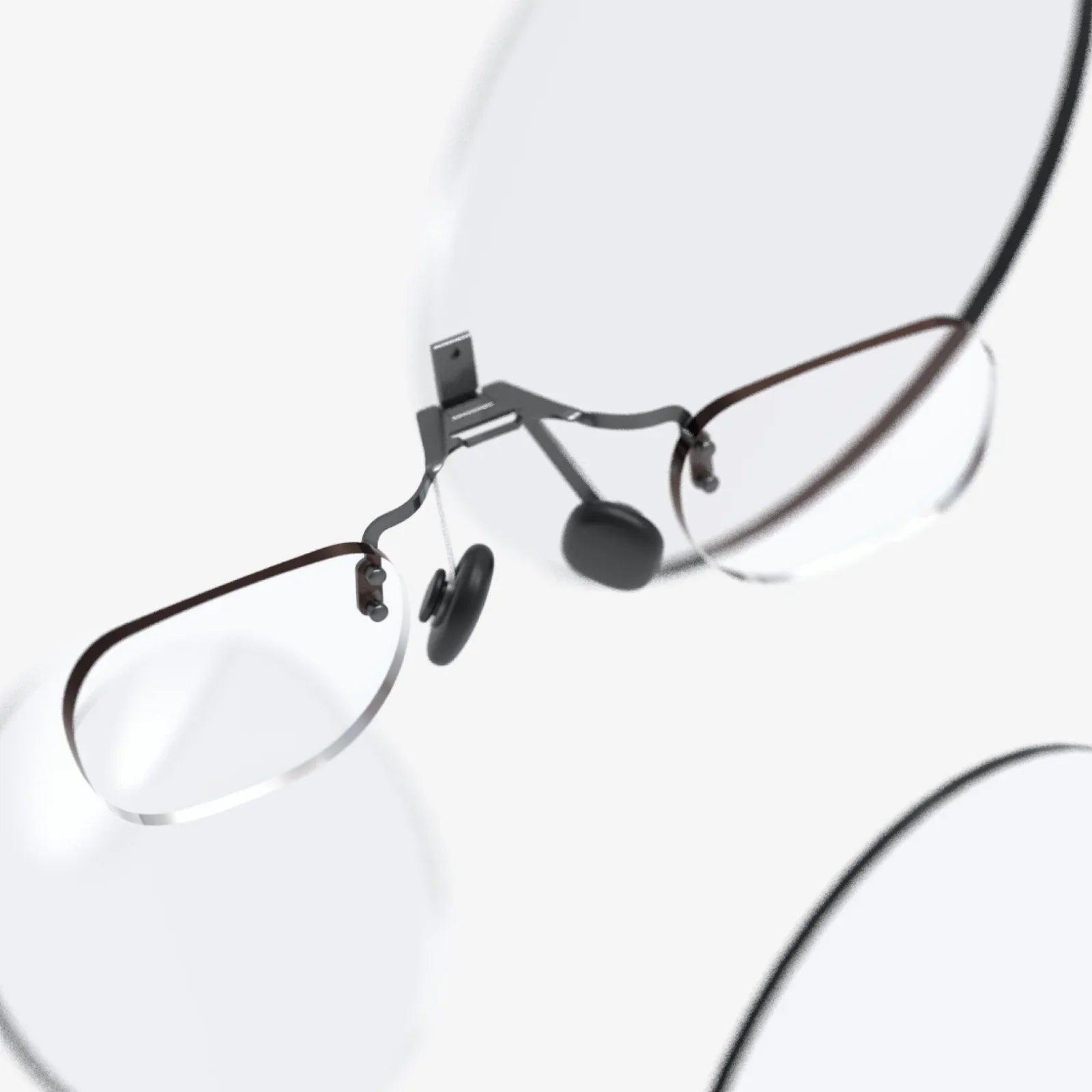
Have you ever finished a long day at the computer only to feel a throbbing headache behind your eyes, or experienced that strange, gritty sensation as if sand had gotten into them? Perhaps you’ve found yourself squinting at your phone late at night, your vision momentarily blurry. If so, you are far from alone. You are one of billions living in the glow of digital screens, and this modern reality is taking a silent toll on our most precious sensory organs. This is where a seemingly simple solution enters the frame: screen spectacles. Far from a mere gimmick, these specialized lenses are rapidly becoming an indispensable tool for navigating our hyper-connected world, offering a shield against the invisible barrage of digital strain.
The Digital Assault on Our Eyes
To understand the value of screen spectacles, one must first appreciate the unique visual challenges posed by our devices. Unlike reading a book or viewing a printed document, interacting with a screen is a complex and demanding task for our eyes.
Firstly, there is the issue of blue light. High-Energy Visible (HEV) blue light is emitted in significant quantities by LEDs, the technology behind most screens and modern lighting. While natural blue light from the sun is part of our circadian rhythm, prolonged, close-range exposure from artificial sources is a newer phenomenon. This short-wavelength, high-energy light is known to scatter more easily within the eye, reducing contrast and contributing to visual noise and glare, which forces our eyes to work harder to maintain focus.
Secondly, we engage in intense near-point focusing for extended periods. Our eyes contain a tiny muscle called the ciliary muscle, which is responsible for changing the shape of our lens to focus on objects at different distances. Staring at a screen fixed at a constant, close range forces this muscle to remain in a state of sustained contraction, much like holding a weight in a fixed position. This leads to fatigue, a condition known as accommodative stress.
Compounding these issues is the significantly reduced blink rate observed during screen use. Studies show we blink up to 66% less often when using digital devices. Blinking is essential for spreading a fresh layer of tears across the ocular surface, keeping it moist, clean, and oxygenated. Reduced blinking leads to faster tear evaporation, resulting in dry, irritated, and tired eyes—a primary symptom of Digital Eye Strain (DES), also known as Computer Vision Syndrome.
Beyond the Blue Light Hype: The True Function of Screen Spectacles
While public discourse often simplifies screen spectacles to "blue light blockers," this is a reductive view. The technology is far more sophisticated, acting as a multi-faceted tool designed to address all the contributors to digital eye strain.
1. Precision Blue Light Filtration
The most advertised feature is, of course, blue light filtration. However, not all blue light filtering is created equal. High-quality screen spectacles do not block all blue light; instead, they employ a selective filtration strategy. They target the specific high-energy wavelengths in the spectrum that are most associated with glare, visual discomfort, and potential circadian rhythm disruption, particularly in the evening. This is often achieved through a subtle tint in the lens (typically a light yellow, amber, or rose hue) or a completely clear coating that reflects blue light away from the eye. The goal is not to distort color perception for tasks like photo editing but to filter the most problematic bands of light, thereby enhancing contrast and reducing the scatter that causes glare.
2. The Critical Role of Anti-Reflective Coating
An Anti-Reflective (AR) coating is arguably as important as blue light filtration, if not more so for visual clarity. This microscopic, multi-layered coating applied to the lens surface minimizes reflections from both the front and back of the lens. Without an AR coating, light from overhead fixtures, windows, and other sources bounces off your lenses, creating distracting reflections and ghost images that force your eyes to strain to see the screen behind the glare. A high-quality AR coating ensures that more light passes through the lens to your eye, providing sharper, clearer, and more comfortable vision by eliminating these distracting reflections.
3. Addressing the Focus Strain: A Helping Hand for Your Eyes
For individuals over the age of 40, or for those who already experience significant focusing fatigue, many screen spectacles incorporate a low-power prescription element. This is not a full reading prescription but a slight power boost (often between +0.50 to +0.75) that provides what is known as "accommodative support." It gives the eye's focusing system a gentle assist, reducing the amount of internal work required to maintain a clear image on a near-distance screen. This can be the difference between a headache-filled afternoon and sustained, comfortable productivity.
Who Truly Needs Screen Spectacles? Debunking the Myths
The short answer is: almost anyone who uses a digital screen for more than two consecutive hours per day. This encompasses a vast swath of the population, but some groups benefit disproportionately.
- The Office Professional: For the millions working an eight-hour day (or more) at a computer, screen spectacles are not a luxury but a piece of essential ergonomic equipment, akin to an ergonomic chair or keyboard.
- Gamers and Content Consumers: Immersive gaming sessions or binge-watching shows involve long periods of intense visual engagement with fast-moving, high-contrast imagery. Screen spectacles can significantly reduce the resulting fatigue.
- Students of All Ages: From university students researching on laptops to younger children using tablets for homework, the educational world is digital. Protecting developing eyes during crucial learning hours is paramount.
- Individuals with Pre-existing Eye Conditions: Those who already suffer from dry eye syndrome, are prone to migraines triggered by light, or have had cataract surgery may find screen spectacles provide profound relief.
- The Night Owl: Using devices in the evening without protection can suppress the natural production of melatonin, the sleep hormone. Spectacles with a stronger amber tint for evening use can help maintain healthier sleep patterns.
Selecting the Right Pair: A Buyer's Guide
Navigating the market for screen spectacles can be daunting. Here are the key factors to consider to ensure you get a pair that delivers genuine benefits.
Lens Quality and Technology: Look for spectacles that specify the percentage of blue light filtered (a range of 20% to 40% for clear lenses is common for daytime) and ensure they include a premium, multi-layer Anti-Reflective coating. The coating should be applied to both sides of the lens for maximum effectiveness.
Fit and Comfort: You will be wearing these for hours. The frame should be lightweight, with comfortable nose pads and temple arms that aren't too tight. The size of the lens should provide ample coverage for your field of vision without excessive peripheral distortion.
Purpose-Specific Design: Consider your primary use. Do you need a clear lens for all-day office work with accurate color representation? Or an amber-tinted lens specifically for evening device use to protect your sleep? Some companies offer combination packs for this very reason.
The Importance of a Professional Opinion: While non-prescription options are widely available, the best course of action is to consult an eye care professional. They can assess your specific visual needs, measure your precise working distances, and recommend a lens power for accommodative support if needed. They can also ensure the optical quality of the lenses is high, providing true visual comfort rather than a cheap, distorting filter that could cause more harm than good.
The Holistic Approach: Screen Spectacles as Part of a Healthier Digital Lifestyle
It is crucial to frame screen spectacles correctly: they are a powerful tool for mitigation, not a cure-all license for endless screen time. Their benefits are maximized when combined with conscious habits that promote ocular health. This holistic approach is known as good "digital hygiene."
Adhere to the 20-20-20 rule: every 20 minutes, look at something 20 feet away for at least 20 seconds. This simple practice gives your ciliary muscle a crucial break, allowing it to relax and reset.
Be mindful of your blinking. Make a conscious effort to blink fully and frequently while working. This can help rewet the ocular surface and prevent dryness.
Optimize your workspace ergonomics. Position your screen so that the top of the monitor is at or just below eye level, about an arm's length away. Adjust brightness and contrast settings to comfortable levels and increase text size to avoid squinting.
Finally, consider the ambient lighting. Avoid having a bright window or light source directly behind you or in front of you, as this will create glare on your screen. Use task lighting that illuminates your desk without shining directly onto your monitor or into your eyes.
Imagine ending your workday not with a sigh of relief to escape the screen, but with a feeling of clear-headed readiness to enjoy your evening. Envision scrolling through your phone before bed without the subsequent struggle to fall asleep. This is the promise of screen spectacles—not just the absence of discomfort, but the presence of sustained visual ease. They represent a small but profound investment in your long-term well-being, a filter for the modern world that allows you to harness the power of technology without falling victim to its glare. The question is no longer if you need them, but how you ever managed without.
Share:
Head Mounted Display Market Share: A Deep Dive into the Battle for Your Field of View
Clear Augmented Reality Glasses Are Finally Here, and They're Changing Everything