


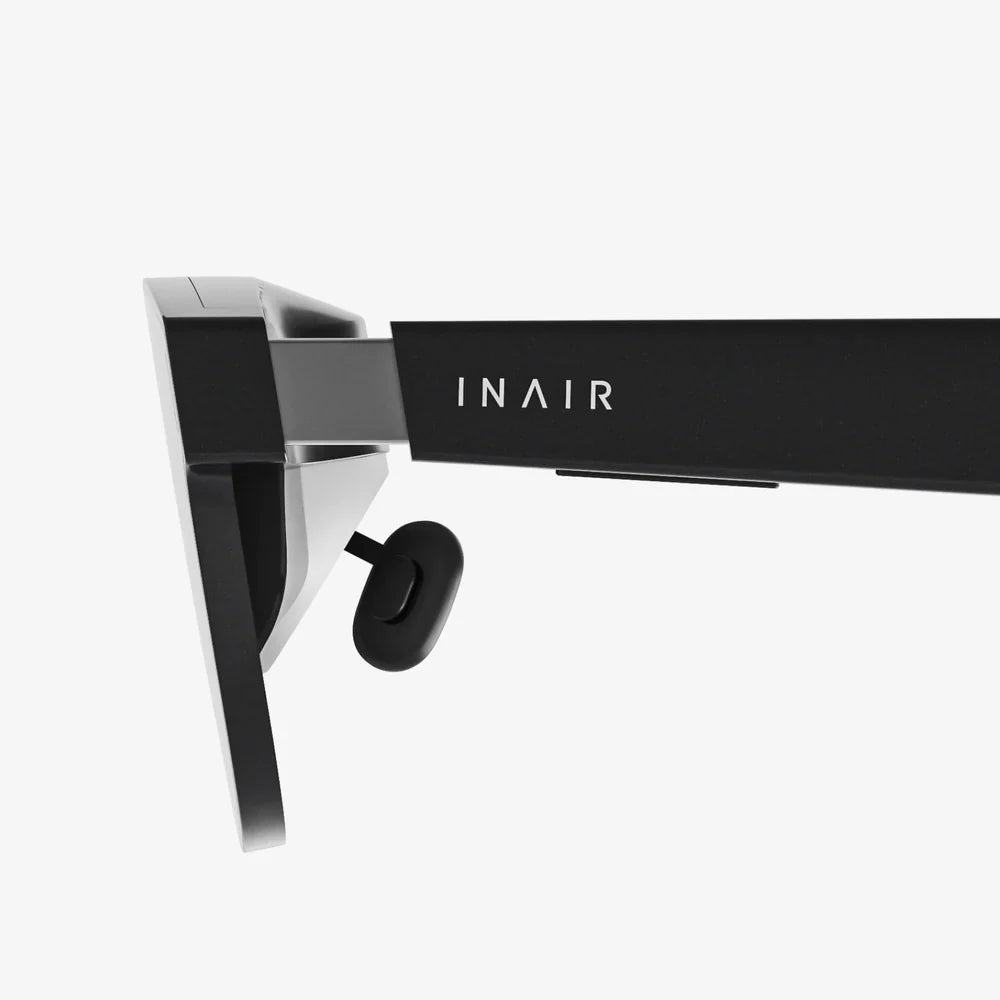
Imagine a world where information, entertainment, and digital assistance are not confined to the glowing rectangles of smartphones or computers but are seamlessly woven into the very fabric of your perception. This is the promise that has tantalized technologists and science fiction enthusiasts for decades, a vision of a future where the digital and the physical are one. For years, this vision was hampered by clunky, opaque headsets that isolated the user in a virtual world or by experimental prototypes that were far from practical for daily use. But now, a pivotal shift is occurring. The era of clear augmented reality glasses has arrived, and it is poised to redefine our relationship with technology, information, and each other in ways we are only beginning to comprehend.
The Technological Leap: From Bulky Headsets to Elegant Frames
The journey to creating truly clear augmented reality glasses has been a monumental engineering challenge. Early attempts often relied on video passthrough, where cameras on the outside of a headset captured the real world and displayed it on internal screens alongside digital elements. This method, while functional, introduced latency, a reduction in visual fidelity, and a sense of disconnection from one's surroundings. The holy grail has always been optical see-through (OST) technology, allowing users to look directly at the real world through transparent lenses that also project digital imagery onto them.
The core innovation enabling modern clear AR glasses lies in advanced waveguide technology. These are incredibly thin, transparent substrates embedded within the lenses. Light from a micro-projector, typically located on the arm of the glasses, is injected into the waveguide. Through a complex process of diffraction, refraction, and reflection—often managed by intricate nano-gratings—this light is bounced through the waveguide until it is finally directed into the user's eye. The result is a bright, sharp digital image that appears to be superimposed on the real world, all while the lenses remain as clear as a standard pair of spectacles.
Other critical advancements include:
- Miniaturized Processing: The immense computational power required for spatial mapping, object recognition, and rendering complex graphics is now being handled by compact, energy-efficient chipsets designed specifically for wearable AR, often with the aid of powerful cloud computing for heavier tasks.
- Spatial Awareness: A combination of high-resolution cameras, depth sensors, LiDAR scanners, and inertial measurement units (IMUs) allows the glasses to understand their environment and the user's position within it with remarkable precision. This enables digital content to interact with physical surfaces, occlude behind real objects, and remain persistently locked in place.
- Intuitive Interaction: Forget clumsy controllers. Interaction paradigms have evolved to feel natural and effortless. Voice commands, subtle hand gestures tracked by onboard sensors, and even predictive AI that anticipates user intent are becoming the standard methods for navigating the AR interface.
Transforming Industries: The Practical Applications of Clear AR
The impact of clear augmented reality glasses extends far beyond consumer novelty. They are set to become indispensable tools, revolutionizing workflows and creating new possibilities across numerous sectors.
Healthcare and Surgery
In the medical field, the implications are profound. A surgeon wearing clear AR glasses could have a patient's vital signs, 3D anatomical models from recent scans, or pre-operative plans displayed directly in their field of view, allowing them to remain focused on the procedure without glancing away at monitors. Medical students could practice complex procedures on holographic patients, and technicians could receive guided, step-by-step visual instructions for repairing sensitive equipment, reducing errors and improving efficiency.
Manufacturing and Field Service
On the factory floor or at a remote wind turbine, these glasses are a game-changer. An engineer can see schematics, torque specifications, and safety warnings overlaid directly on the machinery they are servicing. A remote expert can see what the on-site technician sees and draw digital annotations into their reality, guiding them through a repair in real-time, drastically reducing downtime and travel costs. This "see-what-I-see" capability democratizes expertise and accelerates problem-solving.
Education and Training
Imagine a history class where students can walk through a digitally reconstructed ancient Rome, seeing the Forum come to life around them. Or a chemistry lesson where molecules can be assembled and disassembled in mid-air. Clear AR glasses make learning immersive, interactive, and deeply engaging, moving education from passive absorption to active exploration and discovery.
Navigation and Tourism
The era of holding up a phone to navigate a foreign city will fade. Directional arrows can be painted onto the sidewalk, historical facts can pop up as you look at a monument, and restaurant reviews can hover over the door of an eatery. This contextual, heads-up information delivery enriches our experiences and connects us to our environment in entirely new ways.
The Social and Ethical Dimension: A World Remixed
As with any transformative technology, the advent of clear augmented reality glasses brings a host of social and ethical questions that society must grapple with.
The Privacy Paradox
Devices equipped with always-on cameras and microphones, constantly scanning and interpreting the world, represent a significant privacy challenge. The potential for unauthorized recording, facial recognition, and data collection is immense. Robust digital ethics frameworks, clear consent models, and perhaps even new social norms and laws will be required to prevent a dystopian future of perpetual surveillance. The concept of privacy in public spaces may need to be completely redefined.
The Attention Economy and Digital Isolation
If we thought smartphones were distracting, AR glasses present a new frontier for the battle for our attention. The potential for an endless stream of notifications, advertisements, and digital content layered over reality could lead to further distraction and a diminished engagement with the physical world and the people in it. The risk of creating a new digital divide—between those who are "augmented" and those who are not—is also very real, potentially leading to new forms of social isolation and inequality.
The Blurring of Reality
The ability to seamlessly alter one's perception of reality carries profound implications. Will we be able to trust what we see? The potential for misinformation, sophisticated deepfakes projected into the real world, and manipulative advertising is alarming. Ensuring authenticity and developing systems to distinguish between real and augmented content will be a critical challenge.
The Future is Transparent: What Comes Next?
The current generation of clear augmented reality glasses is impressive, but it is merely the first step. The trajectory points toward even more seamless integration. Future iterations will become lighter, more power-efficient, and offer wider fields of view and higher resolution displays. They will evolve from being a device we put on to a ubiquitous and invisible part of our lives, perhaps eventually integrating directly into standard prescription eyewear or even contact lenses.
The ultimate goal is the development of a spatial web or metaverse—not a virtual world we escape to, but a digital layer intimately entangled with our physical reality. This will give rise to new forms of art, communication, and collaboration that we can scarcely imagine today. The barriers between creator and consumer will lower, allowing anyone to design and place digital objects and experiences into the world for others to discover.
We are standing at the precipice of this new era. The technology is moving out of the laboratory and into the mainstream, and its arrival will be as significant as the introduction of the smartphone, if not more so. It will reshape cities, redefine work, and alter the very nature of human experience.
The path forward is not predetermined by the technology itself, but by the choices we make as developers, policymakers, and users. The potential for enhancement is breathtaking, but so is the potential for harm. It is incumbent upon us to guide this technology toward a future that is equitable, ethical, and human-centric. We have the opportunity to build a future where technology amplifies our humanity, enriches our reality, and deepens our connection to the world and to each other, rather than diminishing it. The clear lens is here; what we choose to see through it is up to us.
Share:
Screen Spectacles: The Essential Guide to Protecting Your Eyes in the Digital Age
Augment Reality Glasses: The Invisible Revolution Reshaping Our World