


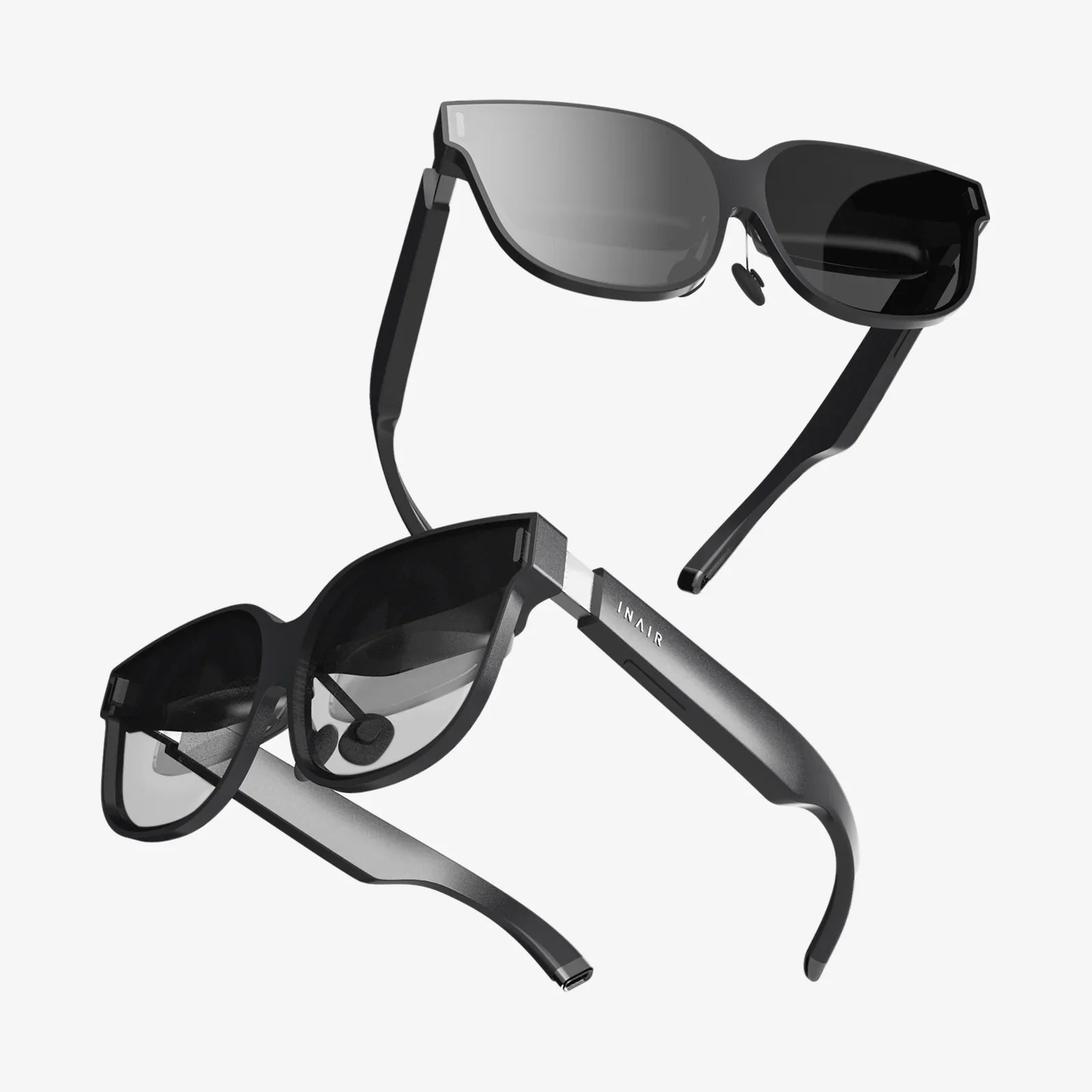
Imagine a world where your digital life doesn’t confine you to a screen but instead flows seamlessly into the space around you. Information appears exactly where you need it, digital creations can be manipulated with a wave of your hand, and the line between the physical and virtual worlds becomes beautifully blurred. This is no longer the stuff of science fiction. With the advent of advanced augmented reality wearables like Sightful AR Glasses, this future is being written today, promising to unlock human potential in ways we are only beginning to comprehend.
The Evolution of Augmented Reality: From Concept to Companion
The dream of augmenting our reality is not new. For decades, technologists, storytellers, and innovators have envisioned a world enriched by digital overlays. Early iterations were clunky, expensive, and offered limited utility, often feeling more like a novelty than a necessity. They were tethered to powerful computers, had narrow fields of view, and suffered from poor battery life, preventing them from achieving true mainstream adoption.
The turning point has been a confluence of several technological breakthroughs. Miniaturization of components, leaps in processing power through specialized chipsets, advancements in waveguide optics, and the development of sophisticated spatial mapping algorithms have all converged. This progress has finally enabled the creation of devices that are not only powerful but also wearable, comfortable, and genuinely useful for extended periods. This new category of spatial computers, exemplified by devices like Sightful AR Glasses, represents the culmination of this journey, moving from a prototype phase to a practical companion for modern life.
Beyond the Hype: The Core Technologies Powering the Experience
What separates this new generation of AR glasses from their predecessors is a sophisticated fusion of hardware and software designed to create a cohesive and intuitive experience.
Spatial Mapping and Computer Vision
At the heart of any advanced AR system is its ability to understand the environment. Using a combination of high-resolution cameras, depth sensors, and LiDAR scanners, the glasses continuously scan the physical world. This data is processed in real-time to create a detailed 3D map of the room, understanding the dimensions of spaces, identifying surfaces like floors, walls, and tables, and recognizing objects. This spatial awareness is fundamental; it allows digital content to anchor itself convincingly to the real world, ensuring a virtual screen stays pinned to your wall and a digital character can hide behind your sofa.
Advanced Waveguide Optics and Display Systems
The magic of making digital images appear in mid-air is achieved through cutting-edge optical technology. Waveguide displays use microscopic gratings to project light from tiny projectors at the temples directly onto the lenses, which then reflect it into the user’s eyes. This creates bright, high-resolution, full-color images that appear to float in the user’s field of view. The latest advancements offer a significantly larger field of view and better transparency, ensuring the digital overlay feels integrated rather than intrusive. Furthermore, solutions for managing vergence-accommodation conflict—where your eyes struggle to focus on both near digital objects and far physical ones—are making the experience more comfortable and natural.
Intuitive Interaction Paradigms
Gone are the days of needing a handheld controller. Modern AR glasses are pioneering hands-free interaction. This is achieved through a multi-modal approach:
- Voice Commands: Natural language processing allows users to summon apps, search for information, or control playback with simple speech.
- Hand Tracking: Ultra-precise cameras track the nuanced movements of your fingers and hands, enabling you to push, pull, resize, and rotate virtual objects with intuitive gestures. A pinch can select, while a flick can dismiss.
- Head Gaze and Dwell Selection: By simply looking at a virtual button for a moment, users can activate it, providing a seamless fallback for quiet environments or precise control.
Transforming Professional Landscapes: The Enterprise Revolution
While consumer applications are thrilling, the most immediate and profound impact of advanced AR glasses is occurring in the professional sphere. They are becoming indispensable tools across numerous industries, boosting efficiency, enhancing safety, and enabling entirely new ways of working.
Design and Engineering
Architects and engineers can step inside their 3D models at a 1:1 scale, walking through building designs before a single brick is laid. They can visualize complex machinery, examining every component in detail and identifying potential design flaws in a virtual prototype, saving millions in development costs.
Manufacturing and Field Service
A technician performing a repair on a complex piece of equipment can have schematic diagrams, instruction manuals, and a live video feed from a remote expert overlaid directly onto their field of view. Their hands remain free to work, dramatically reducing error rates and training time. This application alone is revolutionizing logistics and maintenance operations worldwide.
Healthcare and Medicine
Surgeons can access vital patient statistics, MRI scans, and ultrasound imagery without ever looking away from the operating table. Medical students can practice procedures on detailed holographic anatomies, and therapists can use immersive environments for patient rehabilitation. The potential to improve outcomes and enhance training is immense.
Remote Collaboration
The concept of the "holoportation" meeting is inching closer to reality. Teams distributed across the globe can collaborate within a shared virtual space, interacting with 3D models as if they were in the same room. This erases geographical barriers and fosters a new level of collaborative creativity, making remote work more connected and effective.
Integrating Augmented Reality into the Rhythm of Daily Life
Beyond the office and factory floor, AR glasses promise to subtly enhance our daily routines, offering contextual information and assistance without the need to constantly glance down at a phone.
- Navigation: Directional arrows can be painted onto the street in front of you, guiding you through a new city with ease.
- Smart Home Control: Virtual control panels for your lights, thermostat, and audio system can appear on your wall, accessible with a simple gesture.
- Accessible Learning: A recipe can hover next to your mixing bowl, a language translation can appear subtitled over a conversation, and a piano tutorial can show you which keys to press on your actual keyboard.
- Immersive Entertainment: Watch a movie on a virtual 100-inch screen in your living room, or play games that transform your entire home into a digital playground.
Navigating the Inevitable Challenges: Privacy, Safety, and Social Acceptance
With such transformative power comes significant responsibility. The widespread adoption of always-on, camera-equipped wearables raises critical questions that society must address.
Privacy and Data Security: How do we prevent these devices from becoming the ultimate surveillance tool? Robust, transparent data policies, on-device processing for sensitive information, and clear visual indicators when recording are non-negotiable to build public trust.
Social Etiquette and the "Digital Divide": The sight of people gesturing in the air and talking to seemingly no one will require new social norms. Furthermore, there is a risk that the cost of this advanced technology could create a new kind of digital divide, separating those who can afford an augmented reality from those who cannot.
Safety and Digital Intoxication: Ensuring users remain aware of their physical surroundings, especially when walking or driving, is paramount. The allure of an infinitely customizable digital world also poses a risk of withdrawal from genuine human interaction and the beauty of unmediated reality.
The Path Forward: A Symbiotic Future
The ultimate goal is not to replace reality but to augment it—to enhance our human capabilities rather than diminish them. The next decade will be less about flashy, isolated applications and more about creating a seamless, integrated spatial computing environment. These glasses will evolve to become lighter, more power-efficient, and eventually, indistinguishable from regular eyewear.
They will cease to be a separate "device" and instead become a unified platform, a constant companion that understands our context and intentions, providing information and functionality precisely when and where it is needed. This isn't about having more screens; it's about needing fewer of them, as the world itself becomes our interface.
The true potential of Sightful AR Glasses and their contemporaries lies not in the technology itself, but in the human creativity it unleashes. They offer a new canvas for artists, a new laboratory for scientists, and a new toolkit for problem-solvers. We are standing at the precipice of a new era of computing, one that is more intimate, more contextual, and more human than anything that has come before. The door to a truly integrated future is now open, and the first steps inside reveal a world of limitless possibility waiting to be shaped.
Share:
Digital Binocular Glasses: Merging Human Vision with Computational Power
AR Glasses for PS5: The Ultimate Guide to the Next Gaming Dimension