


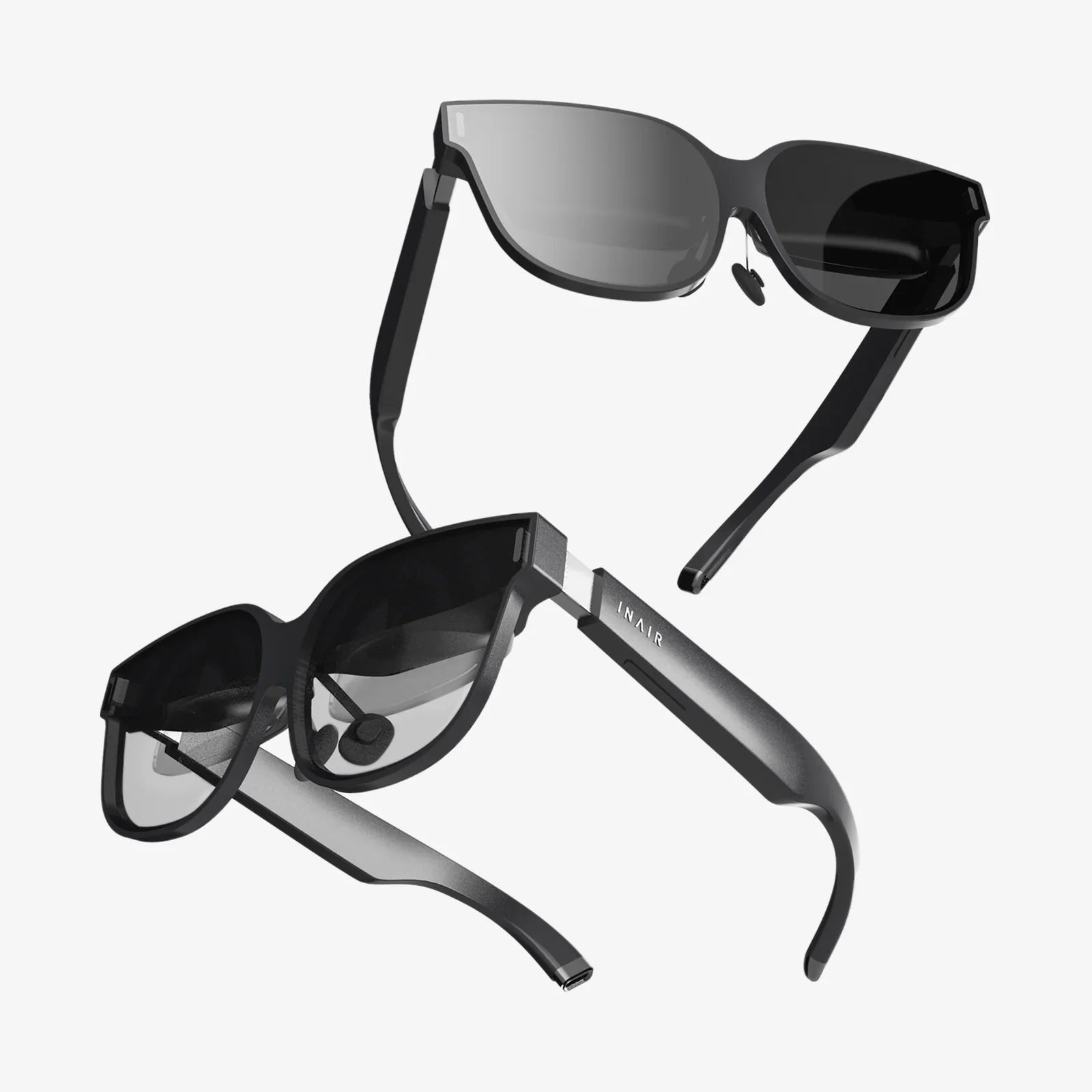
Imagine a world where the line between the digital and the physical doesn't just blur—it vanishes. This isn't a distant sci-fi fantasy; it's the burgeoning reality being built today through two of the most transformative technologies of our time: Augmented Reality and Virtual Reality. While their names suggest a fundamental difference, a deeper exploration reveals a fascinating tapestry of shared DNA, common goals, and intertwined futures that is far more compelling than their surface-level distinctions.
A Shared Foundation in Immersive Technology
At their very core, both AR and VR are branches of the same technological tree, often grouped under the umbrella term Extended Reality (XR). This classification is the first and most significant similarity. XR represents the entire spectrum of realities, from the completely real to the entirely virtual. AR and VR are not opposing forces but neighboring points on this continuum, both striving to achieve a common objective: to alter the user's perception of reality through digital means.
This shared heritage means they are built upon a common technological bedrock. The pursuit of immersion is the driving force behind both. Whether it's VR's goal of creating a persuasive, all-encompassing digital world or AR's aim of seamlessly layering information onto our existing one, both technologies seek to bridge the gap between the user and the digital content. They are both, fundamentally, interfaces—new ways for humans to interact with and manipulate data and digital objects in a more intuitive, spatial manner.
The Hardware Overlap: More Than Meets The Eye
When we picture a VR user, we might imagine someone wearing a large, enclosed headset, while an AR user might be seen glancing through sleek glasses or holding up a smartphone. This superficial difference hides a vast array of shared hardware components that are essential for both experiences to function.
Sensors: The Window to the World
Both AR and VR headsets are packed with an identical suite of sophisticated sensors. These include:
- Accelerometers and Gyroscopes: These measure the headset's orientation, tilt, and rotational velocity. This is crucial for both technologies to track the user's head movements. In VR, it allows you to look around a virtual castle; in AR, it ensures a digital dragon sits stably on your physical coffee table as you walk around it.
- Magnetometers: Acting as a digital compass, they help correct for drift in the gyroscope's data, ensuring the virtual world remains aligned correctly.
- Cameras (Inside-Out Tracking): Modern VR and AR systems increasingly use a array of external-facing cameras to understand their position in the real world. For VR, this is called inside-out tracking, which maps the physical room to create a safe play area (the "guardian" or "chaperone" system). For AR, these cameras are the very eyes of the device, continuously scanning the environment to understand surfaces, depth, and lighting so digital objects can be placed convincingly.
Displays and Processors: Rendering New Realities
The screens, though used differently, face similar challenges. Both require incredibly high-resolution displays to avoid the "screen door effect" (seeing the gaps between pixels) and to make the experience believable. Both demand low persistence—the ability to flash images quickly to avoid motion blur—to prevent user discomfort and nausea.
Furthermore, the computational power needed is immense and similar. Whether rendering a fully synthetic VR environment or compositing complex AR models into a live video feed in real-time, both tasks require powerful mobile processors (or a tethered connection to a powerful computer) to handle the complex graphics, spatial calculations, and sensor data processing simultaneously.
Under the Hood: Common Software and Development Philosophies
The parallels extend deep into the code that brings these experiences to life. Developers working in either field are not starting from entirely different places.
Game Engines: The Universal Tool
The overwhelming majority of both AR and VR experiences are built using the same game development engines, primarily Unity and Unreal Engine. These platforms provide the foundational tools for 3D rendering, physics simulation, lighting, and animation. A developer skilled in creating a VR game possesses almost all the necessary skills to create an AR application, and vice-versa. The core principles of 3D interaction, user interface design in a 3D space (often called "diegetic UI"), and optimizing for performance are universal concerns.
Spatial Mapping and Anchoring
Both technologies must solve the critical problem of spatial awareness. VR systems must map the physical room to create a virtual boundary. AR systems must map the room to understand where the floor, walls, and tables are. The underlying technology for this—using camera data to create a point cloud or mesh of the environment—is virtually identical. Similarly, the concept of "anchoring" is crucial. In VR, you might anchor a menu to your virtual hand or the physical floor. In AR, you anchor a digital sculpture to a specific physical marker on your table. The computational challenge of locking a digital object to a point in space is a shared one.
The Human Factor: Shared User Experience Challenges
Perhaps the most profound similarities lie in the human experience of using these technologies. Developers and designers for both AR and VR are grappling with the same nascent set of user experience (UX) challenges.
- Motion Sickness (Cybersickness): This is a major hurdle for widespread adoption. It is caused by a mismatch between what the user's eyes see (movement) and what their vestibular system feels ( stillness). While often associated with VR, poorly designed AR experiences that feature laggy tracking or unnatural movement can induce the same feelings of nausea and discomfort.
- Intuitive Interaction: Neither a mouse and keyboard nor a touchscreen are ideal for interacting with a 3D world. Both AR and VR are pioneering new interaction paradigms, primarily through hand-tracking controllers and, increasingly, bare-hand tracking via cameras. Designing gestures that feel natural, powerful, and fatigue-free is a primary focus for both fields.
- User Interface (UI) in 3D Space: Placing a traditional 2D menu in a 3D world can be jarring. Both technologies are exploring how to build UI that exists within the experience itself—on virtual tablets, as holographic displays, or responsive to user gaze and gesture.
- Social Connection: The stereotype of VR and AR being isolating technologies is being rapidly dismantled. Both are evolving into powerful social platforms. Multiplayer VR games and social hubs are well-known, but AR is enabling shared experiences where multiple people can see and interact with the same digital object placed in a physical space, from collaborative design reviews to interactive board games.
A Convergent Future: The Blending of Realities
The most compelling evidence for their similarity is the fact that the line between them is already beginning to dissolve. We are moving towards a future of blended realities, not separate ones.
Modern high-end VR headsets increasingly feature passthrough cameras, allowing users to see a video feed of their physical surroundings. This functionality can be used to create a potent mixed reality (MR) experience, overlaying virtual objects onto the real world in a way that is functionally identical to AR. Conversely, as AR glasses become more advanced, they will be able to occlude portions of the real world to display richer digital content, effectively creating VR-like experiences on demand.
The ultimate device may not be exclusively an "AR" or "VR" headset, but rather an XR headset capable of dynamically sliding along the reality-virtuality continuum based on the user's needs at any given moment. The hardware, software, and interaction lessons learned from developing both technologies separately are now converging to make this possible.
The journey through the technological landscapes of AR and VR reveals a story not of competition, but of collaboration and common ancestry. They are two sides of the same coin, both leveraging advanced sensors, powerful processors, and sophisticated software to achieve the ultimate goal of merging human perception with digital innovation. Their shared challenges in design, interaction, and hardware miniaturization mean that advancements in one field invariably propel the other forward. This deep-rooted kinship suggests that the most exciting developments won't come from choosing one over the other, but from watching them finally merge into a single, seamless extension of our own reality. The future isn't just augmented or virtual—it's both, and it's already here.
Share:
3D Immersive Arts: A Journey Beyond the Canvas into Digital Realms
3D Immersive Arts: A Journey Beyond the Canvas into Digital Realms