


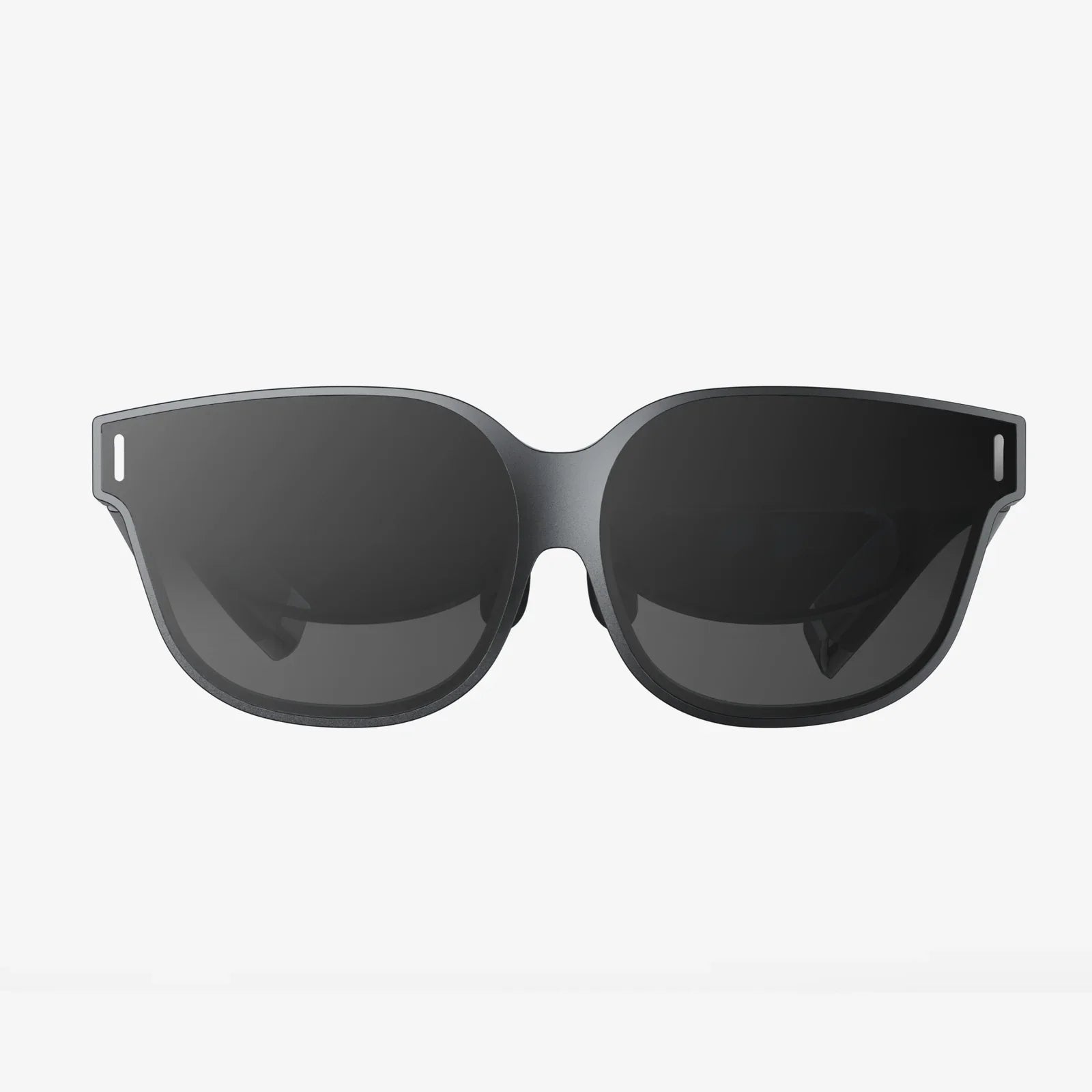
Imagine a world where information floats effortlessly before your eyes, where digital assistants manifest as holograms in your living room, and the line between the physical and digital realms blurs into irrelevance. This is no longer the stuff of science fiction; it is the imminent future being crafted by the rapid evolution of sleek AR glasses. For decades, augmented reality was trapped in clunky prototypes and industrial applications, but a new generation of wearable technology is emerging from the shadows, promising not just functionality, but desirability. The key to unlocking mass adoption lies not merely in computational power, but in a single, critical adjective: sleek. This is the story of how design and engineering are converging to create a device that could become as ubiquitous as the smartphone, fundamentally altering our perception of reality itself.
The Evolution from Bulky to Beautiful: A Design Revolution
The journey to today's sleek AR glasses has been a marathon of miniaturization and user-centric design. Early iterations of augmented reality wearables were often cumbersome headsets, burdened by thick frames, external processing units, and limited battery life. They were tools for enterprise, engineering, and niche hobbies, not for everyday life. The societal vision of a user walking down the street with a digital overlay enhancing their experience was hampered by a simple, yet profound, problem: no one wanted to wear something that looked so obviously technological and awkward.
The turning point has been a fundamental shift in philosophy. Instead of asking, "What technology can we pack into a glasses form factor?" leading designers are now asking, "How can we integrate technology into something people already love to wear?" This human-centered approach prioritizes aesthetics, comfort, and social acceptability alongside raw technical capability. The goal is to create devices that feel like a natural extension of the user, not a distracting appendage.
Deconstructing Sleek: The Pillars of Modern AR Design
So, what exactly makes a pair of AR glasses "sleek"? It is a combination of several key factors that work in harmony.
Form Factor and Aesthetics
The most immediate differentiator is the physical design. Sleek AR glasses strive to mimic the appearance of high-end traditional eyewear. This means significantly reducing the bulk around the temples and lenses. Frames are becoming slimmer, lighter, and available in a variety of styles to suit personal taste. The use of advanced, lightweight materials like magnesium alloys, carbon fiber composites, and polycarbonates is crucial. The objective is for the glasses to be indistinguishable from a fashion accessory at a casual glance, eliminating the social stigma associated with earlier, bulkier models.
Optical Engine Magic: Waveguides and Micro-LEDs
The true magic of sleekness happens in the lenses. The clunky projection systems of the past are being replaced by sophisticated optical engines. The dominant technology enabling this slim profile is the waveguide. Think of a waveguide as a transparent piece of glass or plastic that acts like a highway for light. Tiny projectors, often using incredibly bright and efficient Micro-LED displays, shoot light into the edge of the waveguide. This light is then bounced and guided through the lens through a process of diffraction or reflection until it is finally directed into the user's eye. The result? A bright, sharp digital image superimposed on the real world, all from components hidden within the frame itself. This eliminates the need for large, protruding displays in front of the eyes.
Battery and Processing: The Hidden Challenge
All this technology requires power and processing, two traditional enemies of a small form factor. The solutions here are multifaceted. Some designs opt for a slightly larger temple arm to house a compact battery, while others utilize a minimalist approach with the glasses themselves containing a small battery for short-term use, paired with a companion device—like a smartphone or a dedicated pocketable compute puck—that handles the heavy processing and provides extended power. Advances in chip design, specifically the creation of ultra-low-power processors and spatial co-processors, are making it possible to run complex AR experiences without generating excessive heat or draining the battery in minutes.
Beyond the Spec Sheet: The User Experience of Sleek AR
A sleek design is meaningless without an equally elegant user experience (UX). The interaction paradigm for AR glasses is fundamentally different from phones or computers.
Intuitive Input Modalities
How do you interact with a interface that exists in the space around you? Touchscreens are impractical. The most successful sleek AR glasses are leveraging a combination of:
- Voice Commands: A natural, hands-free way to summon information, send messages, or control playback.
- Gesture Recognition: Tiny, low-power cameras embedded in the frame can track subtle finger and hand movements, allowing users to swipe through menus, select items, or resize windows with a flick of the wrist.
- Touch-Sensitive Temple Arms: A discreet touchpad on the side of the glasses provides a tactile and private way to interact without drawing attention.
- Head and Gaze Tracking: Simply looking at a digital object can be enough to select it, creating a deeply intuitive and futuristic mode of control.
Contextual and Ambient Computing
The ultimate promise of sleek AR glasses is ambient computing—where technology recedes into the background of our lives, providing information and assistance only when needed and in the most contextually relevant way. Imagine walking through a foreign city; your glasses could overlay navigation arrows onto the sidewalk, translate street signs in real-time, and display the history of a building you're looking at. In a meeting, they could discreetly show your talking points. During a cooking session, a recipe could be pinned right above your mixing bowl. The device understands your context—location, gaze, and activity—to deliver a seamless, proactive experience.
The Ripple Effect: How Sleek AR Glasses Will Transform Industries
The impact of widely adopted, sleek AR glasses will extend far beyond consumer convenience, revolutionizing entire sectors.
- Healthcare: Surgeons could access vital patient statistics and 3D anatomical guides without looking away from the operating table. Medical students could learn through interactive holographic models.
- Manufacturing and Field Service: Technicians could see schematic diagrams overlaid on the machinery they are repairing, with remote experts able to see their view and annotate the real world to guide them.
- Education: Textbooks could come alive with 3D models of the solar system, historical battlefields, or complex molecules, transforming abstract concepts into tangible, interactive experiences.
- Retail and Tourism: Trying on clothes virtually or seeing how furniture looks in your home before buying will become effortless. Tourists will experience immersive historical recreations at landmarks.
Navigating the Invisible Hurdles: Privacy, Security, and the Social Contract
With great power comes great responsibility. The always-on, always-sensing nature of AR glasses raises significant questions. The ability to record video and audio discreetly challenges existing social norms around privacy. How do we prevent malicious use? Furthermore, these devices will collect unprecedented amounts of data about our lives—what we look at, for how long, and where we go. Robust data encryption, clear user controls over data collection, and physical indicators like recording lights will be non-negotiable features for gaining public trust. Establishing a new social contract for what is acceptable behavior in public while wearing such powerful sensing technology will be a critical societal discussion.
The Road Ahead: From Today's Prototypes to Tomorrow's Paradigm
While the current generation of sleek AR glasses is impressive, it is still early days. We are on the cusp of even more dramatic advancements. The future points toward:
- True Full-Color, Wide Field-of-View Displays: Overcoming the current limitations of waveguide technology to create massive, immersive digital canvases.
- Advanced AI Integration: On-device artificial intelligence will become the brain of the glasses, processing sensor data in real-time to understand user intent and the environment without needing a constant cloud connection.
- Biometric Sensing: Integrating health monitors that track everything from heart rate to blood oxygen levels, turning the glasses into a powerful health and wellness platform.
- Photorealistic Holography: The ability to project convincing, solid-looking holograms for communication and entertainment, making remote presence feel genuine.
The trajectory is clear. We are moving toward a future where the digital and physical are not just connected, but fused. The sleek AR glasses of tomorrow will be the lens through which we perceive and interact with this new blended reality. They will empower us with superhuman knowledge, redefine social connection, and unlock creative potentials we are only beginning to imagine. The revolution won't be televised; it will be illuminated right before our eyes, seamlessly integrated into the very fabric of our daily vision.
Share:
Interactive Science Animations: Revolutionizing How We Understand the Universe
Virtual Reality Gear Review: The Ultimate Guide to Immersive Technology in 2024