


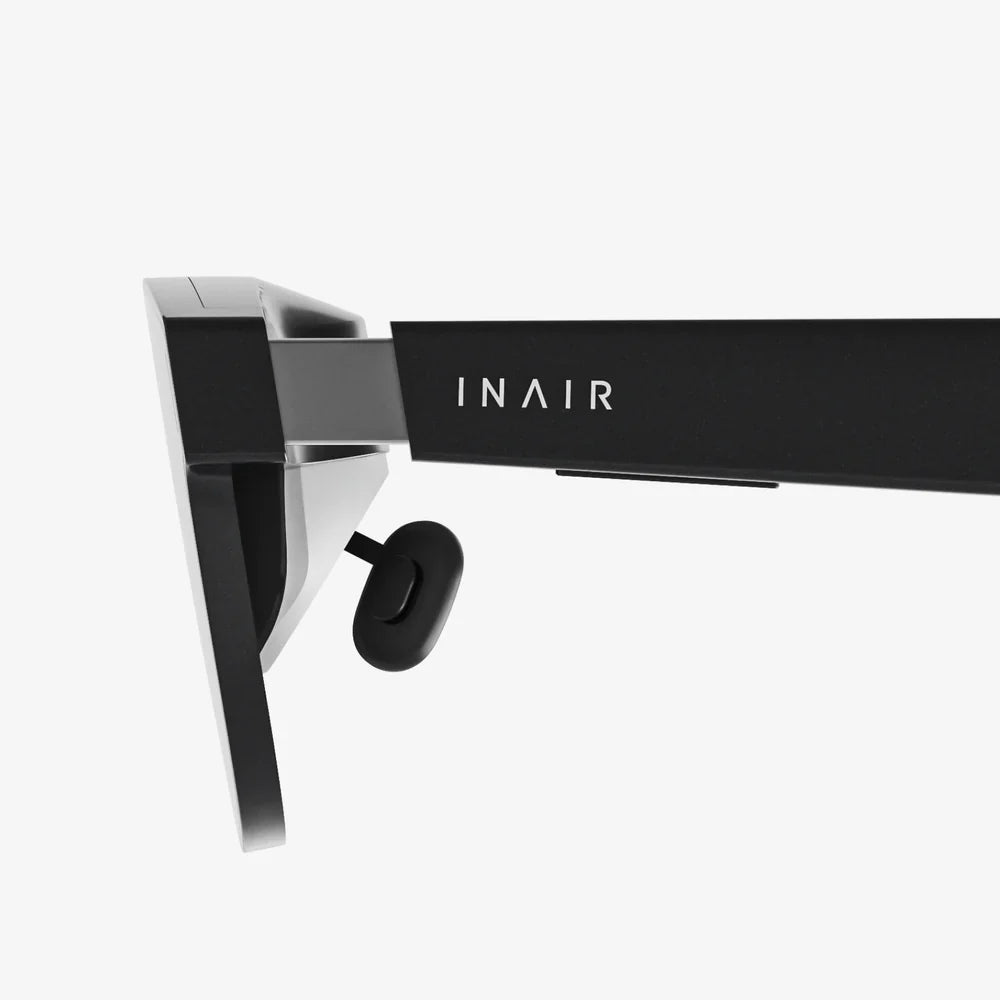
Imagine a device so sleek, so lightweight, and so seamlessly integrated into your life that the very act of stepping into a virtual world feels as natural as putting on a pair of sunglasses. This is not a distant dream from science fiction; it is the reality being forged in the most advanced research labs and design studios today. The pursuit of the smallest VR headset for 2025 represents the culmination of a decade of explosive technological innovation, all converging to create a paradigm shift in how we interact with digital information and with each other. We are on the precipice of a new era, one where the headset ceases to be a bulky, isolating apparatus and becomes an invisible gateway to limitless experiences, forever changing the landscape of work, play, and human connection.
The Architectural Revolution: From Bulky Box to Feather-Light Frame
The journey to miniaturization is a story of overcoming immense engineering challenges. The traditional VR headset architecture, dominant for years, relied on a straightforward but space-consuming design: two high-resolution displays, a series of bulky lenses to focus the image, and external sensors or cameras for positional tracking. This formula, while effective, inherently demanded a large physical form factor.
The 2025 paradigm shatters this model through a multi-faceted approach:
- Pancake Lenses: The adoption of compact folded optics, often called pancake lenses, has been the single biggest contributor to slimming down headsets. These complex optical systems use a polarization-based folding path to dramatically reduce the distance required between the display panel and the user's eye. This innovation alone can reduce the front-to-back depth of a headset by over 50% compared to traditional Fresnel lenses.
- Micro-OLED and Micro-LED Displays: The push for smaller, brighter, and more efficient displays is critical. Micro-OLED panels, which deposit organic light-emitting diodes directly onto a silicon wafer, offer incredibly high pixel density (exceeding 3000 PPI) in a package smaller than a fingernail. For 2025, the emergence of micro-LED technology promises even greater brightness, longevity, and efficiency, all while maintaining this minuscule form factor, eliminating the need for large backlight systems.
- Inside-Out Tracking and Onboard Processing: The removal of external base stations or sensors is a key step towards a self-contained, portable device. Advanced inside-out tracking, using miniature wide-field-of-view cameras and powerful algorithms, handles positional and rotational tracking with millimetric precision. Furthermore, the shift from tethered PCs to onboard processing—either through a powerful yet ultra-efficient system-on-a-chip (SoC) or a symbiotic relationship with a nearby computing device via ultra-low-latency wireless protocols—removes the last physical tether to the outside world.
Beyond Hardware: The Software and Experience Evolution
A smaller headset is not merely a triumph of engineering; it is an enabler of entirely new experiences and use cases that were previously impractical or impossible.
- The Demise of VR Fatigue: A significant barrier to prolonged VR use has been physical discomfort, or 'VR fatigue,' caused by the front-heavy weight and tight straps of traditional headsets. A device weighing well under 200 grams, with weight distribution mimicking that of standard eyewear, fundamentally changes this. Users can engage for hours in virtual meetings, immersive training, or social gatherings without the neck strain and facial pressure that plagued earlier generations. This is a prerequisite for the technology's transition from a novelty to a daily tool.
- Ambient Computing and Augmented Reality: The smallest headsets of 2025 are not purely for VR. Their sleek design often incorporates high-resolution passthrough cameras, enabling a robust mixed reality (MR) experience. Users can switch seamlessly from a fully immersive virtual environment to an augmented one, where digital objects are anchored convincingly in their physical living room. This blurring of lines positions the headset as an ambient computing device—a permanent wearable interface that overlays a context-aware digital layer onto the real world, from navigation prompts floating on the street to recipe instructions hovering beside your kitchen counter.
- Social Acceptance and Always-On Potential: The social stigma of a large, face-encasing device has been a subtle but powerful limiter of adoption. A headset that resembles fashionable or technical eyewear can be worn in public without drawing undue attention. This opens the door for 'always-on' AR applications, where the device becomes a constant companion, offering real-time translation, information retrieval, and communication, fundamentally changing our relationship with pervasive computing.
The Challenges on the Path to Invisibility
Despite the breathtaking progress, the quest for the ultimate form factor is fraught with persistent hurdles that engineers are racing to overcome.
- The Power Dilemma: Miniaturization comes with a severe constraint: battery size. Powering high-resolution displays, multiple cameras, and a powerful processor is incredibly energy-intensive. The 2025 solutions are a mix of ultra-high-density batteries, aggressive power management software that intelligently throttles components based on need, and the development of low-power display technologies like micro-LED. Some concepts even explore offloading the most intensive processing to a smartphone or a small, pocketable compute puck.
- Thermal Management: All this processing power in a tiny space generates heat. Dissipating that heat effectively without making the device uncomfortable to wear or resorting to noisy, small fans is a monumental challenge. Advanced materials like vapor chambers and graphene-based heat spreaders are being integrated into the very structure of the headsets to keep thermals in check.
- Input and Interaction: With no room for traditional handheld controllers, interaction paradigms must evolve. The focus is on advanced inside-out hand tracking, allowing users to manipulate virtual objects with their bare hands with high fidelity. Eye-tracking is becoming standard, not just for foveated rendering (which saves processing power by rendering only the area you're looking at in full detail) but also as a primary input method for menu selection and interface control. Neural interfaces, reading EMG signals from the wrist to interpret subtle finger movements, are an emerging frontier for the most intuitive input yet.
A Glimpse into the Ecosystem: How the Smallest Headsets Will Reshape Industries
The impact of this miniaturization wave will ripple far beyond consumer entertainment, disrupting and enhancing numerous professional fields.
- Enterprise and Remote Work: The virtual office will finally become a viable, comfortable alternative. Architects and engineers will collaborate on 3D models as if they were physical objects on a table. Remote assistants, guided by an expert seeing through their eyes, will perform complex repairs. The headset becomes a universal telepresence and visualization tool.
- Healthcare and Therapy: Surgeons could overlay patient scans directly onto their field of view during procedures. Phobia treatment through controlled exposure therapy will become more accessible and less intrusive. Medical students will learn anatomy in immersive 3D, all facilitated by a device comfortable enough for extended professional use.
- Education and Training: From history students walking through ancient Rome to mechanics training on virtual engine models, education will become experiential. The low barrier of a comfortable, easy-to-use headset will allow for adoption in classrooms and training facilities worldwide.
The race to create the smallest VR headset for 2025 is about much more than winning a spec sheet battle. It is a fundamental reimagining of the relationship between humans and the digital dimensions we create. It is a technical marathon against the laws of physics, a design challenge to create something both powerful and personal, and a philosophical shift towards a future where our digital and physical realities are no longer separate, but fluidly interconnected. The devices emerging are not just products; they are the keys to unlocking this new layer of human experience, promising a world where the only limit is the imagination of the user, unencumbered by the hardware on their face.
This relentless drive towards invisibility is quietly building a future where the most powerful technology is the kind you hardly notice at all, seamlessly weaving a tapestry of digital magic into the fabric of our everyday lives until the two become indistinguishable.
Share:
Building a PC VR Headset: The Ultimate Guide to High-End Immersion
Singapore VR Headset: A Deep Dive into the Lion City's Virtual Reality Revolution