


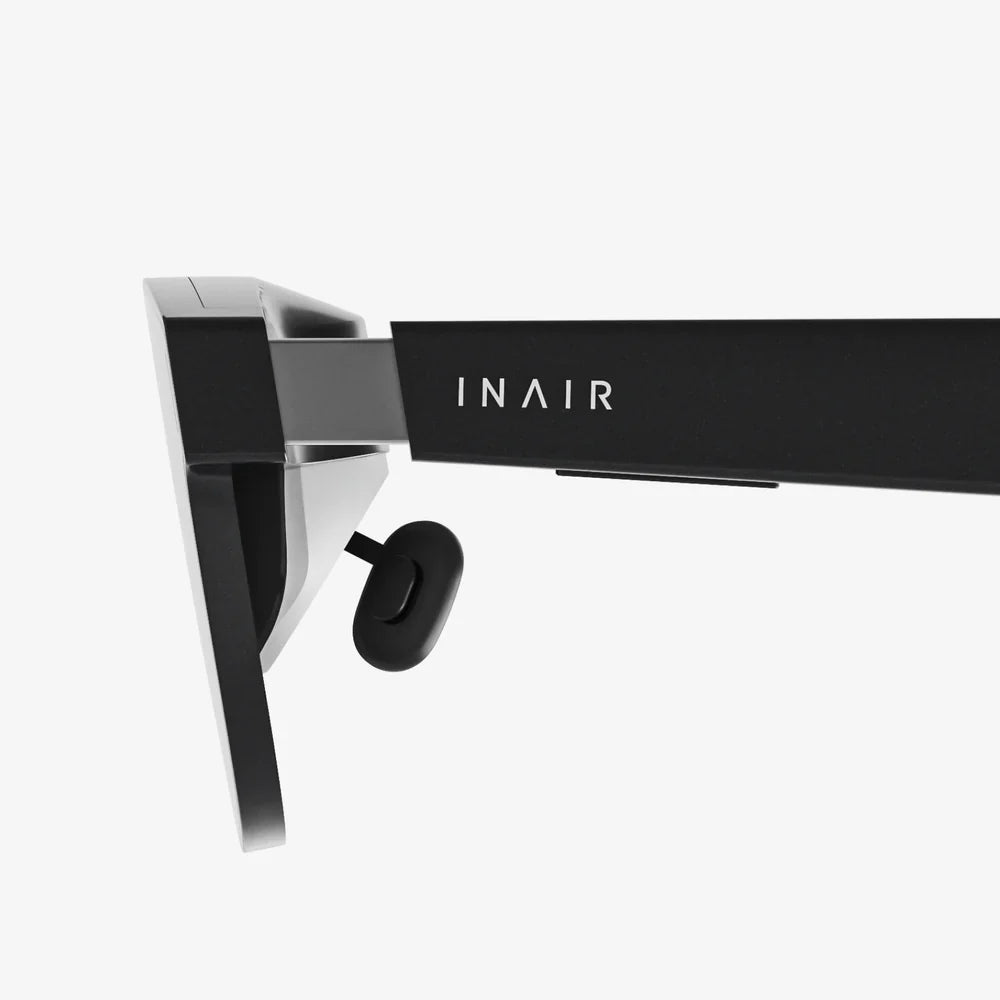
Imagine a world where the line between the digital and the physical doesn't just blur—it disappears. A world where instructions float beside a complex machine, historical figures materialize in a classroom to tell their stories, and a surgeon can see a patient's vital signs overlaid directly on their body during an operation. This is not a distant sci-fi fantasy; it is the tangible, transformative reality being built today by advanced smart AR solutions. This technology is quietly evolving from a consumer novelty into a powerful, intelligent framework poised to revolutionize how we work, learn, and interact with the world around us.
The core of a smart AR solution lies in its name. It's not just Augmented Reality—the simple act of superimposing digital content onto a user's real-world view. The critical differentiator is the word smart. This implies a layer of intelligence, context-awareness, and interactivity that elevates it beyond a simple heads-up display. A smart AR solution understands its environment, processes data in real-time, and delivers relevant, actionable information precisely when and where it is needed.
The Architectural Pillars of Intelligent Augmentation
Building such a sophisticated system requires the convergence of several cutting-edge technologies. A true smart AR solution is a symphony of hardware and software, each component playing a crucial role.
Sensing and Perception
This is the solution's eyes and ears. Advanced sensor suites, including high-resolution cameras, LiDAR, depth sensors, and inertial measurement units (IMUs), continuously scan the environment. They capture not just a 2D image but a detailed 3D map of the geometry, textures, and spatial relationships of the surroundings. This is the foundational data upon which everything else is built.
Processing and Intelligence
Here lies the brain. The raw sensor data is processed using powerful algorithms for Simultaneous Localization and Mapping (SLAM), which allows the device to understand its own position within the environment while simultaneously building a map of that environment. This is combined with machine learning models for object recognition, gesture tracking, and scene understanding. The system doesn't just see a table; it recognizes it as a specific model of a conference table and knows that digital documents can be "placed" on it for collaboration.
Rendering and Display
This is the solution's voice—how it communicates with the user. Using either optical see-through or video see-through displays, the system seamlessly blends digitally generated graphics, text, and 3D models with the user's perception of reality. The key challenge is achieving photorealistic rendering with correct occlusion (digital objects being hidden by real ones) and lighting consistency, making the virtual elements feel truly present.
Connectivity and Cloud Integration
No smart AR solution is an island. Its power is amplified by its connection to the wider digital world. 5G connectivity enables low-latency data streaming and offloads heavy processing to cloud servers. Integration with Internet of Things (IoT) platforms allows the AR system to pull real-time data from connected devices—showing machine performance metrics, environmental conditions, or inventory levels directly in the user's field of view.
Transforming the Industrial Landscape
While consumer applications capture headlines, the most profound impact of smart AR solutions is currently happening on the factory floor, in engineering labs, and within remote field service. Here, the technology is solving real-world problems and delivering a significant return on investment.
The Future of Manufacturing and Assembly
In complex manufacturing, a smart AR solution is revolutionizing workflows. Instead of relying on paper manuals or static computer screens, assembly line workers can wear AR glasses that project step-by-step 3D instructions directly onto the components they are assembling. The system can highlight the exact bolt to tighten, show the correct orientation for a part, and even warn the operator if a wrong step is about to be taken. This drastically reduces errors, slashes training time for new employees, and increases overall production efficiency. Furthermore, digital work instructions can be updated remotely and instantly across a global workforce, ensuring everyone is working from the latest version.
Revolutionizing Remote Expertise and Field Service
One of the most powerful use cases is remote assistance. When a field technician encounters a complex problem with a piece of equipment, they no longer need to wait for a specialist to fly to the site. Using a smart AR solution, they can initiate a video call with an expert located anywhere in the world. This expert can see the technician's view, annotate the live video feed with arrows, circles, and notes, and even anchor 3D diagrams to specific machine parts. The technician sees these annotations perfectly aligned in their real-world view, as if the expert were standing right beside them. This minimizes equipment downtime, reduces travel costs, and empowers less-experienced technicians to resolve issues beyond their normal expertise.
Next-Level Design and Prototyping
In design and engineering, smart AR solutions are changing the prototyping process. Instead of viewing a 3D model on a 2D screen, designers and clients can project a life-size, holographic representation of a product into a physical space. They can walk around it, inspect it from every angle, and even interact with moving parts to assess ergonomics and aesthetics long before any physical prototype is built. This facilitates better collaboration, accelerates the design iteration cycle, and leads to a superior final product.
Beyond the Factory: Smart AR in Healthcare and Education
The applications extend far beyond industrial settings, reaching into fields where the stakes are human lives and minds.
Precision Medicine and Enhanced Surgery
In healthcare, smart AR solutions are providing surgeons with a kind of x-ray vision. By overlaying pre-operative scans—such as MRI or CT data—directly onto the patient's body during surgery, surgeons can see the precise location of tumors, blood vessels, and critical structures beneath the surface. This enhances precision, minimizes incision sizes, and reduces procedure times. Furthermore, patient vitals and monitoring data can be displayed in the surgeon's periphery, eliminating the need to look away from the operating field.
Immersive and Interactive Learning
Education is being transformed from passive learning to active exploration. A history lesson on ancient Rome can come alive as students explore a detailed 3D model of the Colosseum projected in their classroom. Medical students can practice complex procedures on detailed, interactive holograms of human anatomy. This experiential learning leads to dramatically improved knowledge retention and engagement, breaking free from the constraints of textbooks and videos.
Navigating the Challenges on the Path to Ubiquity
Despite its immense potential, the widespread adoption of smart AR solutions faces several significant hurdles that must be overcome.
The Hardware Conundrum: Form Factor and Battery Life
For true ubiquity, the hardware must become socially acceptable, comfortable to wear for long periods, and powerful enough to handle complex processing. Current devices often face a trade-off between capability and form factor. Bulky headsets offer high performance but are impractical for all-day use, while sleek glasses often lack the processing power and field of view for advanced applications. Battery life remains a persistent challenge, with high-fidelity AR often draining power quickly.
The Software Imperative: Developing for a Spatial World
Creating applications for this new medium requires a fundamentally different design philosophy. User Interface (UI) and User Experience (UX) design must move from flat screens to a three-dimensional, context-aware space. Developers must learn to design for gaze, gesture, and voice control, creating intuitive interactions that feel natural and avoid overwhelming the user with information—a phenomenon often called "data sprawl" or "AR clutter."
Privacy, Security, and the Ethical Dimension
A technology that continuously captures its surroundings raises profound privacy questions. The data collected by AR devices—video feeds, spatial maps, and user interactions—is incredibly sensitive. Robust frameworks for data ownership, consent, and security are non-negotiable. Furthermore, the potential for digital vandalism (placing offensive virtual content in real locations) or creating dangerous distractions in the physical world necessitates the development of strong ethical guidelines and governance.
The Invisible Future: What Lies Ahead
The ultimate goal for smart AR technology is not to create a world cluttered with digital noise, but to develop an invisible interface—one that provides information and capabilities only when needed, enhancing our innate abilities without intruding on our experience. The future will see these solutions becoming more integrated with Artificial Intelligence, evolving from tools that present information to proactive assistants that anticipate our needs. We will move towards more natural forms of interaction, like advanced gesture control and eventually, brain-computer interfaces. The device itself will fade into the background, perhaps evolving into standard eyeglasses or even contact lenses, making the augmentation seamless and ever-present.
The revolution won't be announced with a bang, but with a whisper. It will be the mechanic who fixes a jet engine on the first try, the student who masters human anatomy by holding a beating heart in their hands, and the engineer who collaborates with a colleague on a holographic engine block from across the globe. The true power of a smart AR solution is its ability to make us more capable, more efficient, and more connected to the latent information hidden within our physical world. It’s not about escaping reality, but about unlocking its full potential, and that future is already being overlaid onto our present.
Share:
Use VR Goggles as Monitor: The Ultimate Guide to Immersive Computing
Wearable Technology Presentation: A Masterclass in Showcasing the Future on Your Wrist