


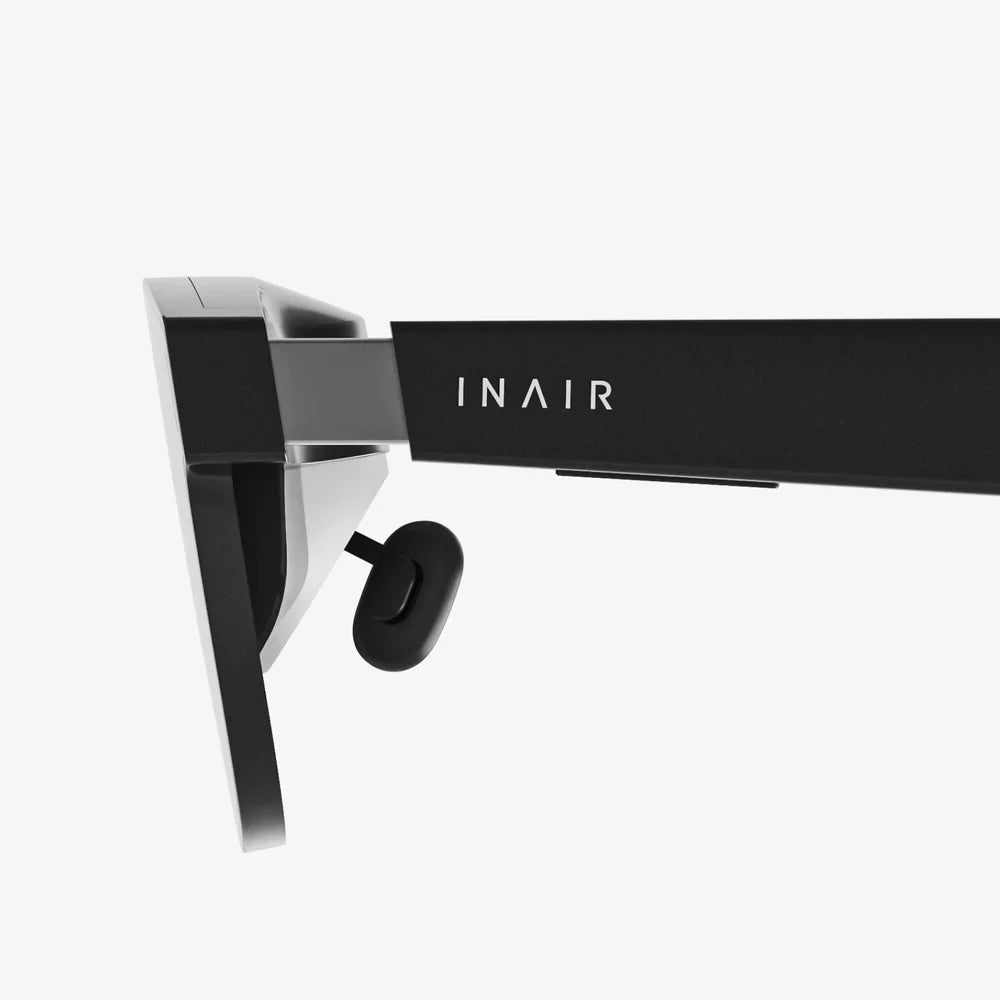
The sleek frames sit unobtrusively on the face, looking for all the world like a pair of contemporary high-end spectacles. But behind the lenses lies a technological revolution, a promise to fundamentally alter our perception of reality itself. This is the bold claim, the grand proclamation of the latest generation of wearable technology. They are not merely gadgets; they are portals. They represent a paradigm shift in human-computer interaction, moving us beyond the confines of screens and into a world where information is contextual, ambient, and integrated directly into our field of vision. This is the future that modern smart glasses vaunt—a future of seamless, augmented living.
The Evolution of a Vision: From Sci-Fi to Your Face
The concept of augmenting human vision with data is not new. For decades, science fiction has painted vivid pictures of characters interacting with floating holographic screens and data overlays. The journey from fantasy to tangible, consumer-facing technology, however, has been fraught with challenges. Early iterations were often bulky, socially awkward, and technologically limited, struggling with short battery life, limited field of view, and poor processing power. They were proof-of-concepts that, while revolutionary for their time, failed to integrate gracefully into daily life.
The true breakthrough, and what the current wave of devices vaunt, is the achievement of a critical trifecta: powerful and miniaturized components, sophisticated software, and a design that prioritizes normalcy. Advances in micro-optics have allowed for projectors to be hidden within frames, casting information onto the lenses with startling clarity. Microprocessors, once the size of a deck of cards, are now tiny systems-on-a-chip capable of handling complex augmented reality (AR) tasks. Artificial intelligence and machine learning provide the contextual awareness that makes the technology truly smart, understanding what the user is looking at and serving relevant information instantaneously. This convergence of technologies has finally enabled the creation of devices that don't scream "technology" but instead whisper it, blending into the user's lifestyle rather than defining it.
Beyond the Screen: The Core Technologies They Vaunt
To understand the promise, one must understand the machinery. The magic of these devices is built upon several key technological pillars that they proudly showcase.
Advanced Optical Systems
At the heart of the experience is the display technology. Unlike virtual reality headsets that completely occlude your vision, these glasses use waveguide technology or other micro-projection systems to overlay digital images onto the real world. Imagine a tiny projector embedded in the arm of the glasses that bounces light through a transparent combiner lens and into your eye. The result is a crisp, bright display of text, icons, or 3D objects that appears to float in space several feet away, all while allowing you to see the world clearly behind it. This optical feat is a primary feature they vaunt, enabling always-available information without the isolation of a screen.
Contextual Awareness and Artificial Intelligence
What makes the glasses "smart" is their ability to understand the context of your situation. Equipped with a suite of sensors—including high-resolution cameras, microphones, inertial measurement units (IMUs), and sometimes depth sensors—they constantly gather data about your environment. Onboard AI processes this data in real time. It can perform visual search, identifying objects, translating text, or recognizing landmarks. It can hear your voice commands and distinguish them from background noise. This contextual intelligence is what they vaunt as the key to a truly intuitive interface, one that anticipates your needs instead of waiting for commands.
Seamless Connectivity
These devices are not designed to be standalone supercomputers. Instead, they vaunt a symbiotic relationship with your other devices, primarily your smartphone. Leveraging high-speed Bluetooth and Wi-Fi, they act as a peripheral for your phone, displaying notifications, taking calls, and streaming content. This approach keeps the glasses lightweight and power-efficient, outsourcing heavy computation to the device in your pocket while providing a revolutionary new way to view that device's output.
Transforming Daily Life: The Practical Applications They Vaunt
The true measure of any technology is its utility. The latest generation of smart glasses vaunt a wide array of applications that extend far beyond novelty, promising to enhance productivity, accessibility, and social connection.
The Augmented Professional
In the workplace, the potential is staggering. For field technicians, repair manuals and schematics can be overlaid directly onto the machinery they are fixing, guiding their hands with visual cues. For surgeons, vital patient statistics and imaging data can be displayed in their periphery without ever needing to look away from the operating table. For architects and engineers, 3D models of their designs can be projected onto a physical site, allowing for unparalleled visualization. They vaunt a future of hands-free, eyes-forward work, drastically increasing efficiency and reducing error.
Revolutionizing Social and Communication Dynamics
Socially, these glasses promise to change how we connect. Imagine having a conversation with someone while seeing their name and recent conversation topics subtly displayed next to them—a boon for the forgetful or those navigating large networking events. Live translation of spoken foreign language can appear as subtitles in real-time, breaking down language barriers in a way that feels like a superpower. They vaunt a more connected and understanding world, where information facilitates rather than hinders human interaction.
Enhanced Accessibility and Navigation
For individuals with visual or auditory impairments, the assistive capabilities are profound. Those with low vision could have text from signs or documents read aloud or magnified in their display. The hearing impaired could see real-time transcriptions of conversations happening around them. For everyone, navigation arrows can be painted onto the sidewalk, guiding you turn-by-turn without ever needing to glance at a phone. This is perhaps the most noble promise they vaunt: using technology to empower and include.
The Inevitable Hurdles: Challenges They Cannot Vaunt Away
Despite the exciting potential, the path forward is not without significant obstacles. The very features they vaunt also raise complex questions that society must grapple with.
The Privacy Paradox
The most pressing concern is privacy. A device that has a always-on camera and microphone, constantly scanning and recording the environment, is a privacy advocate's nightmare. The potential for surreptitious recording, facial recognition on a mass scale, and the collection of unprecedented amounts of biometric data is immense. Manufacturers vaunt strict privacy controls—like LED indicators when recording or on-device processing that doesn't send data to the cloud—but building and, more importantly, maintaining public trust will be a monumental challenge. Clear regulations and transparent user controls will be non-negotiable for widespread adoption.
The Social Acceptance Hurdle
Technology must be socially acceptable to be adopted. Wearing a camera on your face in a social setting can be perceived as rude or threatening. The "glasshole" stigma from earlier attempts still lingers. The newest designs vaunt a normal appearance to overcome this, but the social contract around recording and being recorded in public and private spaces will need to be rewritten. It will take time for these devices to become as socially normalized as Bluetooth earpieces or smartwatches once were.
Battery Life and the Utility Trade-Off
While improved, battery life remains a constraint. To achieve an all-day form factor, compromises are made. Continuous use of the most power-intensive features, like full-color AR projection or constant video recording, can drain a battery in a few hours. Manufacturers vaunt a balance, offering core functionality like notifications and music for a full day, with more intensive features used sparingly. This trade-off between utility and endurance is a key engineering challenge that continues to be refined.
A Glimpse Over the Horizon: What the Next Decade May Vaunt
If the current generation is about laying the foundation, the next decade will be about building the skyscraper. The future they vaunt is one where the technology becomes even more invisible and powerful.
We can anticipate the complete integration of these devices into broader ecosystems, functioning as the primary interface for a user's digital life. Advances in brain-computer interfaces may eventually allow for control through mere thought or subtle eye movements. The resolution and field of view of displays will expand to the point where virtual objects are indistinguishable from real ones. They will likely evolve from being a companion device to a replacement for smartphones, televisions, and laptops, becoming the one device we need to interact with the digital universe.
This evolution will not just change what we do, but how we think about reality itself. It will redefine creativity, education, and entertainment, offering new forms of art and storytelling that are spatially aware and interactive. The boundary between the digital and the physical will erode, creating a blended, augmented existence.
The journey is just beginning, and the road ahead is as challenging as it is exciting. The sleek frames on your face are more than just glasses; they are a statement. They are a declaration of a new age of computing, one that is personal, contextual, and seamlessly interwoven with the very fabric of our reality. The potential to enhance human capability is limitless, waiting only for us to put them on and see the world anew.
Share:
Smart Glasses Market CAGR: A Deep Dive into the Numbers and Future Trends
Smart Glasses Market CAGR: A Deep Dive into the Numbers and Future Trends