


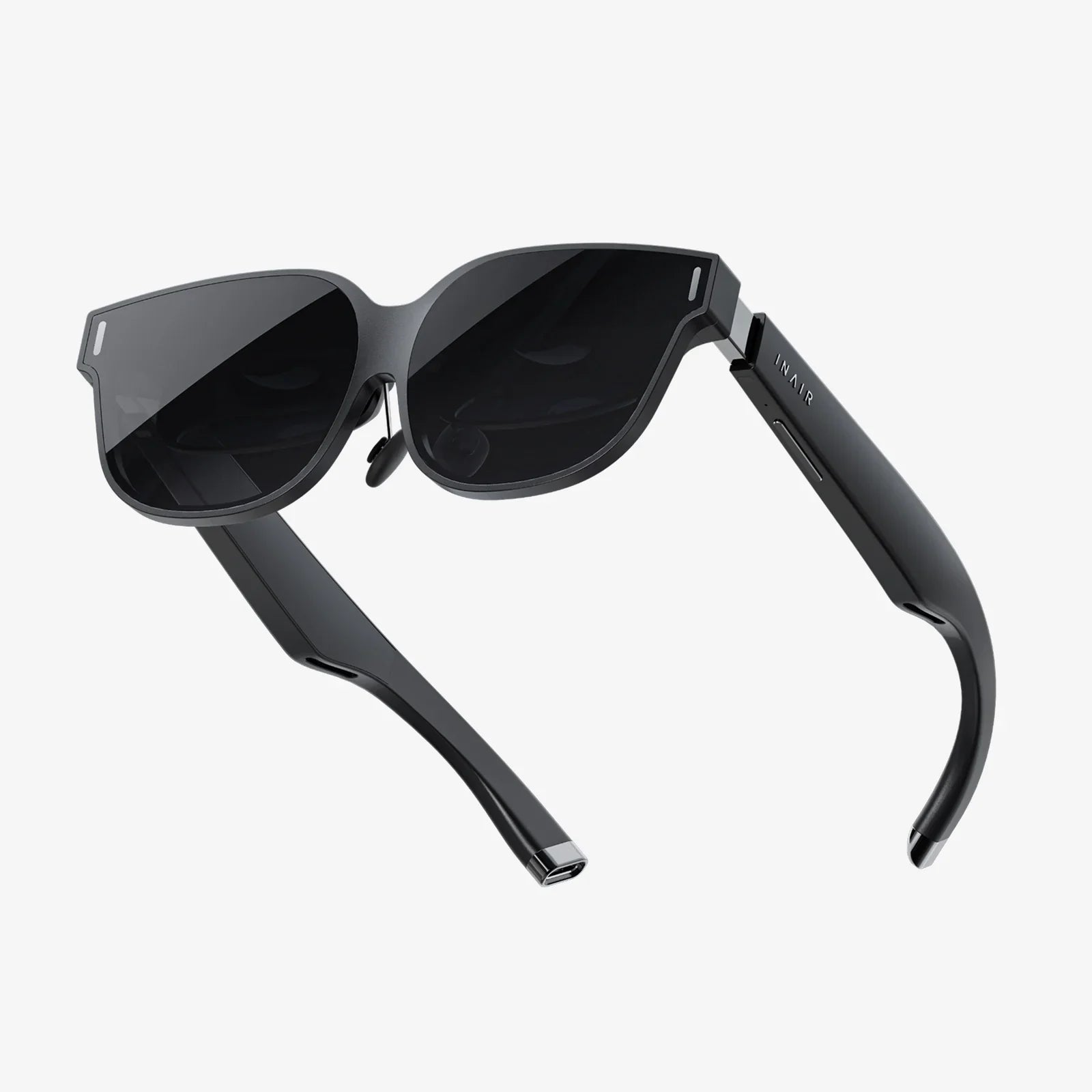
Imagine a world where information flows as effortlessly as sight, where your most pressing questions are answered the moment you think them, and your digital life is woven so seamlessly into your physical reality that the line between the two begins to blur. This is no longer the realm of speculative fiction; it is the imminent future being crafted today by the rapid evolution of smart glasses with AI assistant built in. This convergence of advanced optics, miniature computing, and powerful artificial intelligence is poised to unlock a new dimension of human potential, transforming how we work, learn, navigate, and connect. The era of staring down at a screen is giving way to looking up and out, with a intelligent companion subtly enhancing our view of the world.
The Architectural Marvel: How They Actually Work
At first glance, a pair of these advanced spectacles might appear deceptively simple, perhaps even indistinguishable from traditional eyewear. This sleek exterior, however, belies a dense concentration of cutting-edge technology working in perfect harmony. The magic lies in the integration of several core components.
The most critical element is the optical system. Unlike the bulky headsets of the past, modern smart glasses employ sophisticated solutions like waveguide technology or micro-projectors. These systems beam information directly onto specialized lenses, which then reflect the light into the user's eye. The result is a crisp, transparent display of data—text, directions, icons—that appears to float in the user's field of view, overlaying the real world without obstructing it. This is the foundation of augmented reality (AR), the visual gateway to a digitally-augmented existence.
Acting as the central nervous system is the integrated AI assistant. This is not merely a voice command system but a sophisticated, on-device neural processing unit (NPU) often complemented by cloud-based machine learning. This dual approach allows for low-latency, private processing of simple commands on the device itself, while leveraging the immense power of the cloud for complex queries and continuous learning. This assistant is always listening for its wake word, ready to spring into action, but designed with stringent privacy protocols to ensure it only engages when intentionally activated.
Supporting this are a suite of sensors that would make a spacecraft envious: high-resolution cameras for computer vision, microphones for audio input, inertial measurement units (IMUs) for tracking head movement and orientation, and ambient light sensors to adjust display brightness. All of this is powered by a compact yet efficient battery and managed by a miniaturized processor, a marvel of modern engineering that fits into the frame of the glasses.
Beyond Convenience: A Revolution in Daily Productivity
The practical applications for professionals are nothing short of revolutionary. For the field technician repairing a complex piece of machinery, the glasses can overlay schematic diagrams and step-by-step instructions directly onto the equipment they are viewing, their hands remaining free to work. They can stream their point-of-view to a remote expert thousands of miles away who can then annotate their real-world view with arrows and notes, facilitating instant collaboration.
For the surgeon, access to vital signs, ultrasound images, or 3D anatomical models can be displayed directly in their line of sight without ever breaking sterility or looking away from the patient. For the logistics worker in a vast warehouse, the AI can visually highlight the fastest route to the next item, instantly translate labels, and confirm inventory through image recognition, dramatically accelerating fulfillment processes.
The utility extends to the everyday knowledge worker. Imagine sitting in a meeting and, upon hearing an unfamiliar acronym, quietly asking your AI for a definition and having it appear discreetly in your periphery. You could dictate and transcribe notes, emails, or memos while walking between appointments. A quick glance at a foreign restaurant menu could instantly translate it to your native language. The device becomes a silent, hyper-efficient productivity partner, automating the mundane and unlocking cognitive bandwidth for higher-order thinking.
Transforming Social and Personal Interaction
The impact of this technology extends far beyond the spreadsheet and into the deeply human realms of memory and connection. The AI assistant can act as a perfect, personalized memory aid. It can subtly display the name and key details of a person you’re about to meet at a networking event, saving you from the dreaded forgotten-name panic. It can help those with social anxiety by providing gentle conversational prompts or reminders.
For the average person, the glasses can enrich experiences in profound ways. Touring a museum, you could gaze at a painting and have the AI provide a rich audio history of the artist and the work, all without looking at a placard or your phone. Hiking a mountain trail, it could identify flora and fauna with a glance, overlaying information about the local ecosystem. It can serve as a navigational guide, painting a path on the sidewalk in front of you, making getting lost a thing of the past.
Perhaps most powerfully, it can change how we capture and relive our most precious moments. Instead of holding up a phone to record a child’s first steps or a concert, you can be fully present in the experience, simply instructing the glasses to capture a first-person, high-definition video from your perspective. You are no longer a spectator behind a lens but an active participant, with your digital companion handling the documentation seamlessly.
Navigating the Inevitable Ethical and Social Crossroads
As with any transformative technology, the path forward is not without significant challenges and ethical quandaries. The most immediate concern is privacy. The combination of always-on cameras, microphones, and facial recognition capabilities presents a societal paradigm shift. The potential for surreptitious recording and data collection is immense, necessitating robust, transparent, and legislated safeguards. Clear physical and software indicators—like a prominent light that activates with recording—must be non-negotiable features to ensure those around the user are aware when they are being recorded.
There is also the risk of a new digital divide. Will this technology become an exclusive tool for the affluent, creating a class of hyper-enhanced "cyborgs" with significant informational and cognitive advantages over those who cannot afford it? Ensuring equitable access and preventing new forms of discrimination will be a critical societal challenge.
On a personal level, there are concerns about distraction and dependency. Will constant digital stimulation and the ease of outsourcing memory and navigation to a machine lead to a atrophy of our own innate abilities? Will we become less present in our own lives, more focused on the data overlay than the world itself? The technology must be designed to augment human experience, not replace it, encouraging moments of disconnection and promoting digital wellness.
The Future Vision: Where Do We Go From Here?
The current generation is merely the first step on a long and exciting journey. The future will see these devices become even lighter, more powerful, and more energy-efficient. Advancements in battery technology, such as solar-charging coatings or kinetic energy harvesting from movement, could lead to all-day or even multi-day battery life. Display technology will advance to offer full-color, high-resolution overlays across the entire field of view.
The AI itself will evolve from a reactive assistant to a proactive partner. It will learn our routines, preferences, and goals, anticipating our needs before we voice them. It might notice you looking at a busy schedule and suggest blocking out time for a break, or see you reading a complex document and offer to summarize it. It could monitor subtle health metrics through non-invasive sensors, tracking posture, alertness, or even early signs of illness, transitioning from a productivity tool to a guardian of our well-being.
Ultimately, the goal is true contextual awareness. The glasses will understand not just what you are looking at, but the context of the situation. In a business meeting, it will be formal and concise. On a weekend hike, it will be informative and adventurous. During a quiet moment at home, it will know to be silent. This deep integration will make the technology feel less like a tool and more like a natural extension of our own cognition.
The true promise of smart glasses with an integrated AI assistant is not to bury us deeper in technology, but to use technology to set us free—free from the distraction of devices, free from the anxiety of forgotten information, and free to engage with the world and each other more meaningfully. We are standing at the precipice of a new way of being human, one where our digital and physical selves finally converge into a harmonious whole. The future is not in your pocket; it’s right before your eyes.
Share:
Automatic Lens Glasses The Future of Vision is Here and It's Adaptive
Virtual Office Ideas to Revolutionize Your Remote Work and Boost Team Productivity