


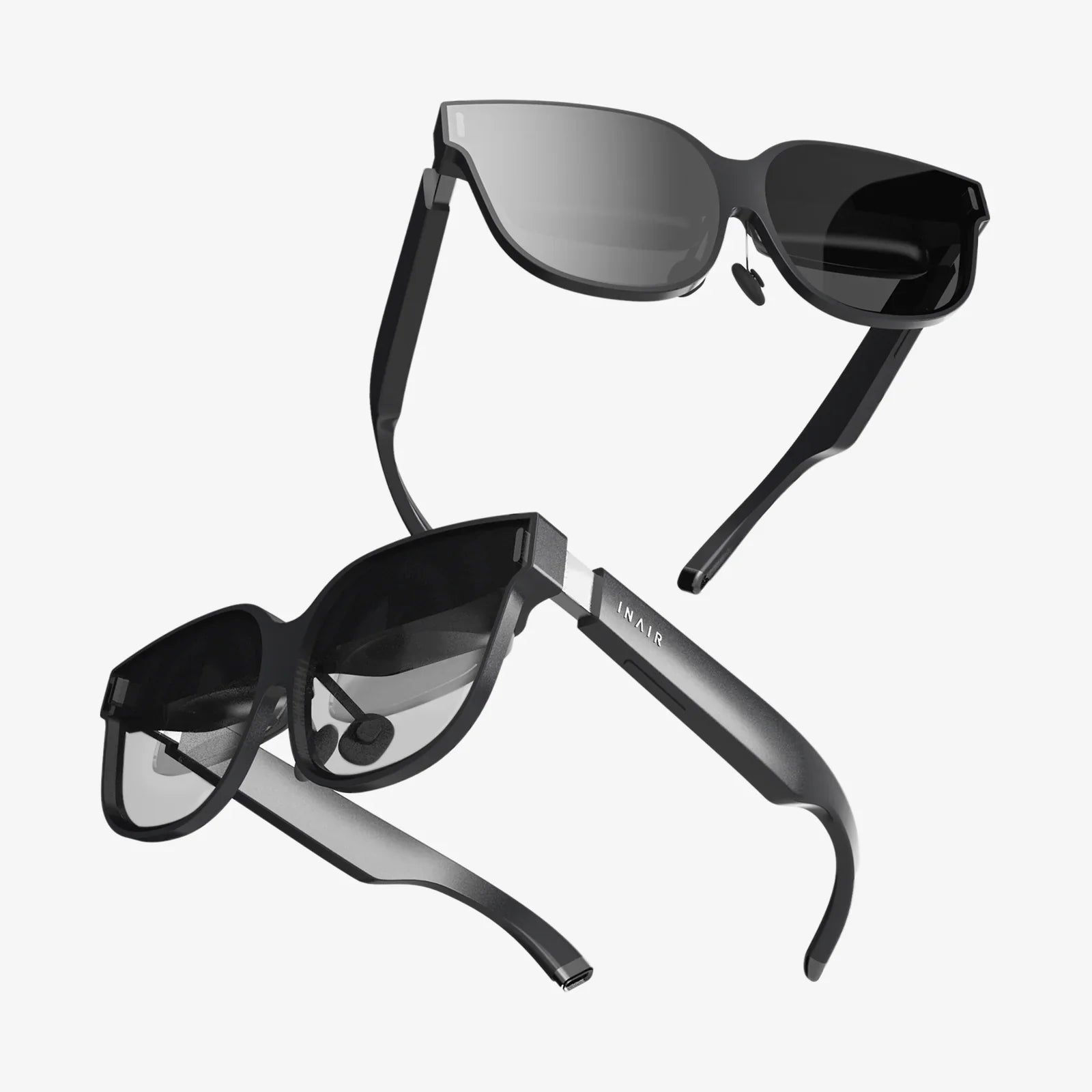
Imagine a world where information doesn't live on a screen in your pocket but is woven seamlessly into the fabric of your reality, where a digital assistant doesn't just respond to your voice but understands your context, anticipates your needs, and sees the world through your eyes. This is not a distant science fiction fantasy; it is the imminent future being forged in the labs and design studios of today, a future set to arrive on the bridge of your nose by 2025. The next generation of smart glasses with built-in AI promises to be the most personal and transformative piece of technology we have ever encountered, moving beyond the awkward prototypes of the past to become the invisible computer that finally closes the gap between human intention and digital action.
The Evolution from Gimmick to Necessity
The journey of smart glasses has been a turbulent one, marked by early missteps, public skepticism, and technological limitations. Initial iterations were often bulky, socially awkward, and offered functionality that felt more like a party trick than a genuine utility. They were solutions in search of a problem. However, the convergence of several critical technological advancements has set the stage for a dramatic renaissance. By 2025, the foundational elements will have matured to a point where they can finally deliver on the original promise.
The miniaturization of components is perhaps the most crucial factor. Processors powerful enough to run complex AI models locally are now small and energy-efficient enough to be integrated discreetly into the frames of eyewear. Similarly, battery technology, while always a challenge, has seen incremental gains that, when combined with ultra-low-power displays and chipsets, can deliver all-day usability. The displays themselves have evolved from clunky projections to micro-LED and laser beam scanning technologies that project crisp, high-resolution images directly onto the retina, allowing for augmented overlays that are bright and clear even in direct sunlight, all while maintaining a completely transparent view of the real world.
But the true heart of the 2025 smart glasses revolution is not the hardware; it is the sophisticated, built-in artificial intelligence. This is not the cloud-dependent, voice-only AI of yesterday. This is an always-on, contextual, and anticipatory intelligence that processes a constant stream of visual and auditory data from its onboard sensors to understand the world around you and your interaction with it.
The Architecture of Intelligence: Sensing, Processing, and Understanding
The sophisticated functionality of 2025's smart glasses is built upon a sophisticated sensory architecture. A suite of tiny, imperceptible sensors acts as the eyes and ears for the onboard AI.
- High-Resolution Cameras: These are not for recording video in the traditional sense but for computer vision. They continuously scan the environment to identify objects, text, people, and places.
- Depth Sensors and LiDAR: These components map the world in three dimensions, understanding spatial relationships and distances. This allows digital objects to be placed realistically in your environment and enables precise gesture control.
- Advanced Microphone Arrays: Using beamforming technology, these mics can isolate your voice from ambient noise with incredible accuracy, enabling clear voice commands even in a crowded room. They also work passively to provide audio context to the AI.
- Inertial Measurement Units (IMUs): These track head movement and orientation, ensuring the digital overlays remain stable and locked in place within your field of view.
All this data is processed not in a distant data center, but primarily on the device itself, thanks to a dedicated Neural Processing Unit (NPU). This shift to on-device AI is critical for three reasons: speed, privacy, and reliability. Latency is reduced to near zero, as there is no need to send data to the cloud and wait for a response. Your most personal data—what you see and hear—never leaves your device, addressing a major privacy concern. And functionality remains intact even without an internet connection.
The AI itself is a multi-modal model, meaning it can understand and cross-reference inputs from all these sensors simultaneously. It doesn't just hear you say, "What is that?" it uses the camera to see exactly what you are looking at to provide an immediate, relevant answer.
Redefining Human Capability: The Practical Applications
The theoretical capabilities are impressive, but their real-world applications are what will make these devices indispensable by 2025.
The Ultimate Productivity Companion
For professionals, smart glasses will dissolve the physical barriers of the office. A virtual, multi-monitor setup can be conjured anywhere you go, allowing you to work on a sprawling digital canvas in a coffee shop, airport, or park. During a video conference, real-time language translation can be displayed as subtitles beneath a colleague speaking a foreign language. Step-by-step instructions for repairing a piece of equipment or performing a complex medical procedure can be overlaid directly onto the components in front of you, guided by the AI ensuring you follow the correct sequence.
Revolutionizing Social Interaction and Accessibility
For individuals who are deaf or hard of hearing, smart glasses could transcribe conversations in real time, displaying the speaker's words like a comic book caption, making group discussions infinitely more accessible. For those with visual impairments, the AI could act as a visual interpreter, amplifying text, identifying obstacles, and describing scenes, people, and objects. In everyday social settings, the AI could subtly display contextually relevant information—the name of an acquaintance you met once before, the topic of a presentation you are about to attend—effectively acting as a social and professional memory aid.
Seamless Navigation and Contextual Information
Gone are the days of looking down at a phone for directions. A faint, path-guided arrow will be projected onto the sidewalk in front of you, seamlessly integrated into the real world. Look at a restaurant, and its ratings and tonight's specials appear. Look at a historical landmark, and its story unfolds before you. The city itself becomes an interactive, informative landscape, with the AI serving as your personal tour guide, revealing the hidden digital layer of information that exists all around us.
Navigating the Invisible Minefield: Privacy and the Social Contract
The potential of always-on, always-sensing glasses is inextricably linked to profound questions of privacy and social etiquette. A device that can record and analyze everything you see and hear is a powerful tool, but in the wrong hands, it could be a dystopian nightmare. The industry's success in 2025 will depend entirely on its ability to build trust through transparent design.
This will require clear, physical indicators—like a dedicated LED light that is hardwired to illuminate whenever sensors are active—to signal to others when recording is happening. It will require robust, user-controlled privacy settings that allow individuals to easily disable sensors in sensitive situations. Perhaps most importantly, it will require the establishment of new social norms and potentially even legislation. Is it acceptable to record a conversation without explicit consent? Can you scan a person's face to pull up their public social profile? These are not technological questions but societal ones that we must answer collectively before these devices become ubiquitous.
The companies developing this technology must adopt a philosophy of "privacy by design," ensuring that data is minimized, anonymized where possible, and encrypted both in transit and at rest. The choice between utility and intrusion will be the defining ethical battle of this new computing paradigm.
The Road to 2025: Overcoming the Final Hurdles
For all the progress, significant challenges remain before smart glasses can achieve mainstream adoption. Battery life, while improved, will need to be managed intelligently, with the AI itself optimizing power consumption based on usage patterns. The user interface must be intuitive and effortless, moving beyond voice and gesture to include more subtle inputs like eye-tracking and even neural interfaces for silent, thought-based commands.
But the biggest hurdle may be cultural and aesthetic. The devices must be indistinguishable from high-end traditional eyewear—lightweight, stylish, and offered in a multitude of designs to suit personal taste. They must become a fashion statement, not a tech statement. Furthermore, the price point must move from early-adopter luxury to consumer accessibility, likely through carrier subsidies and various pricing tiers, much as we saw with smartphones.
The smart glasses of 2025 will not be a standalone product; they will be the central hub of a personal area network, seamlessly connecting to and controlling your other devices—your phone, your earphones, your smartwatch—creating a cohesive and intuitive ecosystem of technology that serves you, rather than demanding your attention.
We are standing on the precipice of the next great shift in human-computer interaction, a move away from devices we look down at and towards intelligence we look through. The smart glasses of 2025 represent more than just a new gadget; they are the gateway to an augmented existence, offering the tantalizing promise of enhanced perception, erased limitations, and a deeper connection to the world around us. The future is not in your hand; it’s right in front of your eyes, waiting to be seen.
Share:
AR VR Testing Tools: The Complete Guide to Ensuring Immersive Excellence
Who Is Using Augmented Reality: The Surprising Industries Embracing AR