


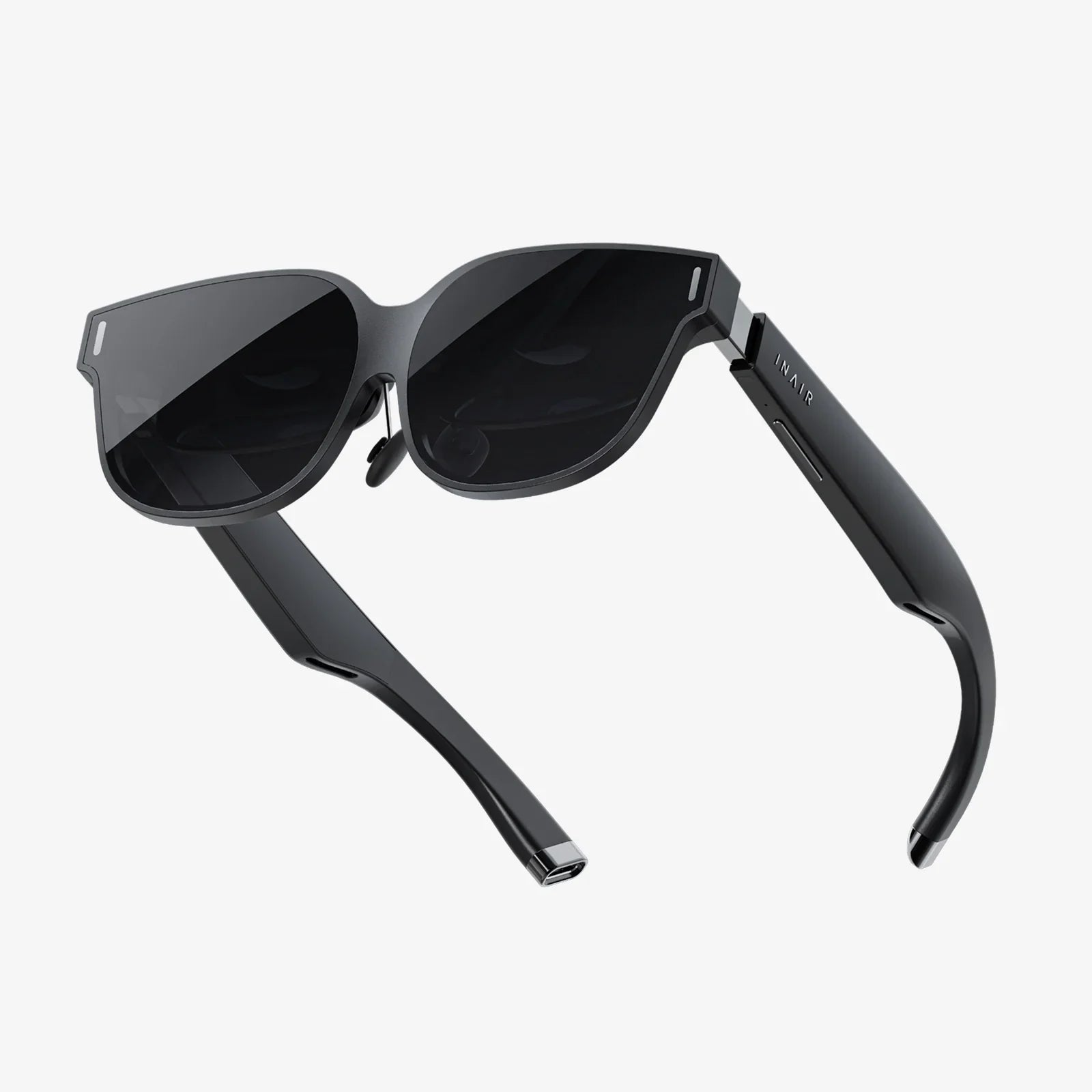
Imagine a world where digital information isn't confined to a screen but is seamlessly woven into the fabric of your physical reality. This is no longer the stuff of science fiction; it's the present-day promise of augmented reality (AR). While many still associate AR with playful social media filters or immersive gaming experiences, the true revolution is happening quietly behind the scenes, transforming how we work, learn, heal, and shop. The question isn't whether AR is the future, but rather, who is already harnessing its power today to build that future? The answer is far more widespread and surprising than you might think.
The Digital Layer on the Physical World
Before diving into the 'who,' it's crucial to understand the 'what.' Augmented reality is a technology that superimposes computer-generated images, sounds, and other sensory enhancements onto a user's real-world view. Unlike virtual reality, which creates a completely artificial environment, AR adds a digital layer to the existing world, typically viewed through a smartphone, tablet, or specialized smart glasses. This ability to overlay critical data onto physical objects and environments is the key that is unlocking innovation across a stunning array of sectors.
Transforming the Front Lines of Healthcare
The healthcare industry has emerged as one of the most profound and impactful adopters of augmented reality. For medical professionals, AR is becoming an indispensable tool for enhancing precision, improving outcomes, and democratizing expertise.
Surgeons with X-Ray Vision
In operating rooms, surgeons are using AR headsets to project critical patient data—such as MRI scans, CT imagery, and real-time vital signs—directly into their field of vision. This allows them to, in effect, see “inside” the patient without constantly looking away from the surgical site to consult a monitor. During complex procedures, 3D anatomical models can be superimposed onto the patient's body, acting as a GPS for surgery. This visual guidance system helps in precisely locating tumors, navigating around delicate nerves and blood vessels, and ensuring incisions are made with unparalleled accuracy, thereby reducing risk and improving patient recovery times.
Medical Training and Education
Medical students are no longer solely reliant on cadavers and textbooks. AR applications allow them to interact with detailed, life-size 3D models of the human body. They can peel back virtual layers of muscle, examine the circulatory system, and understand spatial relationships between organs in a way that static images could never provide. This hands-on, interactive learning accelerates comprehension and prepares future doctors for real-world scenarios in a risk-free environment.
Patient Care and Rehabilitation
AR is also enhancing patient education and treatment. A doctor can use an AR app on a tablet to show a patient exactly how a new knee joint will function inside their body or how a specific medication interacts with a diseased organ. In physical therapy, AR games and exercises make repetitive rehabilitation movements more engaging, encouraging patient adherence and allowing therapists to accurately track progress through motion capture.
Revolutionizing Industrial and Manufacturing Workflows
On factory floors, construction sites, and in field service, AR is solving real-world problems by putting information directly into the hands of frontline workers, dramatically increasing efficiency and reducing errors.
Assembly, Maintenance, and Repair
Technicians assembling complex machinery can use AR glasses to see digital work instructions overlaid onto the physical components in front of them. Arrows can point to exact attachment points, torque specifications can be displayed next to each bolt, and animated sequences can demonstrate the correct procedure step-by-step. This not only speeds up assembly but also drastically reduces error rates for both new and experienced workers. For maintenance, a technician can simply point a device at a malfunctioning piece of equipment to see its service history, identify faulty parts with highlighted overlays, and access a library of repair videos, all without consulting a bulky manual or calling a remote expert.
Design and Prototyping
Engineers and designers are using AR for rapid prototyping. Instead of building expensive physical models, they can project full-scale 3D digital prototypes into a real-world space. An automotive design team can “see” a new car model in the studio, walk around it, and make adjustments to the design in real-time. Architects can project their building designs onto an empty lot, allowing clients to “walk through” the virtual structure before a single foundation is poured. This iterative process saves immense amounts of time and resources.
Logistics and Warehouse Management
In massive distribution warehouses, AR is supercharging logistics. “Pick-by-vision” systems use smart glasses to guide warehouse workers to the exact location of an item. The most efficient route is displayed, and the glasses can visually confirm the correct item through image recognition, minimizing picking errors. Digital arrows on the floor can direct workers, and vital information about handling instructions or weight can be displayed for each item, streamlining the entire supply chain from warehouse to shipping.
Redefining the Retail and E-Commerce Experience
The retail sector is leveraging AR to bridge the gap between the online and in-store experience, combatting uncertainty and empowering consumer choice.
“Try Before You Buy” Becomes Reality
One of the biggest hurdles of online shopping is the inability to interact with a product. AR has effectively solved this. Furniture retailers allow customers to use their smartphone cameras to see how a sofa, table, or lamp will look and fit in their actual living room. Fashion retailers offer virtual fitting rooms where shoppers can “try on” clothes, glasses, or makeup without ever stepping into a physical store. This not only reduces purchase hesitation but also significantly lowers return rates, a major cost center for online businesses.
Enhancing the In-Store Journey
Brick-and-mortar stores are also deploying AR to create engaging experiences. Pointing a phone at a product on a shelf might trigger product demonstrations, show detailed specifications, reveal sustainable sourcing information, or display customer reviews. In fashion stores, smart mirrors can suggest complementary items or allow a customer to change the color of a garment with a touch. This transforms passive shopping into an interactive and informative adventure.
Building the Future: Architecture, Engineering, and Construction
The AEC industry deals inherently with visualizing the unbuilt. AR is providing a powerful lens to see those future creations in the present.
Visualizing Projects on Site
Architects and construction managers can bring blueprints and BIM (Building Information Modeling) data to life on the construction site. Using a tablet or AR glasses, they can overlay the digital model of a building onto the real-world foundation, allowing them to verify that the construction aligns perfectly with the design. This helps in identifying potential clashes between systems (e.g., plumbing running through a steel beam) before they become costly on-site errors, saving millions in rework.
Facilities Management and Urban Planning
After a building is completed, AR becomes a tool for its long-term management. A facilities manager can point a device at a wall to see the hidden network of electrical wiring, plumbing, and HVAC systems behind it, simplifying repairs and renovations. On a city-wide scale, urban planners can project proposed developments, new transit routes, or park designs into an existing cityscape to visualize their impact and gather more informed public feedback.
Creating Immersive and Interactive Classrooms
Education is being transformed from a passive lecture into an active exploration, with AR turning any classroom into a dynamic learning environment.
Bringing Subjects to Life
History students can witness historical events unfold on their desks or explore ancient ruins through detailed reconstructions. Biology students can dissect a virtual frog or watch a beating heart. Astronomy classes can hold the solar system in their hands. This immersive form of learning boosts engagement, improves knowledge retention, and caters to different learning styles, making abstract concepts tangible and unforgettable.
Skills Training and Remote Assistance
Beyond K-12 and higher education, AR is vital for vocational training. Mechanics-in-training can practice on virtual engines, and welders can perfect their technique with digital guidance. Furthermore, it enables remote expert assistance; a seasoned expert located thousands of miles away can see what a trainee sees and annotate their real-world view with arrows and notes to guide them through a complex task, effectively mentoring them from anywhere in the world.
Unexpected Pioneers and Niche Applications
The adoption of AR extends into some truly unexpected areas, proving its versatility.
- Museums and Tourism: Museums use AR to make exhibits interactive. Pointing a phone at a fossil might show a rendering of the living dinosaur, or at a painting to reveal the story behind it. Tourists can use AR apps to get historical overlays on city streets, translating signs or reconstructing ancient buildings on their current ruins.
- Emergency Services: Firefighters can use AR helmets to display building layouts, showing the location of fire hydrants, exits, and potential victims, helping them navigate through smoke-filled environments. Paramedics can receive remote guidance from doctors while on a critical call.
- Marketing and Advertising: Brands create interactive AR campaigns where print ads in magazines come to life with video content, or where product packaging unlocks games and experiences, creating a memorable brand interaction.
The landscape of augmented reality is no longer a niche playground for tech enthusiasts; it is a robust, practical toolkit being deployed by surgeons, engineers, teachers, mechanics, and artists. From the operating room to the living room, the factory floor to the classroom, AR is quietly augmenting human capability, enhancing our perception, and solving complex problems. This is just the beginning of a fundamental shift in how we interact with information and with our world. The next time you raise your smartphone, remember—you're holding a window into a rapidly emerging reality, one that is already being shaped by the most innovative minds across every sector imaginable.
Share:
Smart Glasses with Built-in AI 2025: The Dawn of the Invisible Computer
AI Glasses Technology 2025: The Dawn of a Seamless Augmented Reality Future