


- by wangfred
AI Glasses Technology 2025: The Dawn of a Seamless Augmented Reality Future
- by wangfred
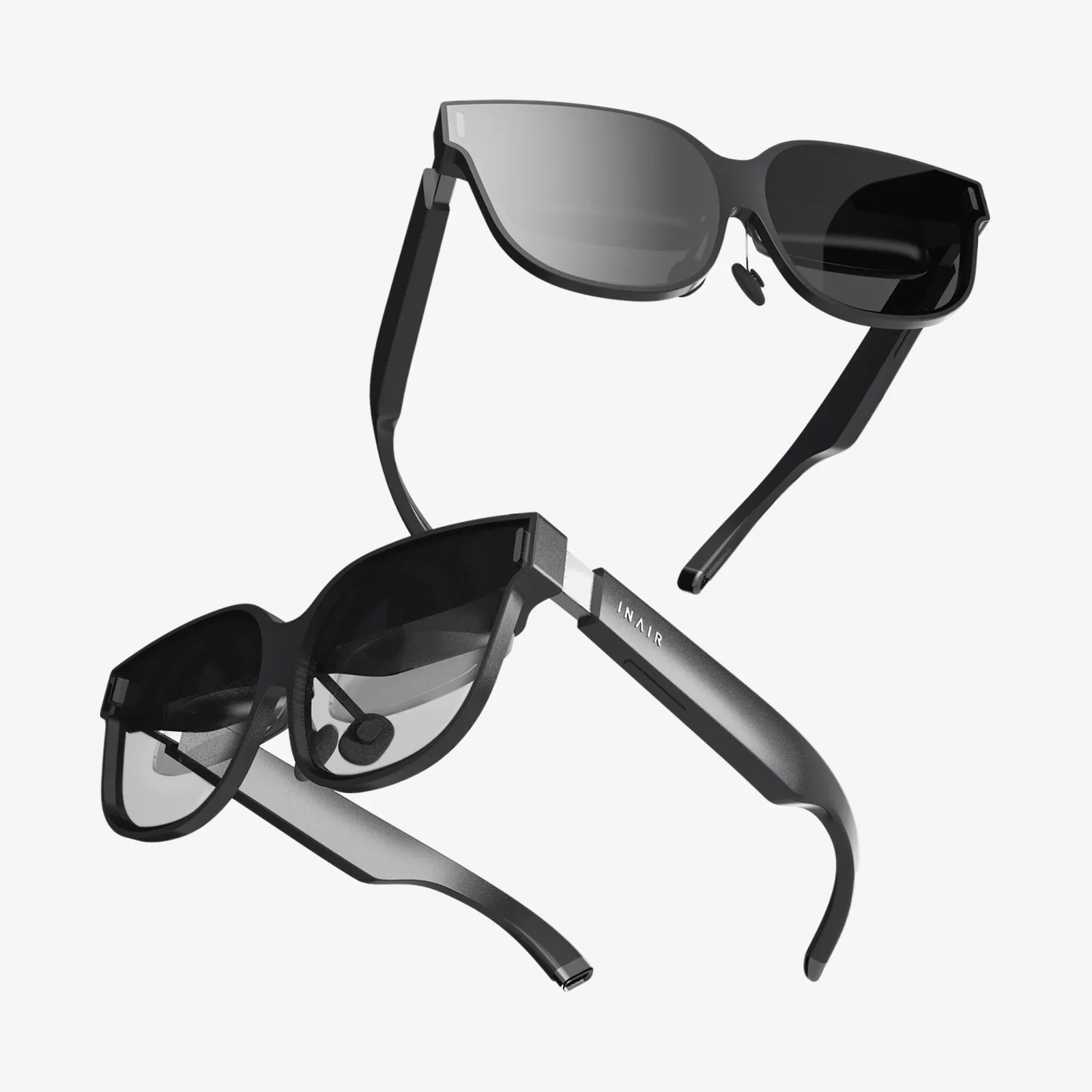
Imagine a world where the digital and physical realms are no longer separate, where information flows around you as naturally as light and air, accessible with a glance and a whisper. This is not a distant science fiction fantasy; it is the tangible future being built in laboratories and design studios today, and its arrival is slated for the pivotal year of 2025. The convergence of staggering advancements in artificial intelligence, micro-optics, and sensor technology is culminating in a product category poised to redefine human-computer interaction: AI glasses. This article delves into the technological revolution brewing behind the lenses, exploring the key innovations, potential applications, and profound societal implications of the AI glasses set to emerge in 2025.
The AI glasses of 2025 will not be the clunky, limited predecessors of a decade prior. Their evolution hinges on several interdependent technological pillars achieving a critical mass of miniaturization, efficiency, and capability.
The term "AI" in AI glasses is the core differentiator. By 2025, the reliance on constant, high-bandwidth cloud connectivity for complex processing will be a relic of the past. Instead, next-generation Neural Processing Units (NPUs) will be embedded directly into the glasses' frame. These are not general-purpose processors; they are hyper-specialized silicon designed from the ground up to perform trillions of operations per second (TOPS) for machine learning tasks with extreme power efficiency.
This on-device AI will enable real-time, low-latency processing of a massive sensor data stream. It will be capable of:
For AR to be compelling, the digital images must be seamlessly superimposed onto the real world. The bulky optics of the past are giving way to elegant solutions. The dominant technology by 2025 will be diffractive waveguide displays. These are transparent, wafer-thin pieces of glass or plastic etched with microscopic patterns that pipe light from a tiny projector at the temple into the user's eye. This allows for a large digital field of view within a form factor indistinguishable from traditional eyewear.
These waveguides will be paired with Micro-LED projectors. Micro-LEDs are infinitesimally small, self-emissive light sources that offer incredible brightness, high resolution, and exceptional color gamut, all while consuming a fraction of the power of older OLED or LCD solutions. This combination is crucial for creating bright, vibrant AR graphics that are visible even in direct sunlight, a previous Achilles' heel for AR glasses.
AI glasses are, in essence, a sophisticated sensor platform. A typical pair in 2025 will incorporate:
The AI's genius lies in its ability to fuse data from all these sensors simultaneously to construct a real-time, understanding of the user's environment and intent—a concept known as spatial computing.
All this technology is power-hungry. 2025's designs will tackle this through a multi-pronged approach. The glasses themselves will contain a small battery, likely in the thickened temples, providing 4-8 hours of core functionality. For all-day use, they will seamlessly offload heavier processing to a companion device—most likely a smartphone in your pocket or a dedicated compute puck—via ultra-low-power, high-speed wireless protocols like Wi-Fi 7 or future iterations of Bluetooth. This bifurcated system keeps the glasses light and comfortable while providing the necessary computational horsepower.
The true measure of this technology is not its specs, but its impact on daily routines across various sectors.
This will be the first and most profound area of adoption. AI glasses will become the ultimate hands-free assistant.
For the general consumer, the applications shift towards convenience, social connection, and accessibility.
This powerful technology does not arrive without significant challenges that society must urgently address before 2025.
AI glasses, by their very nature, are always-on, first-person sensing devices. The potential for ubiquitous surveillance, both by individuals and corporations, is unprecedented. The notion of consent in public spaces becomes blurred. If someone is recording a video in a park, you can choose to step out of frame. If dozens of people are wearing always-on, recording-enabled glasses, opting out becomes impossible. Robust, clear regulations and new social norms will need to be established. Features like a prominent recording indicator light and audio cues will likely become mandatory. The question of who owns the data collected—the user, the glasses manufacturer, or the software platform—will be a central legal battleground.
If a smartphone hack is bad, a glasses hack would be catastrophic. A malicious actor gaining control of a user's eyewear could:
Therefore, security must be baked into the hardware from the silicon up, with secure enclaves for processing sensitive data and robust encryption for data in transit and at rest.
Finally, there is the simple social acceptance of people wearing cameras on their faces. The "Societal Stare"—the unease people feel when being looked at by a device that could be recording—is a significant barrier to adoption. Overcoming this will require demonstrably responsible design, transparent user indicators, and a gradual cultural shift as the benefits become more apparent and the technology becomes more commonplace.
The year 2025 is not an endpoint, but a dramatic beginning. The AI glasses emerging then will be the foundational platform upon which decades of future innovation will be built. They represent a fundamental shift from looking at a device to looking through a intelligent portal onto the world. They promise to augment our cognition, dissolve language barriers, and unlock new levels of human productivity and creativity. Yet, they also demand a sober and proactive conversation about the world we want to build with them. The technology itself is amoral; its value will be determined entirely by the ethics, regulations, and social contracts we establish around it. The future is not something that happens to us; it is something we build. And in 2025, we will start building it through a new lens.