


- by wangfred
Smart Wearables 2025: The Invisible Revolution Reshaping Human Potential
- by wangfred
Imagine a world where your morning coffee is brewed to the perfect caffeine level based on your sleep quality, your morning run is guided by a real-time, AI-powered coach analyzing your gait and vitals, and your first work meeting of the day is translated and transcribed directly into your field of vision, all without you ever needing to glance at a screen. This isn't a scene from a distant sci-fi future; it is the tangible, unfolding reality of smart wearables in 2025. We are standing at the precipice of a revolution where technology doesn't just sit on our bodies—it understands, anticipates, and integrates with them, becoming an invisible yet indispensable extension of our human capabilities.
For the past decade, the wearable technology narrative has been dominated by the wrist. Wrist-based devices served as the crucial proving ground, introducing the masses to the concept of quantified self. However, 2025 marks the beginning of the great unshackling. The form factor is exploding into a diverse ecosystem of intelligent devices designed for specific contexts and purposes.
Smart rings, once a novelty, will mature into sophisticated health monitors. Their continuous, unobtrusive contact with the highly vascular finger provides a superior signal for metrics like core body temperature, blood oxygen saturation (SpO2), and heart rate variability (HRV) compared to the wrist. They will become the default form factor for 24/7 health tracking, particularly during sleep, where their minimal design offers unparalleled comfort.
Advanced smart clothing, embedded with micro-thin, washable conductive fibers, will move from the realm of elite athletes to consumer wellness. Shirts will monitor respiratory rate and thoracic electrical activity, while socks will analyze running form and detect fatigue. This provides a holistic, full-body data picture that a single point device on the wrist could never achieve.
Perhaps the most significant leap will be in hearables. Earbuds will evolve beyond audio playback and passive noise cancellation. They will become advanced health sensors, leveraging the ear canal's stable position for highly accurate core temperature and heart rate monitoring. More importantly, they will act as intelligent auditory interfaces, using advanced beamforming microphones and AI to enhance speech in noisy environments, provide real-time language translation during conversations, and even filter out specific distracting noises, creating a personalized soundscape for the user.
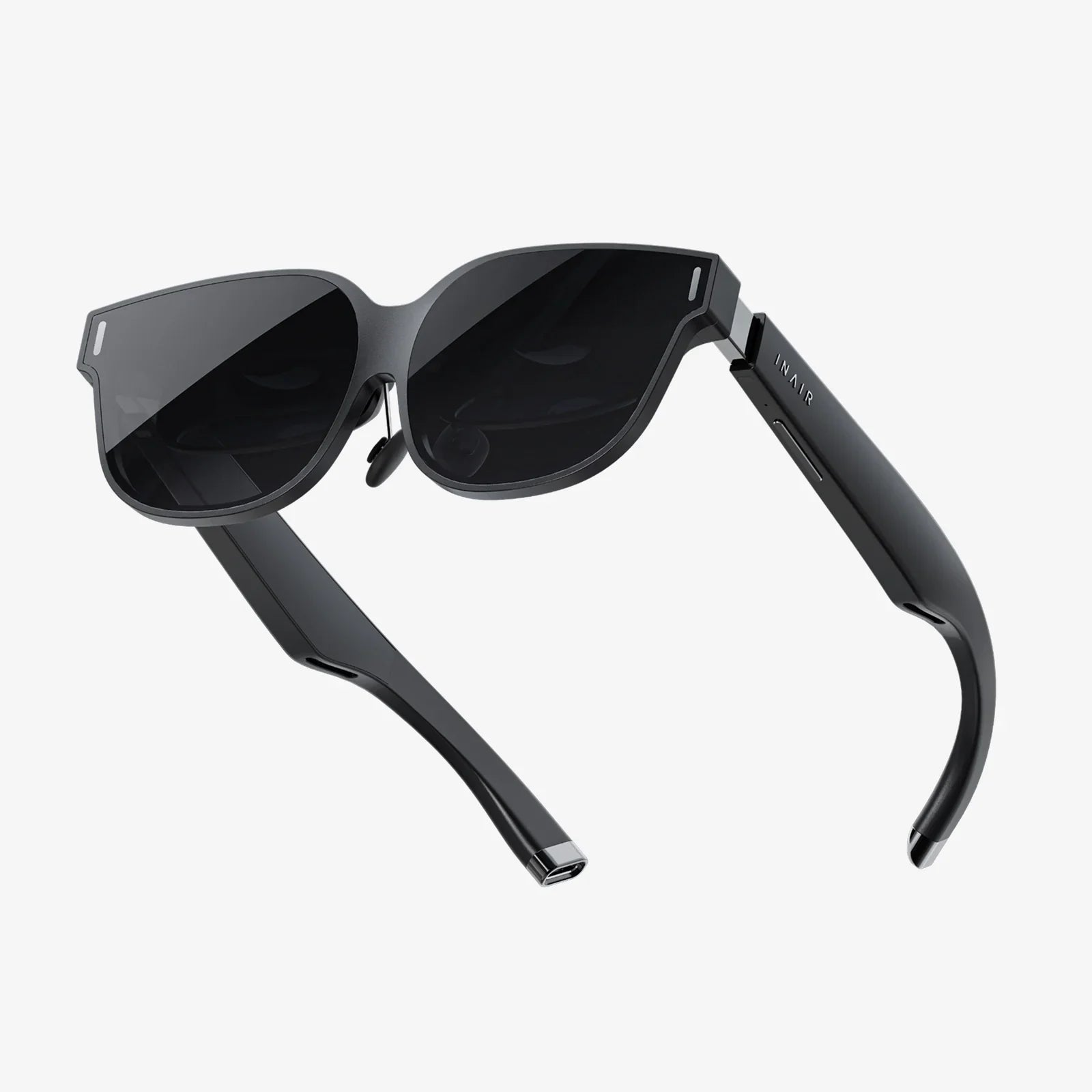
The most anticipated, though still emerging, category is smart glasses. By 2025, we will see a shift from bulky prototypes to more socially acceptable, lightweight designs focused on specific, high-value applications rather than trying to be all-encompassing. They will offer discreet heads-up displays for navigation, context-aware information overlay for professionals like engineers and surgeons, and immersive audio experiences, all controlled by subtle voice commands and gesture recognition.
The hardware is only the vessel; the true transformation in 2025 is driven by the intelligence within. We are moving from reactive data logging to predictive and ambient computing. The goal is no longer to just tell you what happened, but to anticipate what will happen and act on your behalf, often without requiring your attention.
This is powered by a combination of edge computing and sophisticated AI models. Instead of raw data being sent to the cloud for processing, more analysis will happen directly on the device itself. An onboard AI chip in a hearing aid can isolate a speaker's voice in a crowded room in milliseconds, a latency impossible with a cloud-dependent model. This on-device processing is crucial for real-time responsiveness, privacy, and battery efficiency.
These systems will shift from monitoring isolated biomarkers to interpreting the complex symphony of human physiology. By cross-referencing data streams—sleep patterns, activity levels, heart rate trends, body temperature, and even vocal tone analysis—the wearable AI will build a dynamic baseline of your health. It won't just notice an elevated heart rate; it will contextualize it. Was it due to exercise, stress, or the onset of illness? It could detect subtle deviations that precede a migraine or a period of high anxiety, prompting you with proactive suggestions: "Based on your current stress indicators and tonight's forecasted poor sleep, would you like to reschedule your 8 AM meeting?"
This predictive capability will be the cornerstone of true preventative health. The wearable becomes a personalized health guardian, moving the healthcare paradigm from "sick care" to preemptive well-being.
No wearable in 2025 will be an island. The value proposition skyrockets when these devices operate as a cohesive, intelligent network. Your smart ring tracks your sleep and recovery, your smart glasses manage your notifications and information intake, your hearables handle communication and auditory enhancement, and your smart clothing optimizes your physical performance. They will seamlessly hand off tasks and context between each other.
You might start a workout guided by your clothing's sensors, with audio feedback piped through your hearables. As you finish, your ring confirms your recovery status, and your glasses display a summary of your session. This ecosystem will be managed by a central AI persona that knows your preferences, schedule, and goals, orchestrating this symphony of devices to work in harmony in the background of your life.
Interactivity will also become more intuitive and natural. The clumsy taps and swipes on a tiny screen will be largely replaced by voice commands (that work reliably even in noisy environments), subtle gesture controls (like pinching fingers to answer a call or swiping in the air to change a song), and eventually, subvocalization and neural interfaces that detect intended movement or commands before you even physically act.
The algorithms powering the 2025 wearable will be deeply personalized. They will move far beyond generic advice based on population-level data. Through continuous learning, the AI will understand your unique physiology, your personal responses to stress, sleep, diet, and exercise.
The feedback you receive will be hyper-contextual. Instead of a generic notification to "move more," your device might say: "You've been sitting in a focused state for 95 minutes. Your stress levels have risen 15% in the last 30 minutes. A 5-minute walk outside now would optimize your cognitive focus for your next task and lower your cortisol."
This extends into personalized health interventions. Imagine a wearable that not only detects an oncoming panic attack but also guides you through a personalized breathing exercise it knows works for you, using haptic feedback on your wrist to pace your breaths. Or a device that recommends a specific type of exercise—yoga versus weightlifting—based on whether your body needs stress relief or energy expenditure that day.
This incredible power of pervasive, intimate data collection comes with profound responsibility. The wearable of 2025 will know more about your body and behavior than you know yourself. This creates a minefield of ethical and privacy concerns that the industry must navigate with extreme care.
The sheer intimacy of the data—real-time location, health vitals, sleep patterns, social interactions, and even emotional states—makes it a prime target for malicious actors. A data breach would be catastrophic. Therefore, security must be baked into the hardware from the ground up, featuring hardware-level encryption, secure elements, and robust anonymization techniques. The principle of "data minimization" will be crucial: collecting only the data necessary for a specific function and storing it for the shortest time possible.
Perhaps the thornier issue is ethical data use. Who owns this data? You, the manufacturer, your employer if they provide the device, your insurance company? Clear, transparent, and opt-in policies are non-negotiable. There is a significant danger of discrimination based on this data—in hiring, insurance premiums, and lending. Robust legal frameworks must be established to prevent a "biometric underclass" from forming, where people are penalized for genetic predispositions or health conditions revealed by their wearables.
The industry must also guard against the potential for manipulation. If a system can detect your emotional state, it could be used to subtly influence your purchasing decisions or political views. The line between helpful suggestion and manipulative nudging is frighteningly thin. Establishing strong ethical guidelines and ensuring user agency and transparency in how algorithms work will be the defining challenge of this era.
Beyond health and convenience, the most profound long-term impact of wearables lies in their potential to augment human senses and cognition. By 2025, we will see the early, powerful inklings of this future.
Hearables will not just restore hearing but enhance it, allowing users to filter, focus, and amplify sounds in their environment—a concept known as "auditory augmented reality." A mechanic could isolate the sound of a faulty engine component, or a birdwatcher could identify and amplify a specific bird's call.
Smart glasses will provide a layer of contextual information over the real world. They could highlight the path in a dark environment using thermal imaging data, overlay translations of foreign text in real-time, or display a schematic for a machine a technician is trying to repair.
This is the beginning of a fundamental shift. Wearables are becoming the interface through which we mediate and enhance our experience of reality, offering superhuman senses and access to a boundless stream of knowledge, precisely when and where we need it. They are evolving into partners that don't just track our lives but actively help us live them more fully, safely, and intelligently.
The journey to 2025 is not about a smarter watch; it's about a smarter, more intuitive, and deeply integrated partnership with technology. It's about devices that fade into the background while elevating our human potential to the foreground. The future on your wrist, in your ear, and on your eyes is not just connected; it's conscious, contextual, and quietly revolutionary. The next time you glance at your wrist, remember—that's just the very beginning.