


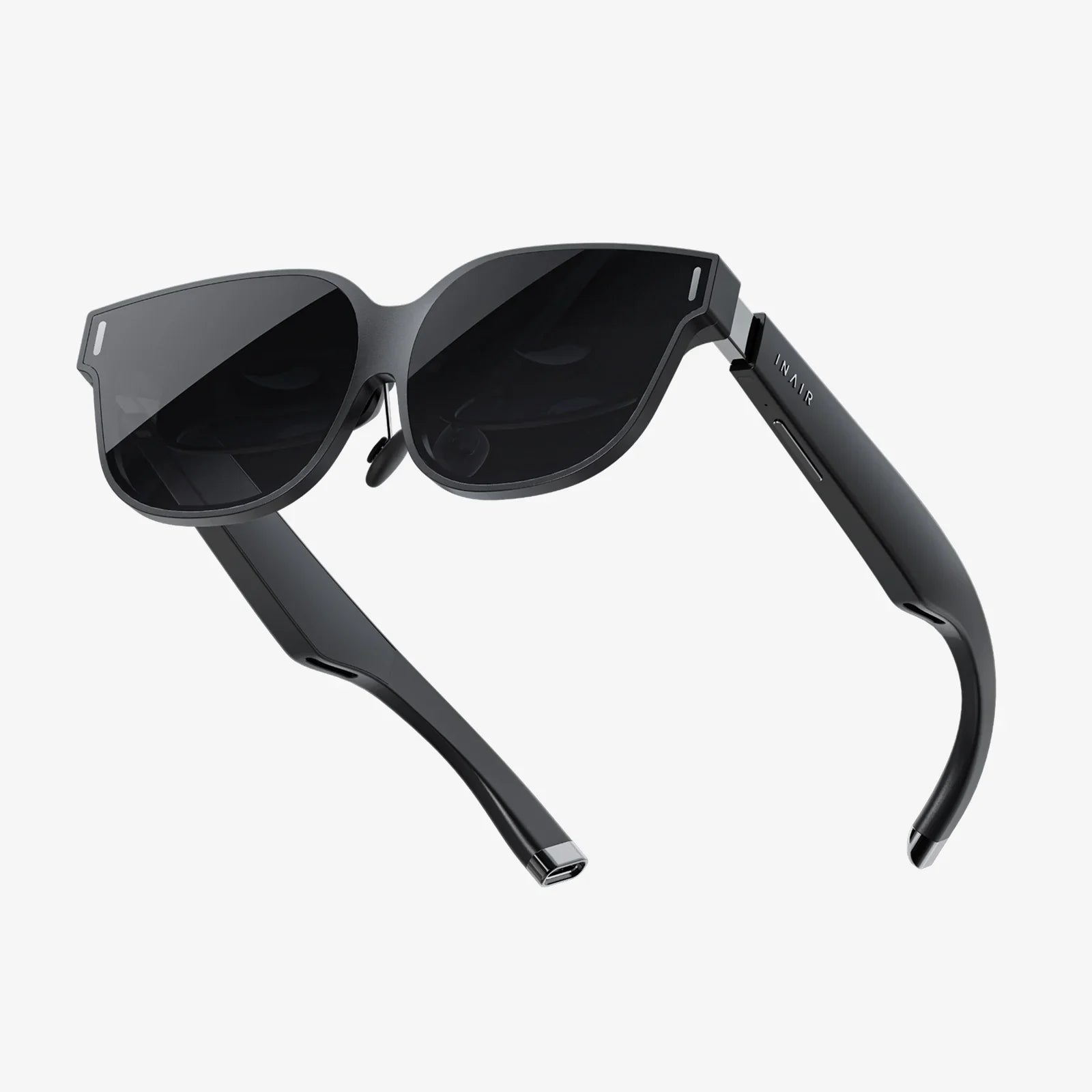
You've seen the futuristic concept videos, the sleek promotional images, and the promise of a world where digital information seamlessly overlays your physical reality. The allure of smartglasses is undeniable, a tantalizing glimpse into a next-generation computing paradigm. But then comes the inevitable, grounding question: how much do they cost? The answer is far from simple. The smartglasses price spectrum is vast and bewildering, ranging from a seemingly casual impulse buy to a serious financial investment that rivals a high-end laptop. Understanding the 'why' behind these numbers is the key to navigating this exciting, yet complex, market and determining if the value proposition aligns with your vision of the future.
Deconstructing the Dollar: The Core Components That Drive Cost
Unlike a standard pair of sunglasses, smartglasses are a marvel of miniaturized engineering. The price tag is a direct reflection of the sophisticated technology packed into the frames. Each component carries its own cost, and together, they tell the story of the final price.
The Optical Heart: Display Systems
This is often the single most expensive and defining element. The method used to project images onto your eye dictates not only the quality of the experience but also a huge portion of the cost.
- Waveguide Technology: The gold standard for sleek, consumer-ready designs. Waveguides use microscopic gratings to bend light from a projector on the temple into your eye. Manufacturing these with precision, often using techniques similar to semiconductor fabrication, is extremely costly. Higher-end waveguides offer a larger field of view (FOV) and better clarity, which exponentially increases the price.
- Micro-OLED Displays: These are tiny, incredibly high-resolution screens that act as the image source. Their development and production are cutting-edge and expensive.
- Birdbath Optics: A more common design in lower-cost consumer models. It uses a semi-transparent mirror to reflect the image from a micro-display into your eye. While more affordable to produce, it often results in bulkier designs and can struggle with outdoor brightness.
The Digital Brain: Processing Power
Smartglasses need to process data, run applications, handle connectivity, and interpret the world around them. This requires a System-on-Chip (SoC), a compact processor.
- High-End SoCs: Glasses designed for complex Augmented Reality (AR) experiences, object recognition, and spatial mapping require powerful, custom-designed processors. These chips consume significant energy and generate heat, necessitating advanced thermal management solutions, all adding to the cost.
- Low-Power Processors: Glasses focused on simpler tasks like displaying notifications, controlling music, or taking photos can use less powerful, more efficient chips, which keeps the price down.
Perceiving the World: Sensors and Cameras
To interact with the real world, smartglasses are equipped with an array of sensors.
- Cameras: High-resolution cameras for photography and video conferencing add cost. More advanced models include depth-sensing cameras (like time-of-flight sensors) for understanding the 3D structure of the environment, a critical feature for true AR that comes at a premium.
- Inertial Measurement Units (IMUs): These gyroscopes and accelerometers track the movement and orientation of your head. Higher-fidelity IMUs are more expensive.
- Eye-Tracking: A premium feature that allows for intuitive control (e.g., looking at an item to select it) and enables advanced features like dynamic focus (vergence-accommodation conflict). This technology is complex and adds significantly to the smartglasses price.
Staying Connected and Powered
Connectivity via Wi-Fi, Bluetooth, and sometimes cellular data is essential. Integrating these antennas into a small frame without causing interference is an engineering challenge. Furthermore, the battery technology needs to be small, light, and safe, yet powerful enough to last through a day of use. Developing custom, high-density batteries is a major cost factor.
The Three Tiers of Smartglasses: From Basic to Brilliant
The market is effectively segmented into three distinct tiers, each with its own price range and target audience.
Tier 1: The Entry-Level Companion Device ($100 - $500)
This tier is characterized by smartglasses that act primarily as a second screen for your smartphone. They are designed for convenience and subtlety.
- Typical Features: Monochrome or basic color displays (often using Birdbath optics), basic audio for calls and music, a simple touchpad, and a camera for photos. They lack advanced AR capabilities.
- Use Cases: Receiving notifications, reading texts, controlling music, navigation prompts, and hands-free calls.
- Price Justification: The lower smartglasses price is achieved by using off-the-shelf, less powerful components, simpler optical systems, and a focus on a single core function rather than being a standalone computer.
Tier 2: The Professional and Prosumer Powerhouse ($500 - $2,500)
This is where smartglasses transition from a companion device to a specialized tool. The price increases dramatically to reflect professional-grade capabilities.
- Typical Features: Higher-quality waveguides, color displays with a better field of view, more powerful processors, improved sensors, and better cameras. They often run a full operating system capable of complex applications.
- Use Cases: Remote assistance for field technicians (seeing manuals and receiving guidance from experts), digital overlays for complex assembly and repair, training simulations, and advanced navigation for logistics.
- Price Justification: The value proposition is not entertainment but increased efficiency, reduced errors, and enhanced training in enterprise settings. Companies calculate a return on investment (ROI) based on these factors, justifying the higher initial smartglasses price.
Tier 3: The Futuristic Flagship ($2,500 and Beyond)
This tier represents the bleeding edge of what is possible. These are often developer kits or very early adopter devices meant to showcase the future of AR technology.
- Typical Features: State-of-the-art full-color waveguides with an ultra-wide field of view, incredibly precise inside-out tracking (understanding the environment without markers), eye-tracking, and powerful standalone computing.
- Use Cases: Primarily for software developers building the next generation of AR applications, and for research institutions. They are not consumer-ready products.
- Price Justification: The cost reflects massive R&D expenditure, low-volume production of exotic components, and the lack of economies of scale. You are paying for a glimpse into the future, not a polished product.
Beyond the Hardware: The Hidden Costs of an Ecosystem
The initial purchase price is only part of the story. The true cost of ownership can be influenced by several other factors.
- Software and Subscriptions: While many apps will be free, enterprise-level software platforms for remote assist or digital work instructions often require expensive monthly or annual subscriptions per user.
- Lens Inserts: For those who need prescription lenses, custom optical inserts must be made. These can cost several hundred dollars on top of the base smartglasses price.
- Accessories: Additional batteries, charging docks, protective cases, and alternative frame styles can all add to the total investment.
- Privacy and Security: Devices with always-on cameras and microphones raise significant privacy concerns. The cost of potential data breaches or the societal cost of constant surveillance is a hidden, non-monetary factor to consider.
The Trajectory of Value: Where Are Prices Headed?
The historical precedent set by other technologies, from calculators to flat-screen TVs, suggests that smartglasses prices will follow a similar path of gradual decline as the technology matures.
- Economies of Scale: As manufacturing volumes increase, the per-unit cost of components like waveguides and micro-displays will fall dramatically.
- Technological Advancements: Manufacturing processes will become more efficient and yields will improve. New, cheaper materials and optical solutions will be discovered.
- Market Competition: As more players enter the market, competition will drive innovation and force companies to find ways to offer compelling features at lower price points.
However, it's crucial to understand that the high-end tier will always exist. There will always be a market for the most advanced, feature-packed professional devices with a correspondingly high price. The decline will be most evident in the consumer and prosumer tiers, bringing capable AR experiences down to a price point comparable to premium smartphones.
Making the Right Choice: It's Not Just About the Price Tag
Before you focus solely on the number, you must conduct a personal cost-benefit analysis. Ask yourself these critical questions:
- What is my primary use case? Are you looking for a smartphone accessory or a standalone AR computer? Your needs will immediately point you to the right tier.
- What features are non-negotiable? Do you need a wide field of view, all-day battery life, prescription inserts, or specific enterprise software compatibility?
- Am I an early adopter or a pragmatic user? Early adopters pay a premium for novelty and the privilege of experiencing technology first. Waiting often results in a better product for a lower price.
- What is the total cost of ownership? Remember to factor in potential subscriptions, accessories, and lens inserts.
The smartglasses price is more than just a number; it's a reflection of ambition, engineering, and market strategy. It represents the immense challenge of squeezing a powerful computer into a socially acceptable form factor. While the current cost of entry for high-fidelity AR can be daunting, it is a temporary barrier. The relentless march of technology is already working to democratize this transformative medium. The question is no longer if you will own a pair of smartglasses, but when the value they offer finally and irresistibly aligns with the price they command. The future is putting on a pair of glasses, and its cost is dropping faster than you think.
Share:
AR VR Public Companies: Navigating the Next Frontier of Digital Interaction
Technical Support in an Augmented Reality: Revolutionizing How We Solve Problems