


- by wangfred
Spatial Computing AR Glasses: Redefining Reality and Reshaping Human Interaction
- by wangfred
Imagine a world where information doesn't live on a screen in your hand or on your desk, but is instead woven into the very fabric of your environment, accessible with a glance, a gesture, or a spoken word. This is the profound promise of spatial computing AR glasses, a technology that is not merely an incremental upgrade but a fundamental shift in how we perceive and interact with both the digital and physical realms. We are standing on the precipice of a new computing paradigm, one that will dissolve the boundaries between atoms and bits, forever changing how we work, learn, play, and connect.
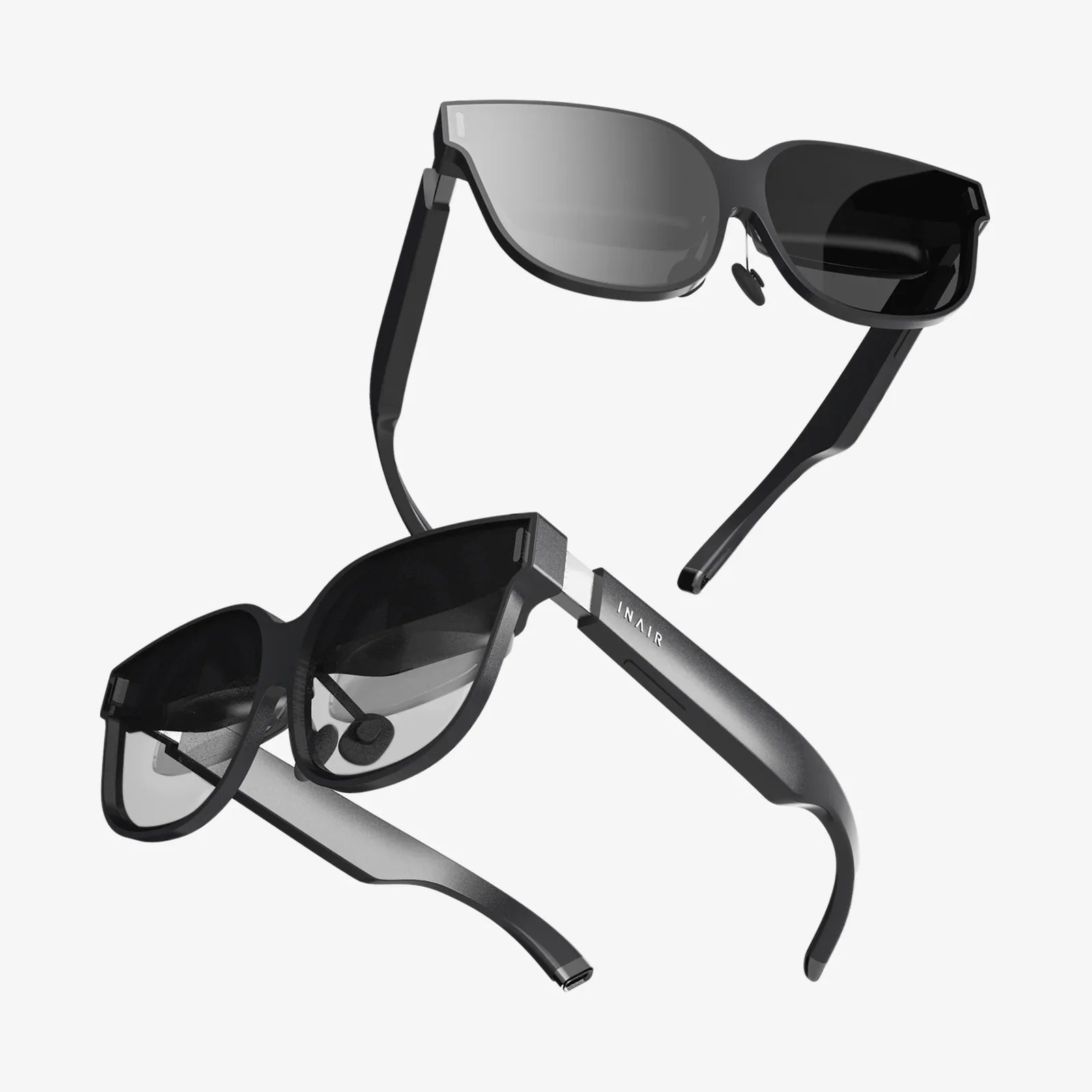
To understand the revolution, one must first deconstruct the magic. Spatial computing AR glasses are not simple displays; they are sophisticated sensor-packed computers worn on the face. Their functionality rests on four critical technological pillars that work in concert to create a cohesive and convincing experience.
At the heart of the system is a complex array of sensors, including cameras, LiDAR scanners, depth sensors, and inertial measurement units (IMUs). These components act as the device's eyes and inner ear, constantly scanning the environment. Advanced algorithms process this data in real-time to create a detailed 3D map of the surrounding space. This map, often called a "digital twin" or a "mesh" of the environment, allows the glasses to understand not just where walls and floors are, but also the dimensions of a table, the shape of a couch, and the precise distance to a door. This persistent understanding is what enables digital objects to behave like physical ones—a virtual monitor stays pinned to your wall, and a digital character can convincingly hide behind your real-world furniture.
With the environment mapped, the next challenge is interaction. The clumsy paradigm of mice, keyboards, and touchscreens is replaced by more natural, human-centric methods. Hand-tracking cameras allow users to reach out and manipulate digital holograms with their fingers, using pinch, grab, and swipe gestures in mid-air. Voice commands serve as a powerful complement, enabling users to summon interfaces or execute complex commands hands-free. Furthermore, eye-tracking technology adds a layer of subtlety and efficiency, allowing the system to infer user intent based on gaze, making selection faster and interfaces more responsive. This multimodal approach creates a deeply intuitive and frictionless way to command the digital world.
The ultimate goal is to make the digital indistinguishable from the physical in terms of visual believability. This is achieved through advanced optical systems like waveguides and micro-LED displays that project light directly into the user's eyes. The key challenges here are field of view (ensuring the digital canvas is large enough to be immersive), resolution (making text and graphics razor-sharp), and managing vergence-accommodation conflict—a technical hurdle where the eyes struggle to focus on a digital object projected at one distance when the real world is at another. Overcoming these optical challenges is crucial for achieving long-term comfort and a truly convincing illusion.
Processing the immense amount of sensor data and rendering complex 3D graphics in real-time requires immense computational power. This is handled by a miniaturized system-on-a-chip (SoC) within the glasses themselves, often assisted by dedicated AI processors for handling specific tasks like object recognition and spatial mapping. The balance between performance, heat generation, and battery life is one of the most significant engineering feats in creating a wearable, all-day device.
The theoretical potential of this technology is vast, but its real-world applications are already beginning to take shape, offering tangible value across numerous sectors.
Spatial computing promises to be the ultimate tool for remote collaboration, moving far beyond the flat grid of video calls. Imagine architects and engineers in different countries standing around a full-scale, interactive 3D model of a new building, making adjustments to the structure in real-time. Or a factory floor specialist being guided through a complex repair by a remote expert who can draw arrows and highlight components directly onto the physical machinery in their field of view. This "see-what-I-see" capability, augmented with contextual information, can drastically reduce errors, accelerate training, and bridge the gap between physical and remote expertise, ultimately redefining the concept of the office and the global workforce.
Learning becomes an active, immersive experience. Medical students can practice complex surgical procedures on detailed holographic anatomies that react to their incisions. History students can walk through a photorealistic recreation of ancient Rome, observing daily life firsthand. Mechanics-in-training can overlay animated, step-by-step repair guides onto the actual engine they are working on. This learning-by-doing in a simulated, yet contextually rich, environment enhances retention, understanding, and skill acquisition in ways textbooks and videos simply cannot match.
From automotive design to interior decorating, spatial computing AR glasses are becoming an indispensable tool. Designers can project life-sized models of new cars into an empty studio, walking around them to assess proportions and lines without the cost of building a physical prototype. Interior designers can place virtual furniture into a client's empty living room, allowing them to visualize different layouts, colors, and styles in perfect scale before making a single purchase. This ability to rapidly prototype and iterate in the real world saves immense time, resources, and materials.
Gone are the days of staring down at a phone map. With AR glasses, navigation cues are painted onto the world itself: a glowing path appears on the sidewalk, a floating arrow indicates the correct turn, and the name of your destination hovers over the building's entrance. This is not only more convenient but also safer, allowing users to remain aware of their surroundings. This technology extends indoors, helping people navigate complex spaces like airports, hospitals, and large office buildings with ease.
As with any transformative technology, the widespread adoption of spatial computing AR glasses brings a host of complex ethical, social, and practical questions that society must grapple with.
A device that is always-on, always-sensing, and always-recording its environment represents a unprecedented privacy challenge. The same cameras that map a room for a virtual meeting could, in theory, capture sensitive information. The potential for surreptitious data collection, facial recognition, and the creation of persistent behavioral profiles is a serious concern. Establishing clear norms, robust encryption, and transparent data policies will be paramount. Users must have ultimate control over their data, with features like obvious recording indicators and the ability to locally process sensitive information without it ever leaving the device.
There is a significant risk that this powerful technology could exacerbate existing inequalities. If spatial computing becomes essential for work, education, and social interaction, those who cannot afford the hardware or lack the digital literacy to use it could be left further behind. Conversely, the technology also holds immense promise for accessibility, offering new tools for people with disabilities, such as real-time captioning for the deaf, audio descriptions of environments for the blind, or navigation aids for those with mobility issues. Ensuring equitable access and designing for inclusivity from the outset is a critical responsibility for developers and policymakers.
How do we interact with someone who is partially immersed in a digital layer? Is it rude to speak to someone wearing glasses if they are watching a video or checking notifications you cannot see? New social norms will need to evolve to govern these interactions. Furthermore, the constant availability of digital overlays could lead to a new form of distraction, pulling our attention away from the physical world and the people in it. Finding a balance between augmented enhancement and genuine human connection will be a key cultural challenge.
For spatial computing AR glasses to transition from compelling prototypes to everyday essentials, several significant hurdles must be cleared.
The ultimate goal is a device that is indistinguishable from regular eyewear—lightweight, comfortable, and socially acceptable to wear all day. Current technology often requires trade-offs between performance, battery life, and size. Breakthroughs in battery technology (perhaps solid-state or even ambient light harvesting), more efficient displays, and increasingly powerful and miniaturized processors are essential to achieving this goal.
Hardware is nothing without software. The success of this platform hinges on the development of a rich, diverse, and interoperable ecosystem of applications and services. Developers need powerful and easy-to-use tools to create spatial experiences. Crucially, there must be open standards to prevent a future where digital objects and information are locked into a single manufacturer's walled garden, unable to interact with others. A open web for the spatial era is a necessary foundation for widespread innovation.
User safety is paramount. Wearing a display over your eyes introduces risks, from tripping over real-world objects while distracted by digital ones to the potential for eye strain and other physiological effects during prolonged use. Extensive research and thoughtful design are needed to mitigate these risks, ensuring that the technology enhances our lives without compromising our health or safety.
The journey into the spatial computing era is not about escaping our reality, but about enriching it, layering it with context, knowledge, and connection in ways we are only beginning to imagine. The device that makes this possible—the pair of spatial computing AR glasses on your face—will become the most personal and powerful portal we have ever had to the collective knowledge and creativity of humanity, transforming every blank space into a potential canvas and every moment into an opportunity to learn, create, and connect. The world is about to gain a new dimension, and it is waiting for you to step inside.