


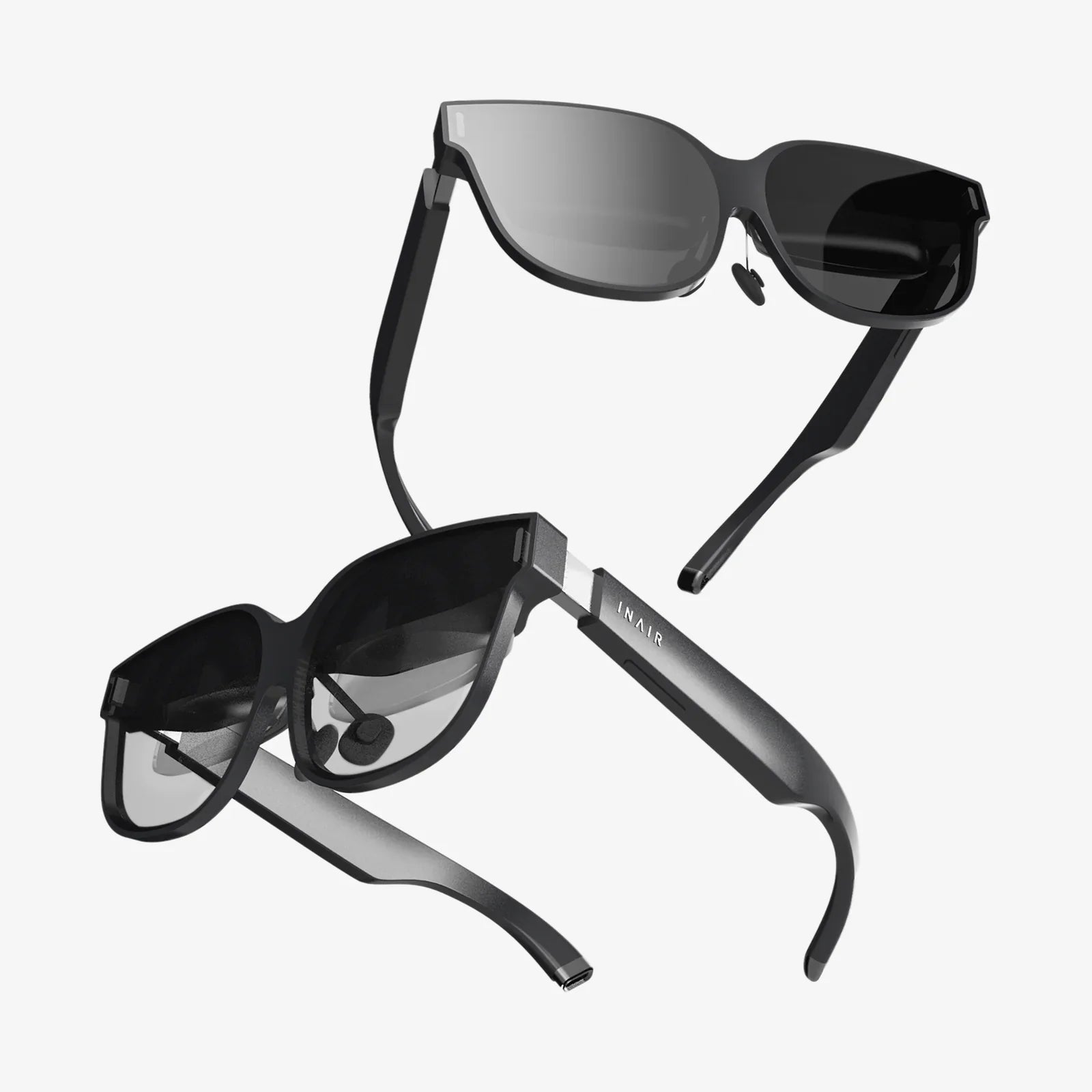
Imagine a world where your digital life isn't confined to a glowing rectangle in your hand or on your desk. Instead, information and experiences are woven seamlessly into the fabric of your physical reality—a world where your living room can transform into a immersive cinema, your workspace can expand across three virtual monitors visible only to you, and a repair manual can project step-by-step instructions directly onto the engine you're fixing. This isn't a distant science fiction fantasy; it's the emerging reality being built today through the power of spatial computing. This technological paradigm shift promises to be as transformative as the personal computer and the smartphone, fundamentally altering our relationship with technology and, ultimately, with the world around us.
Defining the Indefinable: What Exactly is Spatial Computing?
At its core, spatial computing is a form of human-computer interaction that uses the surrounding environment as a medium. It is an umbrella term that encompasses a suite of technologies—including augmented reality (AR), virtual reality (VR), mixed reality (MR), and the sensors and mapping systems that enable them—all working in concert to digitize and interact with the real world. Unlike traditional computing, which requires us to enter its two-dimensional world through a screen and a pointer, spatial computing brings the digital world into our three-dimensional space, understanding and responding to the context of our environment, our bodies, and our intentions.
The key differentiator is contextual awareness. A standard computer doesn't know if you're sitting in a kitchen or a conference room. A spatial computing system does. It can map the surfaces, understand the geometry of the room, identify objects, and overlay relevant digital information precisely where it's needed. It's the difference between looking up a how-to video on a tablet and having animated arrows and instructions appear directly on the broken appliance in front of you.
The Technological Pillars Holding Up the New Reality
This capability doesn't emerge from a single device but from a sophisticated convergence of several critical technologies.
Sensing and Mapping: The Digital Nervous System
The foundation of any spatial experience is a detailed understanding of the physical space. This is achieved through a combination of cameras, LiDAR (Light Detection and Ranging), radar, and other depth sensors. These components work together to perform a process called simultaneous localization and mapping (SLAM). SLAM algorithms allow a device to scan its environment, create a precise 3D mesh map in real-time, and understand its own position and orientation within that map. This digital twin of the physical world becomes the canvas upon which all digital content is painted.
Processing and Intelligence: The Brain Behind the Scenes
The vast amount of spatial data captured by sensors is meaningless without immense processing power. This happens on two fronts: edge computing on the device itself for low-latency responses (like placing a virtual object that stays locked in place), and cloud computing for more complex tasks like parsing a scene with advanced AI. Machine learning and computer vision are the true brains of the operation, enabling the system to not just see shapes, but to recognize them—identifying a chair, a wall, a human hand, or a specific tool. This artificial intelligence is what allows for intuitive interaction, such as using a pinch gesture to select an object or a gaze to highlight a menu.
Display and Interaction: The Bridge to Our Senses
How we see and interact with this blended reality is the most visible part of the stack. For immersive VR, this means headsets that block out the physical world and replace it with a fully digital one. For AR and MR, the spectrum is broader, ranging from smartphone screens and transparent heads-up displays in vehicles to sleek smart glasses that overlay graphics onto your natural vision. Interaction paradigms are also evolving beyond controllers to include voice commands, hand-tracking, eye-tracking, and even haptic feedback, creating a more natural and embodied user experience.
Beyond Novelty: The Practical Applications Reshaping Industries
While consumer entertainment often grabs headlines, the most profound immediate impacts of spatial computing are happening in enterprise and industrial settings, where it is solving real-world problems and driving efficiency.
Revolutionizing Design and Manufacturing
In automotive and aerospace design, engineers can now examine full-scale 3D models of new components virtually, walking around them and inspecting them from every angle without the cost of physical prototyping. On the factory floor, assembly line workers can see digital work instructions overlaid on the physical machinery they are assembling, reducing errors and training time. Technicians can perform complex maintenance procedures with virtual guides highlighting exactly which wire to connect or which bolt to tighten, all while keeping their hands free.
Transforming Healthcare and Medicine
The applications in medicine are nothing short of revolutionary. Surgeons can use AR overlays to visualize a patient's anatomy—such as the precise location of tumors or blood vessels—directly on their body during procedures, enhancing precision and safety. Medical students can move beyond textbooks to practice surgeries on detailed, interactive holograms of the human body. Spatial computing also powers advanced rehabilitation, using motion tracking to guide patients through physical therapy exercises with real-time feedback.
Redefining Remote Collaboration and Workspaces
Spatial computing promises to make remote collaboration truly feel like being in the same room. Instead of a grid of faces on a video call, colleagues from across the globe can appear as life-like avatars or holograms in your physical space, able to interact with and manipulate the same 3D models, diagrams, or virtual whiteboards. This shared spatial context eliminates the misunderstandings that can occur on traditional flat screens, making it ideal for complex design reviews, architecture walkthroughs, and team brainstorming sessions.
Creating Next-Generation Retail and Training Experiences
Imagine trying out a new sofa in your living room before you buy it, or seeing how a new shade of paint would look on your walls, all through the lens of your device. Spatial computing enables this, bridging the gap between online shopping and physical experience. In training, from retail employees to soldiers, it creates safe, scalable, and highly realistic simulation environments where skills can be practiced and mastered without real-world risk or cost.
The Human Factor: Navigating the Challenges Ahead
For all its promise, the path to a ubiquitous spatial future is not without significant hurdles. These challenges are not merely technical but deeply human and societal.
The Privacy Paradox in a Mapped World
If today's smartphones raised concerns about data privacy, spatial devices represent a quantum leap in data collection. They are, by necessity, constantly scanning and digitizing their environment—which often includes our homes, offices, and public spaces. This creates a profound privacy challenge. Who owns the spatial data of a coffee shop or a city street? How do we prevent the creation of persistent surveillance networks? Establishing clear ethical guidelines, data ownership rights, and privacy-first design principles will be critical to earning public trust.
The Digital Divide in Three Dimensions
There is a real risk that the benefits of spatial computing could exacerbate existing social and economic inequalities. The hardware, software, and high-bandwidth connectivity required are currently expensive. If this technology becomes essential for education, high-paying jobs, and social connection, a new kind of digital divide could emerge—one between those who can afford to exist in an augmented world and those who cannot. Ensuring equitable access will be a major societal challenge.
The Quest for a Natural Interface
While the goal is intuitive interaction, we are not there yet. Clunky gestures, voice commands that fail in noisy environments, and social awkwardness of talking to or gesturing at empty space are all barriers to mass adoption. The ultimate interface will be one that feels as natural as using our hands, and achieving this requires relentless innovation in human-computer interaction design.
The Future is Spatial: What Lies on the Horizon?
The trajectory of spatial computing points toward increasingly smaller, more powerful, and more socially acceptable devices. The end goal is a pair of lightweight glasses, or even contact lenses, that can seamlessly toggle between AR and VR, offering photorealistic graphics and all-day battery life. This will be underpinned by a powerful, context-aware operating system that serves as an intelligent agent in our lives, anticipating our needs and providing information before we even ask.
We will move from a world of applications to a world of experiences. Instead of opening a weather "app," the forecast for the day might simply appear subtly in the corner of your vision as you get dressed. Instead of a GPS map, a line on the road might guide you to your destination. This shift represents the final decoupling of information from the screen, unleashing a wave of creativity and innovation that will touch every aspect of our existence.
The boundaries between the digital and the physical are beginning to dissolve. Spatial computing is the catalyst for this great merging, offering a future where technology enhances our reality without isolating us from it. It promises to amplify human potential, unlock new forms of creativity, and solve complex problems by allowing us to interact with digital information as naturally as we interact with the world itself. The revolution won't happen on a screen; it will happen all around you, and it's already begun.
Share:
What Is Human Computer Interface: The Bridge Between Mind and Machine
What's The Best VR System? A Deep Dive into Finding Your Perfect Virtual Reality