


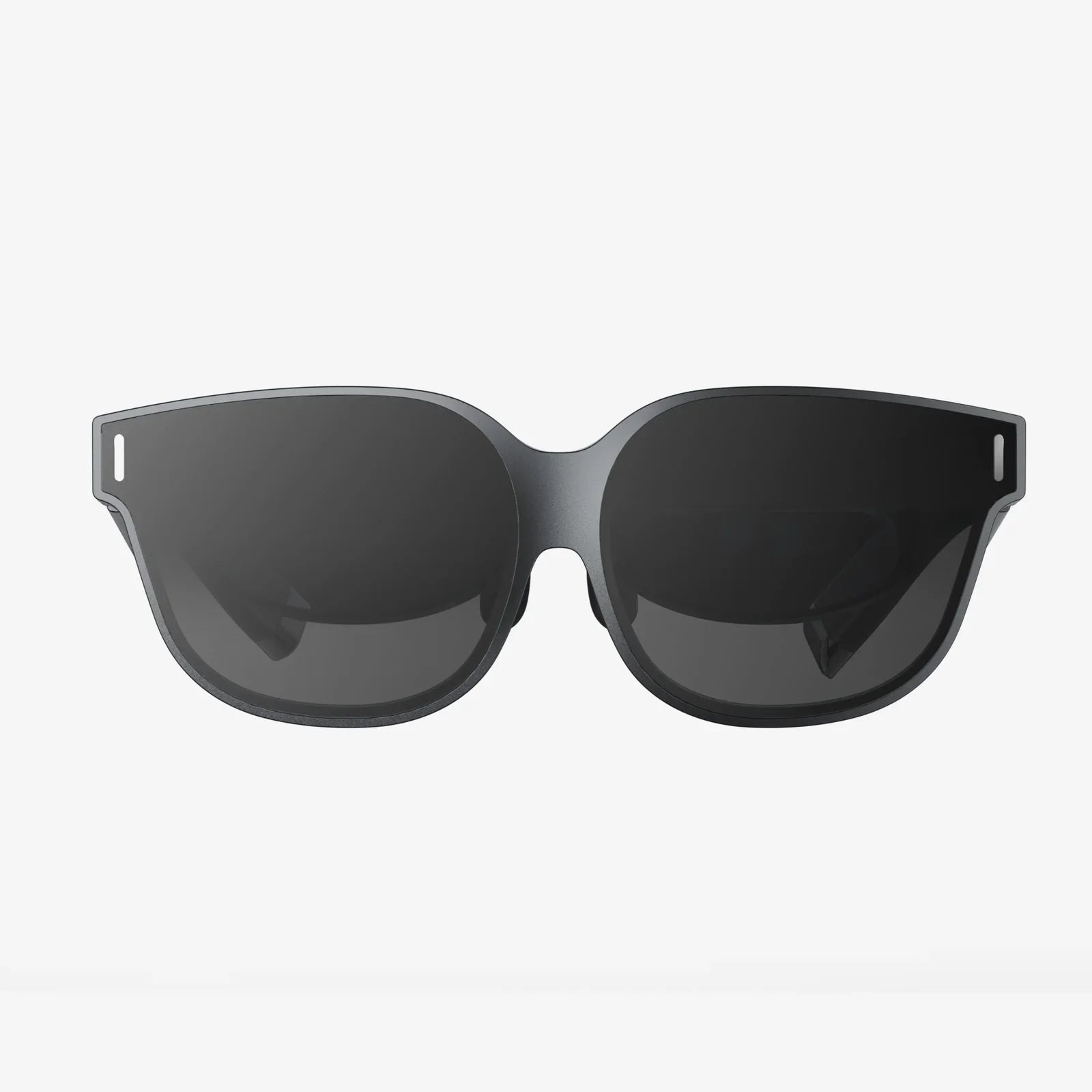
Imagine a world where your thoughts effortlessly manipulate digital landscapes, where technology responds not to a click or a tap, but to a subtle gesture or a fleeting intention. This isn't science fiction; it's the logical endpoint of a field that has been quietly revolutionizing our existence for decades. The bridge to this future, and the foundation of our present digital reality, is the Human-Computer Interface, a discipline that asks one of the most critical questions of our time: how do we, as flawed and beautiful humans, communicate with the perfect, logical machines we create? The answer defines our modern experience.
Defining the Digital Conduit
At its most fundamental level, a Human-Computer Interface (HCI) is the point of communication and interaction between a human user and a computer system. It encompasses everything you see, hear, touch, and use to control a device and everything the device does to present information back to you. It is the dashboard of your car, the touchscreen on your smartphone, the voice assistant in your kitchen, and the virtual reality headset transporting you to another world. HCI is not merely the hardware or the software; it is the entire experience of the interaction itself.
The scope of HCI is vast and interdisciplinary. It is not solely the domain of computer scientists or software engineers. It is a rich tapestry woven from threads of cognitive psychology, behavioral science, ergonomics, design theory, linguistics, and artificial intelligence. A successful interface must understand not just the capabilities of the machine, but the limitations and potentials of the human mind and body. It must account for how we process information, how we learn, how we make errors, and what we find intuitive versus frustrating. This human-centric focus is what separates a mere functional tool from a transformative one.
A Journey Through Time: The Evolution of Interaction
The history of HCI is a story of ambition, moving ever closer to a more natural and seamless form of communication. This evolution can be traced through distinct eras, each marked by a paradigm shift in how we conceptualize the interface.
The Era of Punch Cards and Command Lines
In the dawn of computing, the interface was an esoteric barrier to entry. Early computers like the ENIAC required physical rewiring. This gave way to punch cards, where instructions were literally hole-punched into paper cards and fed into the machine. The interaction was slow, batch-processed, and entirely devoid of immediacy. With the advent of time-sharing systems, the command-line interface (CLI) emerged. Users now communicated with the machine through a terminal, typing precise textual commands. This was a powerful and flexible method for experts, but it placed a tremendous cognitive load on the user, requiring the memorization of a complex and unforgiving syntax. The machine's language was prioritized over the human's.
The Graphical Revolution: The Desktop Metaphor
The most significant leap in HCI history was undoubtedly the development of the Graphical User Interface (GUI). Pioneered by research institutions and later commercialized, the GUI replaced textual commands with visual representations. Instead of typing delete file.txt, you could drag an icon of a document to a graphical trash can. This leveraged a user's existing knowledge of the physical world—a concept known as a metaphor. The desktop, with its files, folders, and trash can, was a metaphor everyone understood.
This era introduced the now-ubiquitous WIMP paradigm: Windows, Icons, Menus, and a Pointer (typically a mouse). This shift was monumental. It dramatically lowered the barrier to computing, transforming it from a tool for specialists into a universal appliance for the general public. It emphasized direct manipulation—the feeling that users were acting upon objects directly rather than through an intermediary command language.
The Age of Direct Manipulation and Ubiquity
The rise of mobile computing, driven by the proliferation of smartphones and tablets, ushered in the next major shift: multi-touch interfaces. The stylus was replaced by the finger. Pinching, swiping, and tapping became the new primary gestures. This was an even more direct form of manipulation, feeling more immediate and tactile than using a mouse. The interface began to fade into the background, letting the content take center stage.
Concurrently, other modalities gained prominence. Voice User Interfaces (VUIs), like those used by smart speakers, allowed for hands-free, conversational interaction. Gesture control, explored in gaming systems and now in vehicles and AR/VR, uses cameras to interpret body movements. These developments marked a move away from the screen-bound GUI towards pervasive or ubiquitous computing, where interaction with computers is woven into the fabric of everyday life and objects.
The Pillars of Powerful Design: Core Principles of HCI
Creating an effective interface is both a science and an art. It is guided by a set of core principles that ensure the interaction is not just possible, but efficient, enjoyable, and accessible.
Usability: The Foundation of Function
Usability is the cornerstone of HCI. It measures the quality of a user's experience when interacting with a product or system. A highly usable interface is characterized by five key attributes:
- Learnability: How easy is it for a new user to accomplish basic tasks the first time they encounter the design?
- Efficiency: Once users have learned the design, how quickly can they perform tasks?
- Memorability: When users return to the design after a period of not using it, how easily can they re-establish proficiency?
- Errors: How many errors do users make, how severe are these errors, and how easily can they recover from them?
- Satisfaction: How pleasant is it to use the design?
Accessibility: Designing for All
A crucial, and often historically overlooked, principle is accessibility. This ensures that interactive products and services are usable by people with the widest range of abilities, operating within the widest range of situations. This includes designing for users with visual, auditory, motor, or cognitive disabilities. Features like screen readers, keyboard navigation, color contrast adjustment, and captioning are not mere add-ons; they are fundamental to ethical and inclusive design. When we design for accessibility, we often create better interfaces for everyone—a concept known as the curb-cut effect.
Feedback and Visibility
A system should always keep the user informed about what is happening through clear and timely feedback. When a user performs an action, like clicking a button, the interface must acknowledge it—through a visual change, a sound, or a haptic vibration. This confirms the action was received and sets an expectation for what happens next. Similarly, the system's state and possible functions should be visible, with clear signifiers indicating what actions are possible. Buttons should look clickable, and scrollable areas should suggest their function.
Consistency and Standards
Consistency is key to reducing the user's cognitive load. Users should not have to wonder whether different words, situations, or actions mean the same thing. Following platform and industry conventions allows users to transfer their knowledge from one application to another. For instance, a floppy disk icon almost universally means "save," and a magnifying glass means "search." Deviating from these established standards without a very good reason often leads to confusion and frustration.
Beyond the Screen: The Expanding Frontiers of HCI
The field of HCI is not static; it is relentlessly pushing into new and exciting territories, fundamentally reshaping our conception of what an interface can be.
Voice and Conversational Interfaces
VUIs represent a shift from a graphical paradigm to a conversational one. Instead of navigating a visual hierarchy, users engage in a dialogue with an intelligent agent. The challenge here moves from visual design to dialogue design, requiring a deep understanding of natural language processing, speech patterns, and context. The goal is to create interactions that feel less like issuing commands to a machine and more like collaborating with a helpful partner.
Gesture and Haptics
Gesture interfaces interpret human movements as commands, freeing interaction from any physical device. This is essential for immersive environments like Virtual Reality (VR) and Augmented Reality (AR), where your hands become the primary controllers. Haptic technology complements this by providing tactile feedback. It allows you to "feel" a virtual button click or the texture of a digital object, creating a powerful illusion of physical presence and making digital interactions more tangible and satisfying.
Brain-Computer Interfaces (BCI)
BCI represents the ultimate frontier of HCI: direct communication between the brain and an external device. By measuring brain activity (through EEG, fMRI, or implanted electrodes), BCIs can interpret user intent without any physical movement. While still largely in research and medical applications (e.g., allowing paralyzed individuals to control robotic limbs or communicate), the potential is staggering. It points toward a future where the interface is invisible, and technology becomes a true extension of our own will and consciousness.
The Invisible Architecture of Modern Life
The influence of HCI principles extends far beyond our personal devices. It is the invisible architecture that shapes our daily experiences in profound ways. The intuitive touchscreen at a self-service kiosk, the clear and panic-free interface of an ATM, the responsive and reassuring controls in a modern vehicle's infotainment system, and the streamlined workflow of enterprise software that empowers employees—all are the result of deliberate HCI design. In healthcare, well-designed interfaces for medical equipment can prevent fatal errors. In public infrastructure, they can make transportation systems more navigable for everyone. Good HCI is, quite literally, a matter of safety, efficiency, and societal progress.
Gazing into the Crystal Ball: The Future of Human and Machine Dialogue
As we look ahead, the trajectory of HCI is clear: interfaces will become more context-aware, adaptive, and ultimately, more human. We are moving towards ambient computing, where technology recedes into the background of our environment, responding to our needs proactively without requiring explicit commands. Imagine walking into a room where the lighting, temperature, and music adjust automatically to your preferences and current activity, all guided by subtle, implicit interfaces.
Artificial Intelligence and machine learning will be the engines of this future. Interfaces will become predictive, learning our habits and anticipating our needs. They will be personalized, morphing to suit individual users' preferences and abilities. Furthermore, the line between the physical and digital worlds will continue to blur through advancements in AR, VR, and spatial computing, creating hybrid environments where digital information is overlaid and integrated seamlessly into our physical reality.
This exciting future, however, is not without its challenges and ethical considerations. As interfaces become more pervasive and personalized, questions of privacy, data security, and algorithmic bias become paramount. How much should a system know about us to be truly helpful? How do we prevent these systems from manipulating user behavior? The role of the HCI designer is evolving to include that of an ethicist, tasked with building not just usable systems, but trustworthy and humane ones.
The journey from punch cards to neural laces is a testament to our relentless drive to close the gap between human intention and machine action. It’s a pursuit that has moved from simplifying complex commands to understanding the subtle nuances of human behavior itself. The question is no longer just 'what is human computer interface,' but rather, what unimaginable form will it take next, and how will it continue to redefine the very fabric of our reality? The next chapter of this story is being written now, and it promises to be the most fascinating one yet.
Share:
VR for Spectacles: A Clear Vision for the Future of Immersive Technology
Spatial Computing: The Invisible Revolution Reshaping Our Digital and Physical Worlds