


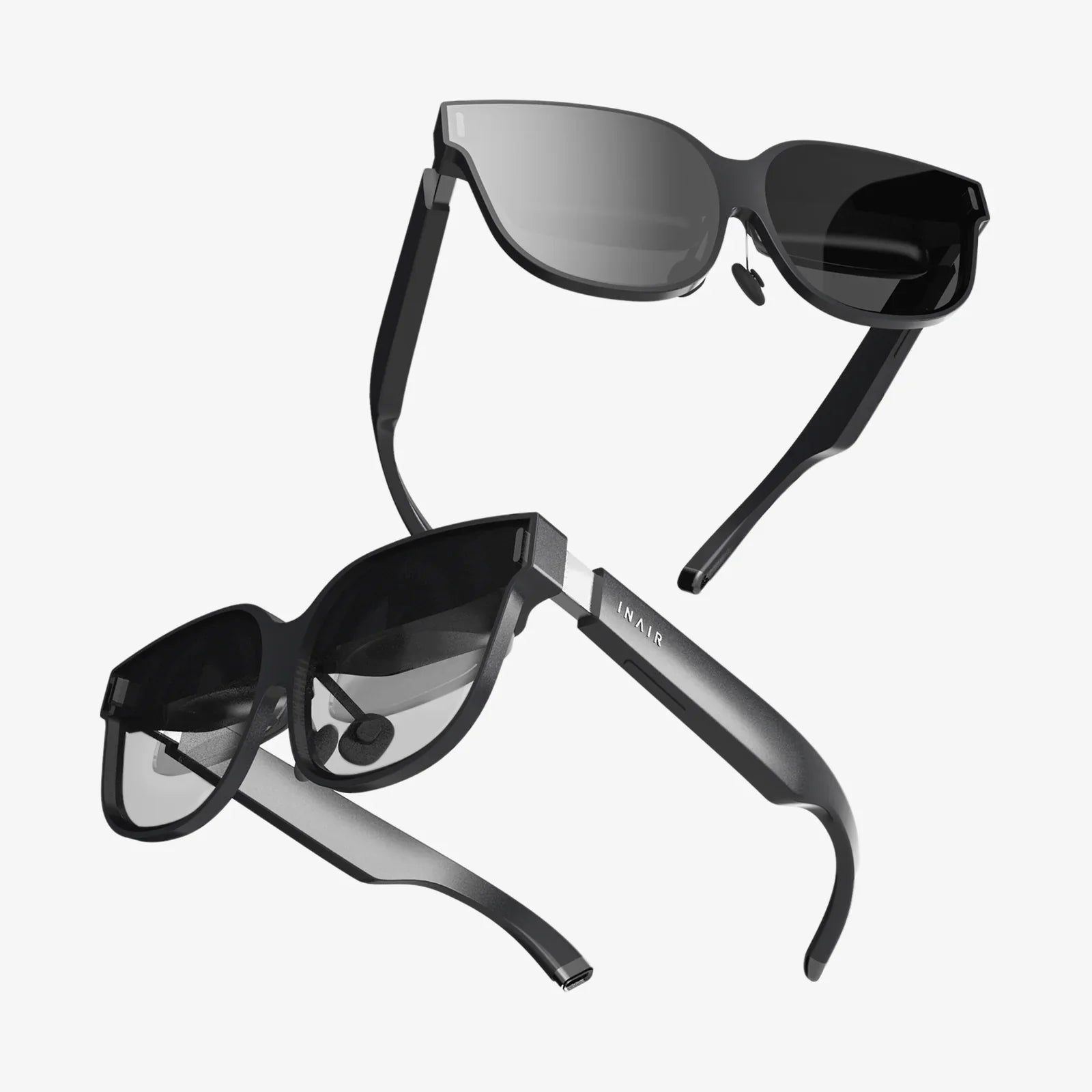
Imagine a world where your digital workspace isn't confined to the glowing rectangle on your desk but floats in the air around you, responsive to your touch and gaze. Envision a surgeon navigating a intricate, three-dimensional map of a patient's heart, not on a screen, but hovering above the operating table. This is the extraordinary promise of spatial display technology, a field that is rapidly dismantling the final barrier between the digital and the physical. We are on the cusp of an interface revolution, one that will transform our relationship with information itself, moving us from passive observers on one side of a screen to active participants within a synthesized reality.
Defining the Third Dimension: Beyond the Flat Screen
For decades, our primary window to the digital world has been the flat-panel display. Whether LCD, OLED, or plasma, these technologies share a fundamental constraint: they present information on a two-dimensional plane. We have become masters of interpreting this 2D data, using cues like perspective and shading to infer depth, but the experience remains inherently limited. Spatial display, in its broadest sense, refers to any system that generates imagery with true three-dimensional qualities, creating the perception of volume and space that a user can explore from multiple angles, often without the need for specialized eyewear.
This is a radical departure from traditional media. It's not merely a better screen; it's a different paradigm for communication. The core value proposition lies in its ability to leverage human beings' innate spatial reasoning capabilities. Our brains are exceptionally well-wired to understand and navigate 3D environments. By presenting data spatially, these displays allow for a more intuitive, natural, and ultimately faster comprehension of complex structures and relationships, from molecular models and architectural blueprints to vast datasets.
The Engine Room: How Spatial Displays Create Illusion
The magic of spatial display is achieved through a variety of sophisticated technological approaches, each with its own strengths and trade-offs. They can be broadly categorized into a few key families.
Volumetric Displays
These systems create imagery by actually illuminating points in a physical volume. Think of it as a 3D printer for light. One method involves projecting light onto a rapidly moving screen, such as a spinning helix or a vibrating panel. As the screen moves through the designated volume, the projected image changes precisely, and the persistence of vision blends these slices into a solid-looking form. Another technique uses focused laser beams to create tiny plasma excitations at specific points in a gas-filled volume, making the air itself glow. The result is a truly holographic-like image that can be walked around and viewed from any angle, with correct parallax and depth cues for multiple simultaneous viewers.
Holographic and Light Field Displays
While often used interchangeably with spatial display, holography is a specific technique that uses wavefront interference to record and reconstruct the light field of an object. True holographic displays remain a significant technical challenge, but the term is often applied to advanced systems that mimic the effect. More practical for current applications are light field displays. These systems use an array of micro-lenses or other optical elements to project multiple rays of light into the eye, each corresponding to a different viewpoint. This replicates how light behaves in the real world, providing the eyes' focusing mechanisms (vergence and accommodation) with accurate information. This solves a critical problem with stereoscopic 3D screens, which can cause eye strain and the vergence-accommodation conflict by forcing the eyes to focus on a fixed screen plane while converging on a virtual object in front of or behind it.
Augmented and Mixed Reality Headsets
While not displays in the traditional standalone sense, head-mounted displays (HMDs) for AR and MR are a dominant and highly accessible form of spatial display technology. They function by using stereoscopic screens and advanced optics to project computer-generated imagery onto transparent lenses or directly into the user's eyes, anchoring digital content to the physical world. The "spatial" element comes from their ability to understand and map the environment, allowing virtual objects to occlude behind real-world furniture, persist on a tabletop, or interact with physical surfaces. They create a personalized spatial display experience for each user.
A World Transformed: The Applications of Spatial Display
The potential use cases for this technology stretch across nearly every professional and creative field, heralding a new era of productivity and understanding.
Medicine and Healthcare
The impact here is already being felt. Surgeons use spatial displays to visualize CT and MRI scan data as interactive, life-size models of a patient's anatomy before making an incision. This allows for precise planning of complex procedures. During surgery, this data can be registered and overlaid onto the patient's body, providing a kind of X-ray vision to guide instruments to their target. Medical students can move beyond textbooks and cadavers to dissect and explore hyper-realistic 3D models of organs and biological systems, accelerating the learning process dramatically.
Engineering, Architecture, and Design
The days of poring over 2D blueprints and struggling to interpret isometric drawings are numbered. Architects and clients can walk through a full-scale spatial rendering of a building before the foundation is even poured, experiencing the flow of space, the play of light, and the overall feel of the design. Automotive engineers can assemble and disassemble virtual engine prototypes, identifying potential interference issues between parts long before physical manufacturing begins. This virtual prototyping saves immense amounts of time, resources, and materials.
Remote Collaboration and Telepresence
Spatial display promises to be the ultimate tool for breaking down geographical barriers. Instead of a grid of faces on a video call, imagine a meeting where life-like, volumetric avatars of your remote colleagues are sitting around the same virtual table with you. You could all interact with the same 3D model of a new product design, pointing, rotating, and annotating it as if it were physically present. This creates a sense of shared presence and enables a quality of collaboration that flat screens simply cannot replicate, making remote work more expressive and effective.
Data Visualization and Scientific Research
Scientists drowning in multidimensional data can use spatial displays to step inside their information. A climate scientist could navigate a swirling, three-dimensional visualization of a hurricane system, observing pressure gradients and wind flows in a visceral way. A financial analyst could explore a landscape of market data, where the height of a peak represents trading volume and color represents volatility, spotting correlations and trends that would be invisible on a spreadsheet. This transforms abstract numbers into a tangible landscape for exploration.
The Hurdles on the Horizon: Challenges to Overcome
Despite the breathtaking potential, the path to ubiquitous spatial display is fraught with significant technical and practical obstacles.
The most glaring challenge is hardware limitation. Many volumetric systems have a limited field of view or a small physical volume within which images can be created. The resolution of these displays, while improving, often still lags behind high-end 2D screens. There is a constant tension between image size, resolution, brightness, and cost. Creating bright, high-resolution, large-volume imagery requires immense computational power and advanced optical systems that are currently expensive and complex.
Computational demands are astronomical. Rendering a 3D scene for a traditional screen is computationally intensive. Rendering that same scene for a light field or holographic display, which requires calculating the appearance from every possible viewpoint, multiplies that demand by orders of magnitude. New algorithms and dedicated processing hardware are essential to making this feasible in real-time.
Furthermore, there is the challenge of content creation. The tools and pipelines for creating native 3D content designed for spatial consumption are still in their infancy. How do you design a user interface that exists in the air around a person? How do you tell a story when the viewer can choose their own angle? These are entirely new disciplines that need to be developed alongside the hardware.
The Future is Spatial: A Glimpse of What's to Come
The trajectory is clear: our interface with technology is evolving towards greater immersion and intuitiveness. In the coming decades, we can expect spatial displays to shrink in size and cost while growing in capability. We will move from specialized devices in labs and offices to consumer products seamlessly integrated into our homes and workspaces. Displays may evolve beyond glass and projectors to use advanced metamaterials that can shape light with unprecedented precision.
The ultimate goal is the seamless merger of the digital and physical realms, often referred to as the "cyber-physical continuum." In this future, information will not be something we go to a device to get; it will be an ambient layer over our reality, accessible through a glance or a gesture. Spatial display technology is the crucial bridge to that future, the canvas upon which this new reality will be painted. It represents not just an incremental improvement in display tech, but a fundamental shift in how we perceive and interact with the digital universe.
The screen that has dominated our lives for over half a century is beginning to fade, not into obsolescence, but into a broader and more immersive canvas. The next time you reach out to pinch, zoom, and swipe on a flat surface, remember that a world of depth awaits, promising to unlock understanding and connection in ways we are only just beginning to imagine. The door to a truly three-dimensional digital existence is now open, inviting us to step through and explore the infinite possibilities within.
Share:
What Is The Newest VR? A Deep Dive Into The Next Generation of Immersive Technology
Wearable Technology is the Future: Reshaping Our Lives from the Wrist Up