


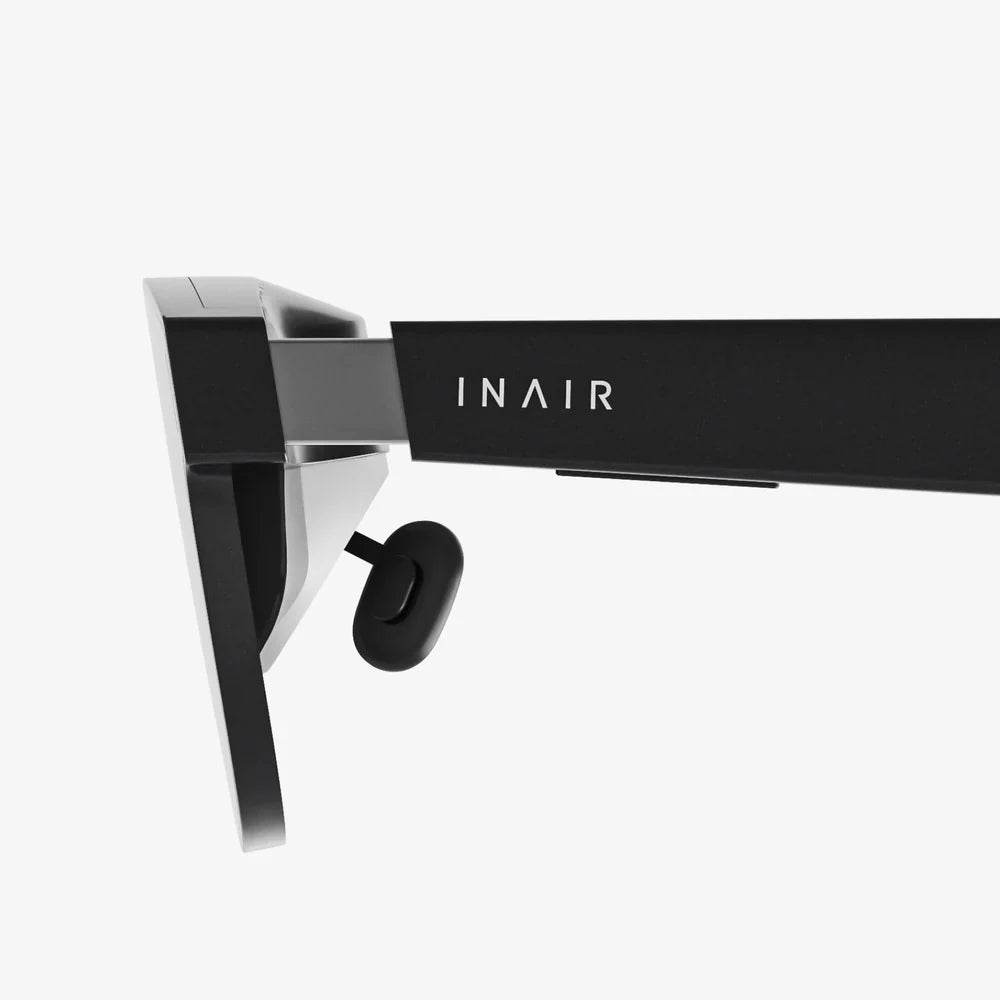
Imagine a world where information floats effortlessly before your eyes, where digital creatures play in your living room, and the line between the physical and virtual worlds dissolves into a seamless, interactive tapestry. This is no longer the realm of science fiction; it is the burgeoning reality promised by spectacles AR glasses, a technology poised to become the most personal and transformative computer we have ever known. These devices are not merely an accessory for vision correction or a fashion statement; they are a portal to an enhanced layer of existence, and their arrival signals a shift in how we will work, learn, play, and connect.
The Architectural Blueprint: How AR Glasses Perceive and Project
At their core, spectacles AR glasses are a marvel of miniaturized engineering, packing a suite of sophisticated sensors and optical systems into a form factor designed for all-day wear. Unlike virtual reality, which replaces your environment, augmented reality aims to supplement it, and this requires the device to intimately understand the world around you and your place within it.
The process begins with a sophisticated array of cameras and sensors. These act as the eyes of the device, continuously scanning the environment. Key components include:
- Depth-Sensing Cameras: Using technologies like structured light or time-of-flight sensors, these cameras measure the distance to objects, creating a detailed 3D map of the room. This allows digital objects to have a sense of volume and occlude correctly behind real-world furniture.
- SLAM (Simultaneous Localization and Mapping): This is the critical software algorithm that processes the sensor data. It allows the glasses to simultaneously understand the geometry of the environment (mapping) and precisely track their own position and orientation within that space (localization) in real-time. This is what prevents a virtual dinosaur from driftingslide across the floor as you move your head.
- Inertial Measurement Units (IMUs): These accelerometers and gyroscopes provide high-frequency data on movement and rotation, complementing the visual tracking for smooth and responsive motion.
Once the environment is understood, the next challenge is displaying information. This is achieved through advanced optical systems projected onto transparent lenses. The two primary competing technologies are:
- Waveguide Displays: Thin, transparent glass or plastic plates that use microscopic gratings to bend light from a micro-projector at the temple into the user's eye. This is the preferred method for its sleek design and ability to offer a large field of view without bulky components.
- Birdbath Optics: A compact arrangement of prisms and mirrors that reflects the image from a micro-display into the eye. While sometimes bulkier, it can offer high brightness and color fidelity.
Finally, all this computation requires significant processing power, handled by a miniaturized chipset often using a system-on-a-chip (SoC) design. Some early models offload heavier processing to a companion device, but the trend is toward powerful, self-contained units with dedicated AI processors for tasks like object recognition and gesture tracking.
Beyond Novelty: The Practical Revolution in Everyday Life
The true potential of spectacles AR glasses lies not in flashy demos, but in their profound utility across countless domains. They promise to make us more capable, informed, and efficient by putting contextually relevant information exactly where we need it: in our line of sight.
Transforming the Professional Landscape
In industrial and technical fields, AR glasses are already proving to be a game-changer. For a field technician repairing a complex piece of machinery, instead of juggling a physical manual or a tablet, animated instructions and diagrams can be overlaid directly onto the equipment, highlighting the specific component to be replaced. A surgeon could see vital signs and 3D anatomical models superimposed on a patient during a procedure, providing a kind of X-ray vision. Architects and interior designers can walk through a physical space and see their digital models rendered at full scale, allowing clients to experience a design before a single wall is built. This hands-free, eyes-up paradigm drastically reduces errors, accelerates training, and enhances precision.
Redefining Social Connection and Entertainment
Social interaction stands to be reimagined. Imagine a video call where the other person appears as a life-sized, realistic hologram sitting across from you on your couch, able to share and manipulate 3D models as if they were physically present. Gaming will evolve from something we do on a screen to something that happens all around us, with characters and events unfolding in our own homes and neighborhoods. Live sports events could be enhanced with real-time stats floating beside players, and concerts could feature stunning virtual effects visible only to the audience wearing glasses.
Empowering Daily Navigation and Learning
On a more personal level, navigation arrows can be painted onto the sidewalk, guiding you turn-by-turn without ever needing to look down at a phone. Shopping becomes more informed, with glasses displaying product reviews, price comparisons, and nutritional information as you glance at items on a shelf. For learners of all ages, abstract concepts can become tangible; a student studying astronomy could have the solar system orbiting around their classroom, while a history student could witness historical events play out on the very ground they stand on.
Navigating the Invisible Minefield: Ethical and Social Challenges
The integration of such a powerful, always-on, and always-worn technology into the fabric of society is not without significant challenges and risks. The path forward must be navigated with careful consideration for ethics, privacy, and human psychology.
The Privacy Paradox
Devices equipped with always-on cameras and microphones represent a unprecedented privacy challenge. The potential for constant, surreptitious recording in public and private spaces is a legitimate concern. Clear and robust systems for indicating when recording is active—both for the user and for those around them—will be essential. Furthermore, the data collected by these devices, from detailed 3D maps of your home to records of everything you look at, will be incredibly valuable and sensitive. Who owns this data? How is it stored and used? Strong legal and technical safeguards must be established to prevent a dystopian future of perpetual surveillance.
The Digital Divide and Social Etiquette
There is a real risk that AR glasses could exacerbate the digital divide. If they become essential tools for work and education, a new class of "information haves and have-nots" could emerge. Furthermore, new social norms will need to be negotiated. Is it rude to wear glasses during a conversation? How do we know if someone is looking at us or interacting with a hidden interface? The constant distraction of notifications and information overlays could also harm our ability to focus, be present, and engage in deep thought, potentially leading to a new form of digital addiction.
The Quest for a Social License
For this technology to be adopted at scale, it must earn a "social license." Early attempts were often clunky, socially awkward, and raised immediate privacy red flags. The next generation must be designed not just for technical prowess but for social acceptability. This means elegant, fashionable designs that people want to wear, intuitive interfaces that feel natural, and transparent features that build trust rather than sow suspicion. The companies developing this technology must engage in an open dialogue with the public to address these concerns head-on.
The Road Ahead: From Prototype to Paradigm Shift
The current generation of spectacles AR glasses are still in their relative infancy, often constrained by battery life, field of view, weight, and computational limits. However, the trajectory is clear. Advancements in micro-LED displays, photonic chips, and battery technology will lead to devices that are lighter, more powerful, and capable of all-day use.
The ultimate goal is a device that is indistinguishable from regular eyewear—a true invisible computer. The interface will evolve from clumsy controllers to intuitive voice commands, subtle hand gestures, and eventually, even neural inputs that respond to our intentions. The "killer app" that drives mass adoption may not be a single application but a confluence of utilities that become indispensable to daily life, much like the smartphone.
We are standing at the precipice of the next major computing platform. The transition from desktop to laptop to smartphone redefined human-computer interaction. Spectacles AR glasses represent the next logical step: moving computing off our desks and out of our hands to place it directly in our perception of reality itself. It is a shift from looking at a device to looking through it at a world infinitely enhanced with context, information, and magic. The future is not something we will watch on a screen; it is something we will step into, and it will be viewed through a new lens.
The world is about to gain a new layer, a digital skin overlaying our physical reality, and it will be accessed not through a device in your pocket, but through the frames on your face. The race to define this new reality is already underway, and the winners will be those who can blend cutting-edge technology with timeless human needs for connection, understanding, and wonder. Prepare to see your world, and your place within it, in a way you never thought possible.
Share:
Lens AR Experiences Are Redefining Our Perception of Reality
Long-Lasting Wearable Tech: The Future of Seamless, Sustainable Personal Electronics