


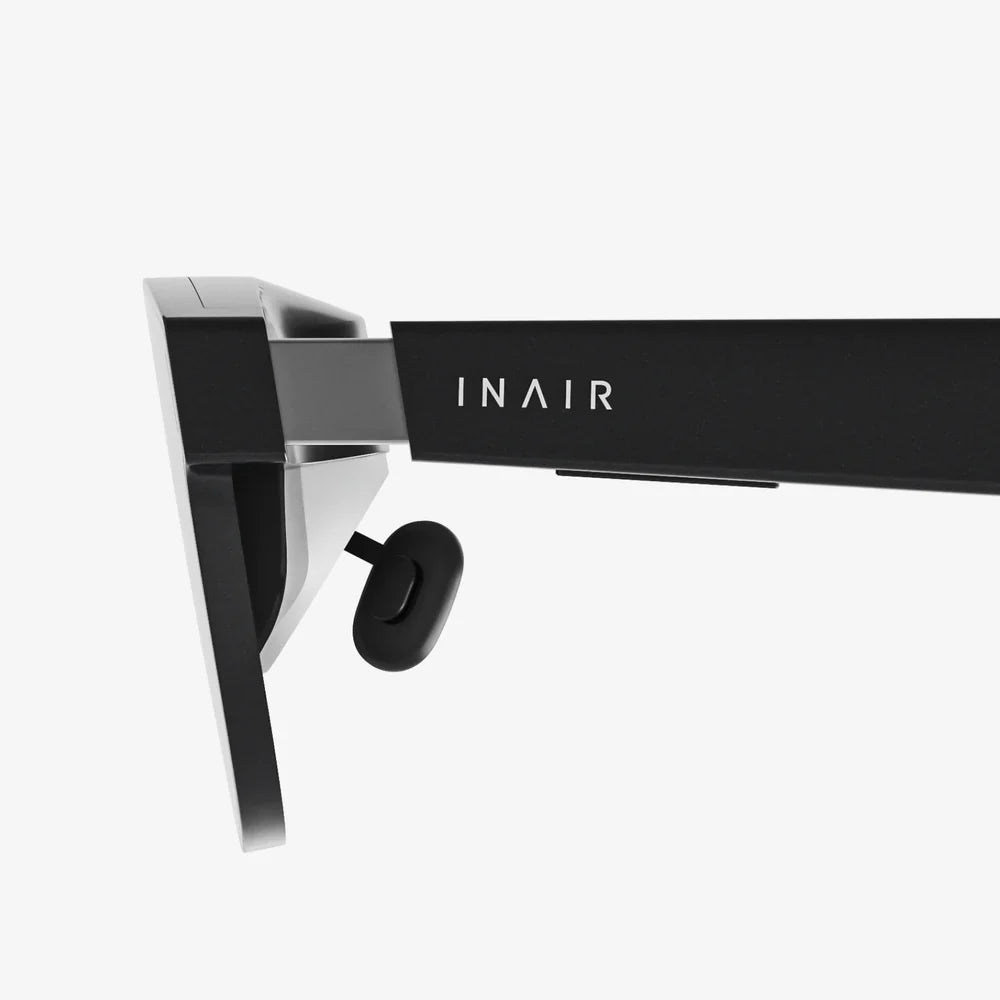
Imagine a world where information doesn't live on a screen in your pocket but is seamlessly painted onto the canvas of your reality. Where directions appear as a glowing path on the sidewalk, a foreign language is instantly translated on the menu in front of you, and a complex engine schematic hovers over the actual machinery for a technician to repair. This is not a distant science fiction fantasy; it is the imminent future being built today through the rapid advancement of Spectacles AR—augmented reality eyewear. This technology represents not merely an incremental step in gadget evolution, but a fundamental paradigm shift in how humans interact with both the digital and physical realms, a silent revolution waiting to be unveiled right before our eyes.
From Concept to Concrete: The Architectural Leap in AR
The journey from clunky, head-mounted displays to sleek, wearable spectacles has been a monumental engineering challenge. Early prototypes were often burdened by heavy batteries, limited field of view, and a conspicuous design that screamed "prototype." The modern pursuit is for something indistinguishable from traditional eyewear—light, comfortable, and socially acceptable. This requires a deep integration of complex systems into a minimal form factor.
At the heart of this hardware revolution are several key technological pillars. Waveguide displays act as the magic trick, piping light from tiny projectors at the temples into the lenses and then directly into the user's eyes, overlaying digital images onto the real world without bulky optics. Advanced micro-LED or laser projection systems provide the vibrant, bright imagery necessary to be visible even in direct sunlight. Sophisticated spatial audio drivers can beam sound directly into the ear without headphones, allowing for private listening while remaining aware of environmental sounds.
Perhaps most critically, the sensory suite embedded within the frames is what makes the experience intelligent. A constellation of micro-cameras, LiDAR scanners, and depth sensors continuously scans the environment, building a real-time 3D map of the world. This allows the device to understand surfaces, measure distances, and place digital objects convincingly within physical space. Inertial Measurement Units (IMUs) track head and eye movement with incredible precision, ensuring the digital overlay remains locked in place as the user moves. All this data is processed by bespoke, low-power chipsets designed specifically for the immense task of on-device AI processing and simultaneous localization and mapping (SLAM). This convergence of miniaturized hardware is what finally makes true, all-day AR spectacles a tangible consumer product.
The Silent Conductor: The Power of AI and Machine Learning
Hardware provides the stage, but artificial intelligence is the director and playwright of the AR experience. The raw data from the sensors is a chaotic stream of information; it is AI that gives it meaning and context. Machine learning models are trained to perform real-time object recognition, instantly identifying everything from a person's face to a specific model of coffee maker. Natural language processing allows for seamless voice control, enabling users to interact with their digital assistant as naturally as speaking to a friend, without ever needing to touch a device.
Predictive AI anticipates user needs based on context, location, and behavior. Glancing at a bus stop might automatically trigger the schedule to appear. Looking at a landmark could bring up a brief historical summary. This shift from pull to push—from asking for information to having it offered proactively and contextually—is a fundamental change in our relationship with computing. Furthermore, AI is crucial for user interaction. Advanced eye-tracking technology allows for subtle, gaze-based controls—selecting a virtual button by looking at it, or scrolling through text with a flick of the eyes. Gesture recognition, using the onboard cameras to track hand movements, enables a rich, tactile interaction with the digital layer without the need for a physical controller. This creates an interface that feels less like using a tool and more like an extension of your own intuition.
Transforming the Professional Landscape
While consumer applications are thrilling, the most immediate and profound impact of Spectacles AR is occurring in the enterprise and industrial sectors. Here, the technology is solving real-world problems with a clear return on investment, refining the technology for broader adoption.
- Field Service and Manufacturing: A technician wearing AR spectacles can see diagnostic data, instructional overlays, and animated repair guides superimposed directly onto the equipment they are fixing. This provides hands-free access to expert knowledge, drastically reducing error rates, training time, and downtime. A remote expert can see what the on-site technician sees and annotate their field of view with arrows and notes to guide them through a complex procedure.
- Healthcare and Medicine: Surgeons can visualize patient vitals, MRI scans, or 3D anatomical models directly in their line of sight during procedures, without turning away from the operating table. Medical students can practice complex surgeries on detailed holographic patients. The technology also holds promise for assisting those with visual impairments, enhancing contrast, highlighting obstacles, or reading text aloud.
- Design and Architecture: Architects and interior designers can walk through full-scale, holographic models of their creations before a single foundation is poured. They can change materials, move walls, and adjust lighting in real-time, collaborating with clients inside the proposed design. This erases the gap between blueprint and reality.
Redefining Social Connection and Personal Expression
Beyond the workplace, Spectacles AR will fundamentally alter the fabric of social interaction and personal computing. The much-discussed concept of the "metaverse" finds its most natural gateway not through a completely virtual world, but through an augmented one. Social AR could allow friends to leave virtual notes and drawings for each other in specific locations—a inside joke hovering over a favorite bar table, a birthday greeting pinned to a friend's front door.
Communication could become profoundly more expressive. Instead of flat video calls, avatars or real-life holograms of people could appear in your environment, sitting on your sofa as if they were truly there, enabling a sense of presence and shared space that current technology cannot match. Furthermore, as a form of wearable technology on the face, AR spectacles will become a powerful medium for personal expression. Frames will be customizable, and the digital content they display—from subtle information widgets to more artistic filters that alter the perception of one's surroundings—will become a new form of fashion and identity, a digital accessory that reflects personality and mood.
Navigating the Invisible Minefield: Privacy and the Ethical Dimension
The potential of always-on, always-worn cameras and sensors that continuously scan and record our environment raises profound and legitimate privacy concerns. The very features that make AR spectacles powerful—their ability to identify objects and people—also make them potentially the most intrusive consumer technology ever conceived. The concept of a "stranger with a camera" is replaced by "everyone, all the time."
This necessitates a radical rethinking of data ethics, consent, and digital etiquette. Robust, on-device processing must be the standard, ensuring that sensitive visual and location data is not streamed to the cloud but is processed and immediately discarded on the device itself. Clear visual and auditory indicators must be developed to signal when recording or scanning is active, providing transparency to those in the vicinity. Society will need to establish new social norms and potentially new laws to govern recording in public and private spaces. The industry must adopt a privacy-by-design approach, making user control and data minimization foundational principles, not afterthoughts. Without this careful and ethical navigation, the promise of AR risks being overshadowed by a justified public backlash.
The Road Ahead: From Novelty to Necessity
The path to ubiquitous AR adoption is not without its hurdles. Battery life remains a constraint, though advances in low-power chipsets and efficient displays are rapidly closing the gap. Network connectivity, particularly the low-latency, high-bandwidth promise of advanced cellular networks, will be essential for delivering complex, cloud-rendered experiences seamlessly. But the biggest challenge may be designing intuitive and universally understandable user interfaces for a medium that has no precedent.
We are standing at the precipice of the next major computing platform. Just as the smartphone demoted the desktop from our primary computer to a stationary workstation, AR spectacles have the potential to demote the smartphone, transforming it from a device we constantly look down at to a silent computer in our pocket, managed through the interface on our faces. This will change everything: from how we navigate cities and consume media to how we learn new skills and connect with our loved ones.
The true magic of Spectacles AR lies in its potential to become invisible—not in the sense of being unseen, but in the sense of being so seamlessly integrated into our lives and interactions that we stop thinking of it as technology at all. It promises a future where the boundary between the digital and the physical dissolves, empowering us with superhuman knowledge and perception without ever asking us to leave the real world behind. The revolution won't be televised; it will be projected directly onto our retinas, changing what it means to see, to know, and to connect, forever.
Share:
Building Own Augmented Reality Glasses: A Comprehensive Guide to Crafting Your Personal Portal
Practical Wearable Tech: The Seamless Integration of Smart Devices into Daily Life