


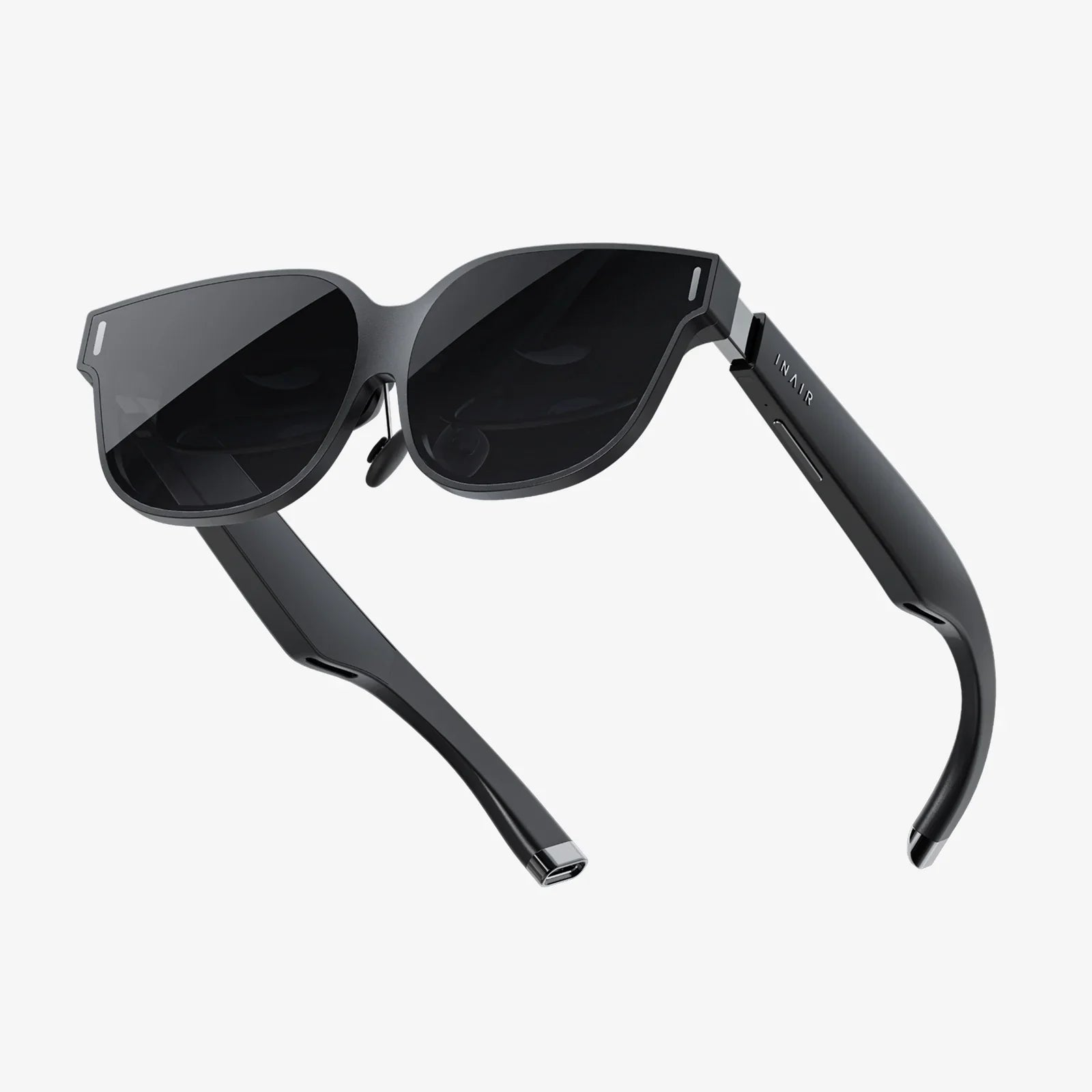
Imagine a world where the line between the digital and the physical blurs, where images leap out from the screen with palpable depth, pulling you into experiences so vivid you feel you could reach out and touch them. This is not a glimpse into a distant future; it is the present reality made possible by the revolutionary technology of the stereoscopic screen. For decades, the flat, two-dimensional display has been the singular window to our digital worlds, but a profound shift is underway, driven by our innate desire for deeper, more engaging visual experiences. Stereoscopic screens are at the forefront of this revolution, offering a gateway to immersive realms that were once the sole domain of science fiction.
The Illusion of Depth: How Our Brain Sees in 3D
To truly appreciate the magic of a stereoscopic screen, one must first understand the remarkable machinery of human vision. We perceive depth and three-dimensionality not because we have two eyes, but because our brain masterfully interprets the two slightly different images each eye receives. This phenomenon is known as stereopsis. Your left and right eyes are spaced approximately two and a half inches apart, giving each a unique perspective on the world. The brain fuses these two distinct two-dimensional images into a single, coherent three-dimensional picture, calculating distances, judging depth, and constructing the rich, layered reality we experience.
A traditional display fails to replicate this natural process. It presents a single, flat image to both eyes, devoid of the crucial binocular disparity that our visual cortex requires to compute depth. A stereoscopic screen, however, is engineered to overcome this limitation. Its core function is to deliver a separate and distinct image to each eye, tricking the brain into perceiving a three-dimensional scene from what is, physically, a flat surface. This elegant deception is the fundamental principle upon which all stereoscopic technology is built.
Behind the Glass: The Core Technologies Powering the Illusion
The quest to create this illusion has given rise to several ingenious technological approaches. While the end goal is the same—delivering a unique image to each eye—the methods vary significantly.
Active Shutter Systems
This technology relies on precision timing and specialized eyewear. The screen itself displays images in rapid alternation: first the perspective for the left eye, then for the right eye, at a very high frequency to avoid noticeable flicker. The user wears glasses with liquid crystal shutters that sync with the display, typically via an infrared or Bluetooth signal. When the left-eye image is on screen, the right lens darkens, and vice versa. This happens so quickly that the brain seamlessly integrates the alternating images into a continuous, fluid 3D picture. The primary advantage of active systems is that they maintain the full resolution of the display for each eye, providing a high-quality image.
Passive Polarized Systems
Polarized systems take a different approach. The screen displays both the left and right-eye images simultaneously. A special filter placed over the display polarizes the light for each image at different angles—often 90 degrees apart for one eye and 45 degrees for the other. The user wears lightweight glasses with lenses that have corresponding polarizing filters. Each lens only allows light polarized at its specific angle to pass through, effectively ensuring each eye sees only the image intended for it. This method is widely used in commercial cinemas because the glasses are cheap, durable, and require no batteries. However, it typically halves the vertical resolution perceived by each eye.
Autostereoscopy: The Dream of Glasses-Free 3D
The holy grail of stereoscopic display technology is autostereoscopy—3D vision without the need for any special glasses. This is achieved by placing a special optical element, called a parallax barrier or a lenticular lens sheet, directly over the screen. This element acts like a venetian blind, directing the left-eye image and the right-eye image into different positions in front of the screen. If a viewer's head is in the correct "sweet spot," each eye will see a different set of pixels, creating the stereoscopic effect. While early implementations were limited by a narrow viewing angle and a precise head position requirement, advancements in eye-tracking technology are making this technology more viable. Cameras track the viewer's eye position and adjust the image output in real-time to maintain the 3D effect across a wider area, bringing us closer to a future where cumbersome glasses are a relic of the past.
A Journey Through Time: The Evolution of the Third Dimension
The fascination with stereoscopic imagery is far from new. Its roots stretch back to the 19th century with the invention of the stereoscope by Sir Charles Wheatstone and later popularized by Oliver Wendell Holmes. This handheld device presented a separate drawing or photograph to each eye, creating a stunningly realistic diorama effect that captivated Victorian society. The 20th century saw this concept leap to the silver screen during various "3D booms," most notably in the 1950s with films that relied on anaglyph technology—the classic red and cyan glasses—which used color filtering to separate the images.
The modern era of stereoscopic screens began in earnest in the first decade of the 21st century. A convergence of digital projection, high-resolution panels, and faster processing power created the perfect storm for a resurgence. The monumental success of a single film in 2009 demonstrated the massive commercial potential of high-quality stereoscopic cinema, triggering a wave of investment and innovation. This soon trickled down into the consumer market, with manufacturers releasing televisions and computer monitors capable of displaying 3D content at home. While consumer interest in home 3D entertainment eventually waned due to the hassle of glasses and a lack of content, the technology found its true calling elsewhere, serving as the foundational visual engine for a new digital frontier.
Beyond the Living Room: The Pervasive Applications of Stereoscopic Vision
While entertainment was the initial driver, the value of stereoscopic screens has proven far more profound and diverse across numerous professional and scientific fields.
Medical Imaging and Surgery
In medicine, depth perception is not a luxury; it can be a matter of life and death. Stereoscopic screens are revolutionizing medical imaging and minimally invasive surgery. Surgeons using robotic systems operate while viewing a high-resolution stereoscopic display that provides a true sense of depth and scale, dramatically improving their spatial awareness and precision during complex procedures. This enhanced visual feedback allows for smaller incisions, reduced tissue damage, and faster patient recovery times.
Engineering, Design, and Architecture
From designing complex machinery to planning entire cities, professionals rely on Computer-Aided Design (CAD) software. Viewing these intricate 3D models on a stereoscopic screen allows engineers and architects to visualize their creations with unparalleled clarity. They can spot potential design flaws, understand spatial relationships between components, and present their ideas to clients in an immersive and easily understandable way, long before a single physical prototype is ever built.
Scientific Visualization and Data Analysis
For scientists grappling with massive, multi-dimensional datasets—from the folding of protein molecules to the cosmic web of dark matter—a 2D graph can be hopelessly inadequate. Stereoscopic visualization transforms this data, allowing researchers to literally step inside their information. Complex molecular structures, geological formations, and astronomical models can be explored intuitively, revealing patterns, connections, and insights that would remain hidden on a flat monitor.
The New Frontier: Virtual and Augmented Reality
This is where stereoscopic screen technology has found its ultimate expression. Every modern Virtual Reality (VR) and Augmented Reality (AR) headset is, at its heart, a sophisticated stereoscopic display. By placing a dedicated screen or a pair of micro-screens just inches from the user's eyes and using lenses to focus the image, these devices create an all-encompassing sense of presence. In VR, you are transported to a fully digital world. In AR, digital holograms are anchored convincingly within your physical environment. This application is driving the most rapid innovation in the field, pushing for higher resolutions, wider fields of view, and more compact form factors, cementing the stereoscopic screen as the cornerstone of the metaverse and spatial computing.
Challenges and Considerations on the Path to Perfection
Despite its incredible potential, stereoscopic technology is not without its challenges. A significant portion of the population experiences visual discomfort, eyestrain, or headaches when viewing 3D content, often due to a conflict between the eyes focusing on the fixed plane of the screen while converging on a perceived object in front of or behind it—a phenomenon known as the vergence-accommodation conflict. This is a major area of research, with potential solutions like light field displays and varifocal lenses being explored.
Furthermore, the creation of high-quality stereoscopic content remains more complex and expensive than traditional 2D production. It requires specialized cameras, careful planning of depth budgets, and a skilled understanding of how to use depth as a narrative tool rather than just a gimmick. Poorly executed stereoscopy can be more distracting than engaging.
Gazing into the Crystal Ball: The Future is Deep
The evolution of the stereoscopic screen is far from over. We are moving towards a future where these displays will become sharper, brighter, and more seamless. We can expect the complete eradication of the glasses requirement through advanced autostereoscopic and holographic technologies. Displays will likely evolve beyond simple two-view systems to multi-view or even light field systems that accurately reproduce the way light rays emanate from real objects, providing a more natural and comfortable 3D experience that can be viewed from any angle.
Integration with other emerging technologies like artificial intelligence and haptic feedback will further enhance immersion. AI will be used to automatically convert 2D content into 3D in real-time, solving the content problem, while haptic systems will allow you to not just see depth but feel it. The screen itself may cease to be a distinct object, transforming into transparent smart glasses for all-day augmented reality or even direct neural interfaces in the more distant future.
The humble screen, once a flat portal to information, is evolving into a dynamic window, a doorway to layered digital dimensions. The stereoscopic screen is not merely a display technology; it is the key that unlocks a more intuitive, immersive, and profound way to interact with the digital universe, forever changing how we work, learn, play, and connect.
The flat screen is fading into history, a relic of a two-dimensional past. The world is not flat, and our digital interfaces are finally catching up, offering a depth of experience that mirrors the rich complexity of reality itself. The next time you look at a screen, prepare to not just see an image, but to step through it, to explore it, and to experience a world where every pixel has a place in a vast and captivating depth of field. The dimension of depth is now open for exploration.
Share:
Compare AR Headsets Price vs Performance: The Ultimate Buyer's Guide
Digital Creation: The New Frontier of Human Expression and Economic Power