


- by wangfred
Summary of Augmented Reality: From Sci-Fi to Everyday Reality
- by wangfred
Imagine a world where digital information doesn't just live on a screen but is seamlessly woven into the very fabric of your physical reality. This is the promise of augmented reality (AR), a technology that is rapidly transitioning from science fiction fantasy to a powerful tool reshaping how we work, learn, play, and connect. It’s not about escaping our world, but about enhancing it, overlaying a rich tapestry of data, imagery, and interaction onto the world we already see. The journey of AR is one of the most fascinating technological evolutions of our time, and its potential to redefine human-computer interaction is only just beginning to be unlocked.
At its essence, augmented reality is an interactive experience that enhances the real world with computer-generated perceptual information. Unlike Virtual Reality (VR), which creates a completely artificial digital environment for the user to immerse themselves in, AR takes the existing environment and layers new information on top of it. This key distinction is crucial. VR replaces reality; AR supplements it.
The goal is to create a system where the digital and physical coexist and interact in real-time. This is often achieved through a combination of hardware and software that includes cameras, sensors, algorithms, and display technologies. The magic of AR lies in its ability to recognize the environment, understand its geometry and context, and then accurately align and anchor digital content within that space, making it appear as a natural part of the world.
The conceptual seeds of AR were planted long before the technology existed to realize them. In 1901, L. Frank Baum's novel The Master Key introduced the concept of "character markers"—a set of spectacles that could overlay data onto people, revealing their character traits. This was arguably the first fictional depiction of augmented reality.
The technology itself began to take shape in the 1960s. Ivan Sutherland, a computer scientist, created the first head-mounted display system in 1968, which he nicknamed "The Sword of Damocles." It was a primitive and monstrously cumbersome apparatus that displayed simple wireframe graphics, but it laid the foundational groundwork for all AR and VR to follow.
The term "Augmented Reality" itself was coined much later, in 1990, by researchers Thomas Caudell and David Mizell at Boeing. They were working on an experimental head-mounted display to assist aircraft wire harness assemblers by projecting diagram information onto the physical boards, thereby reducing errors and increasing efficiency.
The 2000s saw gradual advancements, but the true catalyst for public awareness arrived in the 2010s with the proliferation of powerful smartphones. The combination of high-resolution cameras, fast processors, GPS, and motion sensors made handheld AR a mass-market possibility. This was spectacularly demonstrated by the global phenomenon of a certain mobile game in 2016, which showed millions of people the thrill of seeing digital creatures in their local parks and streets. Since then, the technology has accelerated at a breathtaking pace, moving from phones to dedicated smart glasses and finding serious applications across countless industries.
The creation of a convincing AR experience relies on a sophisticated stack of technologies working in harmony. The process can be broken down into a few key steps:
For digital content to stay locked in place in the real world, the AR system must first understand that world. This is done through a process called simultaneous localization and mapping (SLAM). SLAM algorithms use data from cameras and sensors (like LiDAR, depth sensors, and IMUs) to simultaneously map an unknown environment and track the device's position within that map in real-time. It identifies feature points in the physical space and uses them to create a digital mesh or point cloud, understanding the geometry, surfaces, and boundaries of the room or area.
Once the environment is understood, the device's processor takes over. It runs complex computer vision algorithms to interpret the scene, decide where and how to place the digital object (adhering to physics, lighting, and occlusion), and then renders the high-fidelity 3D model or animation. This requires significant graphical processing power to achieve a smooth, believable result without lag, which can break the illusion of immersion.
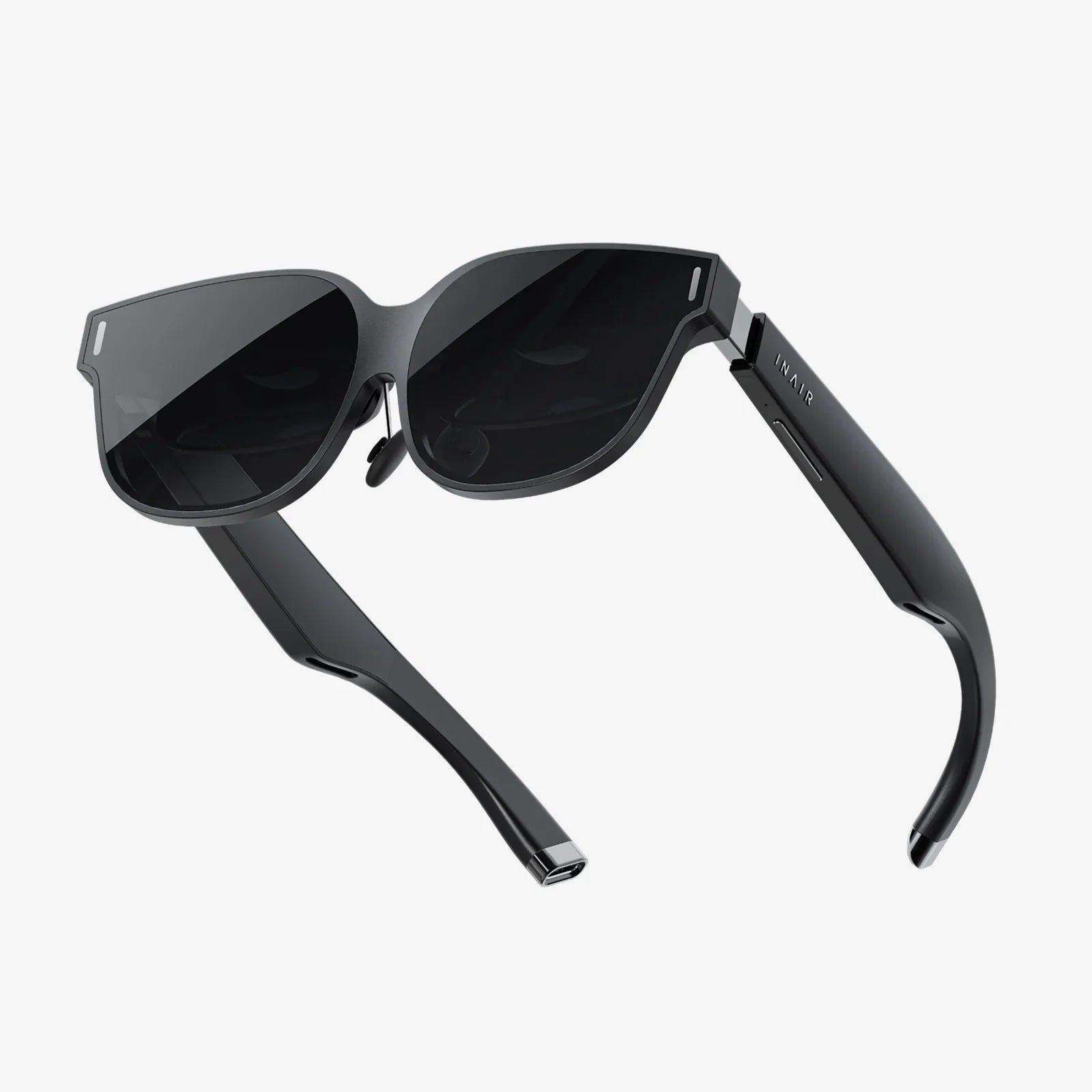
This is the final step: presenting the combined reality to the user. There are several primary methods:
Not all AR is created equal. Experiences are generally categorized based on how they anchor digital content to the real world.
This was one of the earliest forms of AR. It uses a specific, predefined visual object (a "marker")—often a black-and-white QR-like code—as a anchor point. The device's camera recognizes this unique pattern and uses its position and orientation to place the digital content on top of it. It's highly reliable and accurate but requires the user to have and position the marker correctly.
This is the most common and advanced form of AR today. It uses SLAM and environmental understanding to place content on any surface without a pre-fabricated marker. This includes:
This type uses GPS, compass, and accelerometer data from a mobile device to anchor digital content to specific geographic locations. When a user points their device at a particular area, they might see historical figures reenacting a battle, directions overlaid on the street, or a virtual treasure chest hidden in a public park. This is powerful for tourism, gaming, and navigation.
The value of AR extends far beyond entertainment. It is proving to be a revolutionary tool in enterprise and professional settings, offering tangible benefits in efficiency, accuracy, and safety.
In healthcare, AR is literally saving lives and improving outcomes. Medical students use AR to visualize complex anatomical structures in 3D, peeling back layers of a virtual cadaver. Surgeons use AR headsets to project critical information—such as patient vitals, MRI scans, or surgical plans—directly into their field of view during procedures, allowing them to maintain focus without looking away. This technology can also overlay veins onto a patient's skin to guide needle insertion or help with precise tumor targeting during radiation therapy.
This is where AR first found its purpose. Technicians on a factory floor or in the field can use AR glasses to see step-by-step repair instructions overlaid directly on the malfunctioning machinery. They can see arrows pointing to specific components, have torque values displayed next to a bolt, or connect with a remote expert who can draw annotations into their field of view to guide them. This reduces errors, slashes training time, and minimizes downtime.
AR is fundamentally changing how consumers shop. "Try before you buy" is now a digital reality. Customers can use their phones to see how a new sofa would look in their living room, how a shade of paint would change their wall, or how a pair of glasses fits their face. This immersive shopping experience drastically reduces purchase uncertainty and return rates, bridging the gap between the online and in-store experience.
AR brings learning to life. Instead of reading about ancient Rome, students can walk through a digitally reconstructed Colosseum on their tablets. Mechanics-in-training can practice complex repairs on a virtual engine. This interactive, hands-on form of learning improves engagement and knowledge retention, making education a dynamic and exploratory process.
Forget trying to figure out which way to hold a paper map or which exit to take on a roundabout. AR navigation apps use the phone's camera to overlay giant, floating directional arrows onto the live view of the street, making it intuitively obvious where to turn next. This is being integrated into car windshields (head-up displays) and smart glasses to provide drivers and pedestrians with contextual guidance without distracting them from their environment.
Despite its immense potential, the widespread adoption of AR, particularly in the form of wearable glasses, faces significant hurdles.
For AR to become truly seamless, several technical barriers must be overcome. Battery life remains a major constraint, as processing high-fidelity graphics and running complex computer vision algorithms are incredibly power-intensive. The field of view (FOV) in most consumer-grade smart glasses is still too narrow, creating a "letterbox" effect rather than a full-field immersion. Achieving perfect visual registration—where digital objects don't jitter or drift—and realistic occlusion and lighting estimation is computationally difficult and requires ever more advanced sensors and algorithms.
The always-on, recording nature of AR glasses raises profound privacy questions. How do we prevent a world where everyone is constantly scanning and analyzing everyone else? The concept of attention is also challenged; having a constant stream of notifications and information in your periphery could lead to increased distraction and a further withdrawal from physical social interactions. Furthermore, the potential for addiction, the blurring of lines between reality and fiction, and the creation of new digital divides are serious issues that society must grapple with as the technology evolves.
Designing for a spatially-aware, contextually-rich medium is entirely different from designing for a flat screen. UX designers must create intuitive interfaces that exist in three dimensions, respond to gesture and voice, and provide value without overwhelming the user with information. Bad AR design isn't just inconvenient; it can be dangerous if it obscures a user's view of the real world.
The trajectory of AR points toward a future where digital information becomes an ambient utility, as accessible and ever-present as electricity. We are moving toward lighter, more powerful, and more socially acceptable glasses that people will wear all day. The convergence of AR with Artificial Intelligence (AI) and 5G connectivity will be particularly transformative. AI will enable more intelligent and context-aware content, while 5G's high bandwidth and low latency will allow for complex processing to be offloaded to the cloud, enabling thinner, lighter devices.
We can envision a world where AR assists us with everything from cooking dinner by highlighting the next ingredient to providing real-time language translation of street signs. It will empower workers with superhuman knowledge and capabilities and redefine entertainment as immersive stories unfold in our own homes. The ultimate goal is the creation of a spatial web—a layer of information and interaction draped over the physical world, accessible through AR interfaces, fundamentally changing how we access and interact with the internet and with each other.
We stand at the precipice of a new era, one where our reality becomes a canvas for human creativity and a gateway to infinite digital possibility. The boundary between the atoms of our world and the bits of our data is dissolving, and the resulting fusion promises to be one of the most significant technological revolutions in human history. The future isn't just on its way; it's already here, waiting for us to put on our glasses and see it.
Share:
What Are Some Good Examples of Augmented Reality? A Deep Dive into the Digital Overlay Revolution
How to Explain Augmented Reality: A Comprehensive Guide for Everyone