


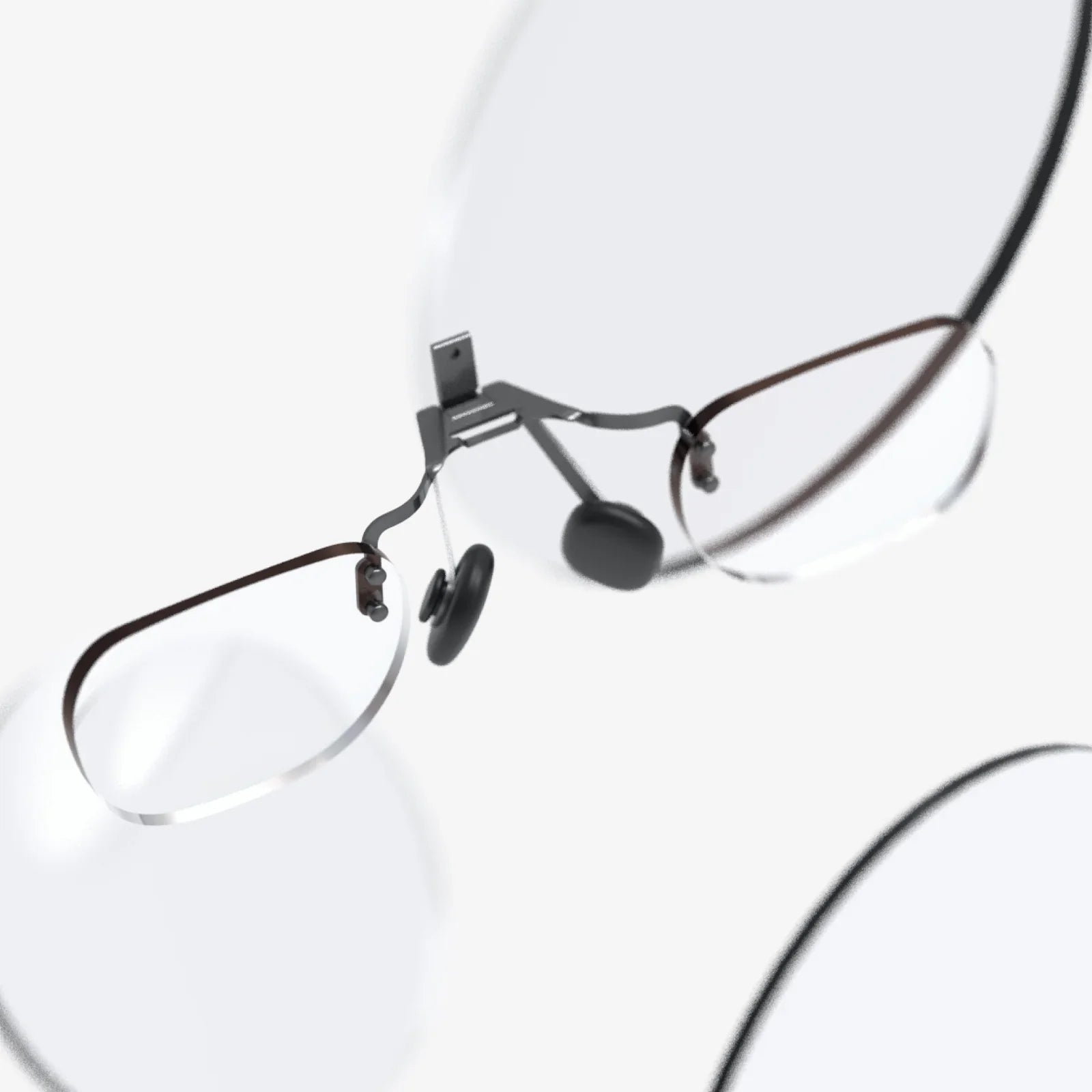
Imagine a world where the line between the digital and the physical not only blurs but disappears entirely, where information, connectivity, and augmented experiences are seamlessly integrated into your field of vision with a sophistication so complete, it becomes invisible. This is no longer the realm of science fiction; it is the promise delivered by the latest generation of wearable technology, epitomized by the rise of super black smart glasses. These devices represent a monumental leap forward, moving beyond clunky prototypes and into the domain of high fashion and powerful, discreet computation. They are not merely an accessory; they are a portal, a personal assistant, and a statement of aesthetic elegance, all contained within a frame that looks and feels like the pinnacle of classic eyewear design. The journey from novelty to necessity is happening right now, and it’s being led by these sleek, super black marvels.
The Evolution of Seeing: From Function to Fusion
The concept of computerized eyewear is not new. For decades, innovators and technologists have dreamed of augmenting human vision. Early iterations were often bulky, obtrusive, and socially awkward, prioritizing raw function over form. They were worn by specialists in industrial settings or embraced by early adopters willing to trade social acceptance for a glimpse of the future. The fundamental challenge was always the same: how to miniaturize powerful technology into a form factor that people would actually want to wear every day. The breakthrough came not from a single invention, but from a convergence of advancements. Micro-displays became incredibly small yet bright, processors became both powerful and incredibly energy-efficient, and battery technology advanced enough to provide all-day life in a tiny package. Most importantly, designers finally cracked the code on style. They realized that for this technology to become mainstream, it had to appeal on an aesthetic level first and a technological level second. The answer was a return to a timeless classic: the super black frame.
The Allure of the Void: Why Super Black is the Perfect Canvas
The choice of a super black finish is a masterstroke in design psychology and practical engineering. On a stylistic level, black is eternal. It is synonymous with sophistication, professionalism, and versatility. A pair of super black smart glasses can be worn with a formal suit, casual weekend wear, or anything in between, seamlessly integrating into any wardrobe. This universality is critical for mass adoption. Unlike a bright color or a unconventional shape, black frames do not shout for attention; they whisper confidence and taste. Beyond aesthetics, the super black color serves a crucial technological purpose. It acts as the perfect camouflage for the intricate technology housed within the frames. Sensors, miniature cameras, and the subtle glow of indicator lights can be seamlessly concealed within the deep, non-reflective matte or gloss finish. This creates a crucial illusion of normalcy, making the advanced technology within feel like a natural, almost secretive extension of the wearer, rather than a bulky add-on. It’s a design that respects the user’s desire to be connected without being defined by their devices.
A Glimpse into the Augmented World: Core Technologies Unveiled
Beneath the sleek exterior of super black smart glasses lies a symphony of cutting-edge technology. Understanding these components reveals the magic of how they work.
The Display: Windows to the Digital Soul
At the heart of the experience is the optical system. Unlike virtual reality headsets that completely envelop the user in a digital world, smart glasses use augmented reality (AR) to overlay digital information onto the real world. This is typically achieved through one of two methods: waveguide technology or micro-LED projectors. Waveguides use tiny, transparent gratings etched into the lens to bend light from a micro-display on the temple into the user’s eye. The result is a crisp, bright image that appears to float in the distance, seamlessly integrated with the physical environment. The advanced engineering ensures this digital overlay is only visible to the wearer, maintaining their privacy and the social normalcy of a conversation.
The Brain and Brawn: Processing and Power
Driving these visual experiences is a system-on-a-chip (SoC) similar to those found in high-end smartphones, but ruthlessly optimized for low power consumption and thermal efficiency. This miniature computer is responsible for everything from interpreting voice commands and processing visual data from cameras to running applications and managing wireless connections. Powering this entire system is a compact, high-density battery strategically distributed throughout the frames—often in the thicker temples—to balance weight and maximize life. Innovative charging solutions, including sleek magnetic charging cases that provide multiple additional charges, ensure the glasses can keep up with a full day’s use.
Perceiving the World: Sensors and Inputs
To interact with and understand the environment, these glasses are equipped with a suite of sensors. This can include accelerometers, gyroscopes, and magnetometers to track head movement and orientation. Some integrate depth sensors or LiDAR scanners to map the world in 3D, understanding the geometry of a room or the distance to an object. For input, voice assistants provide a hands-free primary method of control. Additionally, touch-sensitive surfaces on the temples allow for swiping and tapping to navigate menus, while inward-facing cameras can even track eye movements for more subtle and intuitive interactions.
Transforming Daily Life: Applications Beyond the Hype
The true value of any technology is measured in its utility. Super black smart glasses are poised to revolutionize a myriad of aspects in our personal and professional lives.
The Augmented Professional
In fields like engineering, manufacturing, and logistics, these glasses can project schematics, instructions, or inventory data directly into a worker’s line of sight, freeing their hands and dramatically improving efficiency and accuracy. A surgeon could see vital patient statistics without looking away from the operating table. A field service technician could have a remote expert draw digital arrows onto their real-world view to guide a complex repair.
Navigation and Accessibility
Imagine walking through a foreign city where directional arrows are painted onto the streets themselves, or the name and rating of a restaurant hover above its door. For individuals with visual or hearing impairments, this technology can be transformative, providing real-time audio descriptions of surroundings, highlighting obstacles, or transcribing conversations and displaying them as subtitles on the lenses.
Immersive Learning and Entertainment
Learning a new skill, like cooking or playing an instrument, becomes interactive with instructions overlaid on your tools. Watching a live sports game could come with real-time stats floating beside the players. The potential for new forms of storytelling and gaming, where the narrative unfolds in your own living room, is immense.
Navigating the New Frontier: Privacy, Security, and Social Etiquette
The integration of cameras and sensors into a wearable, always-on device rightly raises important questions about privacy and security. The discreet nature of super black smart glasses amplifies these concerns. Manufacturers have a profound responsibility to embed privacy into the core of their design. This includes physical LED indicators that clearly signal when recording is active, ensuring users are never recorded without their knowledge. Data security is paramount; all processing should be done on-device whenever possible, and any transmitted data must be encrypted end-to-end. Social etiquette will also need to evolve. Just as society developed norms around smartphone use in conversations and cinemas, new norms will emerge governing the appropriate use of always-present AR technology. Transparency and consent will be the cornerstones of responsible use.
The Road Ahead: The Future is Clear
The current generation of super black smart glasses is impressive, but it is merely the foundation. The future points toward even greater integration. We can anticipate advancements like holographic displays with expansive fields of view, even more intuitive neural interface controls that respond to subtle brain signals, and the development of a robust ecosystem of applications that we haven’t even imagined yet. As 5G and eventual 6G networks provide ubiquitous, low-latency connectivity, the cloud will become an extension of the glasses’ onboard processing, enabling ever more complex and real-time applications. The goal remains constant: to make the technology fade away until only the benefit remains, enhancing human capability without intruding upon human experience.
We stand at the precipice of a new sensory paradigm, one where our perception of reality is enhanced, informed, and empowered. Super black smart glasses are the key that unlocks this door, offering a vision of the future that is not cold and robotic, but elegantly human-centered. They promise a world where we are more present in our surroundings, not less, because the digital distractions that currently pull us into our palms are instead gracefully woven into the tapestry of our reality. The opportunity to see the world, quite literally, in a new light has never been more tangible or more stylish.
Share:
Looking at Its 8K Holographic Display: The Future of Visual Technology is Here
Highest Resolution VR Goggles: A Deep Dive into the Pinnacle of Virtual Clarity