


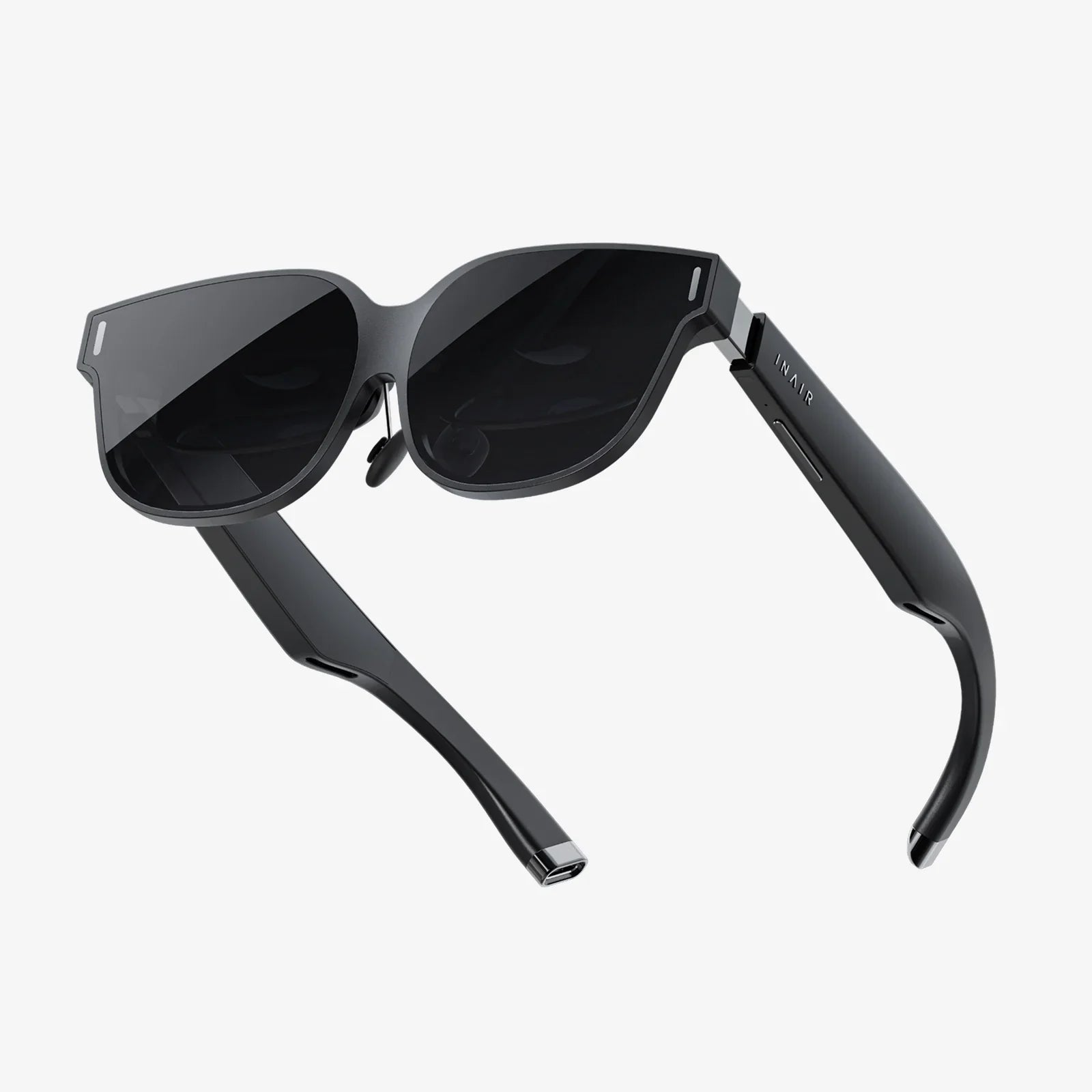
- by wangfred
Highest Resolution VR Goggles: A Deep Dive into the Pinnacle of Virtual Clarity
- by wangfred
Imagine slipping on a headset and being instantly transported to another world—a world so sharp, so vivid, and so breathtakingly real that the boundaries between the digital and the physical begin to blur. This is no longer the stuff of science fiction; it is the promise held by the latest generation of highest resolution VR goggles. For years, the dream of perfect virtual reality has been hampered by the screen-door effect, a visible grid of lines between pixels that constantly reminded users they were looking at a screen. Today, that dream is rapidly becoming a reality as manufacturers push the boundaries of display technology to deliver an experience of unparalleled clarity and immersion. The quest for the highest resolution is not just a technical arms race; it is a fundamental step towards creating truly persuasive and transformative virtual experiences. This journey into the pinnacle of visual fidelity will explore not just the specs on a sheet, but the profound impact this clarity has on how we work, play, and connect.
At its core, resolution refers to the number of distinct pixels that make up a display. In the context of VR, it's typically expressed as a single number (e.g., 2,880 x 1,600) or, more commonly now, as a per-eye resolution (e.g., 2,880 x 2,720 per eye). The drive towards higher numbers is simple: more pixels packed into the same space means a higher Pixels Per Degree (PPD) count. PPD is arguably a more important metric than raw resolution, as it measures how many pixels fill one degree of your field of view. The human eye is capable of discerning approximately 60 PPD. Early VR headsets struggled to reach even 10 PPD, leading to the dreaded screen-door effect and a generally soft, fuzzy image. The latest high-resolution headsets are pushing past 25 PPD, a monumental leap that brings us closer than ever to visual realism.
Achieving this leap in clarity is a complex engineering challenge that involves more than just sourcing better screens. It requires a holistic rethinking of the entire optical stack.
The heart of any VR goggle is its display. The shift from traditional LCD to Fast-Switch LCD and, more significantly, to OLED and its newer variant, Micro-OLED, has been crucial. Micro-OLED panels are manufactured directly onto a silicon wafer, allowing for incredibly small pixel sizes and densities far exceeding what is possible with conventional panel technology. This enables resolutions that can exceed 3,000 pixels per inch, making the screen-door effect a relic of the past.
Even the highest resolution display is worthless if the lenses in front of it distort, blur, or chromatic aberration. Fresnel lenses, common in earlier headsets, are being replaced by advanced hybrid lenses and, in some cutting-edge prototypes, pancake lenses. These new lens designs provide a much larger "sweet spot"—the area where the image remains in perfect focus—and significantly reduce optical artifacts like god rays and glare, which can detract from the pristine image the high-resolution screen provides.
Rendering a 3D environment at such extreme resolutions, often at 90 frames per second or higher to maintain comfort, is an astronomically demanding computational task. It requires top-tier graphics processing units (GPUs) that are capable of parallel processing on a massive scale. Technologies like Foveated Rendering, which uses eye-tracking to render only the center of your gaze at full resolution while subtly reducing the detail in your peripheral vision, are becoming essential. This clever technique dramatically reduces the GPU load without the user perceiving any drop in visual quality, making high-resolution VR more accessible.
The pursuit of higher resolution is often dismissed as a mere numbers game for enthusiasts. However, the implications for user experience are profound and multifaceted.
The ultimate goal of VR is "presence"—the convincing feeling of actually being in a virtual space. A low-resolution image is a constant, nagging reminder that you are not. It breaks the illusion. High resolution eliminates this barrier. When text is sharp enough to read comfortably, distant objects retain their detail, and textures are photorealistic, the brain more readily accepts the virtual world as real. This deepens emotional connections to content, whether it's the awe of standing on a virtual Martian landscape or the tension in a narrative-driven game.
Beyond entertainment, the impact on professional use cases is transformative. Architects and designers can now scrutinize 3D models of buildings and products at a 1:1 scale, examining details that would have been blurred out in previous generations. Medical students can perform virtual dissections with tissue realism that aids learning. Surgeons planning complex procedures can explore patient-specific scans with incredible clarity. In these fields, resolution is not a luxury; it is a critical tool for precision, accuracy, and ultimately, success.
A clearer image is simply easier on the eyes. Struggling to focus on fuzzy text or discern distant objects can lead to rapid eye fatigue and headaches, shortening VR sessions and creating a barrier to adoption. High-resolution displays, combined with improved optics, create a more natural and comfortable viewing experience, allowing users to stay engaged for longer periods without discomfort. This is vital for the use of VR in workplace training and extended productivity applications.
The journey to the highest resolution is not without its obstacles. Pushing the technological envelope invariably introduces new challenges that engineers must overcome.
As mentioned, rendering these dense pixel arrays requires immense computing power. This often means that achieving the highest resolutions is currently tied to powerful, and expensive, desktop computing systems. While standalone headsets are making incredible strides, they must balance resolution with battery life and thermal constraints, making the absolute highest resolutions the domain of PC-connected devices for the time being.
Transmitting a high-resolution, high-frame-rate video signal wirelessly or even across a cable is a data bandwidth nightmare. New compression algorithms and advanced connectivity standards like Wi-Fi 6E are essential to handle the gargantuan data rates without introducing latency or compression artifacts, which would nullify the benefits of the high-resolution source.
Cutting-edge technology commands a premium. The research, development, and expensive components required for high-resolution displays and advanced optics mean that these headsets are initially priced for professionals and early adopters. As with all technology, costs will gradually decrease, but it remains a significant barrier to mainstream adoption in the short term.
So, what lies beyond the current pinnacle? The quest for visual fidelity is far from over. Resolution is just one piece of the puzzle. The next frontiers include:
The evolution of the highest resolution VR goggles is a testament to human ingenuity, a relentless drive to improve upon reality itself. It's a journey from perceiving pixels to perceiving possibilities. As the line between our world and the digital ones we create continues to dissolve, the devices on our faces will become less of a window and more of a doorway—a doorway to places we've never been, to experiences we've never had, and to connections that transcend physical space. The future is not just high-resolution; it's hyper-real.