


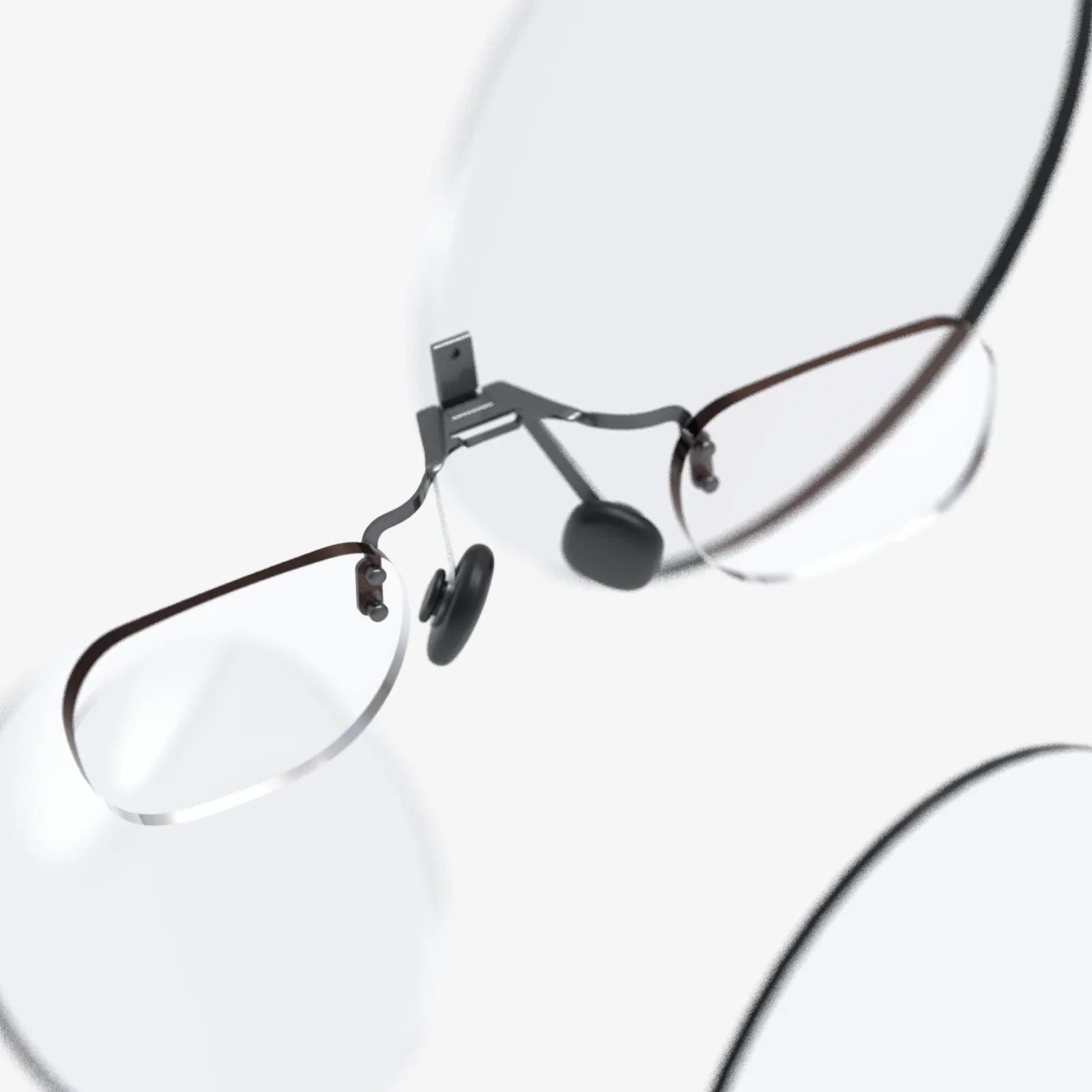
- by wangfred
Technologies That Support AR and VR: The Invisible Engine Powering Digital Realities
- by wangfred
Imagine a world where digital information dances seamlessly with your physical surroundings, where you can learn, work, and play in fantastical realms limited only by imagination. This is the promise of Augmented and Virtual Reality, a technological revolution that feels like magic. But behind every mind-bending AR filter and every breathtaking VR landscape lies a sophisticated, invisible orchestra of technologies working in perfect harmony. The magic isn't supernatural; it's engineered, a testament to human ingenuity pushing the boundaries of perception. Unlocking the full potential of these immersive experiences requires understanding the powerful engines that make them possible, the intricate web of hardware and software that stitches our reality to the digital realm.
At the core of any AR or VR system is the hardware—the physical components that serve as our gateway to altered realities. This technology is the first and most critical layer, responsible for both perceiving the user's environment and generating the digital content that overlays or replaces it.
The window to any virtual world is the display. For VR, this typically involves high-resolution screens housed within a head-mounted display (HMD). These are not ordinary screens; they demand extremely high pixel density and fast refresh rates—often 90Hz or higher—to prevent motion sickness and create a convincing, fluid experience. Placed mere centimeters from the eyes, these screens are viewed through sophisticated optical lenses that warp the image, creating a wide field of view (FOV) and a sense of depth and scale. The relentless pursuit here is towards 4K+ resolution per eye and varifocal lenses that can adjust to the user's focus, mimicking how our eyes work in the real world.
AR presents a different challenge: projecting digital imagery onto the real world. This is achieved through either optical see-through or video see-through systems. Optical see-through, often used in smart glasses, employs semi-transparent waveguides or holographic optical elements that reflect light from micro-displays into the user's eye while allowing real-world light to pass through. Video see-through uses outward-facing cameras to capture the real world, composites digital elements onto the video feed in real-time, and then displays the combined image on an opaque screen inside the device. Each method has trade-offs in latency, resolution, and realism, driving constant innovation in micro-optics and nano-imprinting techniques.
For a digital object to remain locked to a physical table or for your virtual hands to interact with a environment, the system must understand its position in space with incredible precision. This is the domain of tracking technologies. Inside-Out Tracking uses cameras and sensors mounted on the headset itself to observe the environment and track its own movement relative to that environment. This is often supplemented by Simultaneous Localization and Mapping (SLAM) algorithms, which create a map of the unknown surroundings while simultaneously tracking the device's location within that map.
Outside-In Tracking, once the dominant method, uses external sensors or lighthouses placed around the room to precisely track the position of the headset and controllers. While often more precise, it is less portable than its inside-out counterpart. Furthermore, Eye-Tracking is an increasingly vital technology, using infrared cameras to monitor pupil position. This enables foveated rendering—a technique where the full resolution of the image is rendered only where the user is looking, drastically reducing the computational load—and creates more natural avatars and intuitive interfaces.
Immersion is a multi-sensory experience. Visuals are paramount, but true presence is shattered without convincing sound and touch. Spatial Audio technology is crucial. It mimics how sound waves interact with the human head and ears, allowing sounds to be positioned in 3D space. A footstep behind you will sound like it's behind you, creating a powerful and often subconscious layer of believability.
Haptic Feedback technology provides the sense of touch. This ranges from simple vibration motors in controllers to advanced exoskeleton gloves that simulate resistance and texture. Cutting-edge research involves ultrasonic and mid-air haptics, which use focused sound waves to create tactile sensations on the skin without any wearable device, pushing us closer to a future where we can truly feel digital objects.
Hardware is the body, but software is the brain. It's the code and algorithms that interpret sensor data, generate graphics, and manage the entire experience. This layer is what turns raw data into a coherent and interactive reality.
Rendering complex 3D environments at high frame rates is one of the most computationally intensive tasks in computing. This is the domain of powerful Graphics Processing Units (GPUs). These processors are specifically designed for the parallel processing required for rendering high-fidelity graphics. Their architecture continues to evolve to meet the unique demands of VR and AR, such as single-pass stereo rendering, which draws a scene once for both eyes, significantly improving efficiency.
On top of the hardware sits the software that developers use to build these worlds: game engines and rendering frameworks. These powerful platforms provide the tools to create 3D models, apply textures and lighting, script interactions, and ultimately render the final scene. Their real-time rendering capabilities and robust physics engines are indispensable for creating believable and interactive experiences. They also provide plugins and native support for popular AR and VR hardware, streamlining the development process.
This is the intelligence that allows AR systems to understand what they are seeing. Computer vision algorithms enable critical features like:
Machine Learning supercharges these capabilities. ML models can be trained on vast datasets of images to recognize a nearly infinite number of objects and scenes with high accuracy. They are also used for generating realistic avatars by mimicking a user's facial expressions from a live camera feed, enhancing social presence in virtual meetings and gatherings.
As experiences become more complex, the computational burden grows. One solution is to offload processing to the cloud. This concept, known as cloud rendering or cloud gaming for VR, streams rendered content to a headset, turning the device into a sophisticated display terminal. This requires ultra-low latency and high-bandwidth connections to be viable.
This is where next-generation wireless technologies, particularly 5G, become a key enabling technology. 5G's high throughput (multi-gigabit speeds) and incredibly low latency (under 10 milliseconds) promise to make cloud-based AR and VR a widespread reality. It allows for untethered, high-fidelity experiences and enables complex multi-user applications where the state of the world is synchronized in real-time across countless devices, paving the way for persistent AR layers over our cities and truly massive-scale social VR platforms.
The most exciting developments occur at the intersection of these technologies. Standalone headsets represent the convergence of mobile processing, inside-out tracking, and battery technology into a single, untethered device. Sensor fusion algorithms combine data from accelerometers, gyroscopes, magnetometers, and cameras to create a more robust and accurate understanding of movement than any single sensor could provide alone.
Looking ahead, the horizon is filled with emerging technologies that will further blur the line between real and virtual. Brain-Computer Interfaces (BCIs) are being explored for direct neural input, potentially allowing us to control virtual environments with our thoughts. Advances in volumetric capture will allow us to photograph people and objects in 3D, importing perfect digital replicas into virtual spaces. The development of light field displays could solve the vergence-accommodation conflict—a major source of eye strain in current HMDs—by replicating how light behaves in the real world.
Each component in this vast technological stack, from the nanometer-scale transistors in a processor to the continent-spanning networks of data centers, plays an indispensable role. They are the unsung heroes of the immersive age, the intricate clockwork behind the magic. As these technologies continue to advance, becoming smaller, faster, cheaper, and more power-efficient, they will dissolve into the background of our lives, making the extraordinary experiences of AR and VR feel not just magical, but natural and effortless.
The seamless fusion of our digital and physical lives is no longer a distant sci-fi trope; it's being built today in research labs and engineering workshops around the globe. The next time you don a headset and are transported to another world or see a digital dinosaur stomp through your living room, take a moment to appreciate the monumental technological symphony at play. This convergence is redefining every aspect of our existence, from how we connect with others to how we understand information, and it’s only just beginning to reveal its transformative potential.
Share:
Infinity Augmented Reality Infinity AR: The Endless Horizon of Digital Perception
Augmented Reality Everyday Glasses Are Poised to Redefine Our Entire Reality