


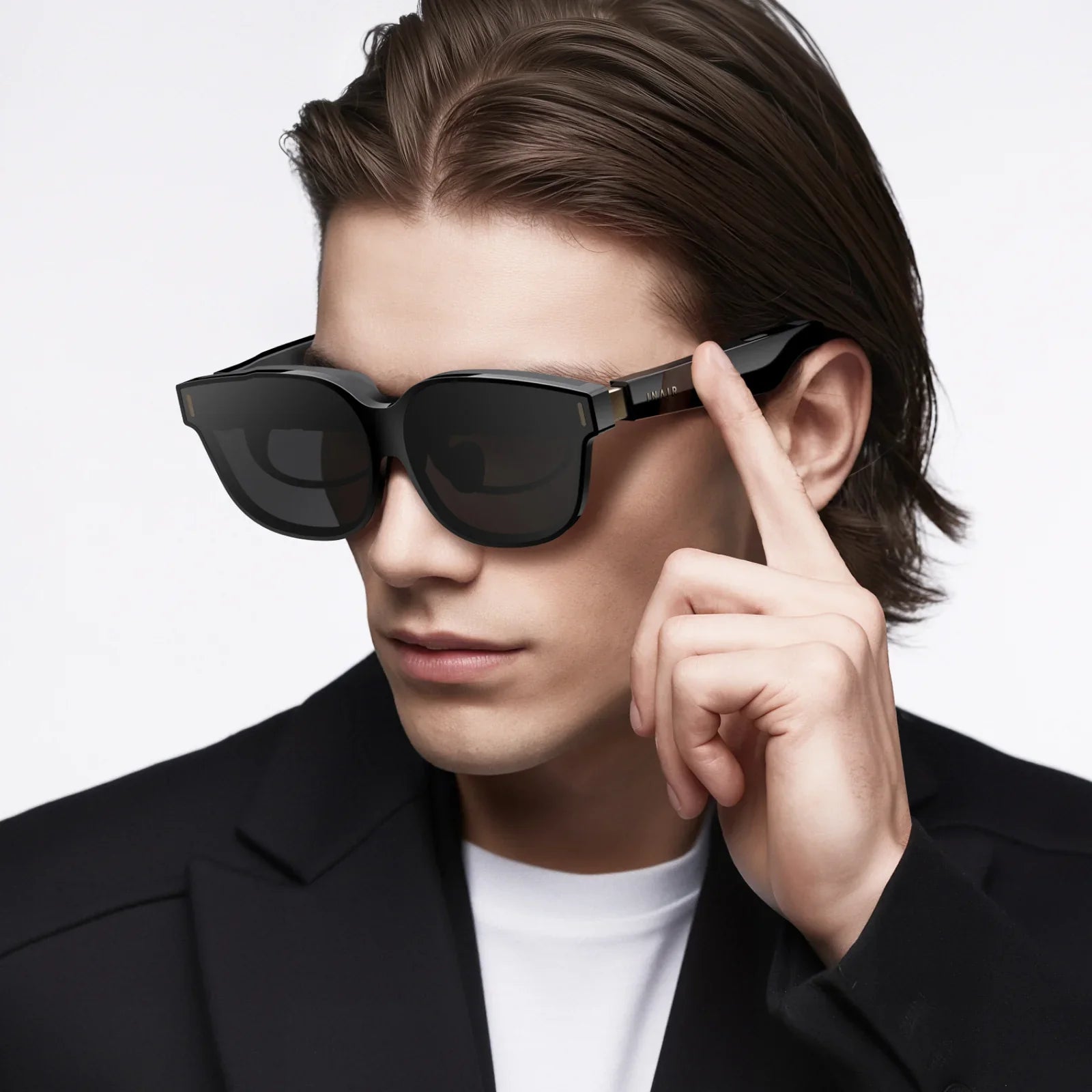
Imagine stepping out into the blinding midday sun, and with a subtle, almost imperceptible shift, your sunglasses automatically adapt, darkening to a perfect shade to eliminate glare while still allowing you to see the true colors of the world. This isn't science fiction; it's the reality of modern technology sunglasses, a fusion of advanced optics, material science, and digital innovation that is fundamentally reshaping our relationship with the sun. The humble accessory that once served a single, simple purpose is now a sophisticated piece of wearable technology, designed not just to protect, but to enhance, connect, and adapt. The era of passive eye protection is over, and the dawn of intelligent, high-performance eyewear is here, promising a clearer, safer, and more connected visual experience than ever before.
The Evolution of Sight: From Basic Shade to Technological Marvel
For centuries, the concept of shielding one's eyes from the sun was rudimentary. Early iterations, from smoked glass used by prehistoric Inuit peoples to the green-tinted spectacles of 18th-century courtiers, were about dimming the world. The 20th century popularized sunglasses as a fashion and cultural icon, but their functional core remained largely unchanged: tinted plastic or glass in a frame. The seismic shift began with the application of serious scientific research to the problems of light and vision. The development of polarized lenses in the 1930s was a key milestone, tackling debilitating glare from horizontal surfaces like water and roads. This was arguably the first major technological advancement in the field, moving beyond simple tinting to actively manipulating light waves for a specific functional benefit.
The late 20th and early 21st centuries saw an explosion of innovation. Aerospace and military research into coatings that could protect pilots' eyes from intense light and laser glare trickled down into consumer products. The sports industry became a crucible for development, demanding eyewear that could withstand extreme impacts, provide unparalleled grip, and offer vision enhancement for specific activities like cycling, skiing, and fishing. This relentless drive for performance created a fertile ground for the integration of electronics and digital technology. The convergence of miniaturization, battery technology, and connectivity protocols finally allowed engineers to embed smart features directly into the frames, birthing the category we now recognize as true technology sunglasses.
Advanced Lens Technology: The Heart of the Innovation
At the core of any great pair of sunglasses are the lenses, and this is where some of the most profound technological advancements reside. Modern lens technology is a complex interplay of chemistry and physics designed to provide superior visual clarity and protection.
Photochromic and Electrochromic Intelligence
Photochromic technology, which allows lenses to lighten and darken in response to UV light exposure, has been refined to new levels. Traditional photochromic lenses could be slow to change and often didn't get truly dark in very hot weather. Newer formulations use embedded organic photochromic dyes that react more quickly and efficiently across a wider range of temperatures. They can now shift from nearly clear to a very dark tint in seconds, providing seamless adaptation as you move from indoors to outdoors or under a cloudy sky.
An even more advanced iteration is electrochromic or liquid crystal technology. Instead of a passive chemical reaction to UV light, these lenses use a tiny electric current (powered by an almost invisible battery in the frame) to activate suspended particles that darken the lens. The key advantage is control. With a button on the frame or a connected smartphone app, the user can manually set the exact level of tint desired, from completely clear to darkest black, independent of UV light conditions. This is a game-changer for drivers, as car windshields block UV light, rendering traditional photochromic lenses ineffective; electrochromic lenses darken on command to combat glare from the road.
Polarization 2.0 and Beyond
Polarization has evolved from a simple laminated filter to a precision tool. Advanced polarization techniques now target specific wavelengths of reflected light, reducing eye strain and fatigue with unprecedented accuracy. Some technologies incorporate variable-polarization patterns within a single lens, offering maximum glare reduction where it's needed most (e.g., off the water or road surface) while maintaining clarity in other areas. Furthermore, lens manufacturers are perfecting color-enhancing tints that use rare earth elements to filter out specific bands of the color spectrum. This technology heightens contrast and makes specific colors—like the red of a fishing lure against green water or the subtle variations in snow on a mountain—pop with incredible clarity, providing a functional advantage for athletes and outdoors enthusiasts.
Smart Features: The Digital Brain of Modern Eyewear
While the lenses handle the physics of light, the frames are increasingly becoming the home for digital intelligence, transforming sunglasses into a hub for personal audio and information.
Integrated Audio Systems
One of the most popular smart features is the integration of open-ear audio. Instead of traditional earbuds that block the ear canal, advanced acoustic systems use miniature speakers embedded in the temples (arms) of the sunglasses. These speakers project sound directly into the ear while leaving the ear canal open. This design allows users to listen to music, take calls, or get navigation prompts while maintaining full awareness of their surroundings—a critical safety feature for runners, cyclists, and city dwellers. Bone conduction technology offers an alternative, using transducers that vibrate the skull to transmit sound directly to the inner ear, achieving a similar open-ear effect. These systems are seamlessly integrated, with microphones for voice calls and touch-sensitive controls on the frame for managing playback and volume.
Heads-Up Display and Augmented Reality
The most futuristic frontier for technology sunglasses is the integration of Augmented Reality (AR) and Heads-Up Displays (HUD). While still in its relative infancy, this technology projects digital information directly onto the lens, overlaying it onto the user's real-world view. Imagine a runner seeing their pace and heart rate floating in the corner of their vision, a cyclist viewing turn-by-turn navigation arrows painted onto the road ahead, or a tourist getting historical information about a landmark they are viewing. Early implementations use tiny LED projectors and waveguides within the lens to create this effect. The challenge is immense—requiring incredible miniaturization, battery life, and display clarity in bright sunlight—but it represents the ultimate convergence of the digital and physical worlds through eyewear.
Cutting-Edge Materials and Ergonomic Design
The technological revolution isn't limited to electronics. Breakthroughs in material science have made modern sunglasses lighter, stronger, and more comfortable than ever before.
Frames are now commonly constructed from advanced grilamid, a flexible and incredibly durable nylon-based material that can withstand significant torsion and impact. For the highest performance, brands utilize proprietary blends of carbon fiber and titanium, creating frames that are feather-light yet possess immense strength. These materials allow for thinner, more minimalist designs without sacrificing durability.
Lens materials have also seen dramatic improvement. While glass offers exceptional optical clarity, it is heavy and can shatter. Polycarbonate, a lightweight and impact-resistant material, became the standard for safety and sports. Today, new thermoplastic polymers like Trivex and NXT offer even better optical properties, higher impact resistance, and inherent UV protection, all while being significantly lighter than glass. These advanced materials are also more amenable to having multiple coatings applied, such as anti-scratch, anti-reflective (on the inside of the lens to reduce glare from behind), and super-hydrophobic coatings that cause water and oils to bead up and roll off the surface, making them exceptionally easy to clean.
Ergonomics have been refined through 3D scanning and printing, allowing designers to create frames that perfectly distribute weight and contour to the unique shape of the human head. Adjustable nose pads and temple tips ensure a custom, secure fit that prevents slipping during vigorous activity, a crucial consideration for the performance-driven user.
Prioritizing Health: Beyond UV Protection
The fundamental purpose of sunglasses remains health-related, and technology has vastly improved their protective capabilities. We've long understood the danger of ultraviolet radiation, and high-quality technology sunglasses offer 100% protection against both UVA and UVB rays, a non-negotiable feature. However, the understanding of harmful light has expanded.
High-Energy Visible (HEV) light, or blue light, emitted by the sun and digital screens, is now known to contribute to digital eye strain and may play a role in long-term retinal health. Specific lens tints and coatings are designed to filter out a significant portion of this blue light, reducing fatigue for those who spend time both outdoors and in front of screens. Furthermore, research into the link between light exposure and circadian rhythms has led to the development of lenses that filter the specific blue-turquoise light that can suppress melatonin production, potentially helping to regulate sleep cycles for users who are outdoors in the evening.
Navigating the Future of Tech-Enabled Eyewear
As with any technology, the evolution of smart sunglasses presents new challenges and considerations. Battery life is a primary concern; integrating speakers, microphones, and connectivity inevitably requires charging. The most successful designs offer all-day battery life and convenient charging cases to avoid the frustration of dead headphones on a long outing. Connectivity, typically via Bluetooth, must be robust and easy to pair. There is also the question of obsolescence; while a well-made pair of traditional sunglasses can last for decades, the electronic components in smart glasses have a much shorter technological lifespan.
Privacy is another emerging frontier. Glasses with built-in cameras or microphones raise legitimate questions about data collection and recording in public and private spaces. The industry will need to navigate these ethical waters carefully, establishing clear norms and controls to gain public trust. Finally, the aesthetic challenge remains: the technology must be integrated so seamlessly that it enhances the user's experience without compromising the style and form that make sunglasses a beloved accessory. The goal is for the technology to feel invisible, leaving only the benefit.
From the professional athlete seeking every possible advantage to the everyday commuter looking for a safer, more connected journey, technology sunglasses are no longer a niche product but a mainstream evolution. They represent a perfect synergy of form and function, where cutting-edge innovation is harnessed to serve a simple, human need: to see better, to be protected, and to engage with the world on your own terms. The future promises even deeper integration, with biometric sensors monitoring health metrics, AI assistants responding to voice commands, and AR displays overlaying a limitless stream of contextual information onto our reality. The journey from darkened glass to intelligent visual interface is well underway, and the view ahead has never been clearer.
The next time you reach for your sunglasses, consider what you're truly holding. It's no longer just a shield against the sun, but a portal to a more enhanced reality. Whether you're a tech enthusiast craving the latest connectivity or an outdoor purist seeking unparalleled optical clarity, the relentless innovation in this field means there's a perfect pair of technology sunglasses designed to redefine your experience under the sun. The question is no longer if you need a pair, but which incredible combination of sight and sound will you choose to upgrade your world?
Share:
AR Assisted Reality The Unseen Revolution Reshaping Our Daily Workflow
Virtual Reality AR Developments 2025: The Year the Digital and Physical Worlds Truly Merge