Imagine a world where your digital life doesn’t exist behind a screen but is seamlessly woven into the fabric of your physical reality, where information, entertainment, and social connection are layered over the world you see, accessible with a glance or a gesture. This is the promise of 2025, a pivotal year where the foundational technologies of Virtual and Augmented Reality are converging to create experiences that were once the sole domain of science fiction. The next great computing platform is arriving, and it will change everything.
The Great Convergence: VR and AR Become XR
For years, Virtual Reality (VR) and Augmented Reality (AR) have been discussed as distinct, parallel paths in immersive technology. VR offered total digital immersion, transporting users to entirely synthetic worlds, while AR aimed to augment the real world with digital overlays. By 2025, this distinction is becoming increasingly academic. The most significant development is the technological and conceptual convergence into what the industry now broadly terms Extended Reality (XR).
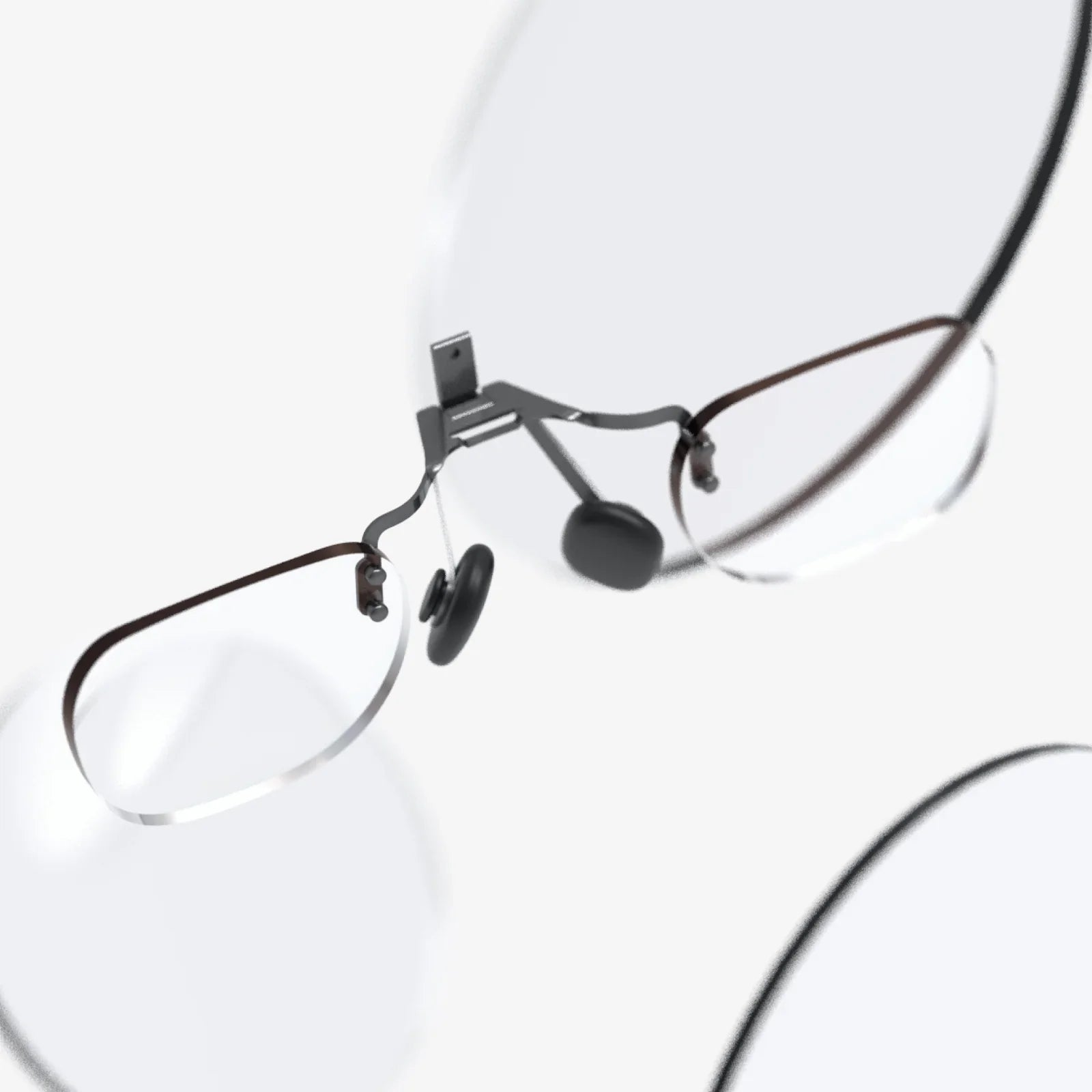
Hardware is at the forefront of this shift. We are witnessing the emergence of a new class of visor that can fluidly transition between a fully opaque, high-fidelity VR mode and a high-transparency, photorealistic AR mode. This is achieved through advanced electrochromic lenses and dynamic passthrough cameras that can replicate the real world with such low latency and high resolution that it becomes indistinguishable from natural vision. This single device eliminates the need for consumers to choose between a VR headset for gaming and AR glasses for productivity; one device now does it all, acting as the primary portal to the spatial web.
The Hardware Revolution: Invisible, Powerful, and Connected
The clunky, tethered headsets of the past are giving way to a new generation of sleek, self-contained, and incredibly powerful wearables. The key developments in 2025 hardware are defined by several critical advancements.
First is the miniaturization of components. Thanks to custom silicon chipsets designed specifically for spatial computing, these devices pack immense processing power into a form factor that approaches the size and weight of standard eyewear. This is coupled with breakthroughs in battery technology, enabling all-day use through a combination of efficient distributed computing and new solid-state battery cells.
Second is the revolution in display technology. MicroLED displays, coupled with advanced pancake lenses, provide stunning brightness, contrast, and pixel density, eliminating the screen-door effect that once plagued earlier devices. Furthermore, advancements in varifocal and light field displays have finally solved the vergence-accommodation conflict—a technical term for the eye strain and discomfort caused when your eyes focus on a virtual object that doesn't have real depth. In 2025, digital objects exist in true 3D space, comfortable to look at for extended periods.
Finally, sensor fusion has reached a new level of sophistication. A combination of high-resolution RGB cameras, LiDAR, depth sensors, and inertial measurement units (IMUs) continuously scans the environment, creating a millisecond-accurate digital twin of the user's physical space. This allows for unprecedented contextual understanding and interaction.
The Rise of the Spatial Web and Contextual Computing
Hardware is nothing without software, and the most profound shift is occurring in how we interact with digital information. The 2D internet of links and pages is evolving into a 3D spatial web of places and objects. In 2025, the web isn't something you browse; it's an environment you inhabit.
This spatial web is built upon a foundation of pervasive, contextual computing. Your XR device understands the context of your surroundings. Walk into your kitchen, and your recipe interface appears floating beside the oven, with timers and instructions you can manipulate with a touch. Sit down at your desk, and your virtual monitors and files arrange themselves perfectly in your field of view. A museum exhibit comes alive with historical figures narrating their stories next to their artifacts. A complex engine repair is guided by animated arrows and instructions overlaid directly onto the physical machinery.
This is powered by a combination of edge computing, which handles the intense processing demands locally for low latency, and 5G/6G networks, which provide the high-bandwidth, low-latency connection to cloud-based AI services. These AI agents are the invisible architects of the experience, constantly analyzing the environment, anticipating user needs, and serving up the right information at the right time and, most importantly, in the right place.
AI as the Engine of Immersion
Artificial Intelligence is the indispensable catalyst accelerating all other Virtual Reality AR developments in 2025. It is the thread that ties the hardware and software together into a cohesive, intelligent, and responsive experience.
Generative AI models have evolved from creating static images and text to generating entire interactive 3D environments and objects in real-time. You can describe a world you wish to explore, and the AI will construct it around you, complete with dynamic ecosystems and characters that behave with believable autonomy. This moves content creation from a painstaking manual process to a conversational one, democratizing the development of immersive experiences.
Furthermore, AI-driven avatars have achieved a level of realism and emotional intelligence that makes digital interactions feel genuine. Through advanced neural speech models and real-time facial and gesture tracking, your digital representation can convey subtle nuances of emotion and intent. This is crucial for the next evolution of social interaction and remote work, where the feeling of "presence"—the genuine sense of being with another person—is the ultimate goal.
Transforming Enterprise and Industry
While consumer applications often grab headlines, the most immediate and impactful adoption of XR in 2025 is occurring within enterprise and industrial sectors. The return on investment is too significant to ignore.
In manufacturing and design, engineers from across the globe can collaborate within a full-scale, interactive 3D model of a new product or factory layout. They can identify design flaws, simulate assembly processes, and train for complex procedures long before a single physical prototype is built, saving millions in development costs and accelerating time-to-market.
The field of remote assistance and training has been utterly transformed. A field technician repairing a wind turbine can be guided by an expert thousands of miles away. The expert sees what the technician sees and can draw annotations directly into the technician's field of view, highlighting specific components and providing step-by-step instructions. This dramatically reduces downtime, improves safety, and allows a single expert to support a global workforce.
In healthcare, surgeons use AR overlays during complex procedures to visualize patient anatomy—such as arteries, tumors, or surgical pathways—precisely superimposed on the patient. Medical students practice surgeries in hyper-realistic VR simulations, and mental health professionals treat phobias and PTSD through carefully controlled and safe exposure therapy within virtual environments.
Redefining Social Connection and the Creator Economy
The concept of a "metaverse" has evolved beyond the hype into a series of interconnected, persistent virtual spaces where people gather not just for play, but for work, learning, and meaningful social interaction. In 2025, these platforms are defined by interoperability and user-generated content.
Digital assets and avatars can increasingly move between different virtual worlds and experiences, thanks to the adoption of open standards and blockchain-based authentication. This creates a true digital identity that users can invest in and carry with them. The creator economy has exploded, as individuals use AI-assisted tools to design virtual clothing, objects, and environments, selling them in thriving digital marketplaces.
Social experiences are becoming more nuanced and expressive. Attending a virtual concert feels palpably close to the real thing, with the ability to see the excited reactions of friends standing next to you and feel the thrum of the music through haptic feedback vests. Families separated by geography can gather in a virtual living room that feels like home, sharing stories and watching movies together as if they were in the same physical space.
Navigating the Ethical and Societal Landscape
With such powerful technology comes immense responsibility, and 2025 is also a year of intense scrutiny and emerging frameworks for the ethical development of XR. The key challenges are profound.
Data privacy and security are paramount. These devices are arguably the most intimate data-gathering tools ever created, with sensors that map the user's home, track their eye movements, and record their interactions. Robust regulations and transparent data policies are being developed to ensure this intimate data is not misused for manipulation or surveillance.
The potential for a new "digital divide" is a serious concern. As these technologies become integral to professional and social life, ensuring equitable access regardless of socioeconomic status is a critical societal challenge. Furthermore, the long-term psychological effects of blending reality are still not fully understood. Questions about addiction, dissociation from physical reality, and the manipulation of perception through augmented information are driving a necessary and urgent conversation among technologists, ethicists, and policymakers.
The journey through 2025's Virtual Reality AR landscape is not just about faster processors and sharper displays; it's about building a new layer of human experience that is empowering, ethical, and universally accessible. The door to a blended reality is now open, and stepping through it reveals a future limited only by our collective imagination and our unwavering commitment to shaping it responsibly.
The boundaries between what is real and what is digital are not just blurring—they are collapsing, giving rise to a new hybrid existence where our environment is alive with information and our interactions are limited only by imagination. This isn't a distant future; the foundational tools are being forged today, setting the stage for a transformation in human experience that will make the smartphone revolution look like a mere prelude. The world is about to become your interface.