


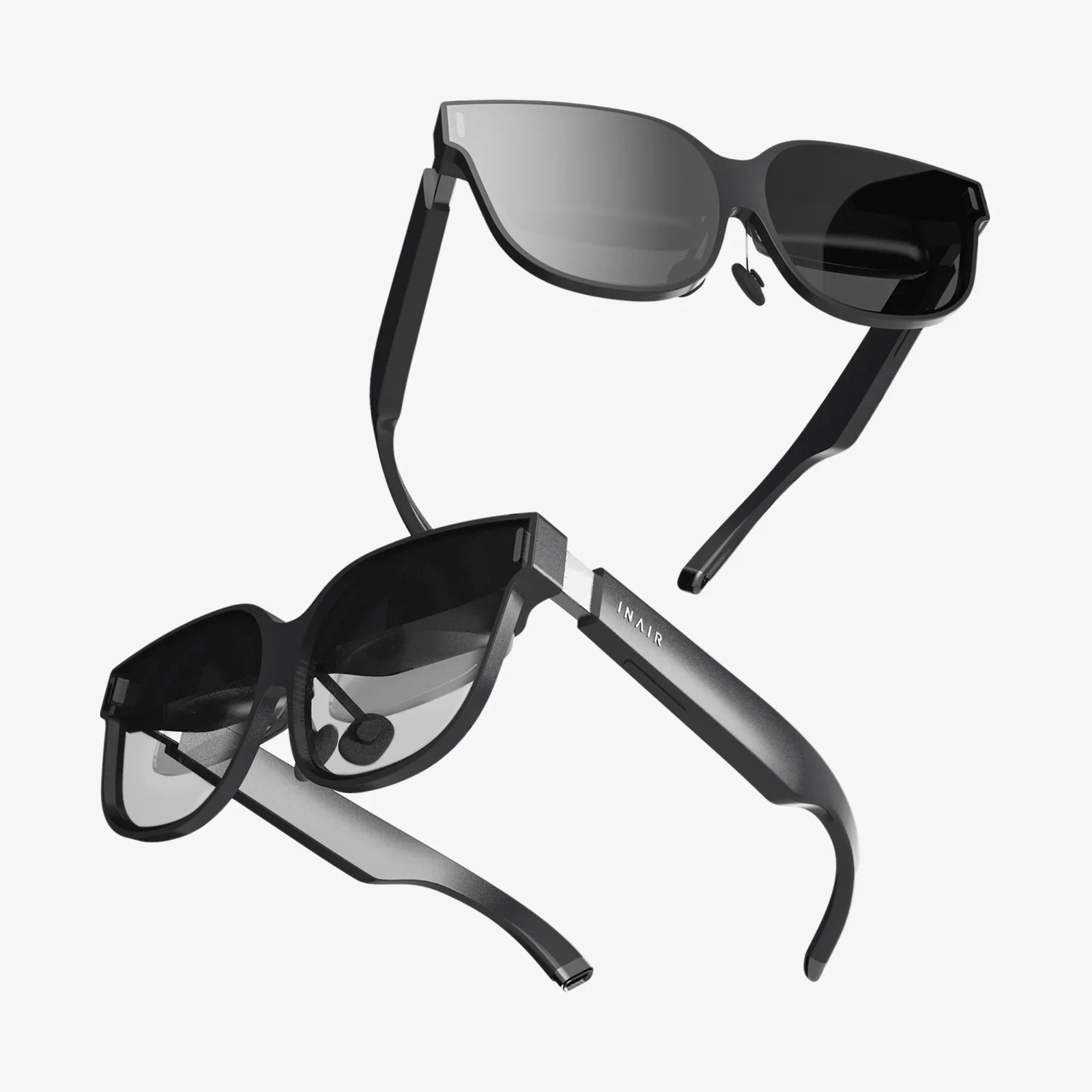
Imagine a world where digital information doesn't just live behind a screen but is seamlessly woven into the very fabric of your reality. This is no longer the stuff of science fiction; it’s the promise and the present of augmented reality. The invention of this transformative technology is a captivating tale of human ingenuity, a story that stretches back further than most realize and continues to evolve at a breathtaking pace. It’s a journey from clunky head-mounted displays to powerful pocket-sized portals that overlay a digital dimension onto our physical world, forever changing how we work, learn, play, and connect.
The Conceptual Dawn: Visionaries Before Their Time
Long before the hardware existed to make it possible, the seed of augmented reality was planted in the fertile ground of imagination. The concept of enhancing human perception with machine-generated information has tantalized thinkers for over a century. In 1901, L. Frank Baum, the author of The Wonderful Wizard of Oz, curiously prophesied the idea in a different medium. He wrote about a character who wore a set of electronic spectacles that mapped data onto people, effectively describing a primitive form of AR for social annotation.
However, the true foundational moment for the invention of augmented reality as we understand it arrived in 1968 with computer scientist Ivan Sutherland. A visionary at Harvard University and the University of Utah, Sutherland created what is widely considered the first head-mounted display system, which he ominously dubbed "The Sword of Damocles." This contraption was monstrously large and heavy, requiring a mechanical arm suspended from the ceiling to hold its weight. It didn't overlay graphics on the real world in a video sense; instead, it displayed simple, wireframe computer graphics that were spatially tracked to the user's perspective. It was a rudimentary, see-through augmented experience. Sutherland himself called it "a window into a virtual world," but its principles of head-tracking and computer-generated overlays laid the indispensable groundwork for everything that would follow.
Finding a Name and a Purpose: The 1990s
The 1970s and 80s saw incremental progress, primarily within secretive military and aviation research labs. The development of Heads-Up Displays (HUDs) for fighter pilots, which projected crucial flight data onto the cockpit canopy, was a critical, parallel evolution. It proved that overlaying data could dramatically improve human performance in high-stakes situations. But the technology remained confined to highly specialized and expensive applications.
The next pivotal leap occurred in 1990, not in a lab, but in the cockpit of a Boeing aircraft. Two researchers, Tom Caudell and David Mizell, were working on a project to simplify the complex assembly process for airplanes. They faced a problem: how to help workers navigate the bewildering maze of cables and parts without cumbersome physical diagrams. Their solution was revolutionary. They devised a head-mounted apparatus that could project digital, wireframe diagrams directly onto the physical panels the workers saw, guiding them through each step. It was Caudell who, searching for a term to describe this new technology, first coined the phrase "augmented reality." This was a milestone. The invention now had a name, and its immense practical utility for industry was clearly demonstrated.
The 1990s became the decade where AR truly emerged from theory into a defined field of study. In 1992, Louis Rosenberg developed the Virtual Fixtures system for the U.S. Air Force. This was one of the first fully immersive AR systems, using a complex exoskeleton to allow users to manipulate physical objects in a environment augmented with virtual overlays that improved their precision. Then, in 1994, Julie Martin, a trailblazing artist, produced Dancing in Cyberspace, the first AR theater production, where acrobats interacted with virtual objects projected onto the stage. This was a crucial moment that expanded the concept of AR beyond industrial and military use, hinting at its potential for entertainment and artistic expression.
The Software That Made It Real: ARToolKit and Beyond
Hardware was only one half of the equation. The invention of augmented reality required a brain—a way for software to understand and interact with the physical world in real-time. This breakthrough came in 1999 with the creation of ARToolKit by Hirokazu Kato at the Nara Institute of Science and Technology in Japan. Released as open-source software, ARToolKit provided developers with a revolutionary tool: marker-based tracking.
This software allowed a camera to recognize specific, high-contrast black-and-white square markers. By calculating the position, orientation, and perspective relative to the marker, the software could then accurately anchor a virtual 3D model or animation on top of it, viewed through a screen. ARToolKit democratized AR development. For the first time, university students, researchers, and hobbyists could experiment with and build AR applications without a multi-million-dollar budget. It became the engine for countless early AR experiments, from museum exhibits that brought artifacts to life to the first marketing campaigns that let users interact with virtual products.
The Mobile Revolution: AR in Your Pocket
For years, AR was hampered by the need for specialized, often bulky, and always expensive hardware. Its journey into the mainstream seemed slow. Then, the smartphone happened. The convergence of several key technologies in the late 2000s created the perfect storm: miniaturized cameras became ubiquitous, processors became incredibly powerful, motion sensors (gyroscopes, accelerometers) became standard, and high-speed mobile internet became widespread.
The smartphone was, by accident or design, the perfect AR device. It had a camera to see the world, a screen to display the augmentation, a processor to run the complex algorithms, and sensors to understand its own movement and orientation. This eliminated the single biggest barrier to adoption: dedicated hardware. Suddenly, anyone with a phone could access AR. Early mobile AR apps were often simple gimmicks or marketing stunts, but they introduced millions to the core concept. They used the phone's GPS and compass to create location-based AR or its camera for marker-based experiences.
The true inflection point was the development of advanced computer vision and simultaneous localization and mapping (SLAM) algorithms. Unlike marker-based AR, SLAM allows a device to understand and map its environment in real-time without any pre-programmed markers. It can recognize flat surfaces like tables and floors, understand depth, and persistently place digital objects in the real world. This breakthrough enabled the modern, markerless AR experiences we have today, where a virtual creature can seemingly hide behind your sofa or a navigation arrow can be painted onto the street in front of you.
The Modern Landscape and Future Horizons
Today, the invention of augmented reality is an ongoing process. We are living in its latest chapter. The technology has splintered into two primary paths: mobile AR, which leverages the power of smartphones and tablets, and wearable AR, which aims to create all-day, hands-free smart glasses. Mobile AR has achieved staggering scale, with its capabilities integrated directly into major mobile operating systems, allowing billions of users to experience AR with a simple tap.
The applications have exploded far beyond early experiments. In retail, customers can visualize how a new sofa will look in their living room or try on glasses and makeup virtually. In medicine, surgeons use AR overlays to visualize anatomy during procedures, and medical students can practice on virtual patients. In education, textbooks transform into interactive 3D models, and historical sites can be rebuilt before a student's eyes. In industry, complex repair instructions are overlaid directly onto machinery, and warehouse workers are guided to items with digital arrows. In navigation, directions are superimposed onto the road through your windshield or phone screen, making it impossible to get lost.
The future horizons of AR are even more thrilling. The convergence with artificial intelligence is creating "context-aware AR," where the system doesn't just see surfaces but understands context—recognizing objects, people, and their relationships to serve up incredibly relevant information. The development of lighter, more powerful, and socially acceptable smart glasses promises to move AR from our hands back onto our faces, making the technology a constant, seamless layer of our reality. The concept of the "digital twin"—a perfect virtual replica of a physical object, system, or city—will be interacted with and manipulated through AR interfaces. Furthermore, the emerging vision of the spatial web or WebXR promises a future where the internet is not a separate space we visit but an augmented layer integrated into our physical environment, accessible through AR browsers.
The path from Sutherland's Sword of Damocles to the powerful AR experiences on a modern device is a testament to persistent innovation. It wasn't invented by a single person in a single moment but was rather assembled piece by piece over decades by scientists, engineers, artists, and dreamers. Each breakthrough in processing power, computer vision, display technology, and miniaturization added another layer to its potential. This technology, once a cumbersome tool for experts, is now poised to become as fundamental to our daily lives as the smartphone. It promises to enhance our capabilities, democratize information in an unprecedented way, and redefine the very nature of human-computer interaction. The invention of augmented reality is the ongoing creation of a new lens through which we will see, and ultimately shape, our world.
Share:
What's Augmented Reality: A Comprehensive Guide to the Digital Layer on Our World
AR VR Design Trends 2025: The Future of Immersive Experiences