


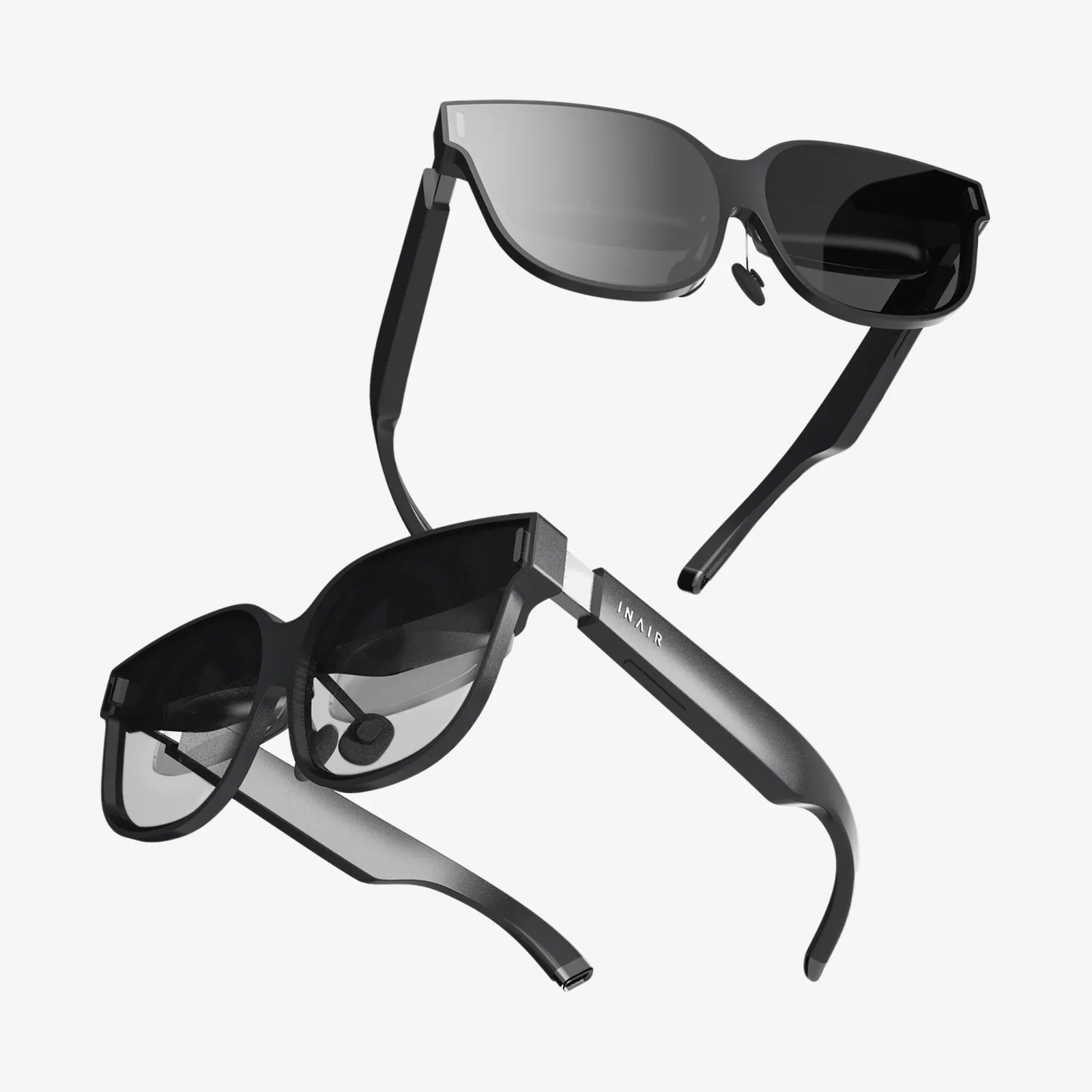
Imagine a world where digital information doesn't just live on a screen but is seamlessly woven into the fabric of your physical reality, enhancing everything you see, do, and experience. This isn't a distant sci-fi fantasy; it's the promise and power of augmented reality, a technology rapidly moving from the fringes of innovation into the mainstream of our daily lives. The ability to overlay data, graphics, and digital creations onto our immediate surroundings is fundamentally altering our relationship with technology, and understanding its mechanics, applications, and implications is the first step into this new, enhanced world.
Defining the Digital Overlay: More Than Just a Filter
At its core, augmented reality (AR) is an interactive experience that enhances the real world by superimposing computer-generated perceptual information onto it. Unlike Virtual Reality (VR), which creates a completely artificial digital environment for the user to immerse themselves in, AR takes your existing environment and adds to it. Think of it as a dynamic, intelligent layer of data painted directly onto your view of reality. This digital overlay can consist of a multitude of elements:
- Visual Elements: 3D models, text, images, and animations.
- Auditory Elements: Spatial audio that seems to emanate from a specific point in the real world.
- Haptic Feedback: Subtle vibrations or sensations that provide physical feedback for digital interactions.
- Sensory Data: Information like temperature, air quality, or historical facts, displayed contextually.
The key differentiator from simply looking at a screen is integration and interactivity. AR technology understands the physical space it occupies. It can place a digital chair in the corner of your room that stays there, allow a animated character to hide behind your real-world sofa, or display a car's internal mechanics by simply pointing your device at its hood. This contextual awareness, powered by sophisticated computer vision and sensors, is what makes AR feel truly magical.
A Brief Journey Through Time: The Evolution of AR
While AR feels like a modern invention, its conceptual roots run deep. The term "augmented reality" is attributed to former Boeing researcher Thomas Caudell, who coined it in 1990 to describe a digital display system used by electricians to assemble complex wiring harnesses. However, the idea was visualized much earlier.
In 1968, computer scientist Ivan Sutherland, often called the "father of computer graphics," created the Sword of Damocles, a head-mounted display system so primitive and heavy it had to be suspended from the ceiling. It displayed simple wireframe graphics, but it laid the foundational vision for head-worn AR and VR. Throughout the 1990s and early 2000s, AR remained largely confined to high-end industrial, military, and academic research labs due to the prohibitive cost and size of the required hardware.
The catalyst for its public emergence was the proliferation of the smartphone. The release of the first mass-market AR application in 2008, and later the global phenomenon of a certain location-based AR game in 2016, demonstrated the technology's potential to hundreds of millions of people overnight. It proved that the powerful sensors—HD cameras, GPS, accelerometers, and gyroscopes—packed into every pocket could be harnessed to deliver compelling AR experiences. Today, we stand on the cusp of the next major shift: the move from hand-held AR (via smartphones and tablets) to hands-free AR through increasingly sophisticated smart glasses and eventually, consumer-grade AR contact lenses.
The Engine Room: How Augmented Reality Actually Works
The magic of AR is powered by a complex symphony of hardware and software working in perfect harmony. The process can be broken down into a few critical steps:
1. Sensing and Mapping the World (Simultaneous Localization and Mapping - SLAM)
This is the foundational technology. The AR device uses its cameras and sensors to scan the environment. Advanced algorithms process this data in real-time to create a digital map of the space while simultaneously pinpointing the device's exact location and orientation within that map. This allows the digital content to be "locked" onto real-world surfaces and objects, understanding the geometry of the room, the location of floors, walls, and tables.
2. Processing and Alignment
Once the environment is mapped, the software must process the user's input and decide what digital content to display and where. This involves immense computational power to render high-fidelity 3D graphics, ensure perfect lighting and shadow matching between the digital and physical objects, and maintain a stable anchor for the content so it doesn't jitter or drift.
3. The Display: Projecting the Illusion
This is the final piece of the puzzle—getting the synthesized image to the user's eye. Different types of AR use different methods:
- Smartphone/Tablet AR: Uses the device's screen as a viewport into the augmented world. It's a simple video-see-through method.
- Smart Glasses (Optical See-Through): These use miniature projectors and waveguides or holographic optical elements (HOEs) to beam light directly onto the user's retina, making digital images appear to float in the world ahead. The user looks through transparent lenses to see the real world, with the digital light superimposed on top.
- Smart Glasses (Video See-Through): Cameras on the outside capture the real world, a computer composites the digital elements onto the video feed, and the combined image is displayed on opaque screens inside the glasses.
Transforming Industries: The Practical Power of AR
Beyond fun filters and games, AR is proving to be a powerful tool for solving real-world problems across countless sectors.
Revolutionizing Retail and E-Commerce
AR is erasing the final barrier to online shopping: the inability to try before you buy. Customers can now use their phones to see how a new sofa would look in their living room, accurately scaled to size. They can virtually "try on" glasses, makeup, watches, and even clothes. This not only dramatically enhances consumer confidence and reduces return rates but also creates a engaging, interactive shopping experience that bridges the gap between the digital and physical store.
Enhancing Healthcare and Medicine
In healthcare, AR is literally saving lives and improving outcomes. Surgeons can use AR headsets to overlay critical patient data—such as MRI scans or vital signs—directly into their field of view during procedures, allowing them to maintain focus without looking away at a monitor. Medical students can practice complex surgeries on detailed 3D holograms of human anatomy. AR can also assist nurses in finding veins more easily for injections, reducing patient discomfort.
Empowering Industry and Manufacturing
This is where AR first found its footing. Field technicians can wear AR glasses that overlay step-by-step repair instructions and animated diagrams directly onto the complex machinery they are fixing, guiding their hands and reducing errors. Factory workers can see digital pick-lists overlaid on warehouse shelves, streamlining logistics. Designers and engineers can collaborate on full-scale 3D prototypes of cars or buildings in a shared physical space, making iterative changes in real-time.
Reimagining Education and Training
AR turns learning from a passive activity into an interactive exploration. Instead of reading about ancient Rome, history students can walk around a detailed, scaled hologram of the Colosseum right in their classroom. Biology students can dissect a virtual frog or watch a human heart beat in 3D. This immersive, visual learning style caters to different learning modalities and makes complex subjects tangible and unforgettable.
Enriching Navigation and Tourism
Imagine walking through a foreign city and having directional arrows painted onto the sidewalk, guiding you to your destination. Look at a historic building, and its construction date, architectural style, and famous past residents pop up in your vision. AR-powered windshields can project driving directions and hazard warnings directly onto the road ahead. This technology is turning our entire world into an interactive, information-rich guidebook.
The Flip Side: Challenges and Ethical Considerations
As with any powerful technology, the rise of AR is not without its significant challenges and concerns that society must proactively address.
- Privacy: AR devices, especially always-on smart glasses, are essentially mobile recording and sensor platforms. The constant collection of detailed visual and spatial data about our environments and the people in them raises profound privacy questions. Who owns this data? How is it stored and used? The potential for unauthorized surveillance is a serious threat.
- Digital Addiction and Reality Blurring: If we can constantly curate and enhance our reality with digital layers, will the un-augmented world become boring? There is a risk of escapism and a further retreat from genuine, unmediated human interaction. The line between what is real and what is digital may become dangerously blurred for some.
- Safety and Security: Digital overlays that obscure or distract from critical real-world information could lead to accidents. Malicious actors could create AR spam or even dangerous "hallucinations"—for example, hiding a real-world hazard with a digital image or displaying false navigation instructions.
- The Digital Divide: High-quality AR experiences will require expensive hardware and fast connectivity. There is a risk that the benefits of this technology will be accessible only to a privileged few, exacerbating existing social and economic inequalities.
The Next Frontier: The Future of Augmented Reality
The AR we see today is merely a glimpse of what is to come. The future points toward increasingly seamless, intuitive, and powerful experiences. We are moving toward spatial computing, where the digital and physical are not just layered but become a single, unified experience. The eventual goal is a pair of stylish, all-day glasses that offer a persistent AR layer, replacing our smartphones as the primary gateway to digital information.
Advancements in 5G and edge computing will offload the intense processing requirements to the cloud, enabling more complex and shared experiences in real-time. Artificial Intelligence will become the brain of AR, allowing it to not just see the world but to understand it—recognizing objects, predicting user intent, and providing contextually intelligent information before it's even asked for. The convergence of AR with other technologies like the Internet of Things (IoT) will mean we can see and interact with the data from our smart devices all around us.
The path forward is not just about better hardware; it's about building a responsible framework for this technology—one that prioritizes human well-being, privacy, and equitable access. The choices we make today will shape the augmented world of tomorrow.
We are standing at the precipice of a new sensory dimension, one where our digital and physical realities are no longer separate realms but a continuous, interconnected existence. This isn't about escaping our world; it's about enhancing it, equipping us with superhuman perception and the ability to interact with information in the most natural way possible—by simply looking. The potential to revolutionize how we work, learn, heal, and connect is staggering, limited only by our imagination and our commitment to steering this powerful technology toward a future that benefits all of humanity.
Share:
Extended Use AI Glasses: The Invisible Revolution Reshaping Our Daily Lives
The Invention of Augmented Reality: A Journey from Sci-Fi Fantasy to Everyday Reality