


Imagine a world where the line between the digital and the physical doesn't just blur—it vanishes. Where you can feel the rough texture of ancient stone in a long-lost city, taste the salt spray of an alien ocean, or share a moment of profound connection with a loved one who feels palpably present, yet is physically thousands of miles away. This isn't the virtual reality of today, a compelling but often isolating experience confined to a headset. This is the breathtaking horizon of immersive technology, the true next step in virtual reality, and it’s arriving faster than we think.
The End of the Screen: Embracing a Multisensory Future
For decades, our interaction with digital content has been mediated by a screen, a flat, cold window into another world. VR and AR began to break this paradigm by surrounding us with visuals, but the next step moves beyond mere sight and sound. It involves engaging the full spectrum of human sensation to create experiences that are not just seen but felt.
The most critical frontier in this sensory expansion is the domain of touch, known as haptic feedback. Current-generation controllers provide rudimentary vibrations, but the future lies in sophisticated haptic suits, gloves, and even direct epidermal stimulation. These technologies will replicate the sensation of pressure, temperature, and texture with astonishing fidelity. Researchers are developing systems that use targeted ultrasonic waves to create the feeling of virtual objects in mid-air, while advanced materials science is producing wearable fabrics that can simulate everything from a gentle breeze to the impact of a virtual projectile.
But the ambition goes further. Pioneering work is being done on simulating taste and smell through controlled chemical releases or targeted sensory foolery. Imagine a culinary training simulation where you can truly taste the dish you've just prepared virtually, or a historical recreation where the scent of gunpowder on a Napoleonic battlefield adds a chilling layer of authenticity. This multisensory approach is key to achieving true presence—the ultimate goal of VR where the brain is fully convinced it is somewhere else.
The Photorealistic and Beyond: The Graphics Revolution
Visual fidelity remains the cornerstone of immersion. The next step relies on a confluence of technologies pushing rendered graphics into the realm of the indistinguishable from reality. This leap is powered by several key developments:
- Ray Tracing and Global Illumination: Moving beyond rasterization, real-time ray tracing accurately simulates the physics of light, creating soft shadows, perfect reflections, and nuanced translucence. This isn't just about more detail; it's about light behaving as it does in the real world, which is fundamental to our perception of reality.
- Hyperrealistic Avatars and Eye Tracking: Social interaction in current VR often falls into the "uncanny valley." The next step involves photogrammetric scans and AI-driven animation to create digital humans whose subtle micro-expressions, eye movements, and lip-syncing are perfect. Integrated eye-tracking is crucial here, not only enabling avatars to make natural eye contact but also allowing for foveated rendering, where maximum processing power is focused only on the exact spot the user is looking at, drastically improving performance and visual quality.
- The Generative World Engine: Instead of teams of artists manually crafting every leaf and brick, AI will generate vast, dynamic, and unique environments on the fly. Describe a "misty forest on a mountain slope at dawn," and a complex ecosystem of flora and fauna, all with realistic physics and behavior, will generate around you. This will enable infinite exploration and storytelling possibilities.
The Invisible Interface: From Controllers to Cortical Control
To truly feel present in a virtual world, the method of interaction must become as intuitive as using your own hands. Waving plastic controllers around breaks this illusion. The next step is making the interface invisible.
Advanced inside-out tracking, combined with ultra-precise hand-tracking algorithms, will allow us to use our bare hands to manipulate virtual objects with natural dexterity—pressing buttons, grasping tools, and gesturing to communicate. The next layer involves brain-computer interfaces (BCIs). While still in early stages, companies are demonstrating non-invasive headsets that can interpret rudimentary neural signals. The long-term vision is a bidirectional interface that can read intention (e.g., wanting to open a door) and even write sensory information back to the brain.
This doesn't necessarily mean a dystopian future of neural implants for all. It could be as simple as a headband that supplements other sensory inputs, allowing for silent communication between users or the control of complex virtual machinery through thought alone. This represents the ultimate evolution of human-computer interaction: intention as action.
The Convergence with AI: The Birth of Dynamic Worlds
Today's VR experiences are largely static. Whether a game, a training simulation, or a social space, the environment and its inhabitants follow pre-scripted rules. Artificial Intelligence is the catalyst that will transform these static worlds into living, breathing ecosystems.
Generative AI will populate worlds with non-player characters (NPCs) that have their own motivations, memories, and personalities. They won't simply recite dialogue trees; they will engage in unique, context-aware conversations, remember your previous interactions, and influence the world around them. An educational VR trip to ancient Rome won't be a guided tour; you'll be able to walk up to a virtual philosopher and have a real-time debate, with the AI drawing upon a vast database of historical knowledge and rhetorical styles.
This extends to environmental storytelling and problem-solving. Puzzles won't have one solution; the world will react dynamically to your choices. This makes every experience unique and deeply personal, moving away from passive consumption to active participation and co-creation within the virtual space.
The Spatial Web: Weaving VR into the Fabric of Reality
The next step in VR is not just about escaping reality; it's about augmenting and interacting with it in profound new ways. This is the concept of the spatial web or the metaverse—a persistent, shared layer of information and experience draped over the physical world.
Through augmented reality glasses that will eventually supersede smartphones, digital information will become contextually anchored to our environment. A virtual workspace with multiple monitors and collaborative whiteboards will persist in your living room. A historical landmark will overlay ghostly images of its past. A virtual art gallery, accessible to anyone with the right hardware, will be permanently hosted in a city's central square.
VR and AR will converge into a spectrum of experiences, often referred to as Mixed Reality (MR) or Extended Reality (XR). You might start your day in an AR overlay, checking messages floating by your coffee machine, then dive into a fully immersive VR meeting with colleagues across the globe, and later relax in a hybrid MR game where virtual creatures hide behind your real-world furniture. 5G and eventual 6G connectivity, with their ultra-low latency and high bandwidth, will be the nervous system that makes this shared, persistent universe possible, ensuring that interactions are seamless and synchronous for millions of users simultaneously.
Beyond Entertainment: The Transformative Impact
While entertainment will be a massive driver, the true revolution of next-generation VR will be its impact on every facet of human endeavor.
- Healthcare: Surgeons will practice complex procedures on photorealistic virtual anatomy. Phobia therapy will be conducted in perfectly safe but utterly convincing environments. BCIs could help rehabilitate neural pathways in stroke patients.
- Remote Work and Collaboration: The concept of a "home office" will be redefined. Why have a video call when you can sit around a virtual table with lifelike avatars of your teammates, manipulating 3D models of your project as if they were physically there? This will democratize opportunity and foster collaboration on an unprecedented scale.
- Education: History students won't read about the pyramids; they will explore their chambers at the time of construction. Astronomy students will stand on the surface of Mars. This experiential learning will deepen understanding and ignite curiosity in ways textbooks never could.
Navigating the Ethical Labyrinth
Such profound power does not come without equally profound responsibility. The next step in VR presents a thorny thicket of ethical and societal questions we must begin addressing now.
Issues of data privacy become existential when a corporation has access to our biometric data, eye gaze, emotional responses, and even neural patterns. How do we prevent the manipulation of thought and emotion in such a persuasive medium? The potential for addiction and the psychological impact of preferring a perfect virtual world to an imperfect reality is a real concern. Furthermore, we must aggressively work to eliminate the digital divides—in terms of access, cost, and literacy—to ensure this powerful technology does not become a tool for further inequality.
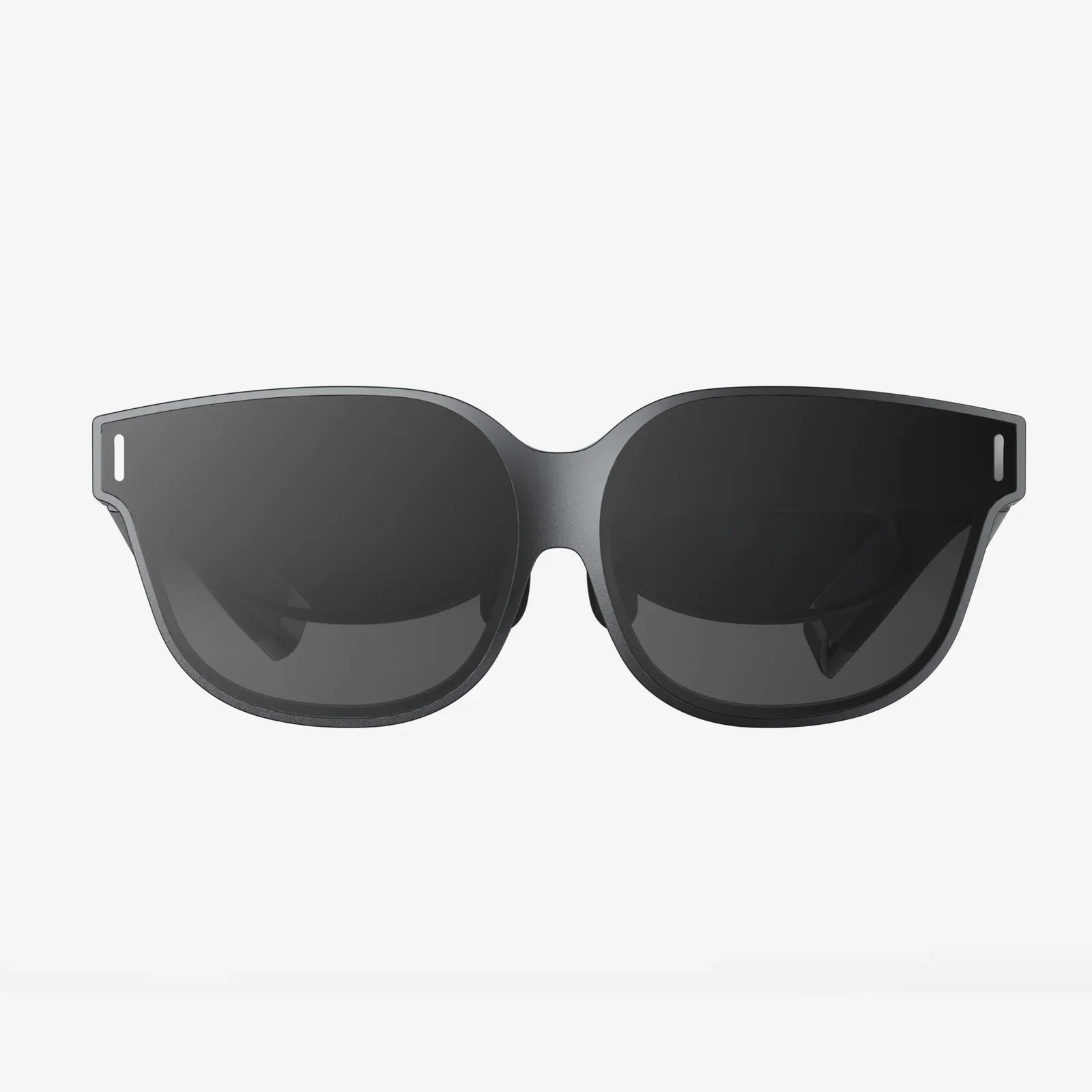
The hardware itself must also evolve. For VR to become a ubiquitous platform, headsets need to become socially acceptable, comfortable, and as easy to use as a pair of sunglasses. This means breakthroughs in miniaturization, battery life, and computational efficiency, likely leveraging edge computing and cloud streaming to do the heavy lifting.
The journey ahead is not merely about sharper pixels or more comfortable headsets; it is a fundamental reimagining of the human experience itself. We are building the plumbing for a new layer of reality, one where distance is irrelevant, imagination is the only limit to creation, and every sensation is a possibility waiting to be coded. The screen that has defined a technological era is finally beginning to fade, and in its place, an entire world—or indeed, infinite worlds—are waiting to be felt, explored, and shared. The door is opening. What will you do when you step through?
Share:
Augmented Reality and Virtual Reality Projects Are Reshaping Our World
What Is Virtual Augmented & Mixed Reality - The Ultimate Guide To The Spectrum Of Immersive Technologies