


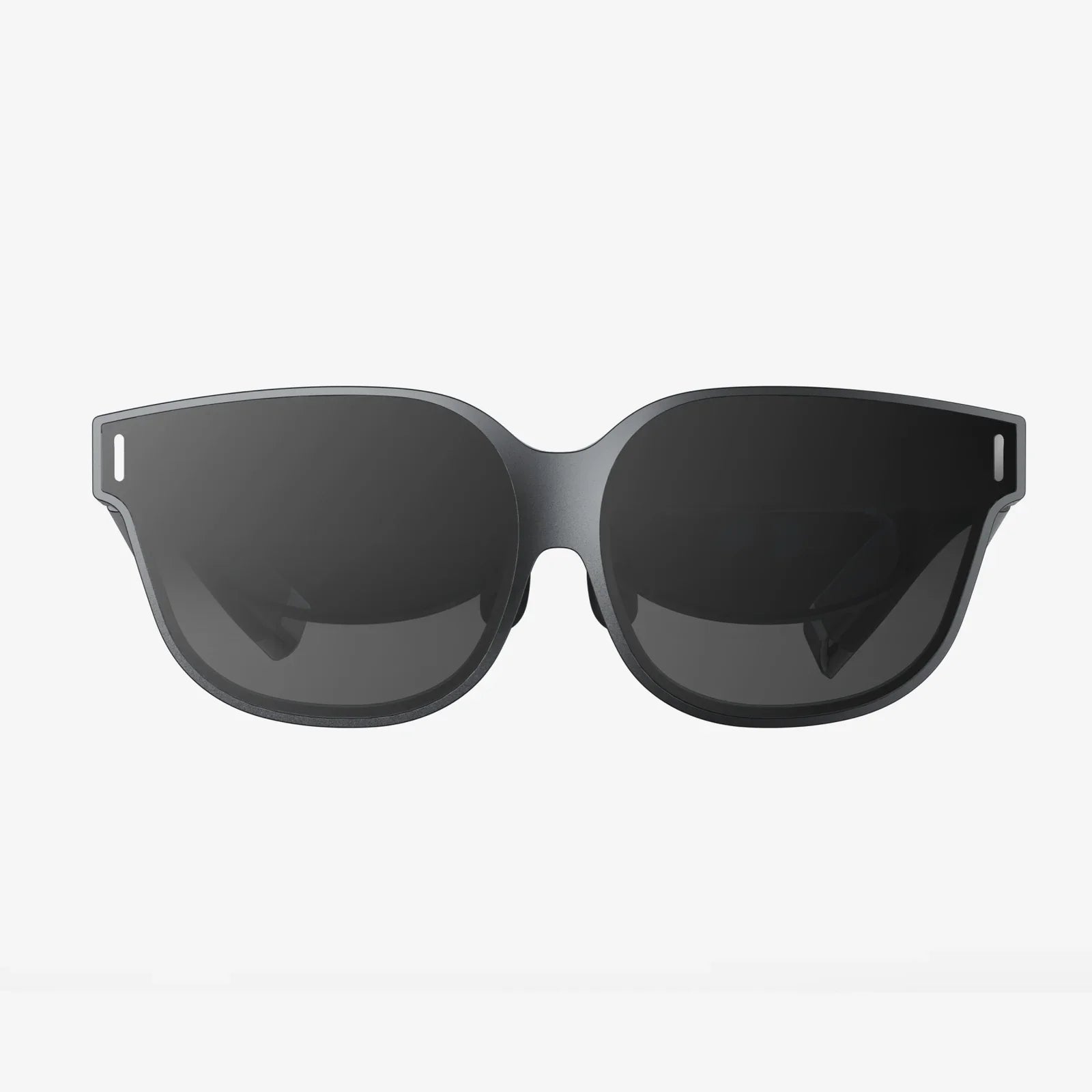
Imagine a world where digital information seamlessly overlays your physical surroundings, where you can explore ancient ruins from your living room, or collaborate with a colleague's lifelike hologram as if they were standing right beside you. This is no longer the realm of science fiction; it is the burgeoning reality shaped by a trio of transformative technologies: Virtual, Augmented, and Mixed Reality. These immersive technologies are poised to fundamentally reshape how we work, learn, play, and connect, blurring the lines between the physical and digital worlds in ways we are only beginning to comprehend.
Demystifying The Terminology: A Spectrum of Experiences
Often used interchangeably, the terms Virtual, Augmented, and Mixed Reality represent distinct points on a spectrum known as the Virtuality Continuum. This continuum, first proposed in the 1990s, charts the progression from a completely real environment to a fully virtual one, with various levels of blending in between. Understanding their unique definitions is the first step to grasping their immense potential.
Virtual Reality (VR): Total Digital Immersion
At one extreme of the spectrum lies Virtual Reality (VR). VR is a fully immersive, computer-generated simulation of a three-dimensional environment. Users experience this digital world through a head-mounted display (HMD) that completely blocks out their physical surroundings, replacing them with a synthetic reality.
Core Characteristics of VR:
- Immersion: The primary goal of VR is to create a convincing sense of presence—the feeling of actually being inside the virtual world. This is achieved through stereoscopic visuals, 3D audio, and, in more advanced systems, haptic feedback.
- Isolation: By design, VR headsets occlude the user's view of the real world, minimizing distractions and enhancing the feeling of being transported elsewhere.
- Interactivity: Users can navigate and interact with the virtual environment using hand controllers, motion tracking, and other input devices, allowing them to manipulate digital objects and influence the simulation.
How VR Works:
The magic of VR is powered by a combination of hardware and software. The headset contains high-resolution displays for each eye, creating a stereoscopic effect that provides depth perception. Sensors, including gyroscopes, accelerometers, and often external or inside-out cameras, track the user's head movements in real-time, adjusting the perspective of the virtual world accordingly to prevent disorientation. Powerful computing hardware renders the complex 3D environments at a high frame rate to maintain smoothness and realism.
Augmented Reality (AR): Enhancing The Real World
On the opposite end of the spectrum from VR is Augmented Reality (AR). Rather than replacing reality, AR superimposes digital information—images, text, 3D models, animations—onto the user's view of the physical world. The real environment remains central to the experience, with digital elements simply adding a layer of context or information.
Core Characteristics of AR:
- Real-World Integration: AR experiences are anchored to and enhance the user's immediate physical environment. They do not create a new world but add to the existing one.
- Contextual Information: The digital content in AR is typically relevant to the user's location or what they are looking at. For instance, looking at a historical monument through a smartphone screen might overlay information about its construction.
- Device Agnosticism: While smart glasses are the ideal form factor, AR is widely accessible through common devices like smartphones and tablets, which use their cameras to act as a viewport for the augmented experience.
How AR Works:
AR technology relies on a camera to capture the real world and a processor to identify where to place digital content. This is done through various methods:
- Marker-based AR: Uses a predefined visual marker (like a QR code) to trigger the display of digital content.
- Markerless AR: More advanced, it uses technologies like Simultaneous Localization and Mapping (SLAM) to understand the environment's geometry and place digital objects persistently on surfaces like tables or floors without a marker.
- Projection-based AR: Projects synthetic light onto physical surfaces, sometimes allowing for interaction.
- Location-based AR: Uses GPS and other location data to trigger AR experiences tied to a specific place.
Mixed Reality (MR): The Seamless Blend
Occupying the crucial middle ground on the Virtuality Continuum is Mixed Reality (MR). MR is the most complex and often misunderstood of the three. It represents a hybrid environment where physical and digital objects not only co-exist but can interact with each other in real-time.
Core Characteristics of MR:
- Seamless Interaction: This is the defining feature. In MR, a user can have a virtual robot hide behind their real-world couch, or use their physical hands to manipulate a holographic engine model. The digital world understands and responds to the physical one.
- Environmental Understanding: MR devices use advanced sensors and cameras to continuously scan and map the user's environment, creating a digital twin of the space. This allows virtual objects to be occluded by real ones and to behave in physically accurate ways (e.g., a virtual ball bouncing off a real wall).
- Next-Generation Hardware: True MR requires sophisticated headsets, often called holographic or MR headsets, that feature see-through lenses (allowing the user to see their real environment) and powerful spatial mapping capabilities.
The MR Difference:
While AR overlays information, MR anchors digital objects to the real world as if they were truly there. If you walk around a holographic MR object, you can view it from different angles, just like a physical object. If you place a virtual cup on a real table, it will stay there even if you look away and come back. This persistence and interactivity set it apart.
The Technology Powering The Immersive Revolution
Bringing these experiences to life requires a sophisticated stack of technologies working in harmony.
Hardware: The Gateways to New Realities
- Headsets: Ranging from affordable mobile-based VR headsets to all-in-one (standalone) devices and high-end PC-connected systems. MR headsets are typically standalone with transparent waveguides.
- Tracking Systems: Inside-out tracking (cameras on the headset track the environment) and outside-in tracking (external sensors track the headset) are used to understand user position and movement.
- Input Devices: From standard controllers to hand-tracking technology and haptic gloves, these allow users to reach into the digital realm and touch it.
- Compute Units: The brains of the operation, either housed within the headset itself or offloaded to a powerful external computer or cloud server.
Software & Development: Building Worlds
Creating immersive experiences requires specialized game engines and software development kits (SDKs). These tools provide developers with the frameworks needed to create 3D assets, program interactions, and optimize performance for a smooth, comfortable user experience.
Transforming Industries: Practical Applications Today
The value of VR, AR, and MR extends far beyond entertainment. They are powerful tools solving real-world problems across numerous sectors.
Healthcare: Saving Lives and Training Professionals
- Medical Training (VR/MR): Surgeons practice complex procedures on virtual patients in risk-free simulations. MR allows them to view a patient's CT scan or MRI data overlaid onto the patient's body during surgery.
- Physical Therapy (VR/AR): Patients engage in gamified rehabilitation exercises, making recovery more engaging and allowing therapists to track progress with precise data.
- Phobia Treatment (VR): Controlled, immersive exposure therapy helps patients confront and manage fears like acrophobia (fear of heights) or aviophobia (fear of flying) in a safe setting.
Manufacturing & Design: Prototyping and Collaboration
- Virtual Prototyping (VR): Engineers and designers can build and test full-scale 3D models of cars, buildings, or products before any physical materials are used, saving immense time and cost.
- Remote Assistance (AR/MR): A field technician wearing AR smart glasses can stream their view to an expert thousands of miles away, who can then annotate the technician's real-world view with arrows and instructions to help solve a problem.
- Complex Assembly (AR): Digital work instructions are projected onto assembly line components, guiding workers through each step and reducing errors.
Education & Training: Learning by Doing
- Immersive Learning (VR): Students can take virtual field trips to the Colosseum in ancient Rome, explore the human bloodstream from the inside, or conduct chemistry experiments with no risk of explosion.
- Skill Development (VR/MR): From welding to public speaking, immersive simulations provide a safe, repeatable, and effective training ground.
Retail & Remote Work: The New Consumer and Corporate Landscape
- Virtual Try-On (AR): Customers can see how furniture looks in their home, how clothes fit, or how a new shade of makeup appears on their skin before making a purchase.
- Virtual Collaboration (VR/MR): Remote teams can meet in a shared virtual office, interacting with 3D models and whiteboards as if they were in the same room, overcoming the limitations of traditional video calls.
Challenges and The Future Horizon
Despite rapid progress, the path forward for widespread adoption is not without hurdles.
Current Barriers
- Cost: High-end hardware remains expensive for the average consumer.
- Hardware Limitations: Issues like display resolution (screen-door effect), field of view, latency (which can cause motion sickness), and battery life are all areas of active improvement.
- Content Gap: There is a need for more high-quality, professional, and enterprise-focused applications beyond games.
- Social & Ethical Concerns:
- Privacy: Devices with always-on cameras and microphones continuously mapping our homes and lives raise significant data privacy questions.
- Accessibility: Ensuring these technologies are usable for people with disabilities is crucial.
- The Reality Gap: Prolonged immersion could potentially lead to new forms of escapism or difficulty distinguishing between virtual and real experiences.
The Road Ahead: The Metaverse and Beyond
The ultimate vision for many in the industry is the metaverse—a persistent, shared, and interconnected universe of virtual spaces, experienced in real-time by millions of users. VR, AR, and MR are the primary gateways to this envisioned future. We can expect:
- Lighter, More Powerful Hardware: Sleeker glasses that are socially acceptable to wear all day.
- Hyper-Realistic Avatars: Digital representations of ourselves that are photorealistic and express emotion accurately.
- Neural Interfaces: A move beyond controllers to direct brain-computer interfaces for more intuitive control.
- Ubiquitous AR: AR seamlessly integrated into everyday eyewear, providing contextual information about people, places, and things throughout our day.
The lines between our physical reality and the digital dimensions we create are not just blurring; they are being consciously and deliberately woven together. Virtual, Augmented, and Mixed Reality are the shuttles and looms in this grand undertaking, offering a glimpse into a future where our interactions with technology become more natural, intuitive, and profoundly integrated into the very fabric of our daily existence. The journey into this synthesized world is just beginning, and its potential to redefine human experience is limited only by our imagination.
Share:
The Next Step in Virtual Reality: Moving Beyond the Headset
Virtual Reality (VR) Brands Are Shaping a New Digital Frontier