


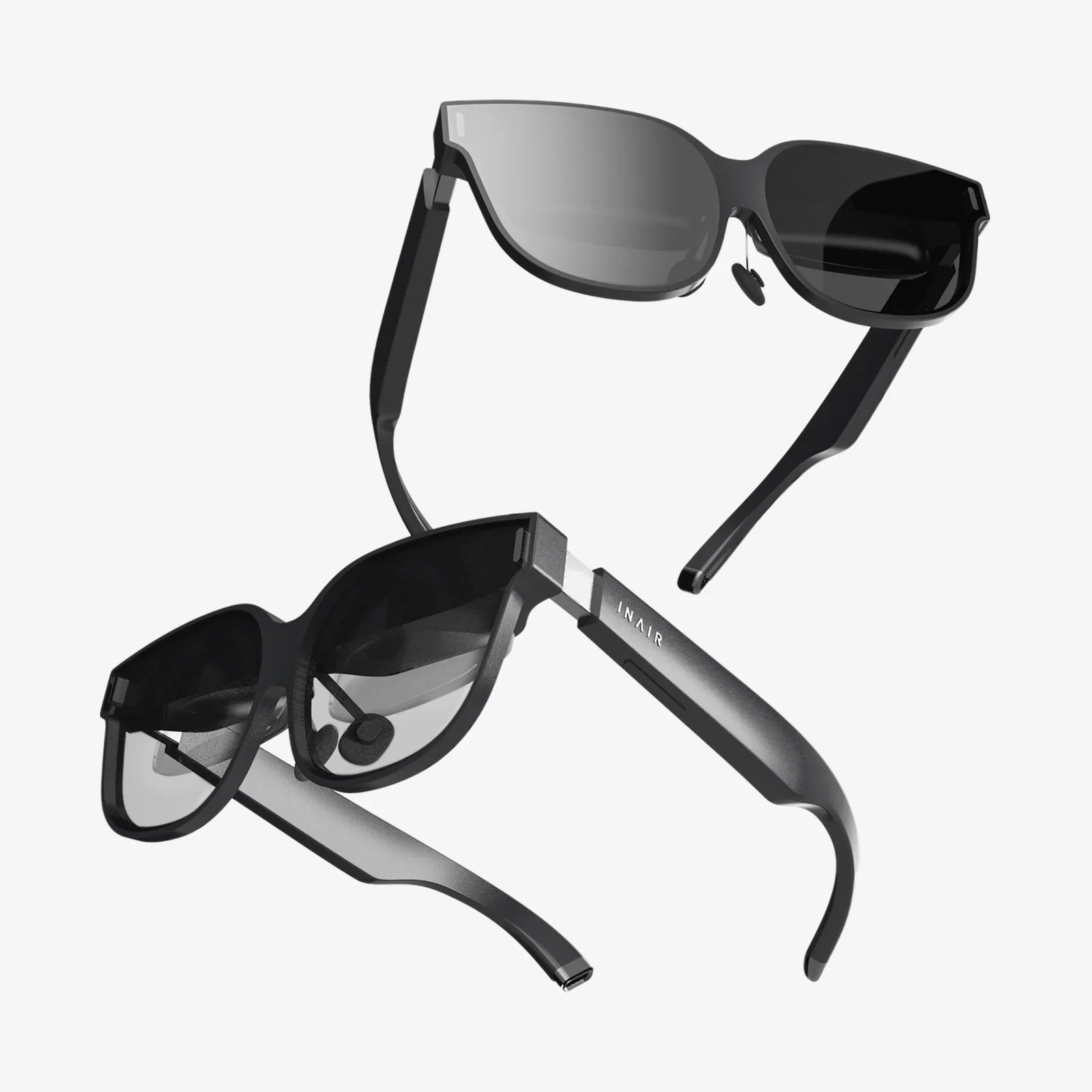
Imagine a world where your morning commute is a five-second glance at a head-mounted display, where your colleagues are both globally dispersed and sitting virtually across from you, and where the most powerful tool for collaboration isn't a conference room but a digital layer superimposed onto your reality. This is no longer the stuff of science fiction; it's the emerging frontier in the great debate of the office vs augmented reality. We are standing at the precipice of the most significant transformation in work culture since the industrial revolution, a shift that promises to dismantle our deepest assumptions about where and how we are most productive. The traditional office, a concept centuries in the making, is now facing its most formidable challenger: a seamless, immersive, and infinitely flexible digital dimension that could either liberate the global workforce or plunge it into a new era of digital isolation. The battle lines are drawn, not between companies, but between ideologies of work itself.
The Historical Anchors of the Physical Office
For over a century, the concept of 'the office' has been a cornerstone of professional life. It is more than just a collection of desks and chairs; it is a carefully engineered ecosystem designed to facilitate a specific mode of production. From the rigid rows of the typing pools to the open-plan layouts of the late 20th century, the office's physical architecture has always reflected the prevailing management theories of its time. Its primary purpose was to centralize resources, create a controlled environment for supervision, and foster serendipitous collaboration through proximity. The water cooler, the conference room, the manager's corner office—these were not accidental features but deliberate tools for shaping behavior and corporate culture. The office became a symbol of stability, a place where professional identity was forged and where the line between work and home was clearly, and physically, defined. This model, however, was built on a foundation of geographic necessity. Everyone had to be in the same place at the same time to access the tools and people required for their jobs.
The Digital Catalyst: From Remote Work to Immersive Work
The advent of the internet and cloud computing delivered the first major blow to the hegemony of the physical office. Laptops, video conferencing, and collaborative documents began to untether work from a specific location. This shift, dramatically accelerated by global events, proved that for many knowledge workers, centralization was no longer a requirement for productivity. However, this first wave of remote work revealed its own limitations. Video call fatigue, a loss of spontaneous connection, difficulties in onboarding new employees, and the challenges of maintaining a cohesive culture across digital divides became significant pain points. Screens, it turned out, were a poor substitute for shared physical presence. They offered connectivity but not immersion. This gap between the promise of remote work and its practical shortcomings created the perfect conditions for the next evolutionary leap: the move from flat, two-dimensional digital collaboration to three-dimensional, spatially aware augmented reality.
Defining the New Frontier: What is Augmented Reality at Work?
Augmented reality (AR) in a professional context is not about escaping reality into a fully virtual world, but about enhancing it. It involves overlaying digital information—holograms, data, virtual screens, 3D models—onto the user's view of their physical surroundings through specialized eyewear or visors. Unlike Virtual Reality (VR), which creates a completely synthetic environment, AR allows the user to remain grounded in their real world, which is now augmented with a powerful digital layer. In the context of the office vs augmented reality, this technology promises to dissolve the binary choice between being physically present in a central location and being remotely connected through a screen. It proposes a third way: a hybrid, persistent digital workspace that can be summoned anywhere, anytime, blending the best aspects of both physical and remote models.
The Augmented Advantage: Reshaping Collaboration and Creativity
The potential applications of AR for professional collaboration are staggering. Imagine a global engineering team standing around a life-sized, interactive 3D hologram of a new engine prototype, each able to manipulate parts, leave virtual notes, and point out features as if they were in the same lab. An architect could walk a client through a full-scale holographic model of a building before the foundation is even poured. For data analysts, complex datasets could be visualized as dynamic, three-dimensional graphs floating in their home office, allowing them to spot trends and correlations that would be invisible on a flat monitor. This moves collaboration from a passive, meeting-based activity to an active, hands-on, and deeply immersive experience. It recreates the magic of standing around a whiteboard, brainstorming and sketching ideas together, but supercharges it with infinite space, perfect memory, and global accessibility.
The Human Factor: Culture, Serendipity, and the Digital Water Cooler
Perhaps the most significant criticism of remote work is its impact on company culture and the loss of informal, serendipitous interactions—the 'water cooler moments' that often spark innovation and build social cohesion. Proponents of AR argue that it can solve this problem better than video calls ever could. Augmented social platforms could create virtual 'commons' areas where employees' avatars can meet for coffee, bump into each other 'in the hallway,' or pop by a colleague's 'virtual desk' for an impromptu chat. These interactions, while digital, would be spatially aware and feel more natural and embodied than a sudden Zoom invitation. The challenge for developers and companies will be to design these social spaces intentionally to foster genuine connection and avoid the feeling of a corporate-mandated metaverse that feels sterile and obligatory. The goal is not to replicate the physical office digitally, but to create new forms of social interaction that are native to the augmented medium.
The Flip Side: Privacy, Accessibility, and the Digital Divide
The vision of a perpetually augmented work life is not without its dark corners. The office vs augmented reality debate must confront serious questions about surveillance and privacy. If a company provides AR hardware, what level of data collection on employee activity, attention, and even biometric responses is acceptable? The potential for a panopticon-style management system, where every interaction and second of focus is quantified, is a disturbing prospect that could lead to unprecedented levels of workplace stress and micromanagement. Furthermore, the accessibility divide must be considered. Will this technology be available to all employees equally, or will it create a new class system within companies between those with high-end, immersive setups and those relying on cheaper, less capable devices? The cost of the technology, the required bandwidth, and the physical space needed to use it effectively could inadvertently exclude certain demographics and geographies, exacerbating existing inequalities.
The Neuroergonomic Impact: Productivity or Burnout?
On one hand, AR promises a monumental leap in ergonomics and productivity. The ability to create infinite, customizable virtual screens eliminates the physical clutter of monitors and the constraints of a physical desk. Information can be presented contextually, right where it's needed—repair instructions overlaid on a malfunctioning machine, a patient's vitals floating above a hospital bed, or translation subtitles during a conversation with an international colleague. This seamless access to information could drastically reduce cognitive load and streamline complex tasks. However, the neuroergonomic impact—the effect on our brains—is unknown. The constant bombardment of digital stimuli overlaying our physical reality could lead to new forms of mental fatigue, sensory overload, and an inability to truly disconnect. The 'always-on' culture of email and messaging could evolve into an 'always-present' culture, where the office is literally superimposed onto your living room, making it harder than ever to establish healthy boundaries between professional and personal life.
The Economic and Environmental Calculus
The economic implications of a widespread shift to AR workspaces are profound. For businesses, the calculus involves weighing massive reductions in physical real estate costs—office leases, utilities, maintenance—against the substantial investment in AR hardware, software development, and IT infrastructure. This could democratize access to global talent, as companies are no longer limited to hiring within commuting distance of an office hub. For cities and commercial real estate, however, it could represent a crisis on par with the decline of brick-and-mortar retail. Environmentally, the picture is mixed. The elimination of daily commutes for millions would lead to a dramatic drop in carbon emissions. However, this must be balanced against the environmental cost of manufacturing millions of electronic devices, running powerful cloud servers to sustain these digital worlds, and the eventual problem of electronic waste. A true sustainability assessment must consider this entire lifecycle.
The Hybrid Horizon: A Blended Future, Not a Binary Choice
The most likely outcome of the office vs augmented reality debate is not a winner-takes-all victory but a new, blended hybrid model. The physical office will not vanish, but its purpose will fundamentally change. It may evolve into a hub for deep social connection, high-stakes strategic meetings, and cultural rituals—a place people go to for specific, intentional purposes rather than a default daily destination. Augmented reality will become the default platform for the daily grind of collaboration, deep work, and routine meetings, accessible from anywhere. This hybrid model offers the most flexible and human-centric approach, allowing individuals and teams to choose the medium that best suits their specific task and personal working style. It acknowledges that while digital presence can be incredibly efficient, physical presence still holds unique and powerful value for building trust and community.
The door to your office is now a digital portal, the whiteboard has no borders, and your most insightful colleague might be a hologram on the other side of the planet. The choice between the office vs augmented reality is a false dichotomy; the future belongs to those who can seamlessly blend the two, harnessing the gravitational pull of physical space and the infinite potential of the digital layer. This isn't about replacing one with the other, but about writing a new definition of 'workplace’ altogether—one that is finally tailored to human potential rather than physical constraint. The next chapter of work won't be written in an office park or on a video call; it will be drawn in three dimensions, by a global team, right before your eyes.
Share:
Smart Glass Meaning: The Future of Windows is Transparently Intelligent
Augmented Reality Market Size 2025 Forecast: A Multi-Billion Dollar Metaverse in the Making