


Imagine a world where digital information isn't confined to a screen but is seamlessly woven into the fabric of your everyday life. Your car's windshield highlights navigation cues directly on the road ahead, a factory technician sees a holographic schematic overlaid on a malfunctioning machine, and you try on a new piece of furniture in your living room before clicking 'buy'. This is the promise of augmented reality (AR), and it's not a distant sci-fi fantasy. It's a rapidly accelerating technological revolution, and the numbers behind its growth are nothing short of staggering. The forecast for the global augmented reality market size by 2025 points toward an economic upheaval that will redefine industries and consumer behavior on a global scale.
The Foundation: Understanding the Augmented Reality Landscape
Before delving into the projections, it's crucial to define what we're measuring. Augmented reality is a technology that superimposes a computer-generated image, video, or 3D model onto a user's view of the real world, thus providing a composite view. This is distinct from virtual reality (VR), which creates a completely immersive, digital environment. The AR market is broadly segmented by device type, offering different levels of immersion and utility.
Device Segments Driving the Market
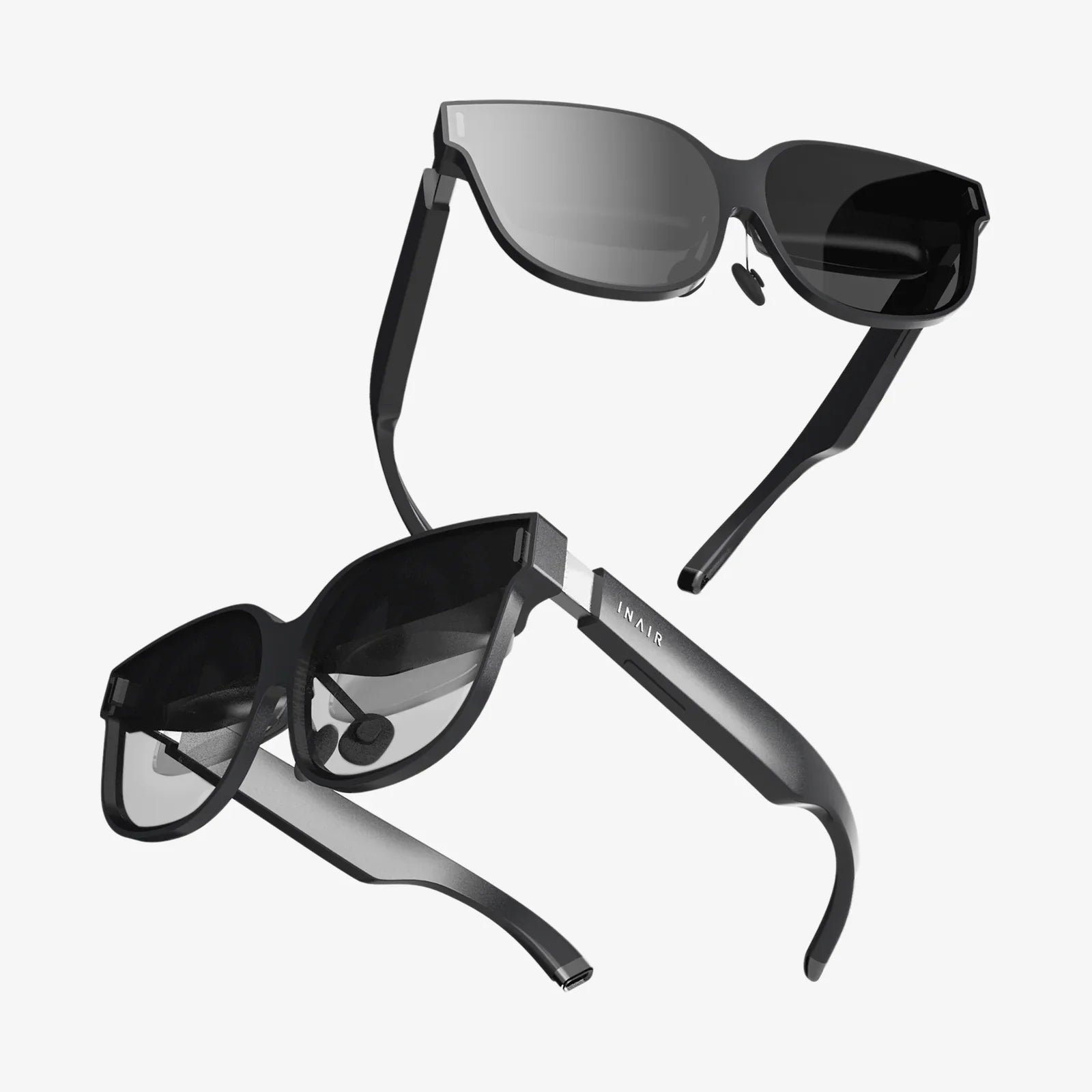
Head-Mounted Displays (HMDs): This segment includes both tethered systems, often used in enterprise and industrial settings for complex tasks, and standalone smart glasses, which are wireless and self-contained. These devices are hands-free, offering a truly immersive experience crucial for field service, manufacturing, and design.
Smartphones and Tablets: Currently, the largest user base for AR experiences is through handheld devices. Using their built-in cameras and sensors, smartphones act as a window for AR applications, from social media filters to interactive gaming and retail. This segment is critical for mass adoption and consumer familiarity.
Heads-Up Displays (HUDs) and Other Devices: This includes automotive windshields that project speed and navigation data, as well as emerging form factors like AR contact lenses and more specialized hardware.
The Numbers: A Deep Dive into the 2025 Forecast
Multiple renowned market research firms have published their analyses, and while the exact figures vary based on methodology and segmentation, the consensus is overwhelmingly positive. The global augmented reality market size is forecast to explode from its value in the early 2020s, reaching well into the tens of billions of dollars by 2025. Some of the most cited projections estimate the market to reach between $80 billion and $350 billion. This vast range accounts for different definitions of the market—whether it includes hardware, software, and services, or focuses solely on AR-specific revenue.
Key Factors Fueling This Meteoric Rise
This projected growth is not happening in a vacuum. It is the direct result of several converging technological and economic trends.
1. Enterprise Adoption: The Primary Growth Engine
The single biggest driver for the AR market is its application in enterprise and industrial sectors. Companies are realizing the immense return on investment (ROI) that AR solutions can provide.
- Remote Assistance and Collaboration: An expert in one country can see what a field technician sees thousands of miles away, annotating their real-world view with arrows and notes to guide complex repairs, drastically reducing travel costs and downtime.
- Design and Prototyping: Engineers and designers can visualize and interact with 3D models at scale, overlaying new components onto existing physical structures to identify issues before production begins.
- Training and Learning: AR provides immersive, hands-on training simulations for everything from surgery to operating heavy machinery, allowing for mistake-driven learning in a risk-free environment.
- Warehousing and Logistics: AR smart glasses can display picking instructions, inventory data, and optimal routes, significantly improving accuracy and efficiency in fulfillment centers.
2. The Consumer Wave: Beyond Gaming
While the initial consumer hype was around gaming, the applications are rapidly expanding.
- Retail and E-commerce: Virtual try-on for clothes, accessories, and makeup, as well as placing furniture and appliances in your home to preview fit and style, are transforming the shopping experience and reducing return rates.
- Social Media and Entertainment: Filters and lenses have become ubiquitous, but the next wave involves persistent AR experiences tied to locations, creating new forms of social interaction and storytelling.
- Navigation and Tourism: Imagine walking through a city and seeing directional arrows on the sidewalk or historical information popping up about a landmark you're viewing.
3. Technological Advancements: Building a Brighter Future
The hardware and software are becoming powerful enough to make these experiences seamless and compelling.
- 5G Connectivity: The high bandwidth and low latency of 5G networks are essential for streaming rich AR content and enabling real-time cloud processing and collaboration.
- Improved Hardware: Lighter, more powerful processors, longer battery life, and advanced display technologies are making AR glasses more comfortable and capable.
- AI and Computer Vision: These technologies allow AR devices to better understand and interact with the environment, enabling object recognition, spatial mapping, and more natural user interfaces.
Sector-by-Sector Breakdown: Where the Investment is Flowing
The adoption of AR is not uniform across all industries. The 2025 forecast highlights several key verticals that are poised to be the biggest investors and beneficiaries.
Healthcare: A New Dimension of Care
The healthcare sector is forecast to be a major adopter. AR is revolutionizing medical training, surgical planning, and patient care. Surgeons can overlay CT scans and MRI data directly onto a patient's body during procedures, providing x-ray vision and improving precision. It also aids in complex medical device assembly and remote patient diagnostics.
Manufacturing and Automotive: The Industrial Metaverse
This is arguably the most mature AR market. From assembly line instructions and quality control to digital twins—virtual replicas of physical assets—AR is streamlining complex processes, reducing errors, and enhancing worker safety. In the automotive sector, AR HUDs are becoming a premium feature, and the technology is integral to the design and manufacturing of next-generation vehicles.
Retail: The Future of Shopping
The retail segment is forecast for significant growth as brands seek to bridge the gap between online and in-store experiences. Virtual try-rooms, interactive product information, and in-store navigation are just the beginning, fundamentally altering the consumer purchase journey.
Education and Training: Learning by Doing
AR brings textbooks to life, allowing students to interact with historical artifacts, explore the solar system, or dissect a frog in stunning detail. This immersive learning leads to higher engagement and better knowledge retention, a market with immense long-term potential.
Challenges and Hurdles on the Path to 2025
Despite the optimistic forecast, the path to a multi-billion dollar AR market is not without its significant obstacles. Addressing these challenges is critical for the market to reach its full potential.
Technical and Hardware Limitations
For widespread consumer adoption, AR glasses need to become as socially acceptable and comfortable as regular eyeglasses. This requires breakthroughs in battery technology, display systems (like waveguides), processing power, and form factor. Overcoming the challenge of vergence-accommodation conflict—where the eyes struggle to focus on digital objects placed at different depths—is also key to preventing user discomfort.
Content Creation and Developer Ecosystem
A platform is only as valuable as the content on it. There is a pressing need for robust, user-friendly authoring tools that allow designers and developers without deep technical expertise to create compelling AR experiences. Building a thriving ecosystem around content is paramount.
Privacy and Security Concerns
AR devices, by their very nature, are equipped with always-on cameras and sensors that continuously scan the environment. This raises profound questions about data privacy, surveillance, and security. Who owns the data collected about your home or your workplace? Establishing clear ethical guidelines and robust security protocols is non-negotiable for public trust.
Digital Divide and Accessibility
There is a risk that advanced AR technology could become a luxury available only to wealthy individuals and corporations, exacerbating existing digital divides. Ensuring the technology is accessible and affordable will be a crucial societal challenge.
The Road Ahead: More Than Just a Number
The augmented reality market size forecast for 2025 represents more than just a financial figure; it signifies a fundamental shift in how we interact with computing and information. It's the foundational technology for the spatial web—an evolution of the internet where information is mapped to the world around us rather than trapped on pages. The companies, developers, and policymakers who successfully navigate the technical hurdles and ethical considerations will not only capture a share of this enormous market but will also play a leading role in defining the next era of human-computer interaction. The fusion of our physical and digital worlds is already underway, and by 2025, it will have become an indispensable part of our economy and our daily lives.
You've seen the projections and understand the forces at play, but this is merely the prelude. The true impact of this technology will be measured not in billions of dollars, but in revolutions to workflow, breakthroughs in design, and entirely new forms of human connection and expression. The door to this blended reality is now open; the next few years will determine just how deeply we choose to step through it.
Share:
The Office vs Augmented Reality: The Future of Professional Collaboration
VR Sun Glasses: The Dawn of a New Reality Blending the Digital and Physical Worlds