


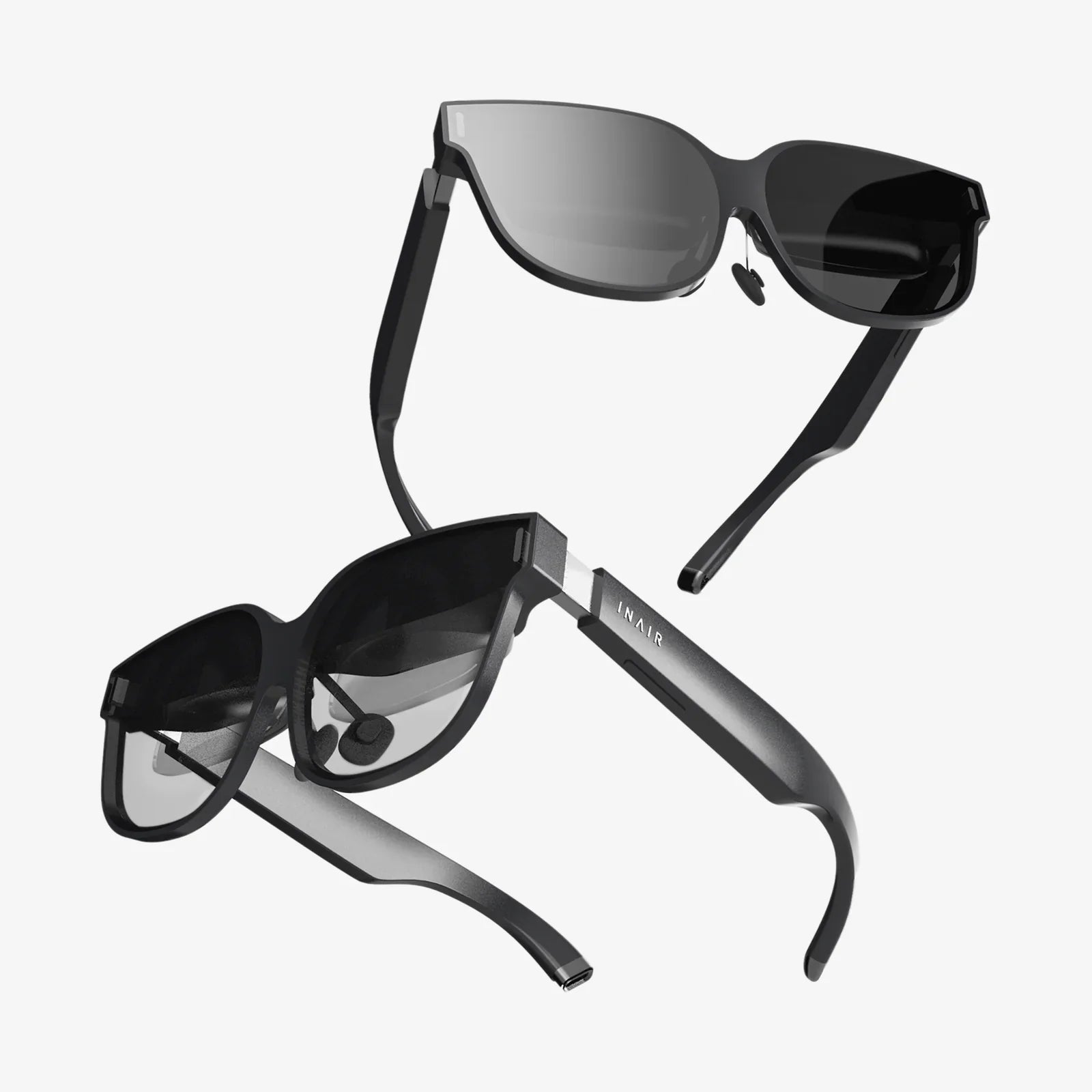
Imagine stepping out into the bright sunlight, not to squint at the world, but to layer it with digital ghosts, access floating dashboards of information, or transform your entire field of view into a private cinema screen. This is the tantalizing promise of VR Sun Glasses, a concept that is rapidly evolving from science fiction into a tangible next chapter for computing. They represent not just an incremental upgrade, but a fundamental shift in how we interact with technology, data, and each other. This isn't about escaping reality; it's about augmenting it, enhancing it, and seamlessly blending the digital and physical realms into a single, cohesive experience. The race to perfect this technology is on, and its success will redefine our very perception of reality itself.
Beyond the Headset: The Evolutionary Leap
For years, immersive technology has been confined to the living room. Bulky headsets, while powerful, act as blindfolds to the real world, isolating the user in a purely digital environment. VR Sun Glasses, by stark contrast, are designed for mobility, social interaction, and constant companionship. Their primary differentiator is a form factor that aims for social acceptance—shades you'd actually want to wear—coupled with the ability to see both the world and a high-fidelity digital overlay simultaneously. This is achieved through advanced waveguide optics and micro-displays that project images directly onto the lenses, creating the illusion that digital objects coexist in your physical space. The goal is to make the technology disappear, leaving only the magic of the augmented experience.
The Core Technologies Making It Possible
The realization of true VR Sun Glasses is a symphony of cutting-edge engineering, where every component must be miniaturized to near-invisibility without sacrificing performance.
Advanced Optical Systems
At the heart of the experience are the optics. Traditional optics are too heavy and inefficient. The frontrunner technology is based on waveguides—incredibly thin, transparent glass or plastic substrates that use diffraction gratings to pipe light from micro-projectors at the temples into the user's eyes. This allows for a wide field of view and a bright, clear image without obstructing the user's view of the real world. Developments in holographic optics and laser beam scanning are pushing this further, promising even smaller, lighter, and more efficient systems.
Power and Processing: The Invisible Burden
Rendering complex 3D graphics, running sophisticated computer vision algorithms for spatial mapping, and processing real-time data demands immense computational power. Fitting this into the arms of a pair of glasses is perhaps the greatest challenge. Solutions are multi-faceted: ultra-low-power dedicated processing chips, offloading intensive tasks to a companion device carried in a pocket via a high-speed wireless connection, and revolutionary battery technologies like solid-state or custom-shaped cells that fit into the frame. Efficient thermal management is also critical to prevent discomfort.
Spatial Mapping and Contextual Awareness
For digital objects to feel anchored in the real world, the device must understand its environment with incredible precision. This is handled by a suite of miniature sensors, including:
- Cameras: For simultaneous localization and mapping (SLAM), tracking surfaces, and understanding depth.
- LiDAR Scanners: Emitting invisible laser dots to create a precise 3D map of the surroundings.
- Inertial Measurement Units (IMUs): Accelerometers and gyroscopes that track head movement with low latency.
- Eye-Tracking Cameras: Crucial for both creating a more realistic visual experience (via foveated rendering) and for intuitive interaction.
All this sensor data is fused together in real time to create a digital twin of the physical space, allowing virtual objects to occlude behind real-world furniture or a digital character to sit convincingly on your actual couch.
A Universe of Applications: More Than Just Games
While gaming and immersive entertainment will be a massive driver, the true potential of VR Sun Glasses lies in their utility across every facet of daily life.
Revolutionizing Work and Productivity
The concept of the "infinite desktop" becomes a reality. Instead of being chained to physical monitors, users can spawn multiple high-resolution virtual screens anywhere they look. Architects could walk through and manipulate 3D models of buildings on a client's empty plot of land. Remote collaborators could appear as life-like avatars in your room, able to point to and interact with shared 3D models. Field technicians could have schematics, instructions, and a live video feed from an expert overlayed directly onto the machinery they are repairing.
Transforming Social Connection and Communication
Communication will evolve from flat video calls on a screen to spatial interactions. A friend living across the globe could appear as a photorealistic hologram sitting in your favorite armchair, able to share 3D photos from their vacation as if they were physical objects on your coffee table. Social media could evolve from a feed you scroll through to a world you walk through, with updates from friends appearing as virtual post-it notes in locations that are meaningful to you.
Enhancing Navigation and Information Access
Walking through a new city, directional arrows can be painted onto the sidewalk, historical information can pop up about buildings you look at, and reviews for a restaurant can float above its door. This "ambient intelligence" provides context-aware information exactly when and where you need it, turning the entire world into an intuitive user interface.
The Formidable Challenges on the Horizon
The path to perfect VR Sun Glasses is littered with significant obstacles that extend far beyond mere technical specs.
The Social Acceptance Hurdle
Technology must be socially acceptable to be adopted. Early adopters may not mind looking slightly peculiar, but for mass adoption, the design must be fashionable, lightweight, and indistinguishable from high-end eyewear. Furthermore, the issue of "recording eyes"—the cameras needed for spatial mapping also having the potential to record people without their knowledge—presents a major privacy dilemma. Clear social norms and technological solutions, like a prominent "recording" light, will be essential.
The Privacy Paradox
These devices, by their very nature, are data collection machines. They will see what you see, hear what you hear, and know where you are and who you're with. This data is incredibly sensitive. Who owns it? How is it stored and used? The companies that create these platforms will have an unprecedented view into the lives of their users. Robust, transparent, and user-centric data policies will be non-negotiable for earning public trust.
Health and Safety Considerations
Prolonged use of near-eye displays can cause eye strain, headaches, and vergence-accommodation conflict—where your eyes struggle to focus on virtual objects at different depths. Mitigating this requires advanced optical solutions and intelligent software. Furthermore, navigating the real world while distracted by digital content poses obvious safety risks, necessitating sophisticated awareness systems that can alert users to dangers or intelligently dim content when needed.
The Future Shaped by Your Perspective
The development of VR Sun Glasses is not just a technological journey; it is a societal one. The choices made today—in design, ethics, and application—will shape how this technology integrates into our lives tomorrow. Will it be a tool for empowerment and connection, or for distraction and surveillance? The answer lies not only with the engineers and corporations but with users, policymakers, and society at large demanding a future that is human-centric. The potential is staggering: to enhance our cognition, extend our memories, bridge vast distances, and unlock new forms of creativity and expression we haven't yet imagined.
The line between the digital and the physical is set to dissolve, not on a screen you hold in your hand, but in the very air around you. VR Sun Glasses are the key to unlocking this layered existence, offering a glimpse into a future where every sunrise can be accompanied by a personalized layer of magic, information, and connection. The next interface won't be a device you look at; it will be the world you look through.
Share:
Augmented Reality Market Size 2025 Forecast: A Multi-Billion Dollar Metaverse in the Making
VR Glasses vs Headset: The Ultimate Guide to Choosing Your Virtual Reality