


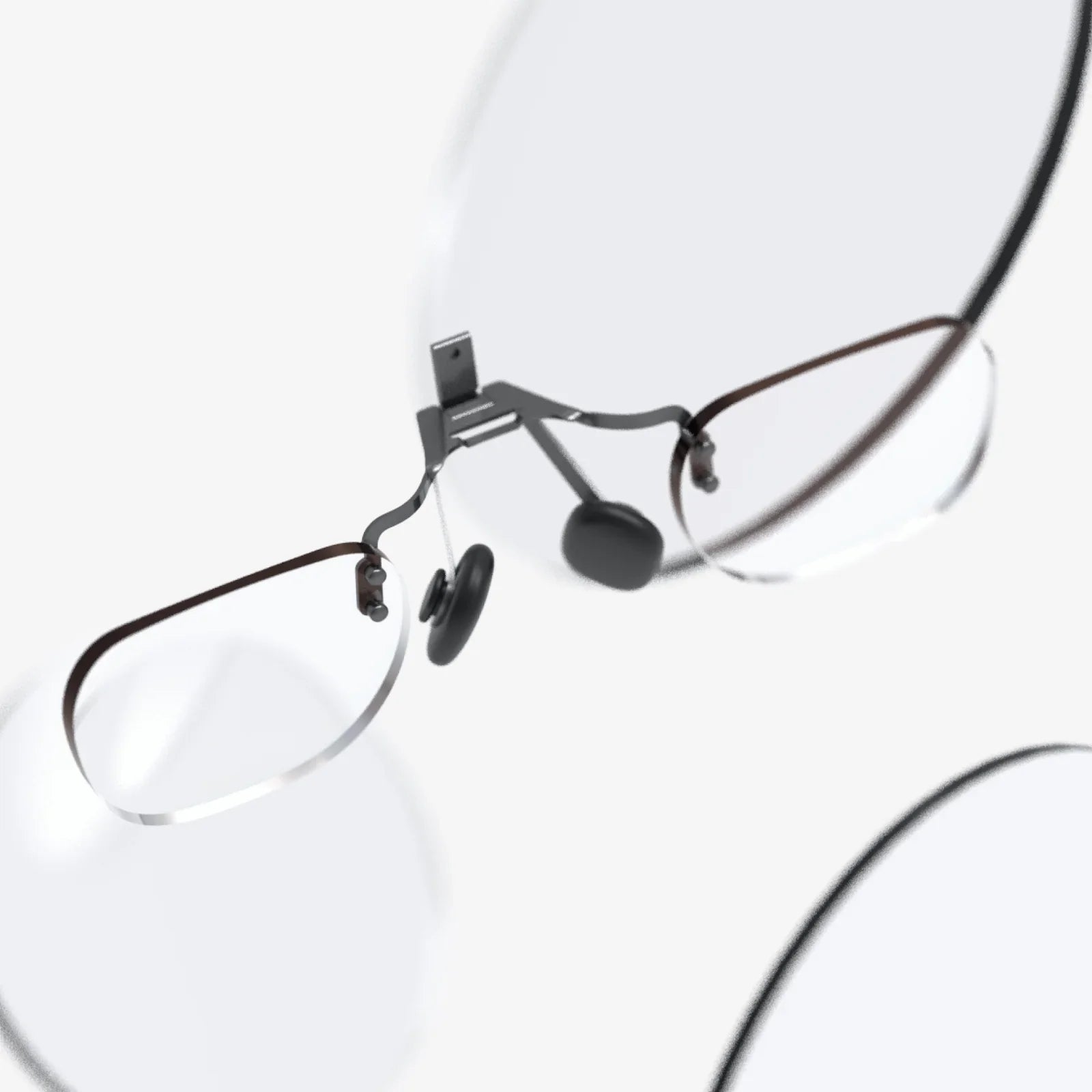
The digital frontier is calling, and the gateway to its immersive wonders is more accessible than ever. But as you stand on the precipice of purchasing your first—or next—virtual reality device, you’re immediately confronted with a critical choice: the sleek, portable promise of VR glasses or the powerful, all-encompassing experience of a full VR headset? This isn't just a matter of semantics; it's a decision that defines your entire journey into the metaverse, gaming, and beyond. Understanding the distinction is the first step toward unlocking a world of potential.
Defining the Contenders: More Than Just a Name
Before we dive into the intricate comparisons, it's crucial to establish what we're actually talking about. The terms "VR glasses" and "VR headset" are often used interchangeably in casual conversation, but in the tech world, they represent two distinct categories of hardware with fundamentally different philosophies.
When we refer to a VR Headset, we are typically describing a more robust, standalone or tethered unit. These devices are characterized by their complete enclosure of the user's field of vision. They are systems that often include built-in high-resolution displays, advanced tracking sensors (inside-out or outside-in), sophisticated cooling systems, and dedicated controllers. They are engineered for performance and immersion above all else, creating a digital reality that feels tangible and responsive.
On the other side, VR Glasses (sometimes called VR goggles) represent a newer, more minimalist approach. The core design principle is portability and convenience. These devices are typically much smaller, lighter, and resemble a pair of oversized sunglasses. Their primary function is often to act as a viewing portal for a powerful external device, like a high-end smartphone or a dedicated processing unit. The goal is to offer a taste of VR and AR without the bulk and complexity of a full headset.
The Form Factor Face-Off: Design and Comfort
The most immediate and obvious difference between these two categories is their physical presence. This has a direct and significant impact on how you use them and for how long.
VR Headsets: The Immersive Beast
A full VR headset is undeniably a piece of substantial hardware. It's designed to block out the entire physical world, which necessitates a front-heavy design that houses the lenses, displays, and internal electronics. To manage this weight, they employ sophisticated strap systems—often a rigid halo design or an elasticated three-point strap—that distribute the pressure evenly across the head. While modern headsets are far more comfortable than their predecessors, they remain noticeable during use. You are always aware that you are wearing a sophisticated piece of technology. They are not designed for all-day, everyday wear but for dedicated sessions of gaming, socializing, or creating.
VR Glasses: The Featherweight Challenger
VR glasses, in stark contrast, prioritize a barely-there feel. Weighing a fraction of a full headset, they often use a simple glasses-style frame or a minimal strap. The comfort advantage for short bursts and casual use is enormous. You can quickly slip them on to watch a video or play a simple game without the ceremony of adjusting a heavy headset. However, this lightweight construction can sometimes lead to a less secure fit during active movement, and the smaller surface area can cause pressure points on the nose or temples if worn for extended periods. Their greatest strength is their disposability; you can throw them in a bag and forget about them until you need a quick virtual escape.
Under the Hood: A Tale of Performance and Power
If design is the body, then processing power and display technology are the heart and soul. This is where the gap between the two categories widens into a chasm.
The All-in-One Powerhouse
High-end VR headsets are computational marvels. They are either tethered to a powerful external computer, which provides desktop-grade graphics processing, or they are fully standalone units with integrated mobile processors, RAM, and storage. This raw power enables them to render incredibly detailed, complex virtual worlds with high polygon counts, advanced lighting effects, and realistic physics. They support high refresh rates (90Hz and above), which is critical for maintaining immersion and preventing motion sickness. Their tracking systems, using multiple cameras and sensors, allow for precise, six degrees of freedom (6DoF) movement. This means you can not only look around but also lean in, crouch, and walk around within a defined space, with your every movement reflected perfectly in the virtual world.
The Slimmed-Down Companion
VR glasses, by necessity, sacrifice raw power for their svelte form factor. They are almost never standalone devices. Instead, they act as a peripheral. Some rely on a smartphone slipped into the front, using its screen and processor to power a basic, often three degrees of freedom (3DoF) experience. More advanced glasses are wired to a small dedicated processing puck or even a gaming console or PC. While this offloads the heavy lifting, the experience is often limited by the bandwidth of the connection (usually USB-C) and the capabilities of the host device. The field of view is typically narrower, and the graphical fidelity, while improving rapidly, cannot match a dedicated headset running native software. They excel at consumption—watching movies in a virtual theater, viewing 360-degree photos, or playing casual games—but struggle with the demanding, interactive experiences that define high-end VR.
The Experience Equation: Gaming, Social, and Productivity
Your intended use is the ultimate arbiter in this debate. Each device class caters to a different set of activities and user profiles.
The Realm of the VR Headset
If you are a serious gamer, a VR headset is the only choice. It is the gateway to vast, AAA-rated virtual worlds, intense first-person shooters, intricate puzzle games, and breathtaking simulations. The precise controller tracking and room-scale capabilities are non-negotiable for these experiences. Furthermore, the social VR landscape—platforms where people gather as expressive avatars to talk, watch events, and play games—is built on the foundation of full-body presence and interaction that only a capable headset can provide. For professionals in architecture, design, or medicine, the high resolution and processing power are essential for visualizing complex 3D models and data in a collaborative space.
The Domain of VR Glasses
VR glasses find their strength in media consumption and portability. Imagine sitting on an airplane and being able to unfold a pair of glasses to watch a movie on a virtual 100-foot screen. This is their killer app. They are also the ideal device for quickly showcasing VR to friends or for short, casual gaming sessions. As the technology evolves, we are seeing a strong convergence with Augmented Reality (AR). Their glasses-like design makes them a natural fit for AR applications, where digital information is overlaid onto the real world for productivity, navigation, or entertainment. A full headset, by design, cannot do this as effectively.
The Investment: Cost and Ecosystem
Budget is always a consideration, but the cost analysis here is more nuanced than a simple sticker price.
A top-tier VR headset represents a significant investment. You are paying for an integrated system with high-end displays, speakers, and powerful processors. If you choose a tethered model, you must also factor in the cost of the high-end computer required to run it. However, this investment grants you access to the richest and most extensive ecosystem of applications and games, with continuous support from major developers.
VR glasses often have a much lower entry point. However, this can be misleading. The glasses themselves might be affordable, but to use them, you may need to already own a latest-generation smartphone or a gaming console. The content library available for these devices is often a subset of the larger VR ecosystem, focused on less demanding titles. You are trading upfront cost for a potentially more limited long-term experience.
Gazing into the Crystal Ball: The Future of VR Form Factors
The line between VR glasses and headsets is not static; it is blurring rapidly. The relentless march of technology is solving the core challenges that forced the divide in the first place. Advancements in micro-OLED displays, pancake lenses, and ultra-efficient processors are allowing engineers to pack headset-level performance into smaller and smaller form factors. We are already seeing new devices that boast the power of a standalone headset in a design that is closer to bulky glasses than a full helmet.
The endgame for many in the industry is a single, universal device—a pair of stylish glasses that you can wear all day. In the morning, they could overlay your emails and calendar onto your real-world view. In the afternoon, they could become opaque, transforming into a private, immersive cinema for a break. In the evening, they could transport you into a hyper-realistic game world or a social space with friends. This ultimate fusion of AR and VR will make the current distinction between "glasses" and "headset" obsolete.
So, which path is right for you? The answer lies not in searching for a universal winner, but in honestly assessing your own digital habits. Are you a pioneer seeking the deepest, most interactive virtual experiences, willing to trade portability for pure power? Then set your sights on a capable VR headset. Or are you a pragmatist, valuing convenience and accessibility, looking for a portable window into virtual worlds for entertainment on the go? Then the evolving world of VR glasses awaits your curiosity. Whichever you choose, you are stepping into a revolution, one that is reshaping how we play, work, and connect. The only wrong choice is not making one at all.
Share:
VR Sun Glasses: The Dawn of a New Reality Blending the Digital and Physical Worlds
Comparison Smartglasses: A Detailed Guide to Navigating the Next Wave of Wearable Tech