


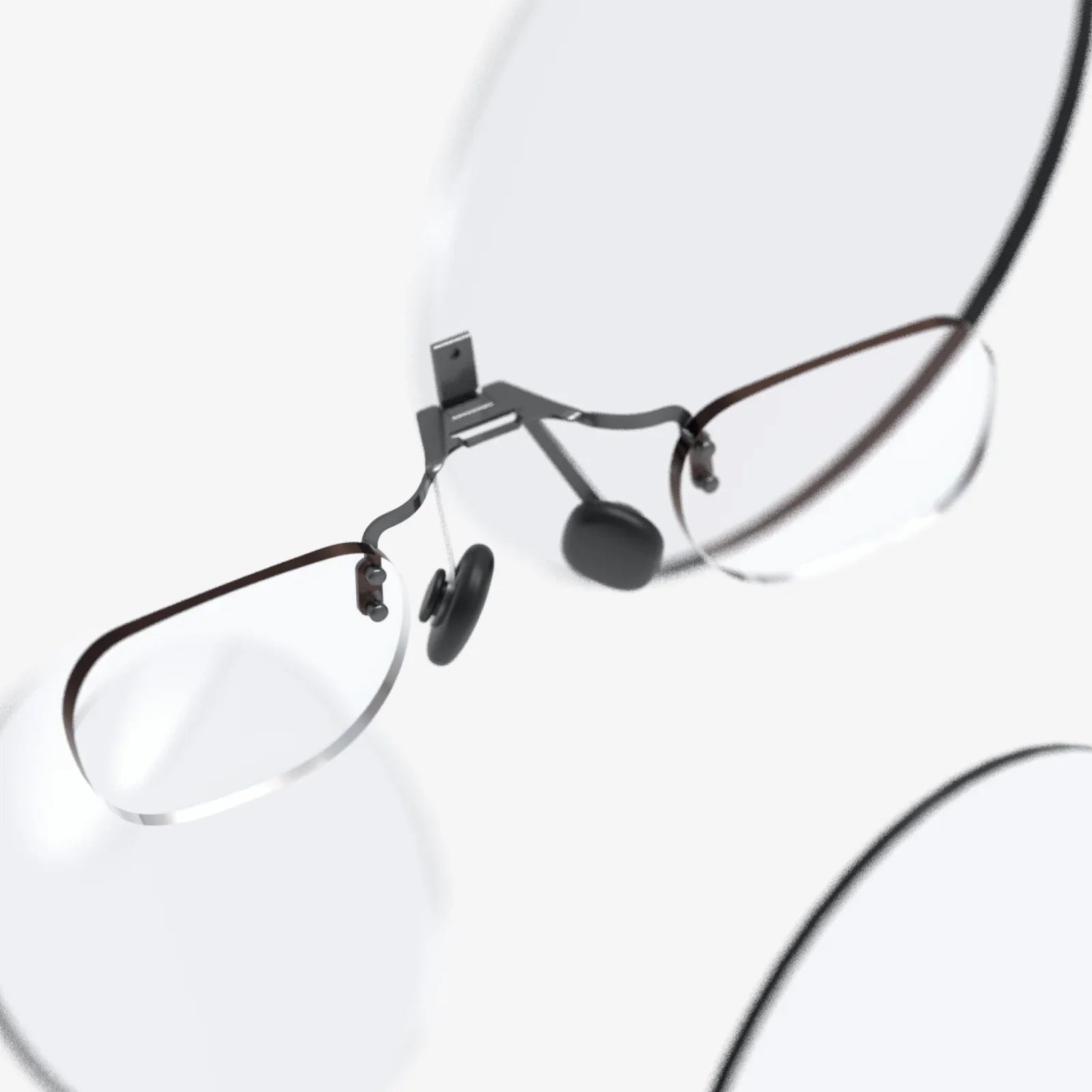
Imagine a world where the digital and physical seamlessly intertwine, where information and interactive experiences are overlaid onto the world you see, and where the gap between imagination and reality is closed with a simple glance through a smartphone or a pair of smart glasses. This is no longer the realm of science fiction; it is the present and future being built by Augmented Reality (AR), and its power to revolutionize business is only just beginning to be unleashed. For forward-thinking enterprises, AR is not a novelty but a critical tool for survival, innovation, and unprecedented growth.
Beyond the Hype: Defining Augmented Reality's Business Value
At its core, Augmented Reality is a technology that superimposes computer-generated images, sounds, and other sensory enhancements onto a user's real-world view. Unlike Virtual Reality (VR), which creates a completely artificial environment, AR enhances the existing environment by adding digital elements to it. This key distinction is what makes AR so powerful for business applications—it operates within and improves the context of the user's immediate surroundings.
The business value of AR is multifaceted. It fundamentally enhances human capability by providing real-time, contextual information exactly when and where it is needed. This leads to:
- Enhanced Decision-Making: Workers can see data overlaid on equipment, allowing for faster and more informed choices.
- Increased Efficiency: Complex tasks are simplified with visual, step-by-step guidance, reducing errors and time-on-task.
- Improved Safety: Hazard warnings and operational instructions can be displayed directly in a worker's line of sight.
- Deeper Engagement: Customers can interact with products in their own space, forging a stronger emotional connection.
Revolutionizing the Customer Experience: From Browsing to Belonging
The most visible application of AR for business is in the realm of customer engagement and retail. AR is transforming the traditional sales funnel into an immersive experience, turning passive browsers into active participants.
Virtual Try-On and Visualization
One of the most powerful use cases is in retail. Customers can now visualize products in their own environment before making a purchase. Imagine using your phone to see how a new sofa would look in your living room, checking if its color matches the walls, and ensuring it fits perfectly in the designated space. This application extends to fashion, allowing for virtual try-ons of clothing, accessories, and eyewear, drastically reducing purchase uncertainty and the likelihood of returns. This "try before you buy" capability builds consumer confidence and closes sales that would have been lost online.
Interactive Marketing and Storytelling
AR transforms static print ads, packaging, and point-of-sale displays into dynamic, interactive portals. By scanning a marker with a smartphone, a product's package can come alive with a video demonstrating its use, nutritional information, or even a fun game. This creates memorable brand experiences that foster deeper emotional connections and encourage social sharing, effectively turning customers into brand advocates.
Enhanced In-Store Navigation and Information
For brick-and-mortar stores, AR can overlay navigation paths directly onto the customer's screen, guiding them to the exact aisle and shelf for their desired product. Scanning a product on the shelf could reveal detailed specifications, customer reviews, comparable items, or even inventory levels for different sizes and colors, empowering shoppers with rich information and improving their overall in-store experience.
Transforming Internal Operations and Workforce Empowerment
While customer-facing applications are flashy, some of the most significant ROI from AR is found in internal operations, particularly in manufacturing, logistics, field services, and training.
Next-Generation Training and Onboarding
AR is revolutionizing corporate training. Instead of bulky manuals or video tutorials, new employees can receive hands-on, interactive guidance overlaid on the actual machinery or system they are learning to operate. A trainee mechanic wearing AR glasses could see animated arrows pointing to components, torque specifications floating next to bolts, and step-by-step instructions for a repair procedure. This accelerates the learning curve, improves knowledge retention, and ensures standardized procedures are followed correctly every time, all while keeping hands free and focused on the task.
Complex Assembly and Manufacturing
On assembly lines, AR can project digital wiring diagrams and assembly instructions directly onto the physical workpiece. This reduces cognitive load, minimizes errors, and significantly speeds up production times, especially for high-mix, low-volume or highly customized products. Workers no longer need to look away at a screen or paper manual, keeping their focus entirely on the task and improving both quality and safety.
Remote Expert Assistance and Collaboration
This is a game-changer for field service and maintenance. A field technician encountering a complex problem can don AR glasses and stream a live first-person view of the situation to an expert located anywhere in the world. The remote expert can then annotate the technician's real-world view with arrows, circles, and notes, literally drawing the solution onto the world. This "see what I see" collaboration resolves issues faster, reduces travel costs for specialists, and ensures that critical expertise is available on-demand, 24/7.
Logistics and Warehouse Management
In massive distribution centers, AR smart glasses can visually guide warehouse pickers to the exact bin location for an item, displaying the quantity to pick and the optimal route through the facility. This technology, often integrated with Warehouse Management Systems (WMS), has been shown to increase picking accuracy to nearly 100% and boost productivity by 25% or more by minimizing walking time and eliminating guesswork.
Architecture, Engineering, and Construction: Building the Future
The AEC industry has embraced AR as a critical tool for design, planning, and execution. Architects and clients can walk through full-scale 3D models of buildings overlaid onto empty lots, allowing for design validation and changes before a single foundation is poured. On construction sites, workers can see where hidden elements like electrical conduits or plumbing should be placed within walls, preventing costly errors and rework. This ability to bridge the digital model (BIM) with the physical site is reducing waste, improving safety, and ensuring projects are built exactly as designed.
Overcoming the Challenges: Implementation and Strategy
Adopting AR is not without its hurdles. Businesses must navigate technical challenges like ensuring robust connectivity, developing high-quality 3D content, and choosing the right hardware platform (smartphones, tablets, or dedicated glasses). There are also human factors: designing intuitive user interfaces and managing organizational change to gain workforce acceptance.
The key to success lies in a strategic approach:
- Start with a Clear Problem: Don't deploy AR for its own sake. Identify a specific, high-value business problem it can solve, such as reducing machine downtime, improving first-time fix rates, or lowering training costs.
- Pilot and Iterate: Begin with a small-scale pilot program to test the technology, gather user feedback, and demonstrate measurable ROI before scaling across the organization.
- Focus on User Experience: The technology must be intuitive and provide genuine value to the user, whether they are an employee on the factory floor or a customer in their home.
- Build a Content Ecosystem: The power of AR is in the digital content. Invest in creating accurate, detailed, and maintainable 3D models and digital instructions.
The Future is Augmented: What Lies Ahead
The evolution of AR technology will continue to accelerate. We are moving towards lighter, more powerful, and more socially acceptable wearable devices. The integration of Artificial Intelligence (AI) with AR will create even more powerful applications—imagine an AR system that can not only show a repair manual but also use computer vision to automatically identify a faulty component and highlight it. The convergence of 5G connectivity will enable complex, cloud-rendered AR experiences without latency. Furthermore, the emergence of the spatial web—where digital information is mapped to physical locations—will create persistent AR experiences that are shared and interacted with by multiple users, opening up new possibilities for collaborative design, location-based entertainment, and networked industrial operations.
The line between our digital and physical realities is blurring irrevocably, and businesses that learn to harness this convergence will define the next era of commerce and industry. The power of Augmented Reality is not just in the technology itself, but in its profound ability to enhance human potential, create deeper connections, and solve real-world problems with elegant, digital clarity. The question for any modern business is no longer if AR will impact their industry, but how quickly they can adapt and integrate this transformative power into their own operations to stay ahead of the curve and redefine what's possible.
Share:
Augmented Glasses Test: A Deep Dive into the Future on Your Face
Glasses Hardware The Unsung Hero of Vision and Style