


- by wangfred
The Rise of Augmented Reality: Blending Our Digital and Physical Worlds
- by wangfred
Imagine a world where the digital and the physical are no longer separate realms, but a single, unified experience. Information doesn’t live on a screen you hold in your hand; it lives on the world itself. Directions are painted onto the street in front of you, historical figures reenact events on the very ground they occurred, and a mechanic can see the inner workings of an engine simply by looking at it. This is the promise, and the rapidly unfolding reality, of the rise of augmented reality. This technological revolution is poised to become as transformative as the smartphone, weaving a layer of intelligent, interactive data over the fabric of our everyday existence.
The concept of augmenting our reality is not new. For decades, it lived firmly in the realm of science fiction, teased in novels and films where characters interacted with holographic displays and data-rich visors. The term itself was coined in 1990, but the journey to making it a practical technology has been a long one, requiring a perfect storm of innovation across multiple fields.
The true catalyst for the rise of augmented reality has been the smartphone. These devices, now ubiquitous, packed the essential ingredients into a single, accessible package: high-resolution cameras to see the world, powerful processors to understand it, sophisticated inertial measurement units (IMUs) to track movement, and high-density displays to render digital content. Suddenly, the barrier to entry was not a specialized, expensive headset but a device millions already owned. Early applications were simple—overlaying a cartoon character on a camera feed or displaying basic information about a location—but they proved the concept and captured the public's imagination.
Concurrently, advancements in core enabling technologies accelerated progress. Computer vision algorithms became sophisticated enough to recognize objects and surfaces, allowing digital content to "lock" onto the real world instead of floating arbitrarily. Simultaneous Localization and Mapping (SLAM) technology enabled devices to understand and map their environment in real-time, creating a spatial canvas for digital objects. Furthermore, the expansion of high-speed mobile networks provided the necessary bandwidth for cloud-based AR, where complex rendering and data processing could be handled remotely, making experiences richer and more responsive.
The rise of augmented reality has been supercharged by the intense interest and investment from the world's largest technology platforms. Their development of software ecosystems has been crucial in moving AR from a collection of isolated apps to a fundamental platform capability.
Major mobile operating systems have baked AR capabilities directly into their core, providing developers with robust toolkits. These toolkits handle the complex tasks of environmental tracking, surface detection, and lighting estimation, allowing creators to focus on building experiences rather than the underlying technology. This democratization of development has led to an explosion of AR applications across every imaginable category.
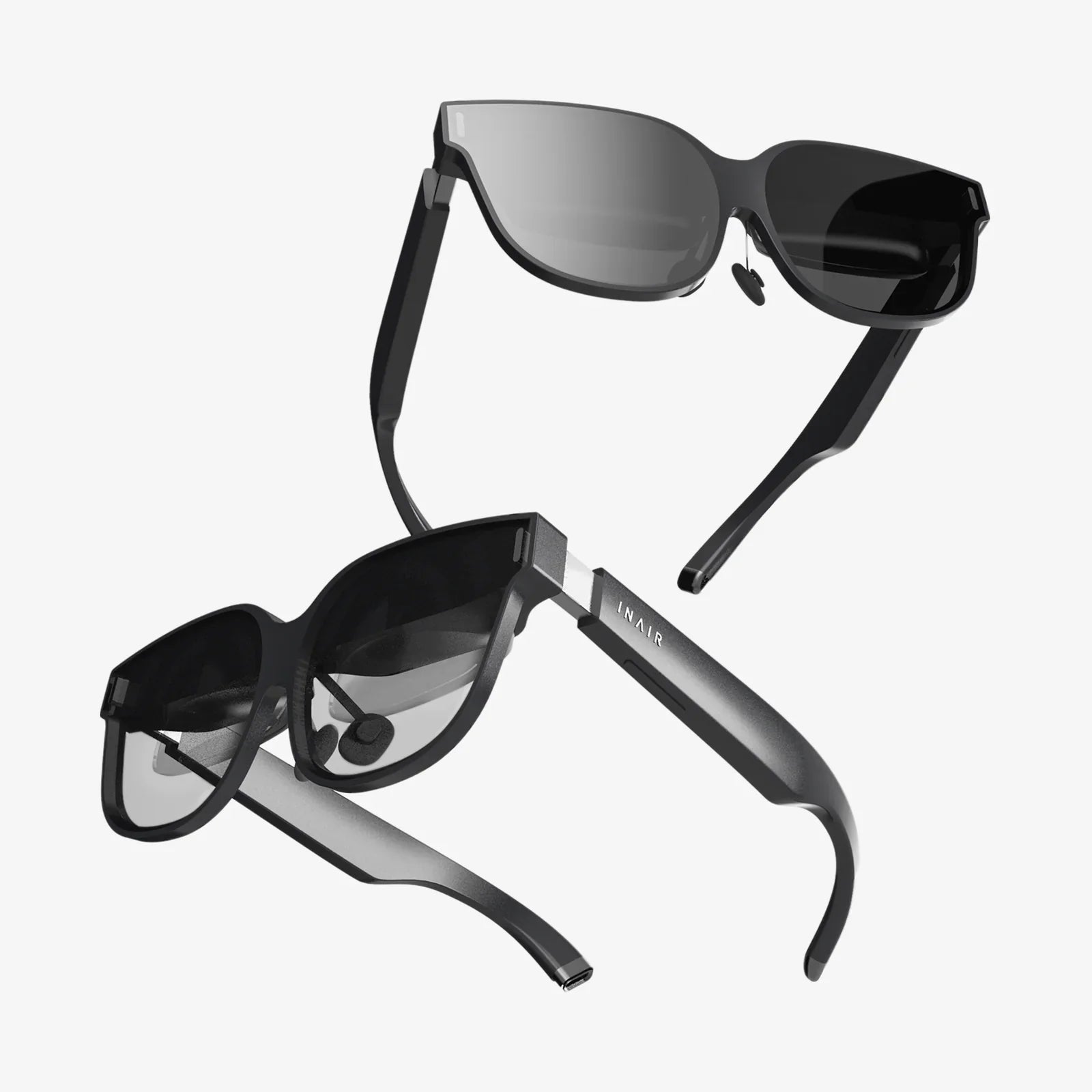
Beyond software, the push towards dedicated hardware is a clear sign of AR's maturation. While smartphone-based AR is the gateway, wearable devices like smart glasses represent the endgame—a truly seamless, hands-free, and always-available augmented experience. The development of these devices presents immense challenges, from creating transparent displays that are bright enough for outdoor use to designing form factors that are socially acceptable and comfortable for all-day wear. The industry is in a period of intense experimentation, with various approaches to optics, processing, and battery life. The ultimate goal is a device that feels as natural as a pair of everyday glasses but provides a constant, useful stream of contextual information.
While consumer-facing filters and games often grab headlines, the most profound impact of the rise of augmented reality is currently happening within enterprise and industrial sectors. Here, AR is solving real-world problems, increasing efficiency, reducing errors, and saving money.
As with any powerful technology, the rise of augmented reality brings a host of social, ethical, and philosophical questions that society must grapple with.
The concept of data privacy takes on a new dimension when devices are equipped with always-on cameras and microphones, continuously scanning our homes, workplaces, and public spaces. The data collected—detailed 3D maps of our private environments, what we look at, and how we interact with objects—is incredibly sensitive. Clear rules and robust security frameworks are needed to prevent misuse and ensure users retain control over their personal information.
Furthermore, the potential for pervasive advertising and digital litter is significant. Will our vision be bombarded with virtual billboards and sponsored content, creating a new form of attention economy? The prospect of public spaces being cluttered with digital graffiti or commercial messages is a real concern that requires thoughtful design and perhaps new forms of regulation to preserve the shared experience of reality.
On a deeper level, AR forces us to ask fundamental questions about shared reality and truth. If everyone can customize their perception of the world with their own digital layer, do we risk eroding common ground? The technology could be misused to spread misinformation or manipulate perception in dangerous ways, making it harder to distinguish between what is real and what is digitally augmented. Establishing norms and developing media literacy for this new medium will be an ongoing challenge.
The current state of AR is merely the foundation for a far more integrated future. The next phase of its evolution will be defined by a move towards greater context awareness and seamless integration.
The ultimate goal is the contextual and ambient interface. Future AR systems will not just display information but will understand the user's immediate needs, environment, and intentions. It will know you are cooking and automatically pull up a recipe, highlighting the next step and timers. It will recognize a colleague in a meeting and subtly display their name and the project you are both working on. This shift from explicit commands (searching for information) to implicit, ambient assistance will make technology feel less like a tool and more like an intelligent partner.
This future relies on the convergence of AR with other transformative technologies. The integration of Artificial Intelligence is paramount, as AI is needed to understand the content of the real world, predict user intent, and manage the vast streams of data. The development of 5G and edge computing will provide the low-latency, high-bandwidth connectivity required for complex, cloud-rendered AR experiences to run smoothly on lightweight wearable devices. Furthermore, the concept of the spatial web or metaverse envisions a world where digital content is persistently anchored to locations and objects, creating a unified digital layer over the entire planet that anyone with AR glasses can access and interact with.
We are standing at the precipice of a fundamental shift in human-computer interaction. The rise of augmented reality represents a journey away from the isolated, distracting screens of today and towards a future where technology enhances our perception of the world without separating us from it. It promises to make us more knowledgeable, more efficient, and more connected to the information that surrounds us. The path forward is filled with both incredible potential and significant challenges, but one thing is certain: the boundary between our digital and physical lives is dissolving, and the world will never look the same again.
Share:
Latest VR AR XR News: The Next Digital Revolution Is Happening Now
Latest VR AR XR News: The Next Digital Revolution Is Happening Now