


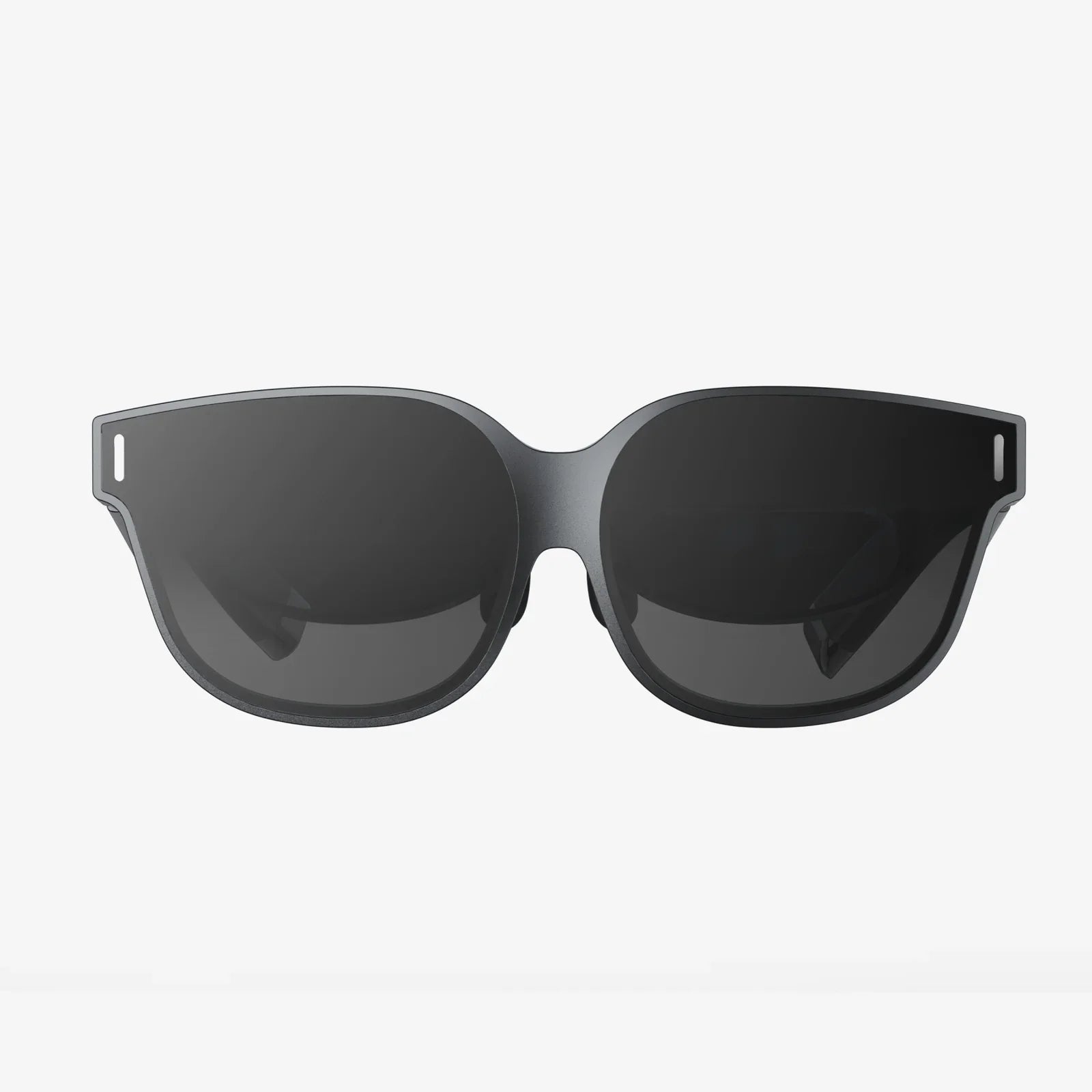
Imagine a world where information flows as effortlessly as sight, where digital intelligence is woven seamlessly into the fabric of your perception, and the boundary between the physical and virtual realms dissolves. This is no longer the stuff of science fiction; it is the promise and the reality of the current generation of top AI glasses. This cutting-edge wearable technology is poised to revolutionize how we work, learn, navigate, and connect, moving beyond the confines of screens and placing the power of artificial intelligence directly in our line of sight. The future is not in your pocket; it’s on your face.
The Architectural Marvel: What Powers Top AI Glasses?
At their core, top AI glasses are a symphony of miniaturized technology, a testament to how far computing has evolved. Unlike their simpler predecessors, which were often little more than displays with a camera, true AI glasses are integrated systems designed for constant, contextual awareness and interaction.
The hardware foundation is a marvel of engineering. It typically includes:
- Advanced Microdisplays: These are the windows to the digital world. Using technologies like OLEDoS (OLED on Silicon) or advanced LCoS (Liquid Crystal on Silicon), these tiny projectors beam high-resolution, full-color images onto specially designed waveguides or lenses, creating the illusion that holographic screens are floating in the user's environment.
- Spatial Audio Systems: Immersion isn't just visual. Dedicated speakers, often employing bone conduction or directional audio technology, deliver rich sound directly to the user's ears without blocking ambient noise, allowing for private listening while maintaining situational awareness.
- A Multitude of Sensors: This is the nervous system of the device. A sophisticated array includes high-resolution cameras, depth sensors, inertial measurement units (IMUs) for tracking head movement, ambient light sensors, and microphones. Together, they create a constant, real-time data stream of the user's environment.
- Onboard Processing: The true differentiator for top AI glasses is the presence of a dedicated AI processing unit (APU) or a powerful system-on-a-chip (SoC). This allows for on-device computation, meaning tasks like real-time translation, object identification, and gesture recognition can happen instantly, without a constant, lag-inducing reliance on a cloud connection.
- Battery Technology: Powering all this innovation requires efficient, compact batteries. Modern designs often distribute battery cells across the frame (e.g., in the temples) to balance weight and maximize usage time, which is one of the most significant engineering challenges.
The Intelligence Within: The AI and Software Ecosystem
Hardware is nothing without intelligence. The software and AI algorithms are the soul of these devices, transforming raw sensor data into meaningful, contextual, and helpful experiences.
Computer Vision: This is arguably the most critical AI capability. It allows the glasses to "see" and understand the world. Algorithms can identify objects (Is that a dog or a cat?), read text from signs or documents, recognize faces (with user permission and privacy controls), and map the user's surroundings in 3D. This enables features like instant translation of a foreign menu right before your eyes or getting information about a landmark you're looking at.
Natural Language Processing (NLP): Top AI glasses are designed for voice-first interaction. Advanced NLP models allow users to have natural, conversational interactions with a built-in AI assistant. You can ask complex questions, dictate messages, or control the device hands-free, all powered by models that understand context and intent.
Augmented Reality (AR) Platform: The operating system of these glasses is built around spatial computing. It understands depth, surfaces, and persistence, allowing digital objects to be "pinned" to real-world locations. A virtual monitor you place on your desk will stay there even if you walk away and come back, thanks to simultaneous localization and mapping (SLAM) technology.
Transforming Industries: Professional and Enterprise Applications
While consumer applications are exciting, some of the most impactful uses for top AI glasses are happening in the professional world, where they are boosting productivity, enhancing safety, and streamlining complex tasks.
- Field Service and Manufacturing: A technician repairing a complex machine can have schematics, step-by-step instructions, and live video support from an expert overlayed directly onto their field of view. This provides "X-ray vision" guidance, reduces errors, and drastically cuts down training time.
- Healthcare and Medicine: Surgeons can access vital patient statistics, MRI scans, or ultrasound data without looking away from the operating table. Medical students can observe procedures from the surgeon's point of view, and paramedics can receive remote guidance while treating a patient.
- Logistics and Warehousing: Workers fulfilling orders can have navigation directions to items, quantity counts, and quality check instructions displayed directly in their vision, allowing them to work faster and with greater accuracy without constantly consulting a handheld scanner or clipboard.
- Design and Architecture: Architects and engineers can project 3D models of their designs onto a physical space, allowing clients to "walk through" a building before a single brick is laid. Interior designers can visualize how furniture will look and fit in a room.
Augmenting Everyday Life: The Consumer Experience
For the average user, top AI glasses promise to become an indispensable daily companion, offering subtle yet powerful enhancements to everyday activities.
- Seamless Navigation: Imagine walking through a new city with directional arrows and points of interest painted onto the sidewalk in front of you, eliminating the need to stare down at a phone map.
- Contextual Information: Look at a restaurant, and see its reviews and today's specials pop up. Look at a movie poster, and see showtimes and a trailer link. The world becomes intuitively interactive.
- Real-Time Translation: Have a natural conversation with someone speaking another language, seeing their translated words appear as subtitles in real-time, and hearing your own words translated back to them. This has the potential to break down language barriers like never before.
- Memory and Recall: The glasses can act as a perfect, searchable photographic memory. "Where did I last see my keys?" could be answered by reviewing a first-person recording of your morning. "What was the name of that person I met at the conference?" could be answered by facial recognition linked to your contacts.
- Content Consumption and Creation: Watch a movie on a virtual giant screen while on an airplane or lying in bed. Capture photos and videos from a unique first-person perspective, hands-free, making content creation more immersive and less intrusive.
Navigating the Challenges: Privacy, Design, and Society
The path to widespread adoption of top AI glasses is not without significant hurdles. The very features that make them powerful also raise profound questions.
The Privacy Paradox: A device that sees and hears what you do 24/7 is a privacy advocate's nightmare. The potential for unauthorized recording, facial recognition, and data collection is immense. Top-tier manufacturers must, and are, building privacy into the core of their devices. This includes physical hardware switches to disable cameras and microphones, clear LED indicators showing when recording is active, and robust, encrypted on-device data processing that minimizes what is sent to the cloud. Building trust through transparency and user control is not optional; it is essential for survival.
The Social Hurdle: For decades, eye contact has been a cornerstone of human interaction. Wearing technology that can record and display information can feel disconcerting to the person wearing them and to those around them, creating a "cyborg effect" that can be socially alienating. The ultimate goal is to make the technology so elegant, lightweight, and unobtrusive that it fades into the background, becoming as socially acceptable as a standard pair of eyeglasses or wireless earbuds are today.
The Battery Life Conundrum: High-resolution displays, constant sensor data processing, and wireless connectivity are incredibly power-intensive. Delivering all-day battery life in a glasses form factor remains the holy grail. Innovations in low-power displays, efficient AI chips, and perhaps even alternative charging solutions like solar or kinetic energy will be key to overcoming this limitation.
The Road Ahead: Where Do We Go From Here?
The current generation of top AI glasses is impressive, but it is merely the first step. The future trajectory points toward even greater integration and capability. We can anticipate glasses with even wider fields of view, displays indistinguishable from reality, and AI so advanced it becomes a true cognitive partner, anticipating needs and offering insights before we even ask. The line between assistance and augmentation will blur, leading to ethical discussions about human enhancement that we are only beginning to grapple with.
Furthermore, the ecosystem around these devices will explode. Developers will create entirely new categories of spatial apps that we haven't even imagined, built for a world where digital and physical coexist. The way we design software, user interfaces, and even physical spaces will evolve to account for this new, augmented layer of reality.
The journey of top AI glasses is just beginning. They represent a fundamental shift in our relationship with technology, moving from a tool we look down at to an intelligent layer we look through. They promise to make us more capable, more connected, and more informed, all while keeping our heads up and our hands free to engage with the real world. The potential to enhance human potential is limitless, offering a glimpse into a future where technology doesn't isolate us, but empowers us to experience life more richly and completely. The next era of computing won't be held in your hand; it will be reflected in your eyes.
Share:
Augmented Reality Simple Definition: A Beginner's Guide to the Digital Overlay
VR Glasses 3D with USB: The Ultimate Immersive Experience Awaits